Pip: If you’ve ever watched a kindergartener try to sit still for twenty minutes, you already know the punchline — the body wins every time.
Mara: Today we’re looking at posts from Kathy Kampa at MagicTimeKids that put movement at the center of early literacy, covering phonics, letter shapes, and the case for getting kids on their feet.
Pip: Let’s start with the song that turns the alphabet into a full-body workout.
—
Moving Letters: Phonics Through Full-Body Play
Mara: The central question here is whether movement can be the method, not just a reward — whether kids can actually build phonemic awareness by walking, jumping, and shaping letters with their whole bodies.
Pip: The post sets it up directly: “Much of learning is taught with children sitting down. But what if we could teach our students THROUGH MOVEMENT?”
Mara: That’s the hinge. The song Moving Letters was written for kindergarteners in Tokyo, and it works on two tracks simultaneously — phonemic awareness through listening for beginning sounds, and physical literacy through locomotor movement.
Pip: Two skills, one song. That’s an efficient use of circle time.
Mara: The locomotor movements in the song are walk, gallop, march, jump, skip, tiptoe, hop, and leap — each tied to a letter. Students listen for the beginning sound of the movement word, then make the corresponding letter shape with fingers, arms, or their whole body.
Pip: And the letters covered are W, G, M, J, S, T, H, and L— chosen because they’re shapeable, not just singable.
Mara: The post even suggests partners make letters together, or students try making the letter that begins their own name — which turns a phonics drill into something personal.
Pip: Personalization is underrated as a classroom hook. Kids remember what involves them.
Mara: The post also gestures toward a wider album — songs built around falling leaves, a butterfly life cycle, seasonal movement — all growing from the same classroom-tested philosophy of linking music to a child’s lived experience.
Pip: So Moving Letters isn’t a standalone trick. It’s one entry point into a whole approach where the body is doing the learning alongside the brain — and the music is holding it together.
—
Mara: The through-line is that movement isn’t a break from learning — it’s a delivery system for it.
Pip: Next time, we’ll see what else that philosophy connects to. There’s more ground to cover.
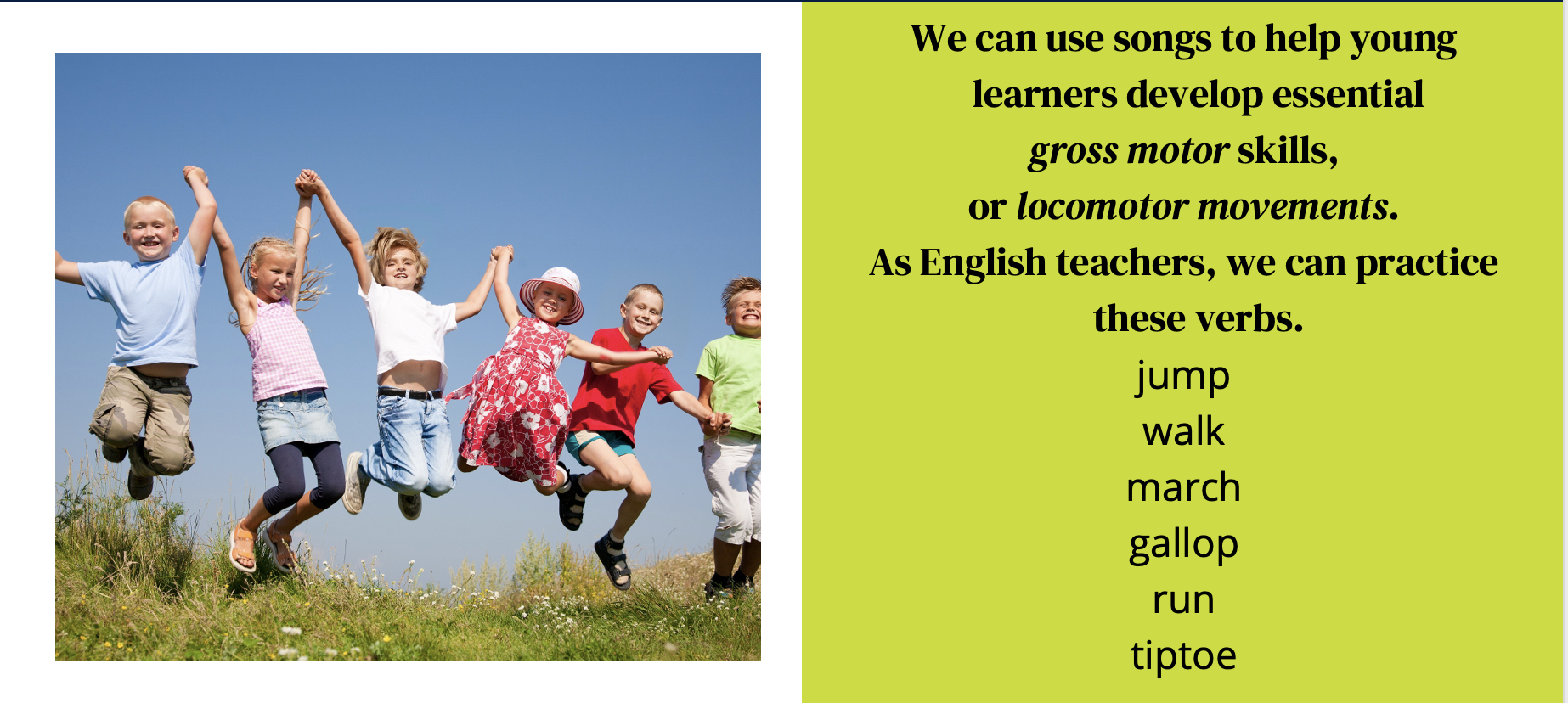
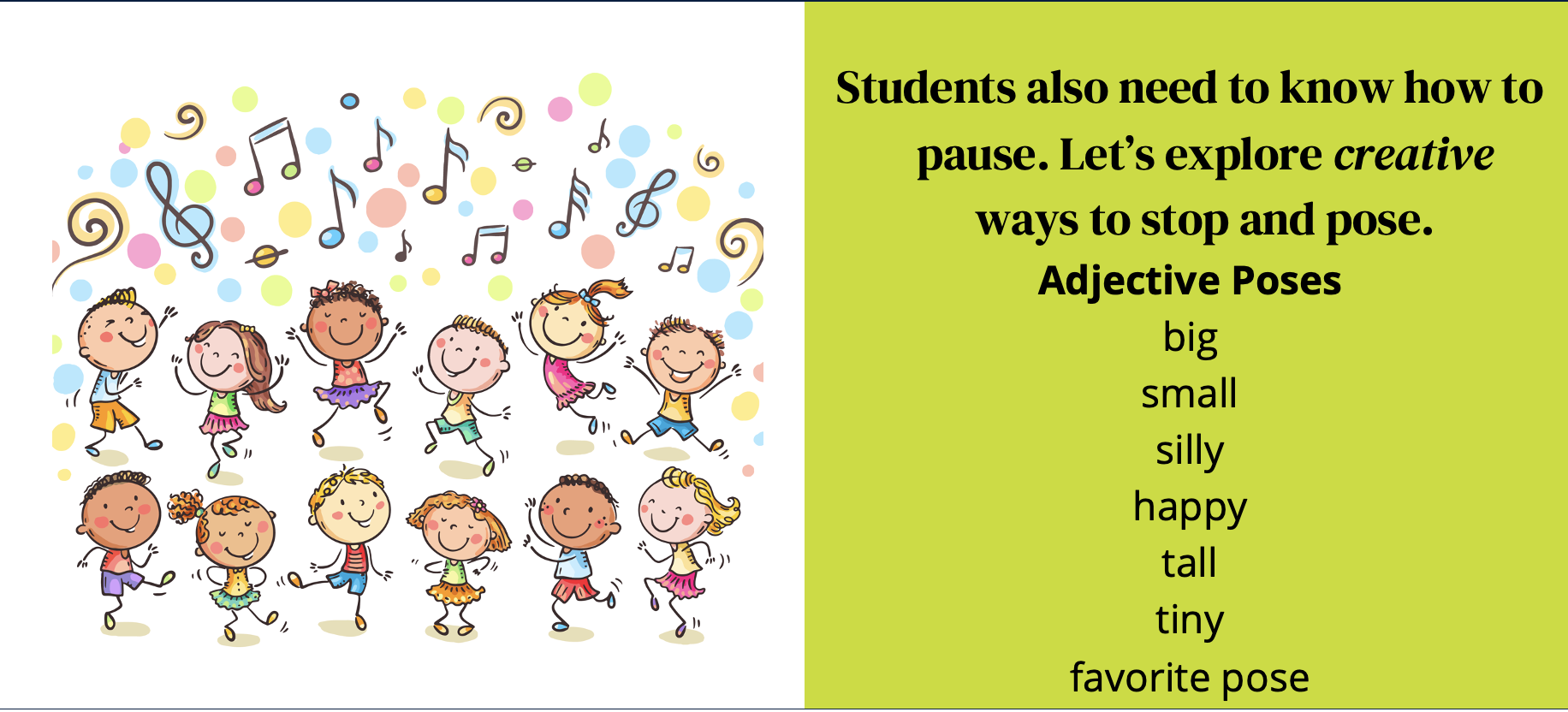
When your little ones need a movement break, this is the perfect dance song! It teaches various locomotor movements, movements that go from one place to another. Perhaps more importantly, it teaches little ones to pause and stop. When they stop, different adjectives prompt their poses. It’s a song that my students and parents ask for over and over again!
Here are the lyrics. The music is available on Spotify.
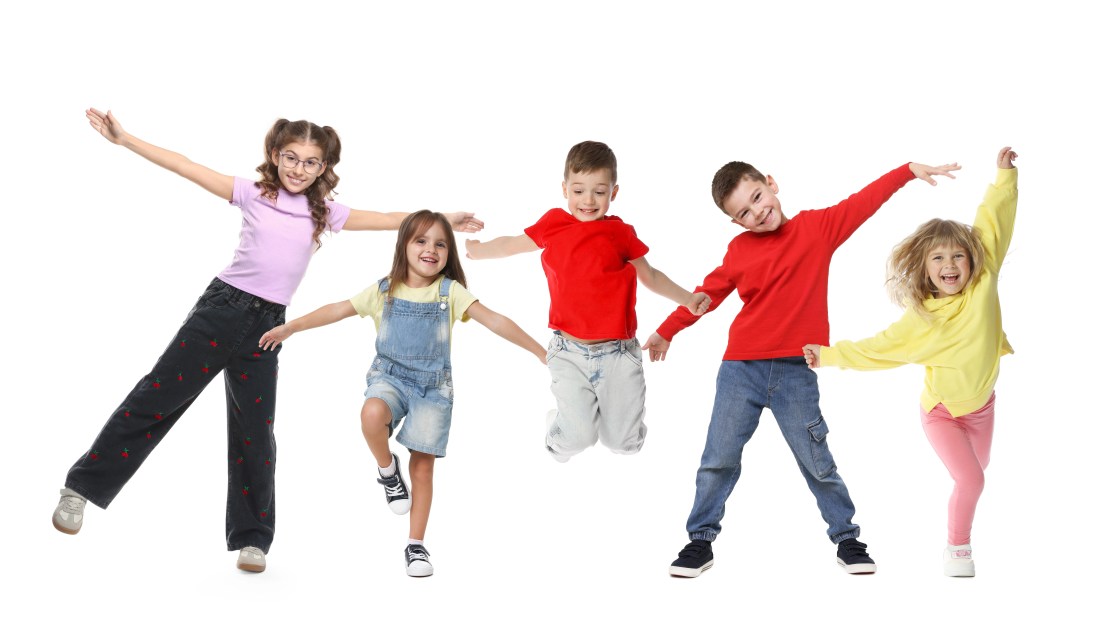
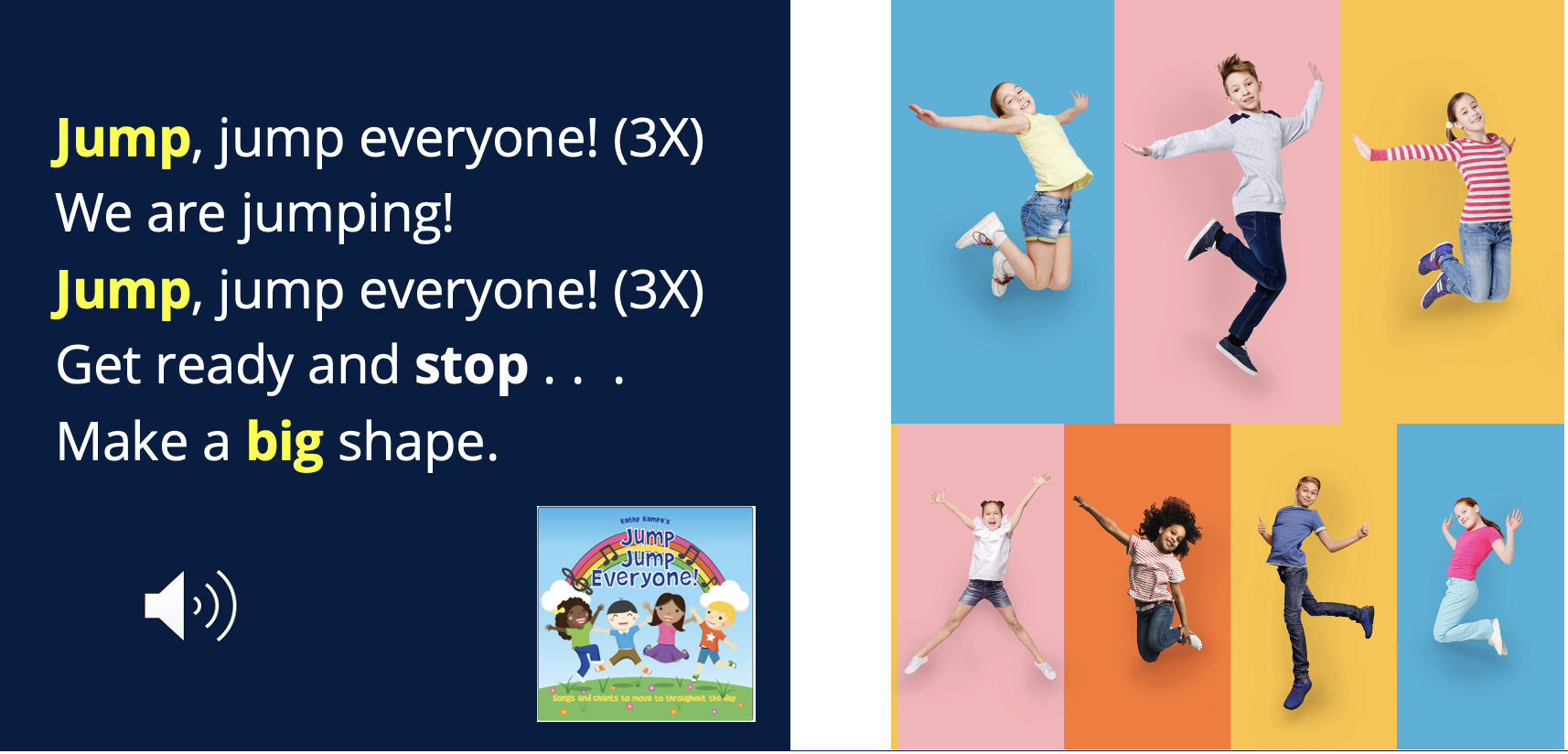
Jump, jump, everyone! (3X) Get ready and stop. Make a big shape.
Substitute:
2. Walk, walk everyone . . . Make a small shape.
3. March, march everyone . . . Make a silly shape.
4. Gallop, gallop everyone . . . Make a happy shape.
5. (inside run) Run, run everyone . . . Make a tall shape.
6. Tiptoe, tiptoe everyone . . . Make a tiny shape.
7. Jump, jump everyone . . . Make your favorite shape!
Here is a short snippet of our Wirth Center for the Performing Arts families at our 2026 Spring Gala. The students are from our Music Play and Dance Play classes. They’re performing “Jump, Jump Everyone.” This is the very end of the song where they are facing the audience. We do most of this song moving together around in a circle. Look at the joy on everyone’s faces!!! Most of these children range in age from six months to four years. We have two student helpers who loved this dance, too!!!
How to teach this song:
Before I use the recorded music, we practice each locomotor movement and the poses.
“Let’s jump . . . when we jump, we need to use two feet to get up off the ground. Can you jump? “
Parents can help little ones by holding them under their arms and bouncing them along. They can also help them jump high in the air like the video. See the video.
“We can jump around the circle. Stop, then make a big pose.”
You can describe the way your students are making their poses. “Olivia is making a big pose with her arms up high. Griffin is making a big pose by stretching his legs out wide.”
Practice each locomotor movement around the circle, along with the poses.
Walk . . . you can pretend to walk your dog. Or your elephant. Or you can walk with a baby in a stroller.
March . . . let’s lift our knees up high.
Gallop . . . put one foot in front of the other. You can put your hands behind your back. Listen to the uneven rhythm. (clap a galloping rhythm.)
Run . . . When we are outside, we can run with big steps. But we are inside, so let’s be careful. Look at my “inside run.” I’m running fast, but I’m running with little steps. (model this to the students)
Tiptoe . . . can you lift your heels up? Let’s move quietly. Maybe the baby is sleeping. Or maybe your daddy!
Let’s jump again!!
Now move in a circle with the music. Here’s the link on Spotify.
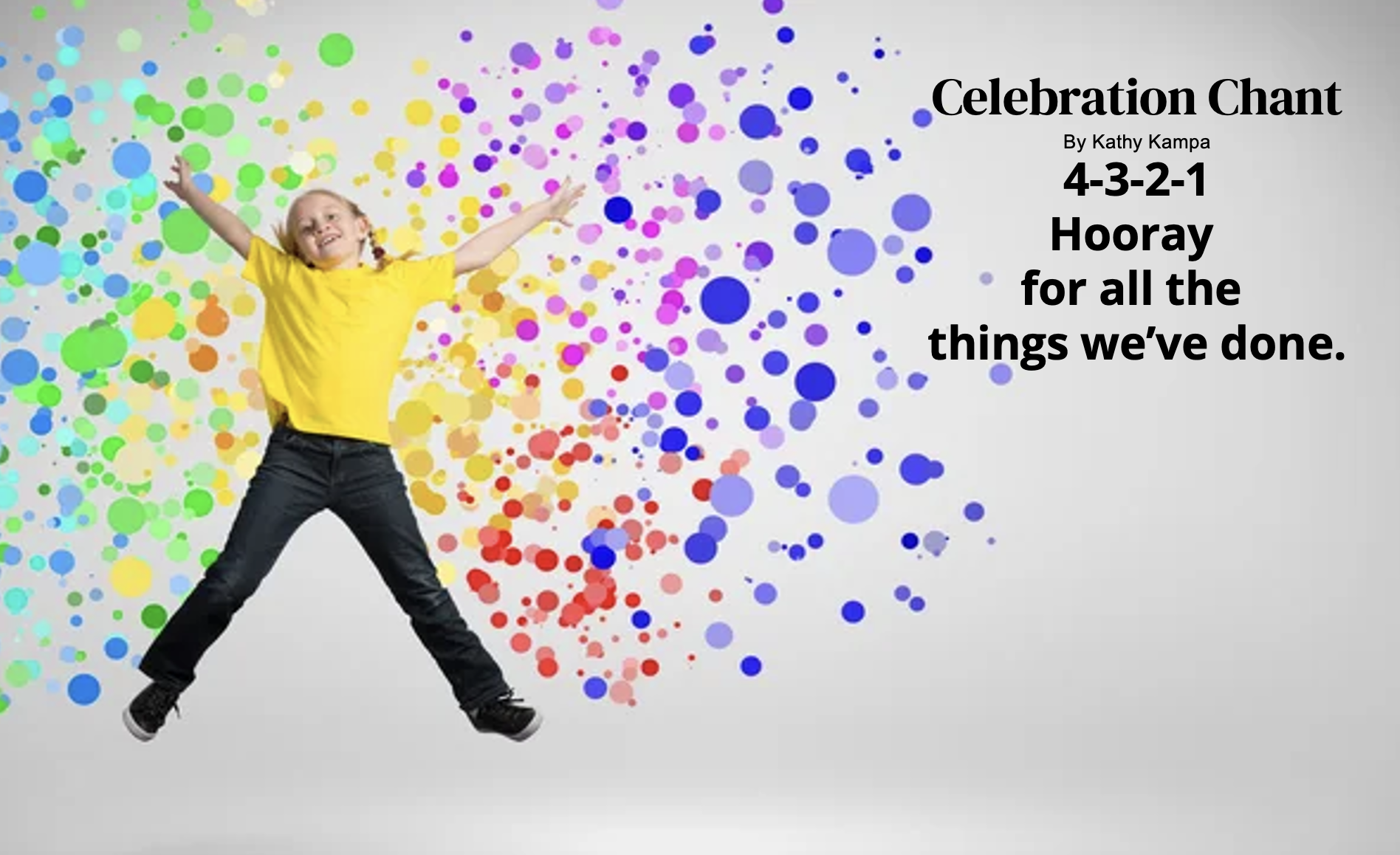
When we finish an activity, I often end with a Celebration Chant.
How to do this:
Use your fingers to show the numbers. (or for very littles, just clap.)
Shake your hands on “Hooray for all the . . .”
Clap your hands on “things we’ve done.”
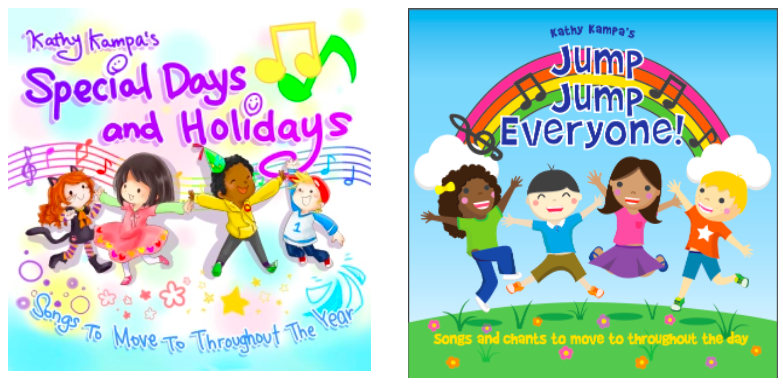
If you’re looking for songs and chants that build language skills as well as music and movement skills, check out my two albums on Spotify.
Kathy Kampa’s Special Days and Holidays is filled with songs and chants that celebrate special events–including birthdays, a loose tooth, and holidays throughout the year. “Skeleton Dance” has been one of our top hit songs, but all are well-loved by my students.
Jump Jump Everyone is filled with many happy songs that have grown in my young learner classroom. The songs encourage children to move. Many songs link to classroom content. Children can dance like falling leaves, bloom like a spring flower, move through the butterfly life cycle . . . . you’ll find LOTS of fun and magic in this album.There are useful transitional songs, too.
Music by Kathy Kampa
Why use songs by Kathy Kampa?
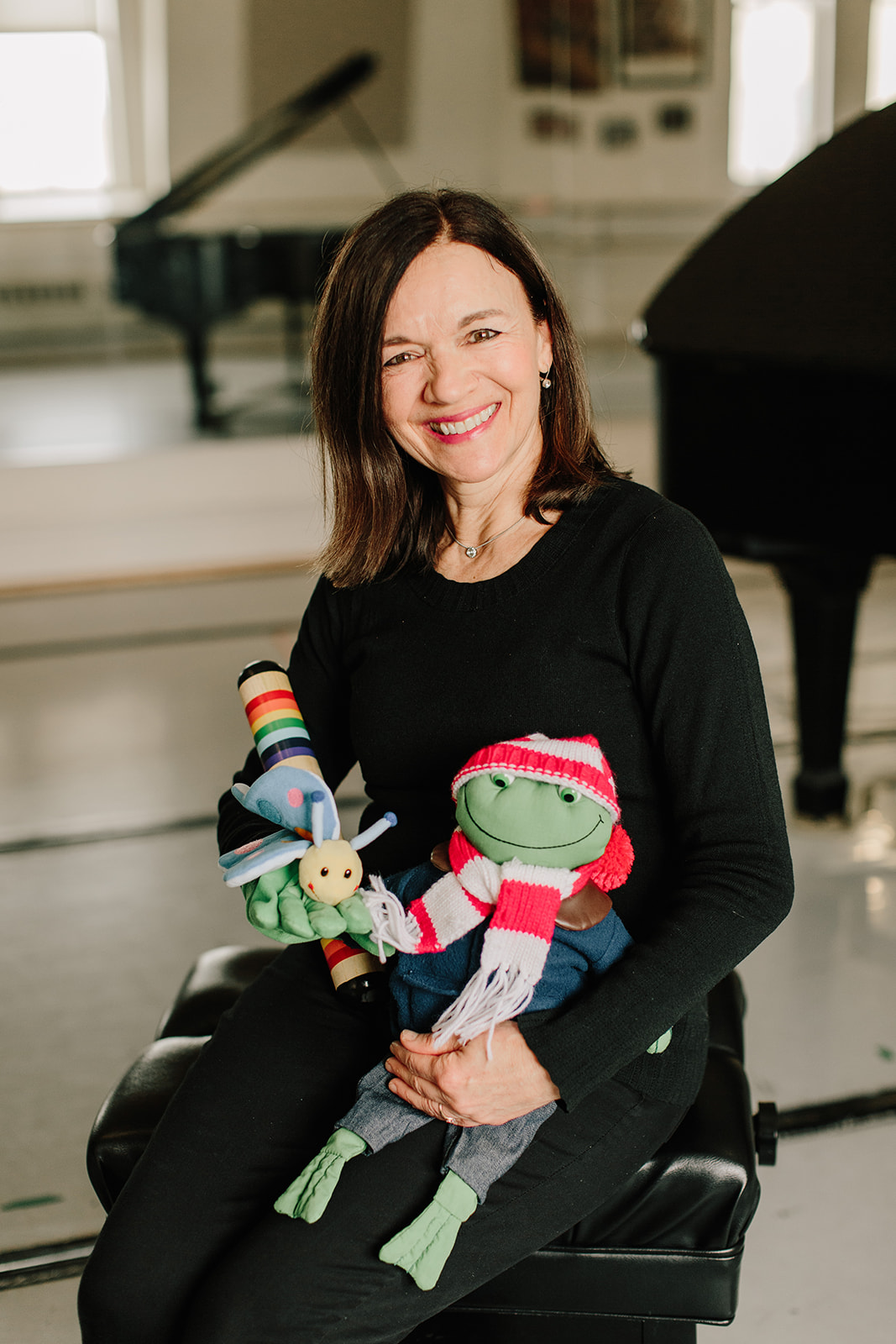
Kathy Kampa loves to bring joy to the world through her children’s music. She is passionate about making learning engaging for young learners. You’ll find more resources on Kathy’s YouTube page. Kathy seeks to nurture children’s imaginations and spark creativity through fun and engaging activities. She also supports the development of English language skills by creating songs, chants, and TPR/movement activities targeted to young learners’ needs. She believes music and movement should be a part of every young child’s education. Kathy’s Songs for Kids (Kathy Kampa’s Special Days and Holidays and Jump Jump Everyone) are available on iTunes and streaming services like Spotify.
As a PYP teacher, Kathy uses a globally-minded and concept-based inquiry approach to teaching and learning through which students develop 21st-century skills. Kathy is an author and teacher-trainer with Oxford University Press. Together with her husband, Charles Vilina, they have written Magic Time, Everybody Up, Oxford Discover, Beehive, Buzz, and now Blue Dot (2025). They have worked with Tokyo Shoseki to create wonderful songs for children learning English.
Looking for more songs to start your school year on the right foot. Check out these songs for cleaning up your space.
It’s winter 2025 here in Minnesota. We’ve had a lot of snow already! And every time it snows, I start to sing this song in my head. (You might, too!)
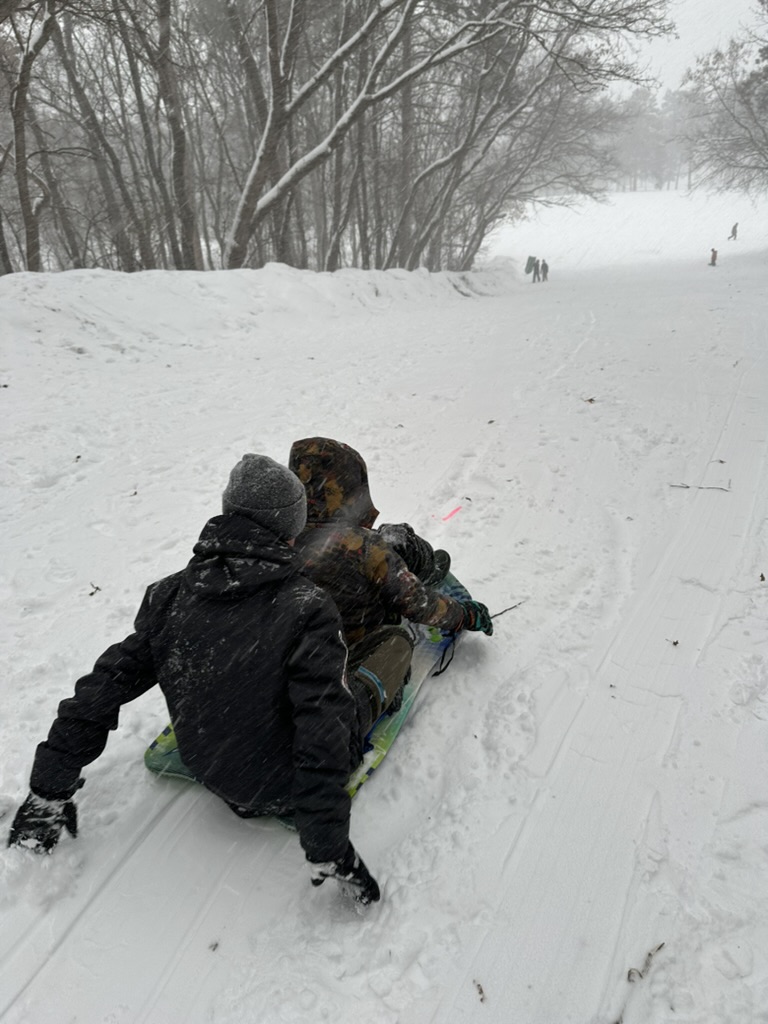
A snowy winter is a dream for us here in Minnesota. And today–it’s been snowing all day long! I went sledding with my neighbor’s children. With about eight inches of snow, we have to say that it was a winter wonderland!
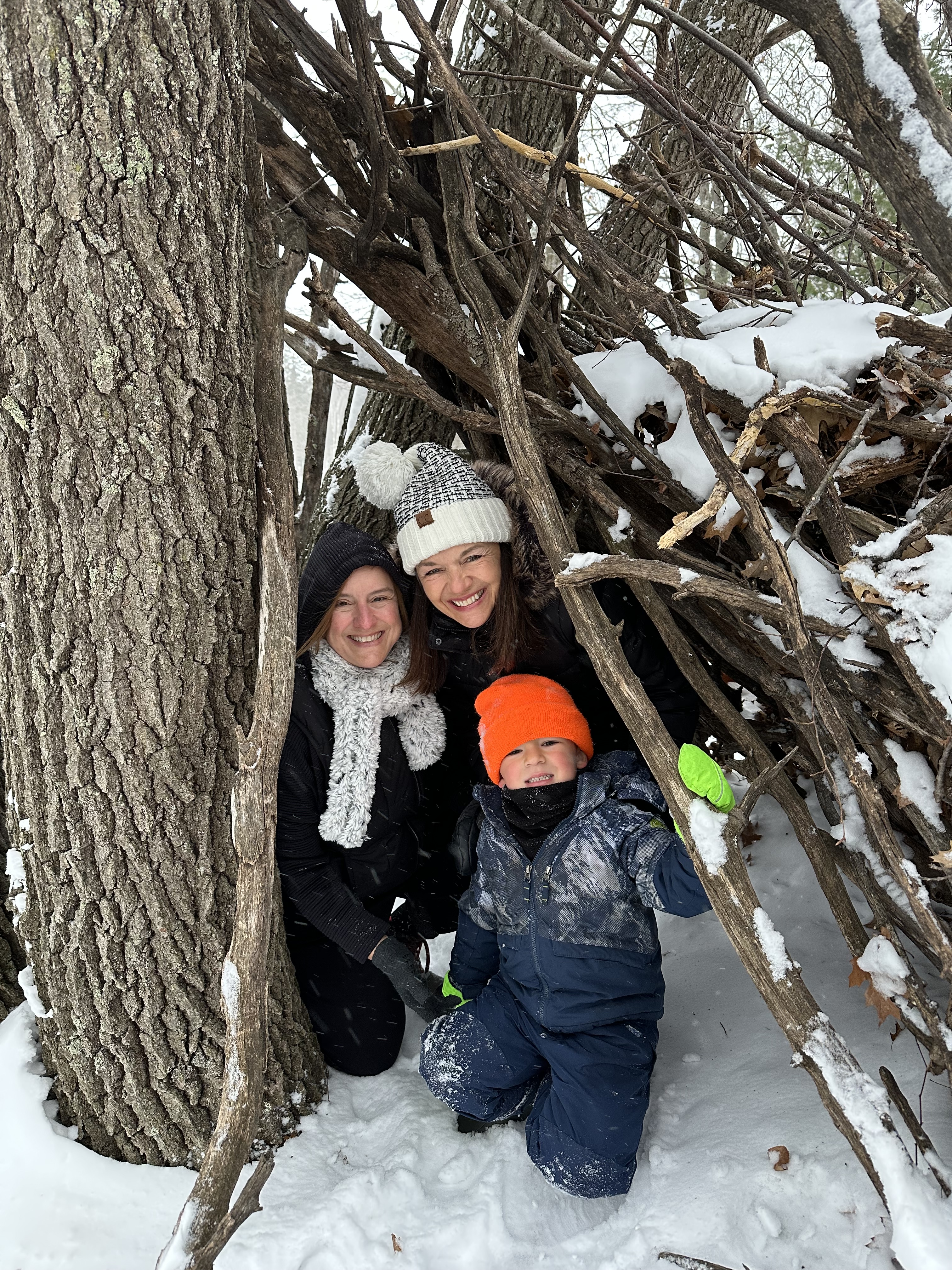
Look at this magical fort! I had a delightful time playing there with my great-nephew and my sister.
I started writing this song during our first snowfall in November 2024. I taught it to all my students last winter, and it quickly became a favorite. My cousin stopped by with her daughter and her granddaughter. I brought some toys for her to play with. We also sang this song with scarves. I gave each of them a scarf to take home.
This is what my cousin wrote: “We were checking to see if you had recorded it (Snow Is Falling Down) yet. We sang your song so much today that we honestly started searching for it so we could get a little break🤣🤪. Let’s just say the song and the scarves are a real hit with Lucy💝💝💝💝💝💝💝. “
Things you may notice:
-You’ll find repetition in the lyrics to help children learn the song quickly.
– I featured the /l/ sound to support ESL language development (especially for Japanese students) (la, la, la, la, la/ falling/ gently/ whirling)
-I taught this first as a seated song, then as a dance standing in one place.
-I added variety by inviting students to add playful movements with their scarves and dancing with the scarf on a different body part. Scarves are easy for young learners to manipulate.
You can add, Think, think, think, Think, think, think, what should we do? Let’s dance with the scarf on our elbows!
-Movements include toss/catch, crossing the midline with the scarf (standing), and vestibular (turning).
Here are the lyrics. You can choose which body part to put the scarf on.
Snow is falling down, la-la-la-la-la, Falling gently from the sky,
Snow is falling down, la-la-la-la-la,
Falling to the ground. Falling on my head.
(Scarves cover the children’s heads, sit and move with continuous flow)
B. See it falling down, Whirling all around, Dancing on my head. (2X)
Peek-a-peek-a- peek-a-boo! ( Toss!!)
(Sit and toss scarves or stand and dance.)
2. Snow is falling down, la-la-la-la-la, Falling gently from the sky,
Snow is falling down, la-la-la-la-la,
Falling to the ground. Falling on my shoulder.
(Scarves rest on children’s shoulders)
B. See it falling down, Whirling all around, Dancing on my shoulder. (2X)
(toss it in the air . . . Whee!)
3. Snow is falling down, la-la-la-la-la, Falling gently from the sky,
Snow is falling down, la-la-la-la-la,
Falling to the ground. Falling on my hand.
(Children hold the scarf in one hand)
B: See it falling down, Whirling all around, Dancing in my hand. (2X)
(Sit and toss scarves)
Snow is falling down, la-la-la-la-la, Falling gently from the sky,
Snow is falling down, la-la-la-la-la, Falling to the ground.
Falling to the ground. (scrunch up the scarf, make a snowball, and toss!)
* Variation: Add other body parts.
*Try part or all of this song standing. Make sure that children have enough space to move.
Swing scarf across the body to feel the meter. (1-2-3, 1-2-3, this is a waltz.) End with the scarf on a named body part.
Make circles with the scarf. OR Turn slowly in one direction, then the other.
If you’d like to add instruments, try triangles, shakers, or jingle bells.
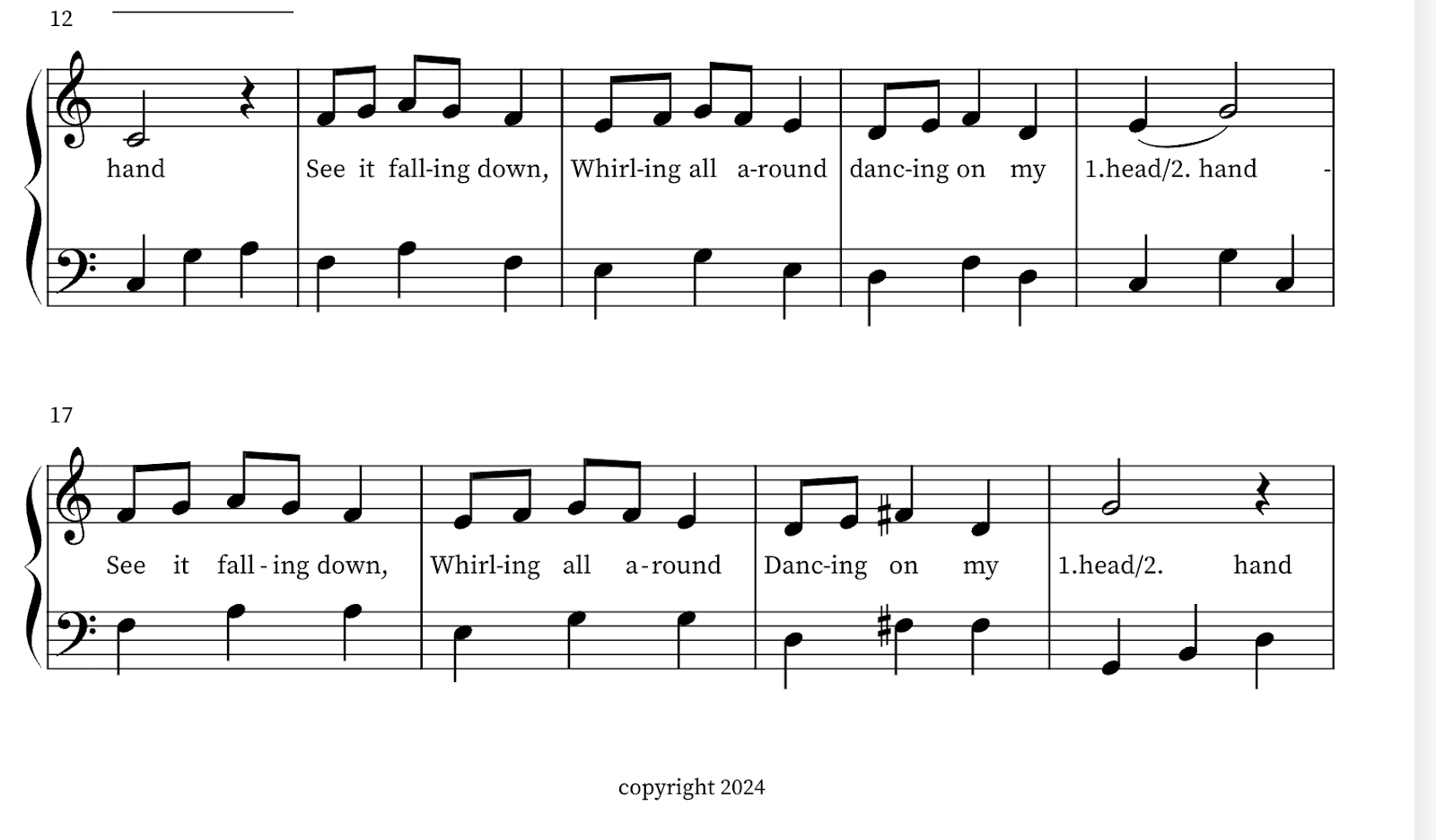
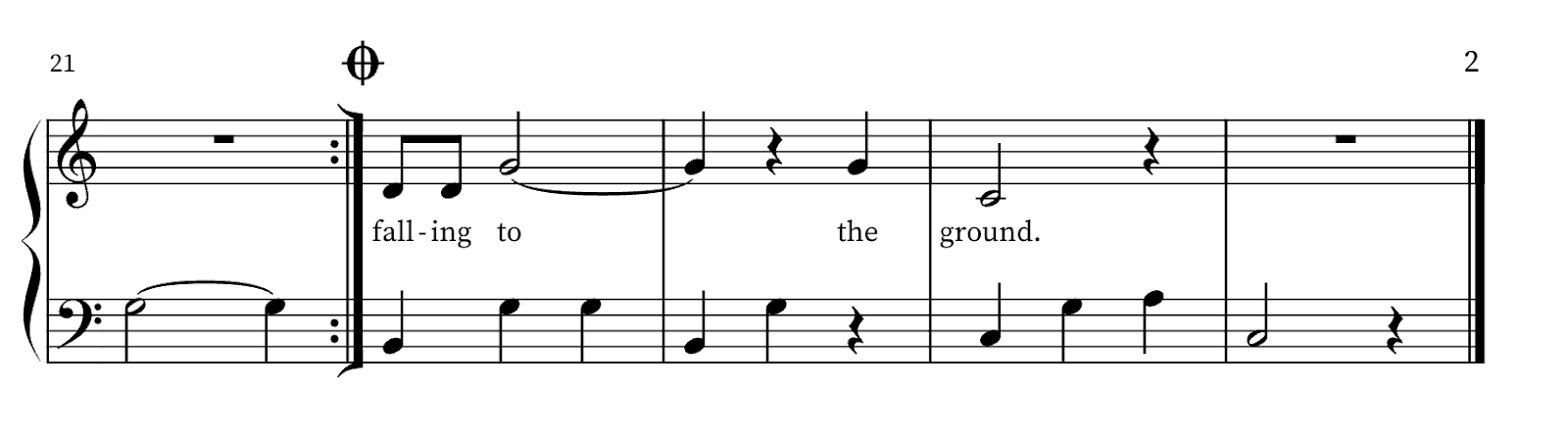
Here’s the notation. Enjoy!
Are you streaming music? Go to Spotify or Apple Music to find Kathy’s additional music. You’ll find these albums there.
Jump Jump Everyone, Kathy’s second album, is filled with many happy songs that have grown in my young learner classroom. The songs encourage children to move. Many songs link to classroom content. Children can dance like falling leaves, bloom like a spring flower, move through the butterfly life cycle . . . . you’ll find LOTS of fun and magic in this album.
This song will be on Kathy’s next album. If you have song requests, let her know.
Kathy Kampa loves to bring joy to the world through her children’s music. She is passionate about making learning engaging for young learners. You’ll find more resources on Kathy’s YouTube page. Kathy seeks to nurture children’s imaginations and spark creativity through fun and engaging activities. She also supports the development of English language skills by creating songs, chants, and TPR/movement activities targeted to young learners’ needs. She believes music and movement should be a part of every young child’s education. Kathy’s songs for kids (Kathy Kampa’s Special Days and Holidays and Jump Jump Everyone) are available on iTunes and streaming services like Spotify.
Kathy uses a globally-minded and concept-based inquiry approach to teaching and learning through which students develop 21st-century skills. Kathy is an author and teacher-trainer with Oxford University Press. Together with her husband, Charles Vilina, their new course Blue Dot will be released in 2025.