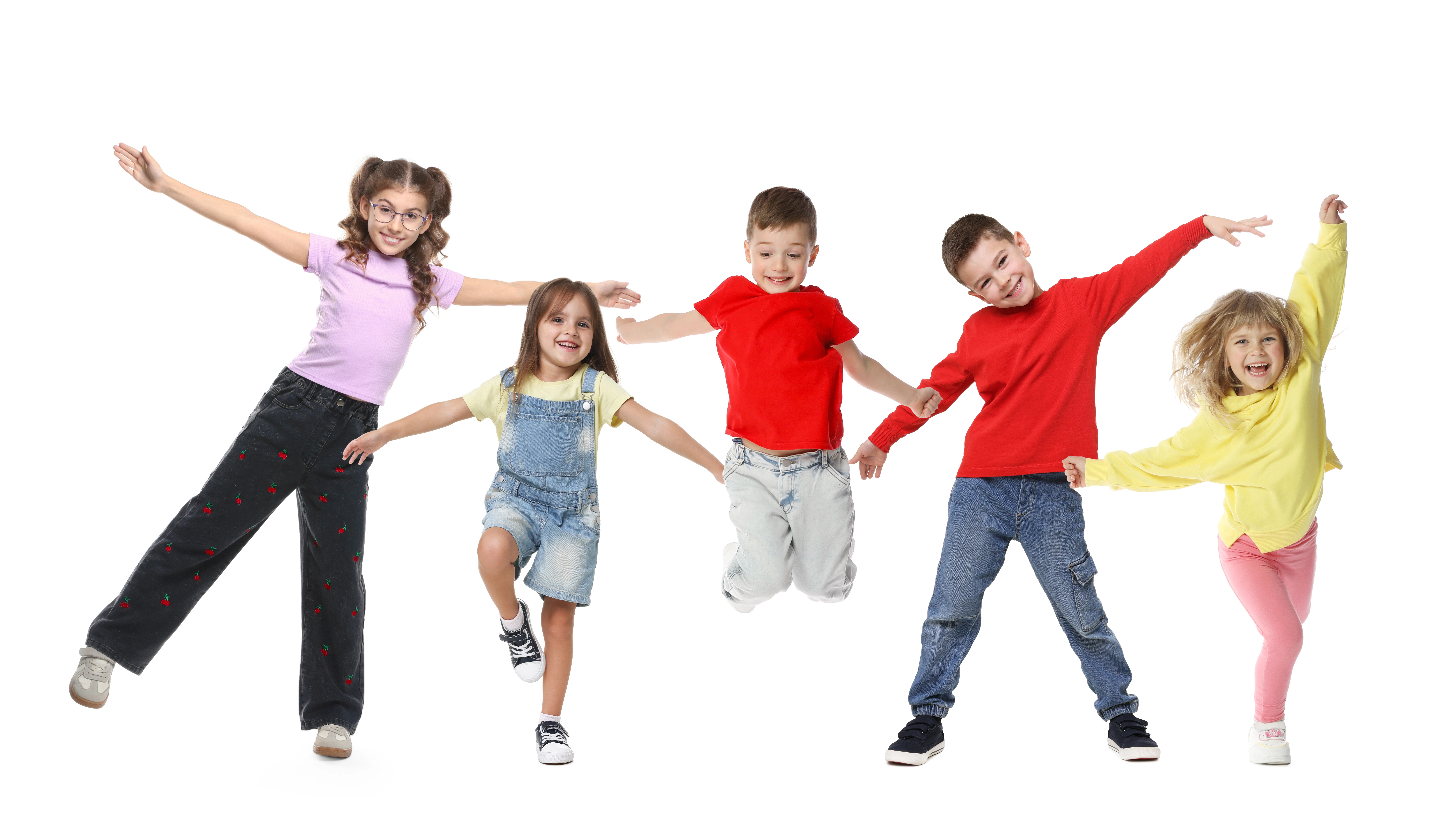

Pip: If you’ve ever watched a kindergartener try to sit still for twenty minutes, you already know the punchline — the body wins every time.
Mara: Today we’re looking at posts from Kathy Kampa at MagicTimeKids that put movement at the center of early literacy, covering phonics, letter shapes, and the case for getting kids on their feet.
Pip: Let’s start with the song that turns the alphabet into a full-body workout.
—
Moving Letters: Phonics Through Full-Body Play
Mara: The central question here is whether movement can be the method, not just a reward — whether kids can actually build phonemic awareness by walking, jumping, and shaping letters with their whole bodies.
Pip: The post sets it up directly: “Much of learning is taught with children sitting down. But what if we could teach our students THROUGH MOVEMENT?”
Mara: That’s the hinge. The song Moving Letters was written for kindergarteners in Tokyo, and it works on two tracks simultaneously — phonemic awareness through listening for beginning sounds, and physical literacy through locomotor movement.
Pip: Two skills, one song. That’s an efficient use of circle time.
Mara: The locomotor movements in the song are walk, gallop, march, jump, skip, tiptoe, hop, and leap — each tied to a letter. Students listen for the beginning sound of the movement word, then make the corresponding letter shape with fingers, arms, or their whole body.
Pip: And the letters covered are W, G, M, J, S, T, H, and L— chosen because they’re shapeable, not just singable.
Mara: The post even suggests partners make letters together, or students try making the letter that begins their own name — which turns a phonics drill into something personal.
Pip: Personalization is underrated as a classroom hook. Kids remember what involves them.
Mara: The post also gestures toward a wider album — songs built around falling leaves, a butterfly life cycle, seasonal movement — all growing from the same classroom-tested philosophy of linking music to a child’s lived experience.
Pip: So Moving Letters isn’t a standalone trick. It’s one entry point into a whole approach where the body is doing the learning alongside the brain — and the music is holding it together.
—
Mara: The through-line is that movement isn’t a break from learning — it’s a delivery system for it.
Pip: Next time, we’ll see what else that philosophy connects to. There’s more ground to cover.

