Pip: If you’ve ever watched a kindergartener try to sit still for twenty minutes, you already know the punchline — the body wins every time.
Mara: Today we’re looking at posts from Kathy Kampa at MagicTimeKids that put movement at the center of early literacy, covering phonics, letter shapes, and the case for getting kids on their feet.
Pip: Let’s start with the song that turns the alphabet into a full-body workout.
—
Moving Letters: Phonics Through Full-Body Play
Mara: The central question here is whether movement can be the method, not just a reward — whether kids can actually build phonemic awareness by walking, jumping, and shaping letters with their whole bodies.
Pip: The post sets it up directly: “Much of learning is taught with children sitting down. But what if we could teach our students THROUGH MOVEMENT?”
Mara: That’s the hinge. The song Moving Letters was written for kindergarteners in Tokyo, and it works on two tracks simultaneously — phonemic awareness through listening for beginning sounds, and physical literacy through locomotor movement.
Pip: Two skills, one song. That’s an efficient use of circle time.
Mara: The locomotor movements in the song are walk, gallop, march, jump, skip, tiptoe, hop, and leap — each tied to a letter. Students listen for the beginning sound of the movement word, then make the corresponding letter shape with fingers, arms, or their whole body.
Pip: And the letters covered are W, G, M, J, S, T, H, and L— chosen because they’re shapeable, not just singable.
Mara: The post even suggests partners make letters together, or students try making the letter that begins their own name — which turns a phonics drill into something personal.
Pip: Personalization is underrated as a classroom hook. Kids remember what involves them.
Mara: The post also gestures toward a wider album — songs built around falling leaves, a butterfly life cycle, seasonal movement — all growing from the same classroom-tested philosophy of linking music to a child’s lived experience.
Pip: So Moving Letters isn’t a standalone trick. It’s one entry point into a whole approach where the body is doing the learning alongside the brain — and the music is holding it together.
—
Mara: The through-line is that movement isn’t a break from learning — it’s a delivery system for it.
Pip: Next time, we’ll see what else that philosophy connects to. There’s more ground to cover.
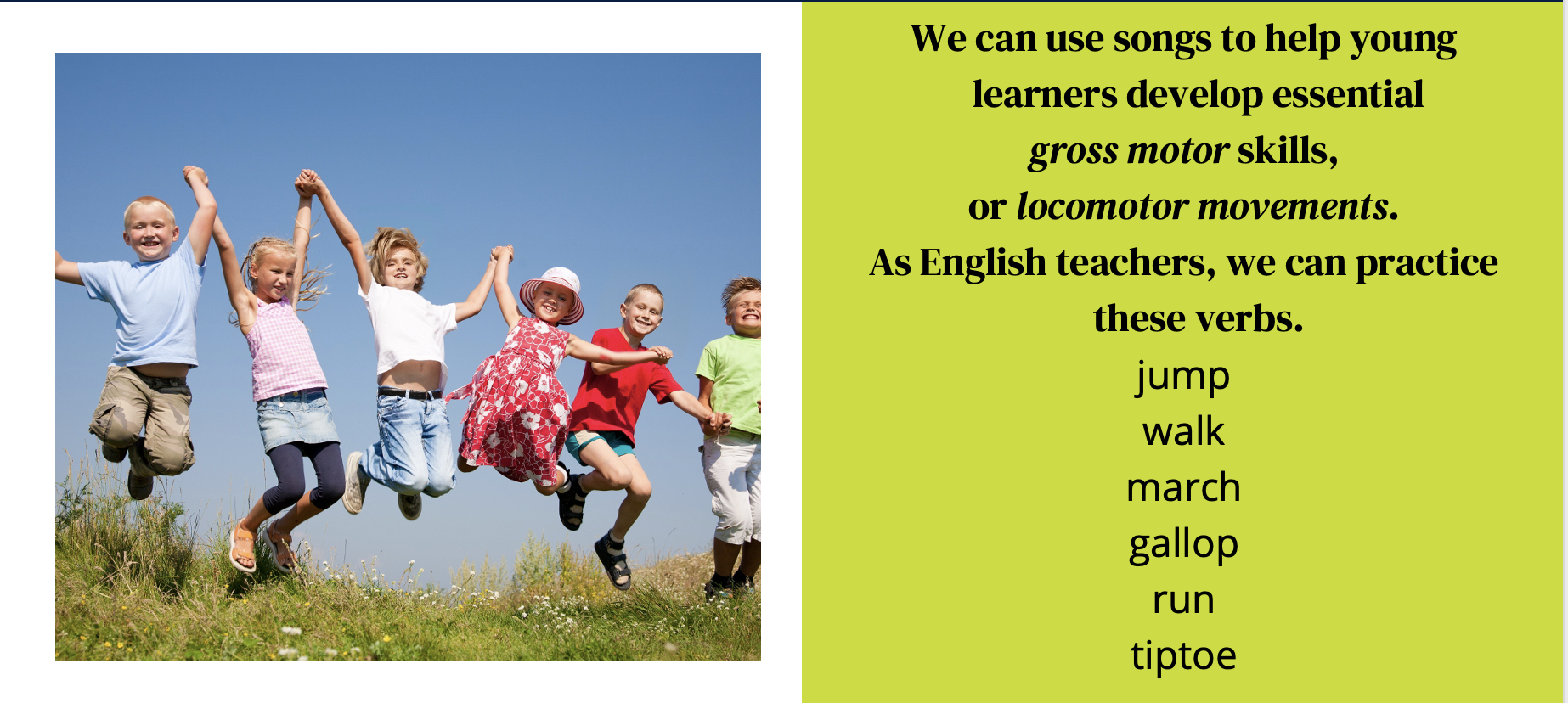
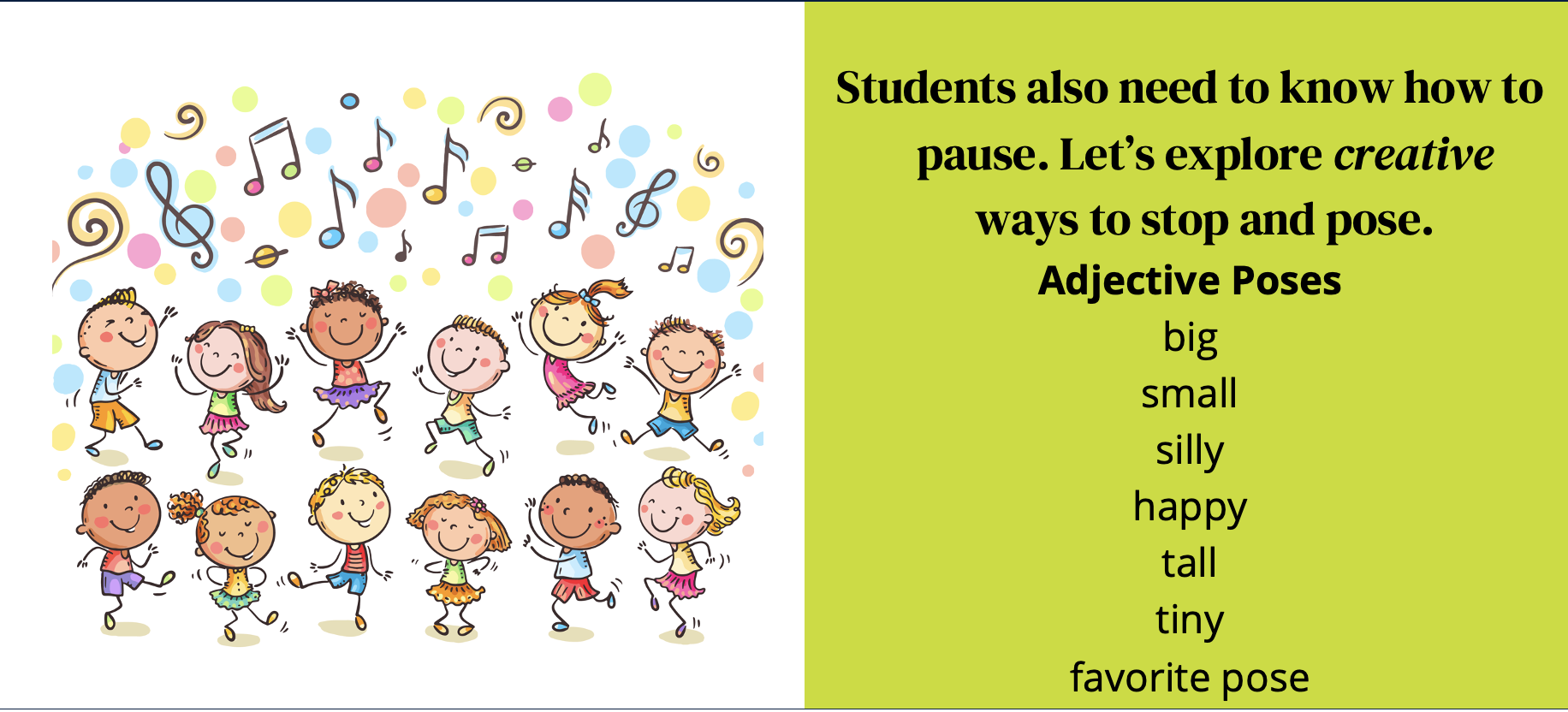
When your little ones need a movement break, this is the perfect dance song! It teaches various locomotor movements, movements that go from one place to another. Perhaps more importantly, it teaches little ones to pause and stop. When they stop, different adjectives prompt their poses. It’s a song that my students and parents ask for over and over again!
Here are the lyrics. The music is available on Spotify.
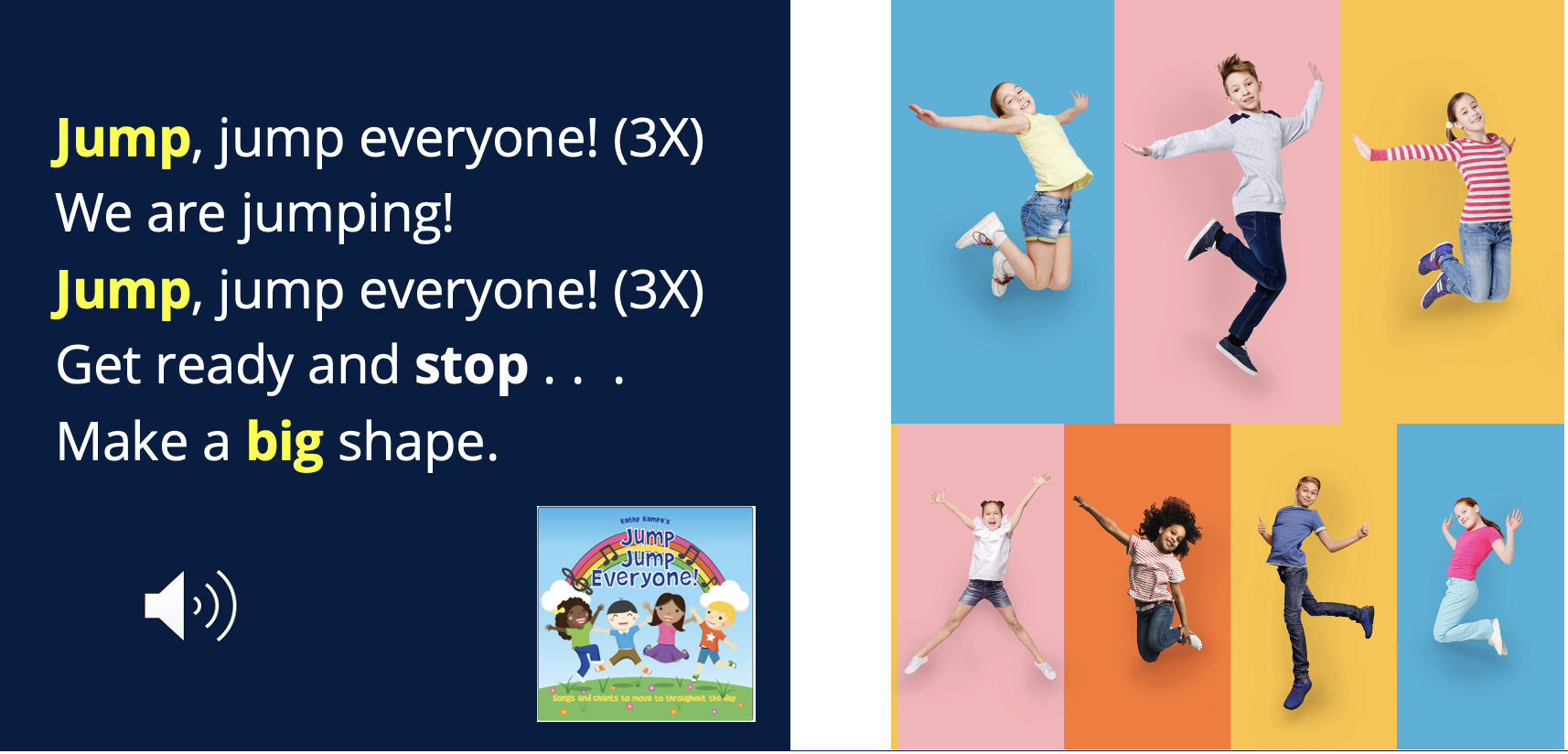
Jump, jump, everyone! (3X) Get ready and stop. Make a big shape.
Substitute:
2. Walk, walk everyone . . . Make a small shape.
3. March, march everyone . . . Make a silly shape.
4. Gallop, gallop everyone . . . Make a happy shape.
5. (inside run) Run, run everyone . . . Make a tall shape.
6. Tiptoe, tiptoe everyone . . . Make a tiny shape.
7. Jump, jump everyone . . . Make your favorite shape!
Here is a short snippet of our Wirth Center for the Performing Arts families at our 2026 Spring Gala. The students are from our Music Play and Dance Play classes. They’re performing “Jump, Jump Everyone.” This is the very end of the song where they are facing the audience. We do most of this song moving together around in a circle. Look at the joy on everyone’s faces!!! Most of these children range in age from six months to four years. We have two student helpers who loved this dance, too!!!
How to teach this song:
Before I use the recorded music, we practice each locomotor movement and the poses.
“Let’s jump . . . when we jump, we need to use two feet to get up off the ground. Can you jump? “
Parents can help little ones by holding them under their arms and bouncing them along. They can also help them jump high in the air like the video. See the video.
“We can jump around the circle. Stop, then make a big pose.”
You can describe the way your students are making their poses. “Olivia is making a big pose with her arms up high. Griffin is making a big pose by stretching his legs out wide.”
Practice each locomotor movement around the circle, along with the poses.
Walk . . . you can pretend to walk your dog. Or your elephant. Or you can walk with a baby in a stroller.
March . . . let’s lift our knees up high.
Gallop . . . put one foot in front of the other. You can put your hands behind your back. Listen to the uneven rhythm. (clap a galloping rhythm.)
Run . . . When we are outside, we can run with big steps. But we are inside, so let’s be careful. Look at my “inside run.” I’m running fast, but I’m running with little steps. (model this to the students)
Tiptoe . . . can you lift your heels up? Let’s move quietly. Maybe the baby is sleeping. Or maybe your daddy!
Let’s jump again!!
Now move in a circle with the music. Here’s the link on Spotify.
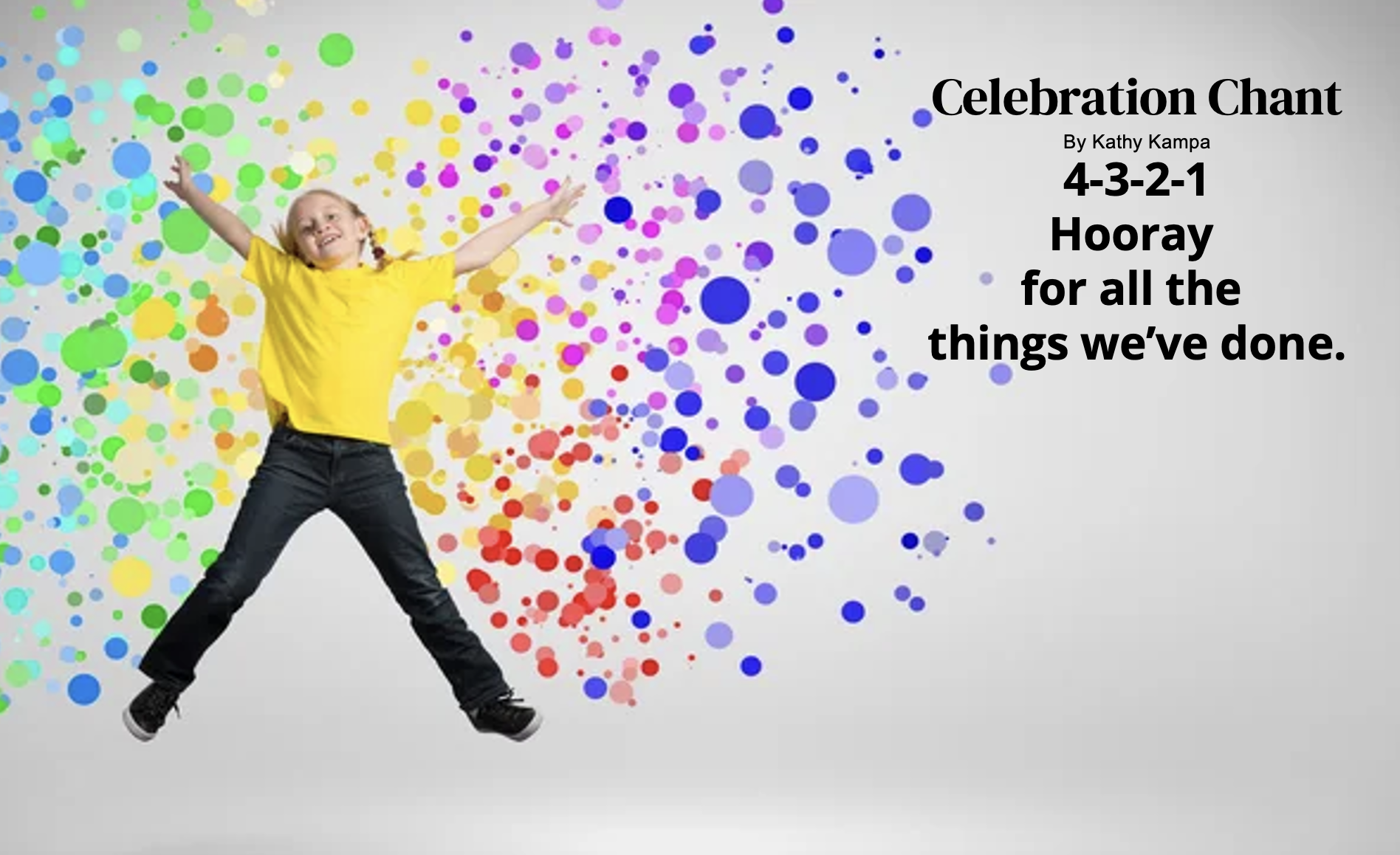
When we finish an activity, I often end with a Celebration Chant.
How to do this:
Use your fingers to show the numbers. (or for very littles, just clap.)
Shake your hands on “Hooray for all the . . .”
Clap your hands on “things we’ve done.”
If you’re looking for songs and chants that build language skills as well as music and movement skills, check out my two albums on Spotify.
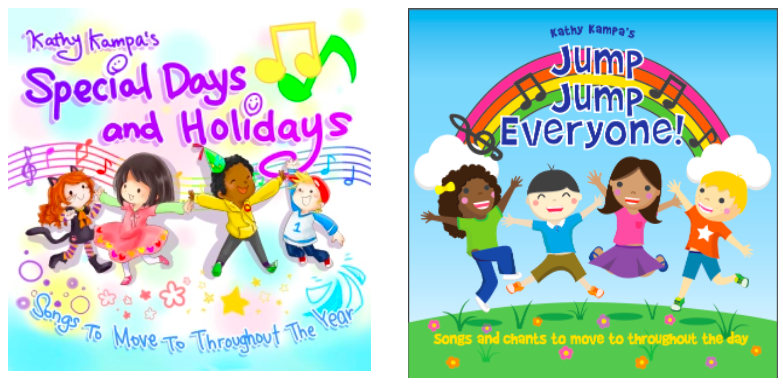
Kathy Kampa’s Special Days and Holidays is filled with songs and chants that celebrate special events–including birthdays, a loose tooth, and holidays throughout the year. “Skeleton Dance” has been one of our top hit songs, but all are well-loved by my students.
Jump Jump Everyone is filled with many happy songs that have grown in my young learner classroom. The songs encourage children to move. Many songs link to classroom content. Children can dance like falling leaves, bloom like a spring flower, move through the butterfly life cycle . . . . you’ll find LOTS of fun and magic in this album.There are useful transitional songs, too.
Music by Kathy Kampa
Why use songs by Kathy Kampa?
Kathy Kampa loves to bring joy to the world through her children’s music. She is passionate about making learning engaging for young learners. You’ll find more resources on Kathy’s YouTube page. Kathy seeks to nurture children’s imaginations and spark creativity through fun and engaging activities. She also supports the development of English language skills by creating songs, chants, and TPR/movement activities targeted to young learners’ needs. She believes music and movement should be a part of every young child’s education. Kathy’s Songs for Kids (Kathy Kampa’s Special Days and Holidays and Jump Jump Everyone) are available on iTunes and streaming services like Spotify.
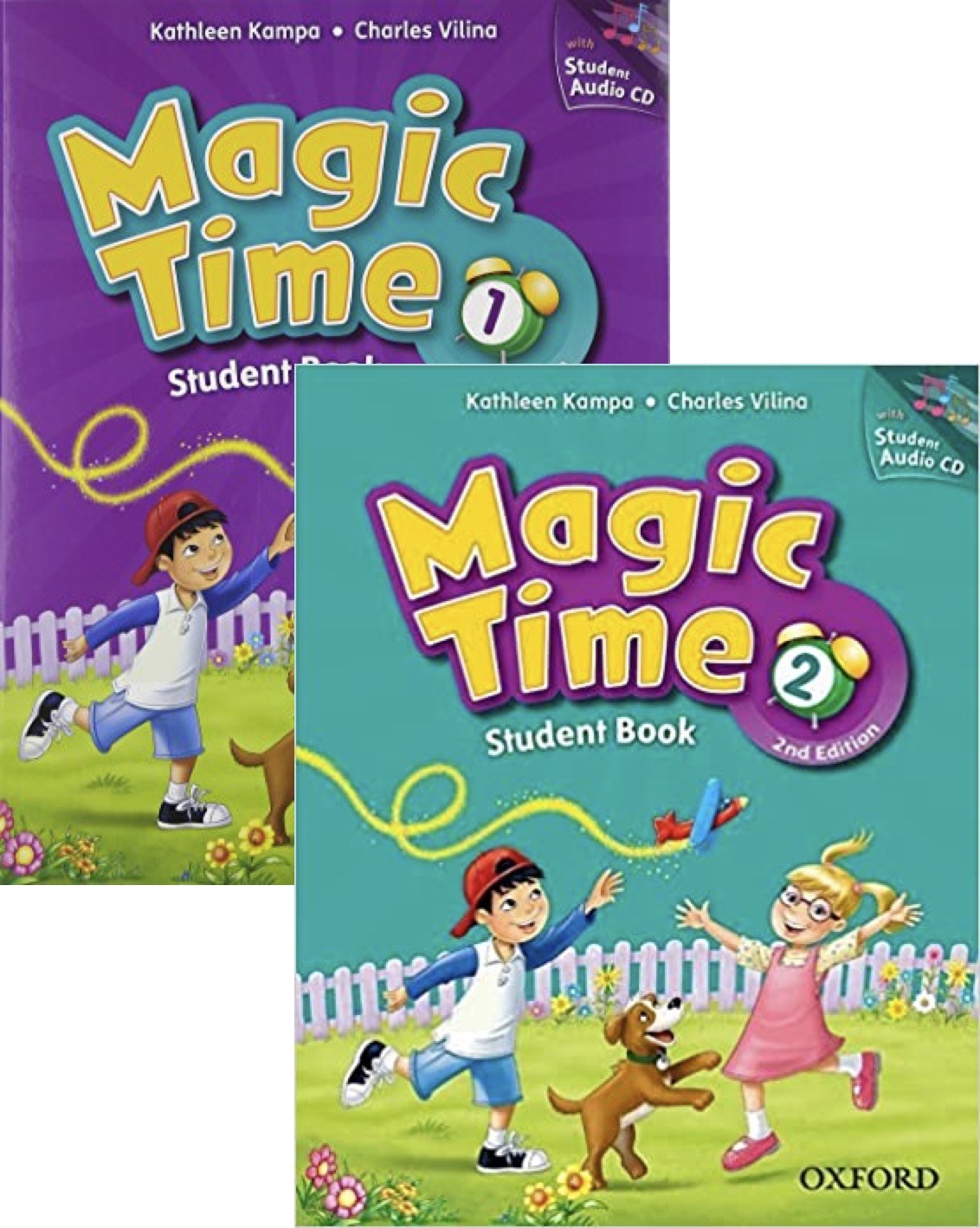
As a PYP teacher, Kathy uses a globally-minded and concept-based inquiry approach to teaching and learning through which students develop 21st-century skills. Kathy is an author and teacher-trainer with Oxford University Press. Together with her husband, Charles Vilina, they have written Magic Time, Everybody Up, Oxford Discover, Beehive, Buzz, and now Blue Dot (2025). They have worked with Tokyo Shoseki to create wonderful songs for children learning English.
Looking for more songs to start your school year on the right foot. Check out these songs for cleaning up your space.
If you teach young learners, you know that they love to move! In some classrooms, students need to move in a small space. You might have circle time with students standing on a spot. Your students might just stand beside their desks. This is a movement chant that you can do in ONE SPOT.
This chant comes from OUP’s Magic Time, Book One. There are just verbs–jump, run, hop, fly, stop. Once you and your students know the pattern, add your ideas. Here are some ideas: march, wiggle, twist, spin, stretch, bend, shake.
In Unit 10, students learned animal names. When they flip the page, the animals are moving. Here are the words to this simple chant.
Run, Run, Run
by Kathleen Kampa and Charles Vilina, Magic Time One
Jump! Jump! Run, run, run.
Jump! Jump! Run, run, run.
Jump! Jump! Run, run, run.
Jump! Jump! Stop!
The second time, substitute hop for the word jump.
Hop!Hop! Run, run, run. (3X)
Hop! Hop! Stop!
Last of all, substitute fly for the word hop.
Fly! Fly! Run, run, run. (3X)
Fly! Fly! Stop!
Students do all of the movements on their spot. When they say, Stop! they can make an interesting pose. Watch how my students create their own ideas.
We need to practice moving and stopping with our young learners. This develops their focus and self-control. Plus, it’s a fun activity for our little ones.
Here are my young learners in Tokyo, Japan. I placed the picture cards on the floor as a reminder of the order, similar to a rebus reading. This chant helps them practice their /r/ sound.
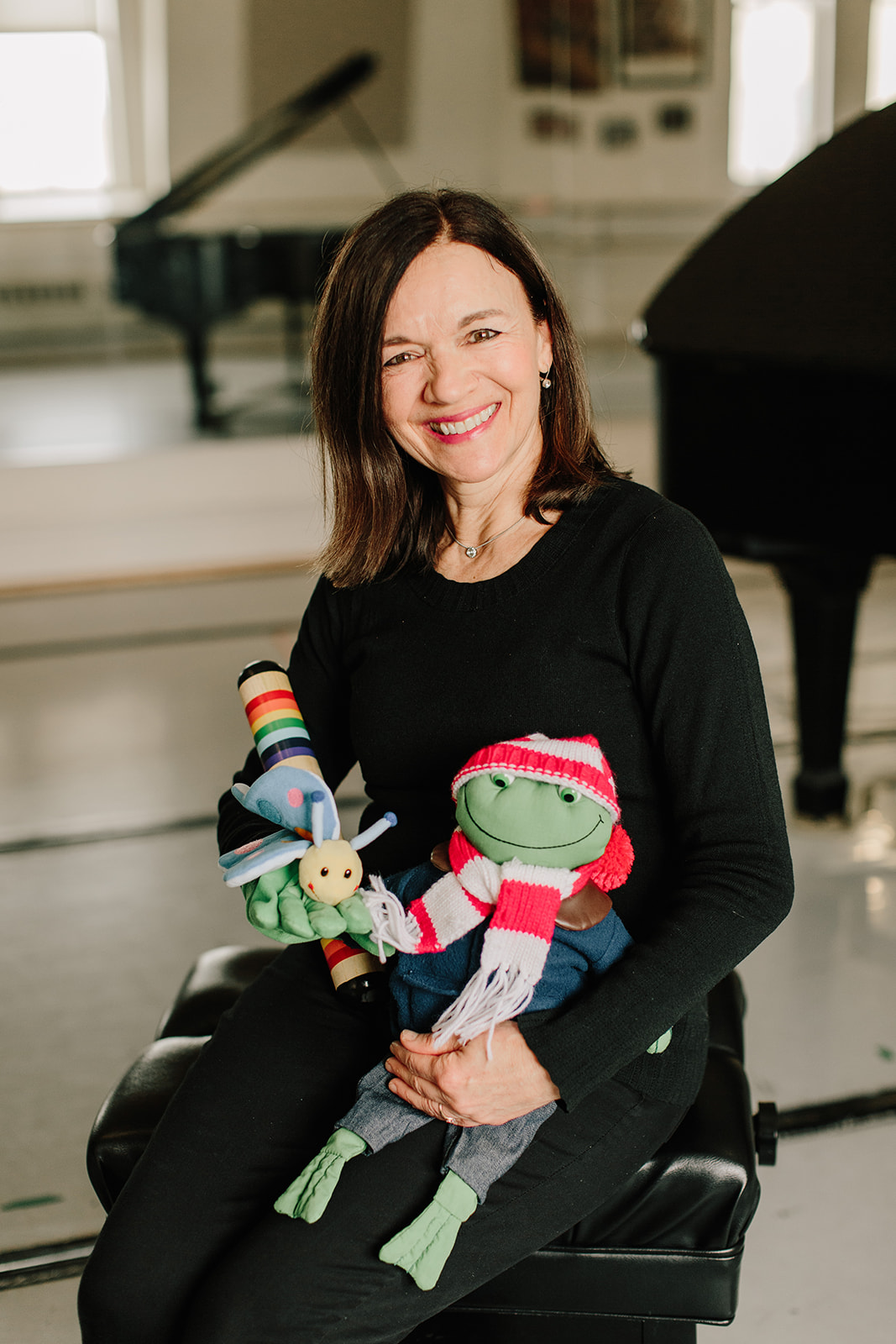
Songwriter Kathy Kampa is a passionate educator of young learners. She seeks to nurture children’s imaginations and spark creativity through fun and engaging activities. Kathy believes music and movement should be a part of every young child’s education.
Kathy uses a globally-minded and inquiry-based approach to teaching through which students develop 21st-century skills. She also supports the development of English language skills by creating songs, chants, and TPR/movement activities targeted to young learners’ needs. Kathy is an author and teacher-trainer with Oxford University Press. She is delighted to be teaching young learners in her hometown.
This chant comes from Magic Time 1, by Oxford University Press. Each lesson has a simple chant or song to practice the language. Many of these chants and songs invite children to move
For more fun and engaging songs that have been loved by many kids, check out these albums. Kathy’s songs for kids (Kathy Kampa’s Special Days and Holidays and Jump Jump Everyone) are available on iTunes, Spotify, and other streaming services.