Discover the parts of a flower with this magical fingerplay

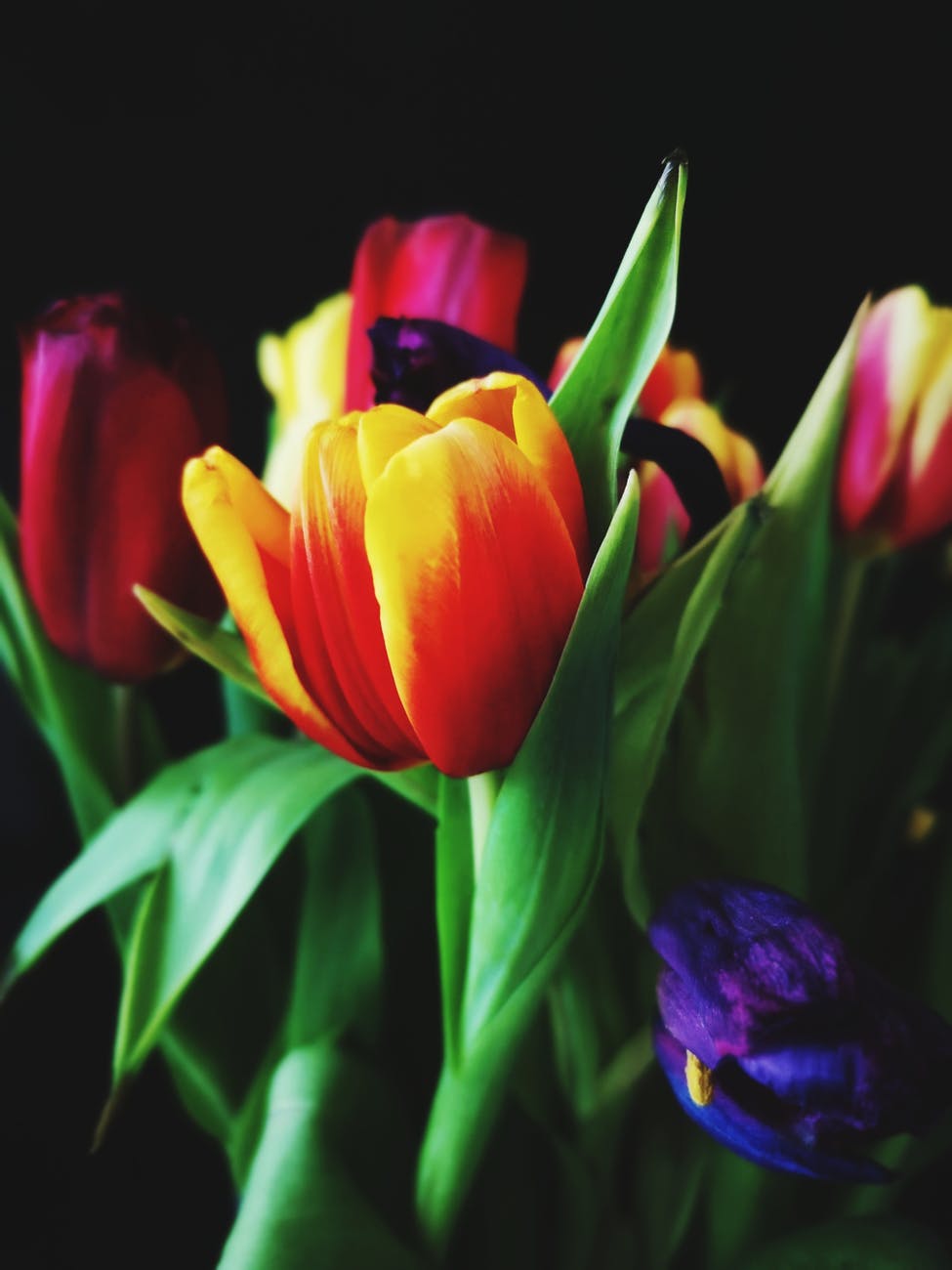
When I was living in Japan, springtime was filled with one beautiful flower after another. We could find flowering trees (especially plum and cherry blossoms), purple and blue hydrangeas, wisteria, tulips, rapeseed, azaleas, and lots of roses.

Now we’re living in Minnesota. It’s been too cold for anything to start blooming yet. Once it warms up, however, we can find gardens filled with colorful flowers–zinnias, daylilies, purple coneflowers, hollyhocks, daisies, bee balms, and more. This year we’re going to plant a pollinator garden to help the bee and butterfly population.

The kindergarten children at my former school learned about living things. They planted seeds and watched them grow. Look at a real plant with your students. Look at the stem, the leaves, the buds, and the flowers. Do all plants have the same types of leaves? Buds? Flowers? What do they look like? If you don’t have a real plant, you can often find a silk one at a bargain store. I like to show students a watering can, too. This graphic showing how to plant from a Garden of Goodies (Pinterest) may be helpful.
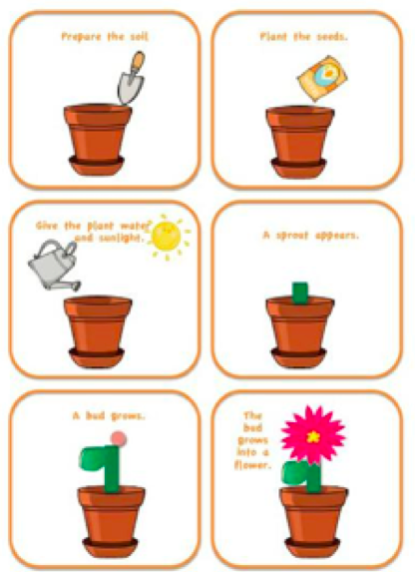
Looking at how seeds changed into a flower

My students loved this poem called Here’s a Leaf! They would ask to do it over and over again. Yours will, too! You’ll see the magic when you try it. I use small, lightweight hemmed scarves like these. Search for “hemmed scarves” or “juggling scarves.” Check the reviews. I like mine! These scarves expand beautifully for this poem. Young children can practice naming the color, too.
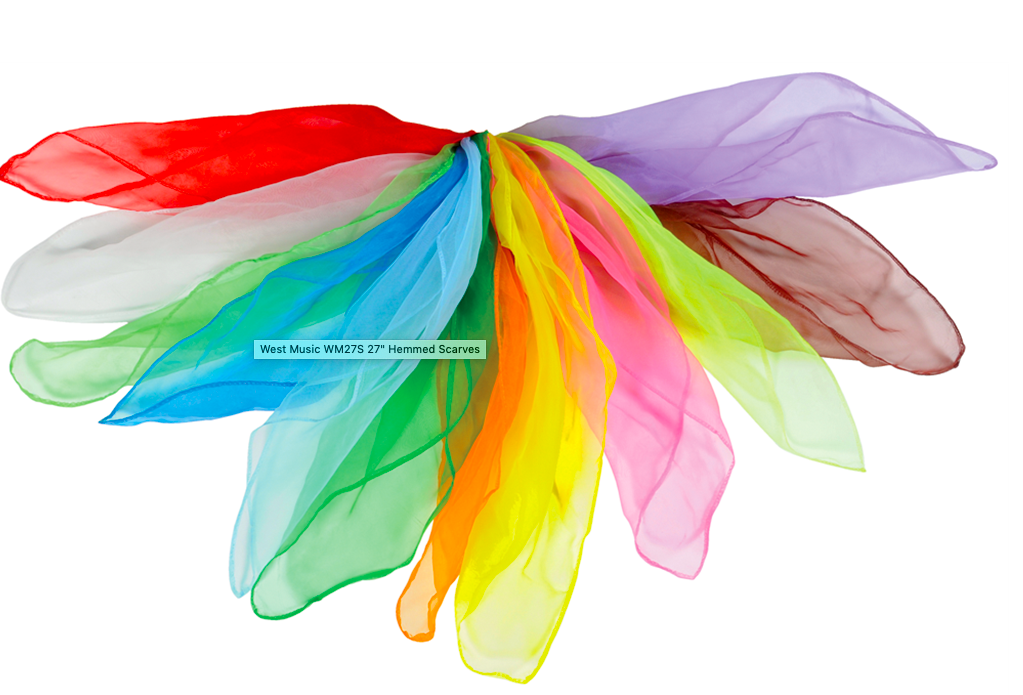
Screen Shot 2020-03-19 at 16.55.57

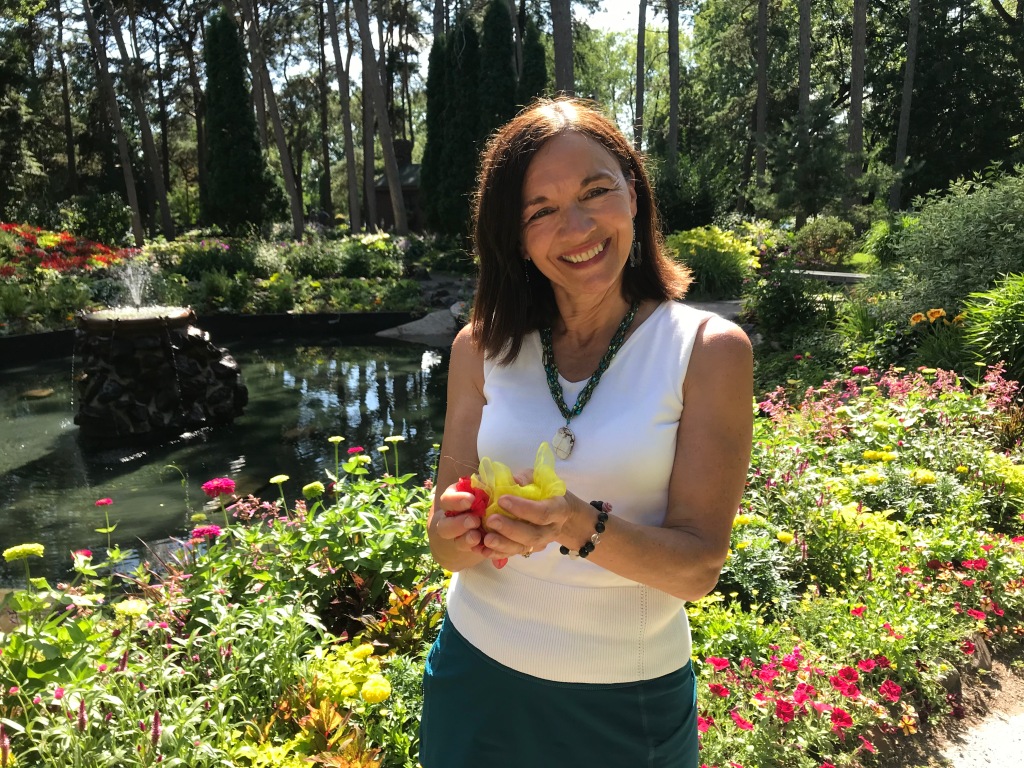
In my video, we take you to Munsinger-Clemens Gardens, one of my favorite places in St. Cloud, Minnesota. Special thanks to my son, Christian Vilina for his awesome video work.

To begin, scrunch up the scarf in your hands, so that it can’t be seen. Here’s the video to show you how you might do it.

Here’s a Leaf (also known as The Flower Poemadapted by Kathy Kampa

Available on iTunes (Jump Jump Everyone)

Children listen and answer.

Here’s a Leaf video

Do you have a scarf? (Yes!) 

Let’s scrunch up our scarves. (tsch, tsch, tsch, tsch . . . . .)

(Scrunch up the scarf in your hands so that it’s not visible.)

Is your scarf very tiny? (Yes, it is!)

Are you ready? (I’m ready!)

Let’s pretend.

Let’s plant a seed in the dirt.

(Bend down and tap the ground, pretending to plant a seed in the dirt.)

Water it!

(Pretend to water the seeds by tipping your hands.)

Watch it grow and grow and grow.

(Stand up slowly.)

Now show me your thumbs. Here we go.

Here’s a leaf, and here’s a leaf.

(Pretend that your thumbs are leaves. Wiggle one thumb, then the other.)

Count them. 1-2.

(When you count 1-2, move your thumbs up and to the side.)

Here’s a bud.

(Open your hands slightly to reveal the scrunched-up scarf.)

Here’s a flower,

(Open your hands a little more.)

blooming just for you.

(Open your hands and let the scarf ‘bloom’ like a flower.)

Hooray!

(Toss the scarf into the air!)

Let’s grab our scarves and do it again!

For more kid-tested music and movement activities, check out my music on iTunes.
Jump Jump Everyone
Kathy has produced two music CDs for very young learners, Kathy Kampa’s Special Days and Holidays and Jump Jump Everyone, which build English language skills through movement while nurturing creativity and imagination! Grown and loved by real kids!

Kathy Kampa is a teacher, author, and teacher-trainer specializing in working with young learners. As a PYP (Primary Years Program) teacher, she uses a globally-minded and inquiry-based approach to teaching through which students develop 21st-century skills. She also supports the development of English language skills by creating songs, chants, and TPR/movement activities targeted to young learners’ needs.

Kathy and her husband Charles Vilina are also co-authors of Magic Time, Everybody Up, Oxford Discover (ELTon winner), Beehive/Buzz (2022), Blue Dot (2024), all published by Oxford University Press.

Thanks again to my son Christian Vilina for his vision in creating this video.

Images: “Easter Lily” by Recherché Furnishings is licensed under CC BY 2.0

Build Creativity with Dancing Fingers!

illlustration by Shuli Ko


Can you nurture creativity while building English language skills? Yes, you can!

An important part of creative thinking is to generate many possible solutions. This is easy to do with young learners. Here is a simple activity and chant that you can use to help develop creative and imaginative thinking with your young learners.

Introducing Vocabulary

1. Show students (or draw) a picture of a circle. Say, What is this? Can you make this shape with your fingers?

2. Point out the various ways that your students are making circles. For example:

Yuri is making a tiny circle using her thumb and pointer finger. Can you do that?

Daniel is using all of his fingers to make a circle. Let’s try that, too! We can make circles in many ways.

3. Say, Can you make your circle bigger?  Can you make a circle with a friend?

4. Repeat the three steps above using other shapes. I usually show shapes in the following order because some are a little easier to make than others.

circle

triangle

heart

rectangle (two long sides, and two short sides)

square (four equal sides)

star (five points)

Remember, it’s important to take time making these shapes with your students before putting them into the chant.

Teaching the Chant

Here’s the first verse of the chant.

My Fingers Dance by Kathleen Kampa Vilina ©2003

My fingers, fingers, fingers, fingers, fingers dance!

My fingers, fingers, fingers, fingers, fingers dance!

Make a circle. Take a picture. Click!

Make a circle. Take a picture. Click!

Now, let me break it down so that you know the movement for each part.

1. My fingers, fingers, fingers, fingers, fingers dance!

My fingers, fingers, fingers, fingers, fingers dance!

(For this part, students have fun wiggling or “dancing” their fingers.)

 2. Make a circle.

(Students make the shape with their fingers.)

3. Take a picture. Click!

(Students look through the shape at a classmate, and pretend to take a photo.)

(Repeat steps 2 and 3.)

(Students then substitute the other shapes in this chant.)

You can use any shape picture cards to teach the vocabulary. I used the picture cards from Magic Time 1, Unit Two, for my video. Feel free to add your own shape ideas, such as diamonds, ovals, etc.

Here’s a video I’ve prepared to show you how the chant is done. Just click here.  You can also find a studio version of this chant on iTunes by clicking here.

This chant is also on my new album Jump Jump Everyone, available on iTunes.  Physical CDs are also available.

Cover screen shot

Happy teaching, everyone!

Kathy


How Can You Build English Throughout a Lesson? Use Transitional Songs, Part One

DotIn any children’s class, many activities are needed to keep students happy and motivated throughout the lesson.  Transitional songs are a perfect way to signal to children that one activity is ending and another is beginning.  A good transitional song also has other benefits:

  1. It supports the natural rhythm and intonation of the phrase or sentence you are using.
  2. The melody is quickly learned and recognized by students, so they move into action as soon as they hear it.
  3. In most cases, children can be encouraged to sing along, building group cohesion as well as productive language skills.
  4. Transitional songs soon become part of a classroom routine, giving students a sense of structure and making them feel secure during the lesson.

Today, for Part One, we present three transitional songs that help to make activities smooth and enjoyable for students. The lyrics for each of the transitional songs are included below with a simple recording.  A professional recording is now available on “Jump Jump Everyone.”

1.  Let’s Make a Circle

Many language activities work well with students seated (or standing) in a circle.  This transitional song quickly motivates children into forming a circle in the classroom.

Let’s Make a Circle  (copyright © 2012 by Kathleen Kampa and Charles Vilina)

(melody:  Skip to My Lou)

Let’s make a circle big and round.

Let’s make a circle big and round.

Let’s make a circle big and round.

Everybody please sit down. (or Let’s make a circle big and round to remain standing)

2.  Come and Sit in Front of Me

This transitional song works well when you want students to sit as a group in front of you, perhaps for a storytelling session.

Come and Sit in Front of Me  (copyright © 2012 by Kathleen Kampa and Charles Vilina)

(melody:  Muffin Man)

Come and sit in front of me,

In front of me, in front of me,

Come and sit in front of me,

In front of me.

3.  Cards, Please!

Many activities involve the use of picture cards for language support. After the activity is over, this transitional song gets the picture cards back to you quickly and efficiently.

The song is sung as a dialogue between the teacher and students.  The word cards can also be changed to any other item that needs to be collected (papers, crayons, etc.)

Cards, Please!  (copyright © 2012 by Kathleen Kampa and Charles Vilina)

(melody:  Skip to My Lou)

T: Cards please.   Ss: Here you are.

T: Cards please.   Ss: Here you are.

T: Cards please.   Ss: Here you are.

All: Thank you very much!

You can sing these transitional songs in your classroom.  The songs are also professionally recorded here on “Jump Jump Everyone.”  Check out the link on iTunes .

Mimi CD cover 2015-10-12 at 1.04.43 AM

This album has lots of movement songs which are important for young learners growth and development.  Contact Englishbooks.jp or me (magictimekids@gmail.com) to order CDs.