Jump! Jump!

If you teach young learners, you know that they love to move! In some classrooms, students need to move in a small space. You might have circle time with students standing on a spot. Your students might just stand beside their desks. This is a movement chant that you can do in ONE SPOT.

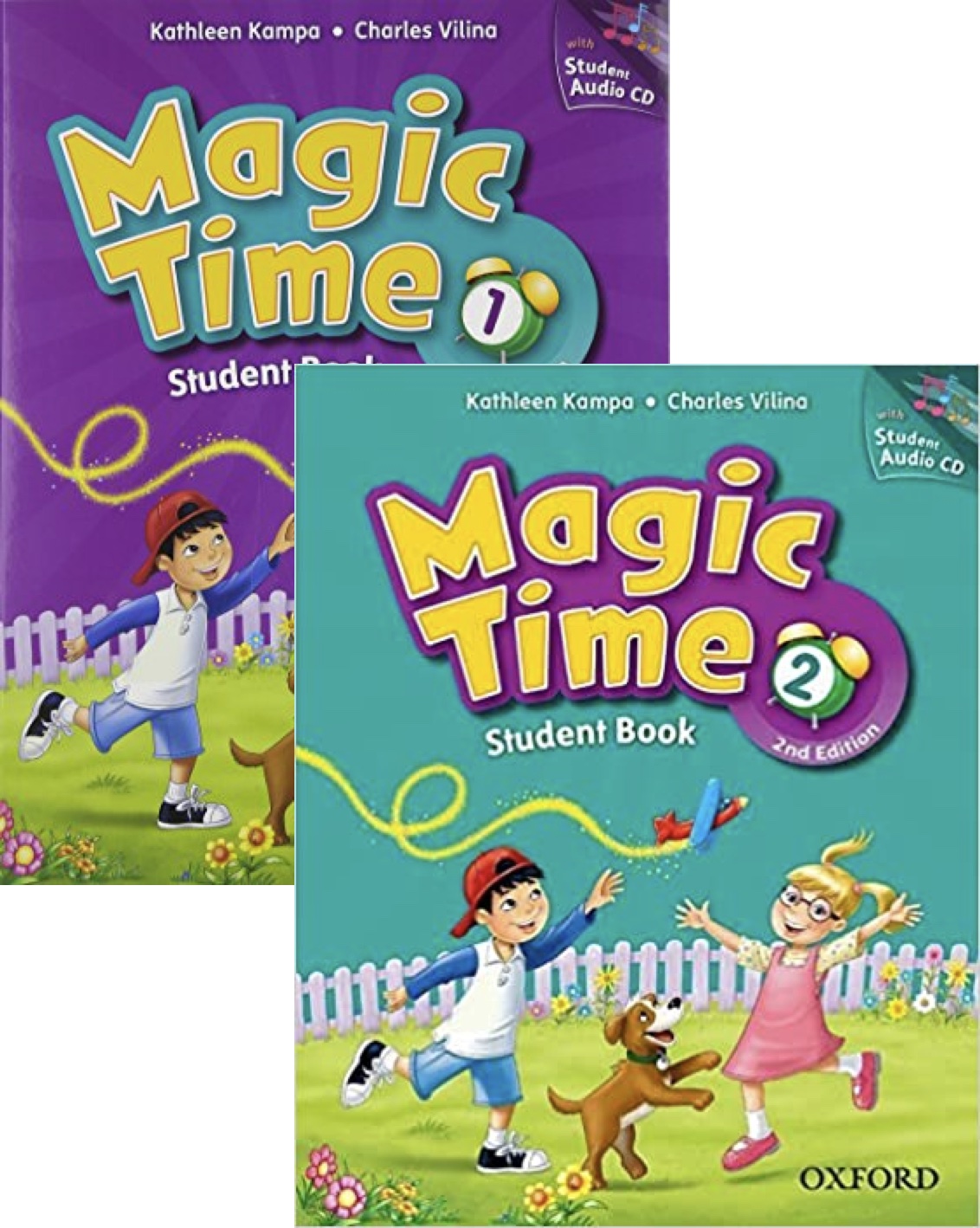
This chant comes from OUP’s Magic Time, Book One. There are just verbs–jump, run, hop, fly, stop. Once you and your students know the pattern, add your ideas. Here are some ideas: march, wiggle, twist, spin, stretch, bend, shake.

In Unit 10, students learned animal names. When they flip the page, the animals are moving. Here are the words to this simple chant.

Run, Run, Run

by Kathleen Kampa and Charles Vilina, Magic Time One

Jump! Jump! Run, run, run.

Jump! Jump! Run, run, run.

Jump! Jump! Run, run, run.

Jump! Jump! Stop!

The second time, substitute hop for the word jump.

Hop! Hop! Run, run, run. (3X)

Hop! Hop! Stop!

Last of all, substitute fly for the word hop.

Fly! Fly! Run, run, run. (3X)

Fly! Fly! Stop!

Students do all of the movements on their spot. When they say, Stop! they can make an interesting pose. Watch how my students create their own ideas.

We need to practice moving and stopping with our young learners. This develops their focus and self-control. Plus, it’s a fun activity for our little ones.

Here are my young learners in Tokyo, Japan. I placed the picture cards on the floor as a reminder of the order, similar to a rebus reading. This chant helps them practice their /r/ sound.

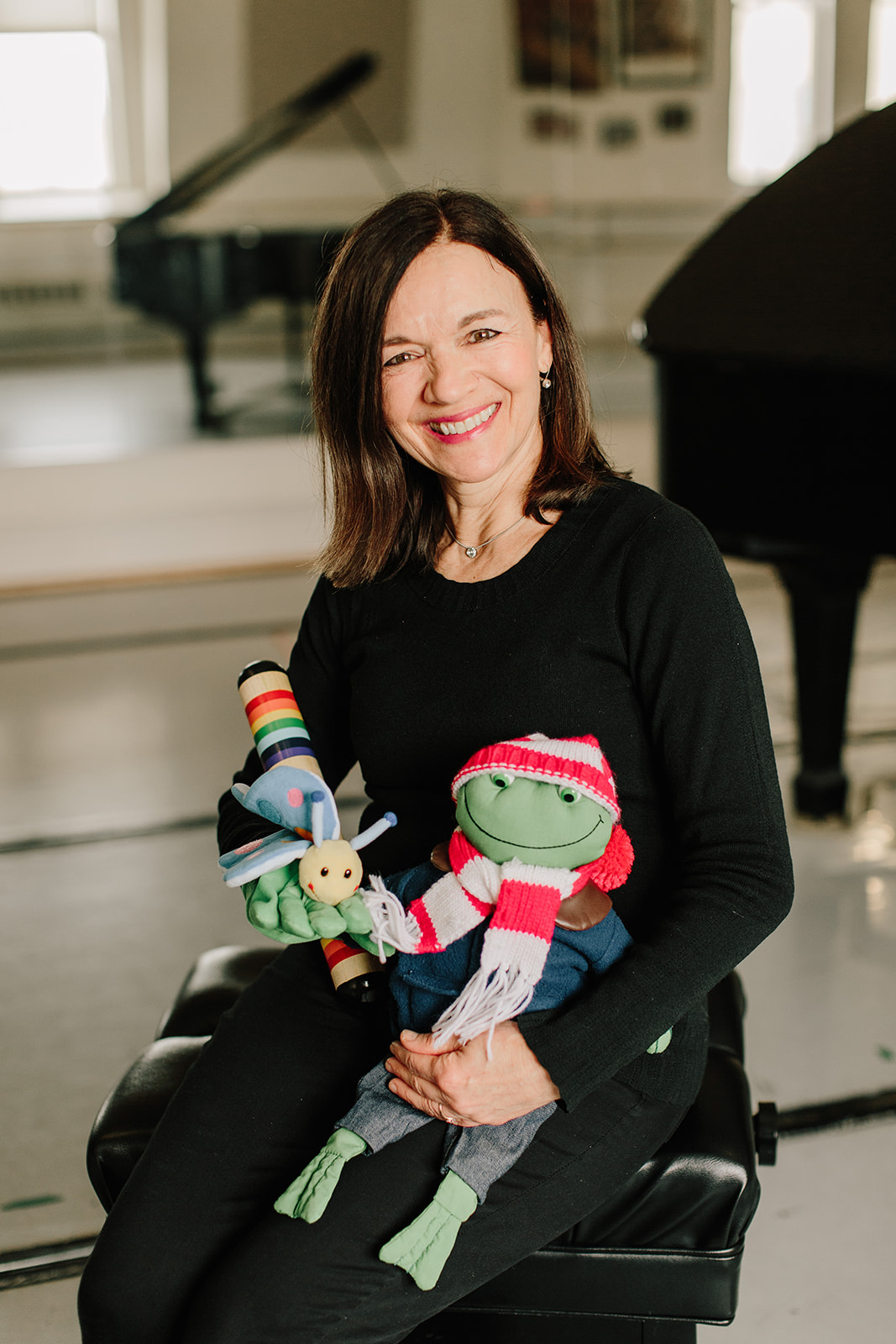
Songwriter Kathy Kampa is a passionate educator of young learners. She seeks to nurture children’s imaginations and spark creativity through fun and engaging activities. Kathy believes music and movement should be a part of every young child’s education.

Kathy uses a globally-minded and inquiry-based approach to teaching through which students develop 21st-century skills. She also supports the development of English language skills by creating songs, chants, and TPR/movement activities targeted to young learners’ needs. Kathy is an author and teacher-trainer with Oxford University Press. She is delighted to be teaching young learners in her hometown.

This chant comes from Magic Time 1, by Oxford University Press. Each lesson has a simple chant or song to practice the language. Many of these chants and songs invite children to move

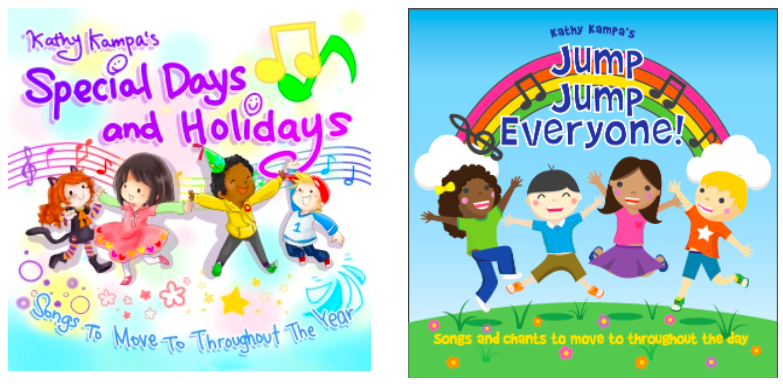
For more fun and engaging songs that have been loved by many kids, check out these albums. Kathy’s songs for kids (Kathy Kampa’s Special Days and Holidays and Jump Jump Everyone) are available on iTunes, Spotify, and other streaming services.

Rainy Day Songs

What do you do with young learners on a rainy day? Sing! Dance! Make inside recess a lot of fun!

In this post you’ll find three different rain songs, all perfect for young learners. You’ll find movement suggestions, videos, and Spotify playlists for more rainy-day songs. Enjoy!

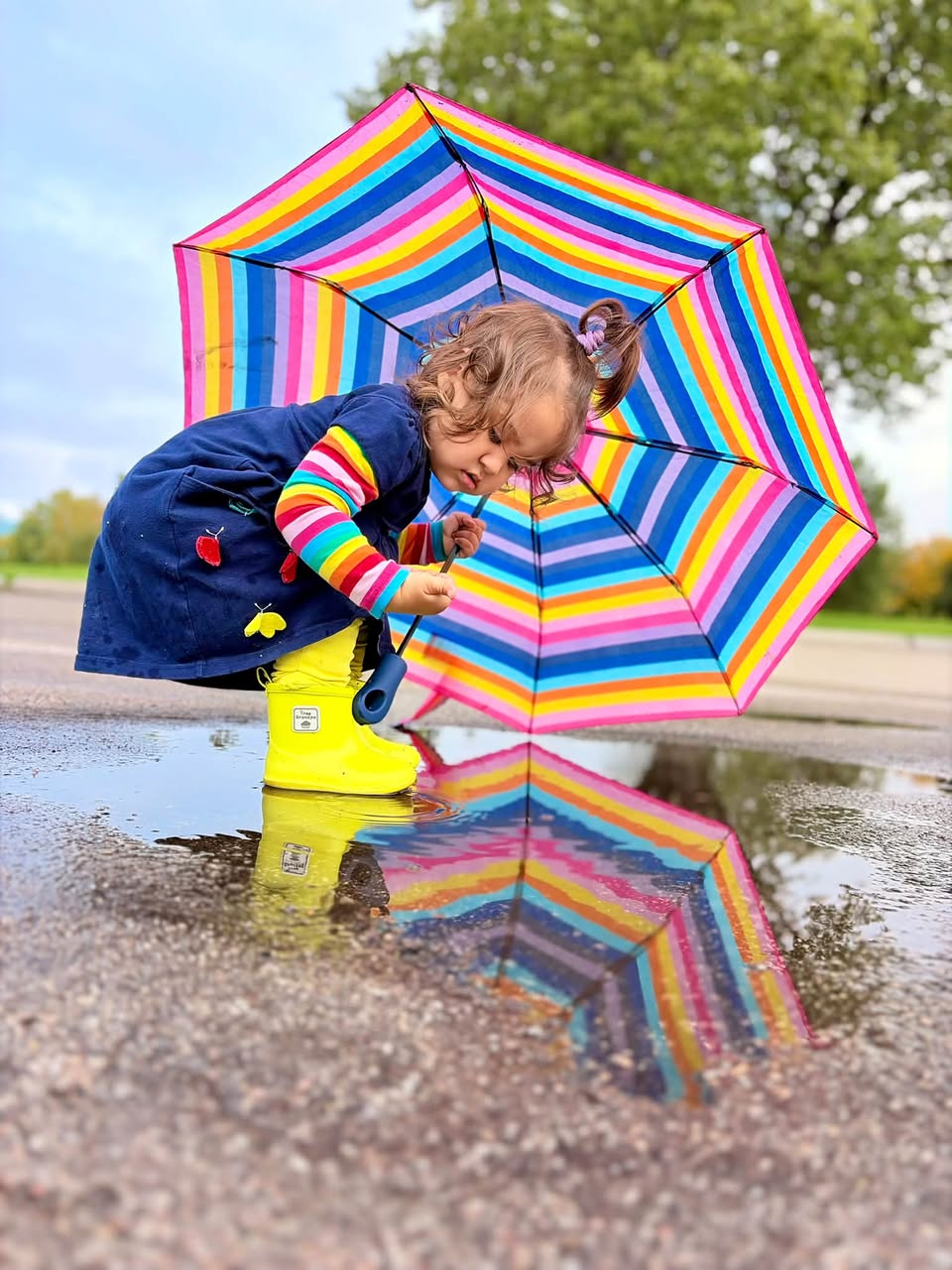
Photo by Kristina Rose Photography

This first song is called “It Is Raining.” It’s a song that encourages noticing, a first step in learning. It invites students to listen to the various sounds created by patting on different body parts. These sounds are called “body percussion.” They can listen to the similarities and differences in the sounds. Is the sound loud or quiet/soft? Is the sound high or low?

Students learn the names of body parts, like head, arms, legs, chest, cheeks, and tummy. They can pat the rhythm of the words.

It Is Raining

by Kathy Kampa on Jump Jump Everyone

(Goals: body part names, listening for different types of sounds, rhythm of the words)

It is raining. It is raining.

Wiggle your fingers from high to low to look like it’s raining.

On my legs. On my legs.

Pat your legs to the rhythm of the words.

Pitter patter raindrops. Pitter patter raindrops.

Tap that body part (legs) to the rhythm of the words.

I’m all wet! I’m all wet!

Brush your hands along your legs. Pretend to shake off the water.

Step inside my classroom in Japan to see my young learners singing and moving to this song.

Once your students have learned this song, take it a step further.

Think, think, think. Think, think, think. What should we do?

Tap your finger to the side of your forehead. Put your hands out to the side.

Let’s sing about our elbows!

Tap your elbows. How does that sound? Loud? Soft? High? Low? I think that sounds soft or quiet. Sing in the same way.

Let’s sing about our back(s)!

Tap your back. How does that sound? Loud? Soft? High? Low? I think that sounds kind of low. Sing in the same way.

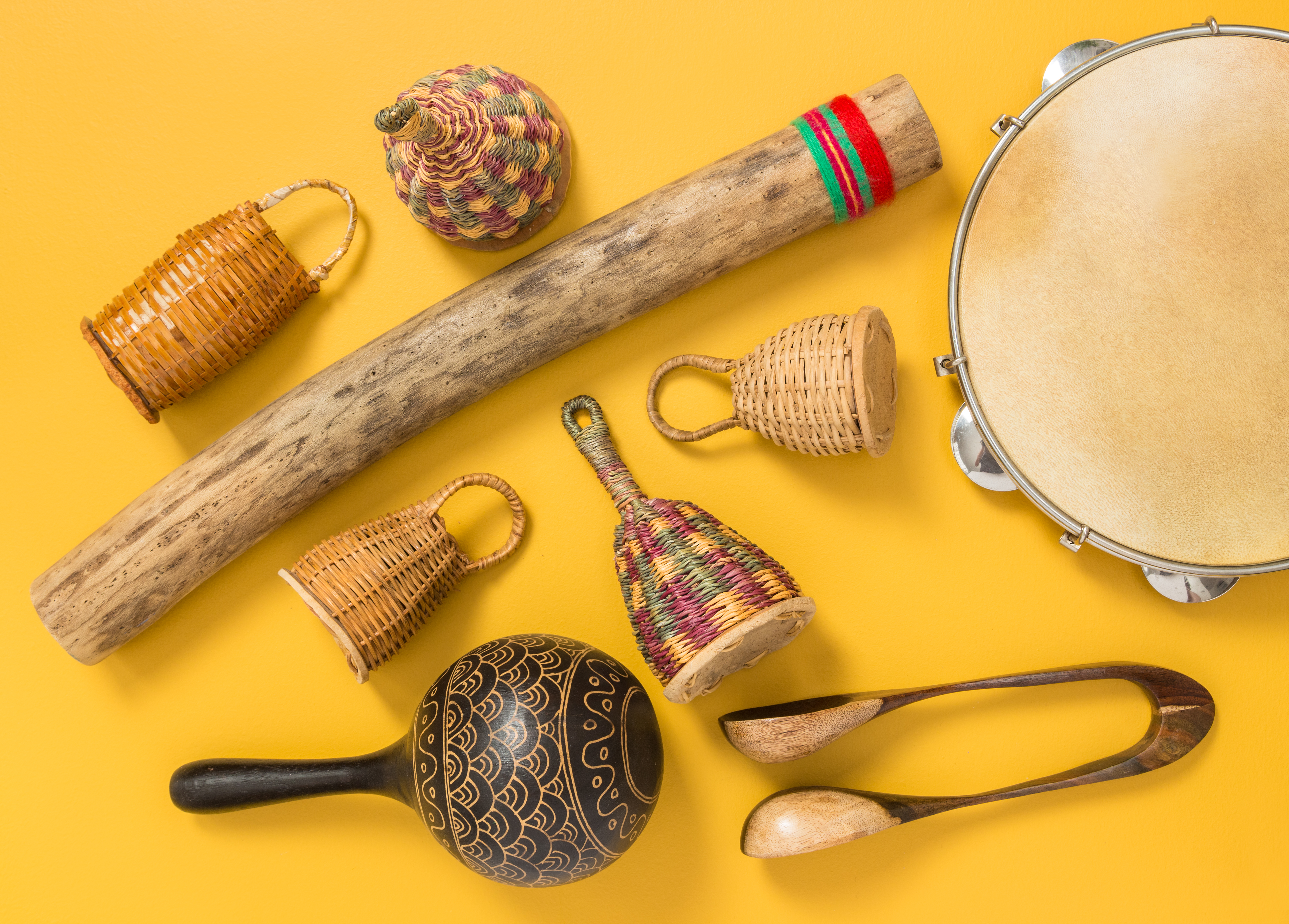
Get a rainstick or shaker if you want to add an interesting sound.

Ethnic percussion musical instruments on yellow background. Caxixi shakers, rainstick, pandeiro, maracas and musical spoons.

Our second song is called “Ame, Ame.” After living in Japan for over thirty years, I grew to love this traditional song. There are many different translations for it. Here’s mine.

Japanese Rain Song “Ame, Ame”

Beth’s Notes shares this notation as well as some delightful videos.

Pitter patter falling falling, Rain is falling down,

Tap on your legs. Wiggle fingers to look like rain falling.

Mother brings me my umbrella, Rain is falling down,

Pretend to open an umbrella. Wiggle fingers to look like rain falling.

Pi-chi Pi-chi, cha-pu, cha-pu, ran, ran, ran, (らん、らん、らん)

Tap on your legs.

If you have instruments, it’s fun for students to make their own rainstorm. First the wind and gentle rain, thunder, pouring rain, then returning to the wind and gentle rain.

Students can create this with body percussion sounds, too.

Lastly, a traditional rain song is “Rain Rain Go Away.”

Rain, Rain Go Away

Rain, rain, go away! Come again another day.

Make rain movements. Show “Go away.” Show “Come again.”

All the children want to play.

Clap your hands.

Rain, rain, go away!

Make rain movements. Show “Go away.”

There are many videos for this song. This one by Cocomelon shows how we can be creative while we wait for the rain to stop.

And if three songs aren’t enough for your rainy-day plans, check out these Spotify Playlists with lots of music for kids.

Are you streaming music? Go to Spotify or Apple Music to find Kathy’s music. You’ll find “It Is Raining” on “Jump Jump Everyone.”

Jump Jump Everyone, my second album, is filled with many happy songs that have grown in my young learner classroom. The songs encourage children to move. Many songs link to classroom content. Children can dance like falling leaves, bloom like a spring flower, move through the butterfly life cycle . . . . you’ll find LOTS of fun and magic in this album.
Kathy Kampa loves to bring joy to the world through her children’s music. She is passionate about making learning engaging for young learners. You’ll find more resources on Kathy’s YouTube page.

Enjoy your rainy day!!!!

Here We Go Looby Loo!

If you want a fun song to practice the sound /l/, this is for you! Looby Loo is a simple dance song. It encourages listening to the movement directions and dancing together as a group. It invites young learners to add their own ideas, too.

Check out the lyrics to this traditional song from Mother Goose.

Here we go looby loo,

Here we go looby light,

Here we go looby loo,

All on a Saturday night!

For my young students in Japan, distinguishing /r/ and /l/ can be challenging. This is a playful way to practice the /l/ sound. In addition, students hear the rhyming words, light and night.

We sing this song in a circle. Use Let’s Make a Circle to get ready.

The verses invite students to put one part of their body into the middle of the circle. For young learners, we choose body parts, like hands, feet, arms, legs, tummy, head, fingers, thumbs, etc.

Verses:

You put your hands in.
You take (put) your hands out
You give your hand/hands a shake, shake, shake (shake, shake, shake, shake . . . .)
And turn yourself about!

To build learner agency, invite students to share their ideas.

All say: Think, think, think. Think, think, think. What should we do? Think, think, think. Think, think, think. What should we do?

Teacher: Should we put in our legs? Our thumbs? Our elbows?

Student: Legs. Let’s put our legs in the circle.

Here’s a video of my young learner class in Tokyo. These children range in age from three to six. They studied English once a week with me. Listen to how well they sing along! You can see how I’m prompting the next body part to sing about by naming and showing them two or three choices. You’ll also notice that we have a lot of fun shaking longer than the standard version of this song.

For older children, practice right and left with each body part. You may want to use less repetitions of the song.

For older students, it looks like this:

You put your right hand in.
You take (put) your right hand out
You give your hand a shake, shake, shake (shake, shake, shake, shake, shake, shake . . . .)
And turn yourself about!

If you want to learn more about this song, check out the history of it here. The professional version of this song isn’t available yet.

This image has an empty alt attribute; its file name is img_7171.jpeg
About me:

Kathy Kampa is a passionate educator of young learners. She seeks to nurture children’s imaginations and spark creativity through fun and engaging activities. Kathy believes music and movement should be a part of every young child’s learning.

Kathy is the co-author of Magic Time, Everybody Up, Oxford Discover, Beehive, and Buzz (all published by Oxford University Press). She has taught young learners in Tokyo, Japan for over 30 years. Kathy is also active as a teacher trainer, inspiring teachers around the world. She has currently returned to her home state of Minnesota in the US.

If you’re interested in more of Kathy’s work, check out her YouTube channel at Kathy Kampa.

Are you streaming music? Go to Spotify or Apple Music to find Kathy’s music.

This image has an empty alt attribute; its file name is screen-shot-2022-05-11-at-22.56.25.png

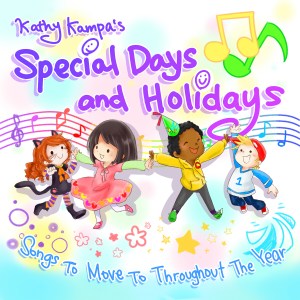
You can find more engaging songs on Kathy Kampa’s Special Days and Holidays and on Jump Jump Everyone

Kathy Kampa’s Special Days and Holidays has songs for the special events in children’s lives, including a loose tooth, birthdays, and many holidays.

Jump Jump Everyone is filled with many happy songs that have grown in my young learner classroom. The songs encourage children to move. Many songs link to classroom content. Children can dance like falling leaves, bloom like a spring flower, move through the butterfly life cycle . . . . you’ll find LOTS of fun and magic in this album.

For more action songs, check out this curated playlist.

Hokey Pokey Like The Easter Bunny!

 Let’s get hopping!  Put on your bunny ears and do the Easter Bunny Hop.

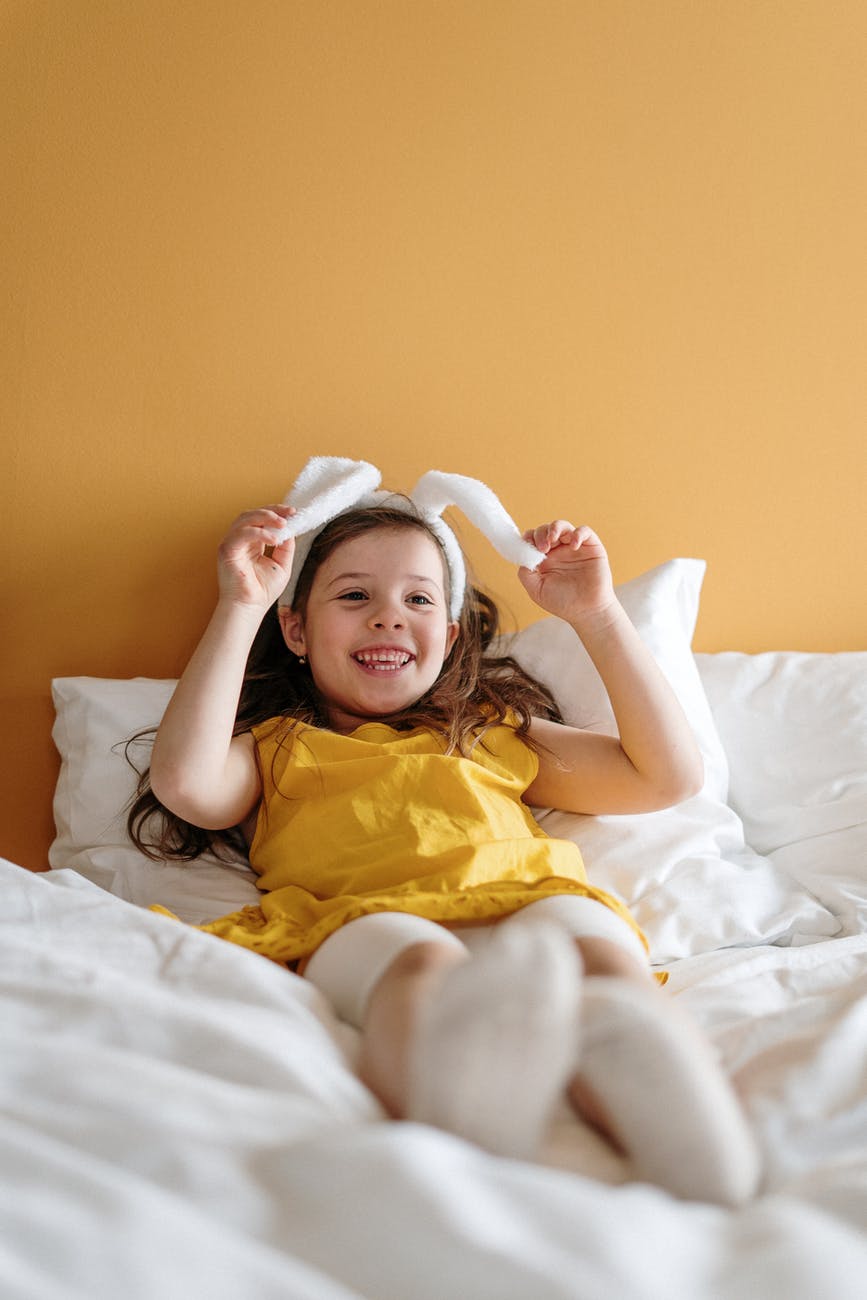
 Say to your students, Let’s pretend to be Easter Bunnies.  Look at this picture.


Let’s pretend to be the Easter Bunny. We need . . . 

Students may say, such as two long ears, two big feet, a bunny tail, bunny paws, and a bunny nose. This song teaches ears, feet, tail, tummy, and whole self as well as the directional movements in, out, and around. Students have a lot of fun jumping and shaking. There’s a slow version, followed by a fast one. It’s easy to just turn on the music and dance!

Students can stand in their spots or you can make a circle together. Sing Let’s Make A Circle. (Click here for this song.)

Here are the movements. 

Say, Show me your Easter Bunny ears.

Put your bunny ears in. Put your bunny ears out.

Let’s shake our Easter Bunny ears. 

Jump like a bunny.  Then, turn around and say, Happy Easter!

Click here to watch the video of my former students dancing to this song. Grab the recording to listen to the entire song. It’s a great way to teach body parts and directional movements. Use this as a brain break, an energizer, or an Easter celebration son.

Easter Bunny Hop

Words by Kathy Kampa, Music Hokey Pokey

on Kathy Kampa’s Special Days and Holidays, available through iTunes

Slowly: You put your bunny ears in.

You put your bunny ears out.

You put your bunny ears in. And you shake them all about.

Shake, shake, shake, shake, shake, shake, shake!

Jump like a bunny. Jump, jump, jump!

Turn around and shout! Happy Easter!

Then sing quickly . . .

You put your bunny ears in.

You put your bunny ears out.

You put your bunny ears in. And you shake them all about.

Shake, shake, shake! (* three shakes!)

Jump like a bunny. Jump, jump, jump!

Turn around and shout! Happy Easter!

Repeat each verse slowly, then quickly with these body parts.

2. You put your bunny feet in.

3. You put your bunny tail in.

4. You put your bunny tummy in.

5. You put your whole self in.


Click here to get this song on iTunes on Kathy Kampa’s Special Days and Holidays, track #7. You can find it on Spotify and Apple Music, too.

Special Days and Holidays

Kathy Kampa loves to bring joy to the world through her children’s music. She is passionate about making learning engaging for young learners. You’ll find more resources on Kathy’s YouTube page.

Looking for more Easter songs? Check out this super simple song for little ones. It’s called “Hop Along Easter Bunny.”

After your young learners wiggle about, check out this quieting activity. This simple reproducible is from Julissa Mora. For more hands-on Easter resources, check out my Pinterest page.

Hello, Spring!

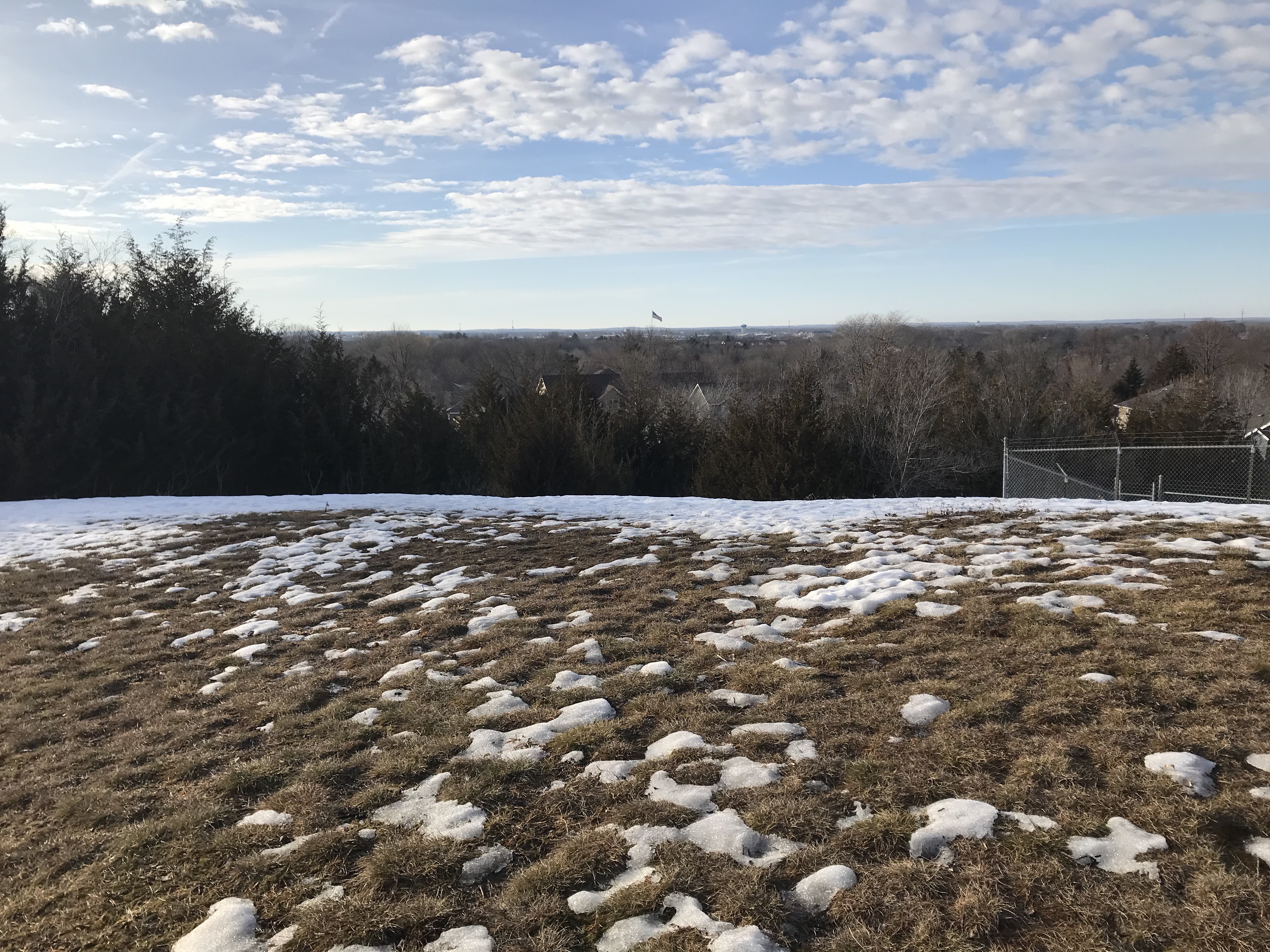
Here in the Northern Hemisphere, spring has officially begun. What does spring look like in Minnesota? The snow has been melting, so we can finally see the ground. It might even snow again tomorrow. Soon, however, we will see many signs of spring we’ve been waiting for!

Our favorite point to stop on our walk, St. Cloud, Minnesota, March, 2022

Many people take walks in my neighborhood. As they stroll past my window, I delight in watching the little ones. I often see them pointing at things–“Look! A butterfly! Look! A puppy!” Their chubby little fingers point to all of the wonderful things around them.

With that thought in mind, I wrote this song called “Hello Spring.” The melody comes from a traditional Scottish song I have always loved called “Ally Bally.” Imagine this song as a greeting to the many things one might see in the spring.

Hello Spring lyrics by Kathy Kampa on Jump Jump Everyone

Hello, bluebirds. Hello, bumblebees.

Hello, red tulips. Hello, cherry trees.

Hello, warm sun. Hello, blue skies.

Hello, little ants and orange butterflies!

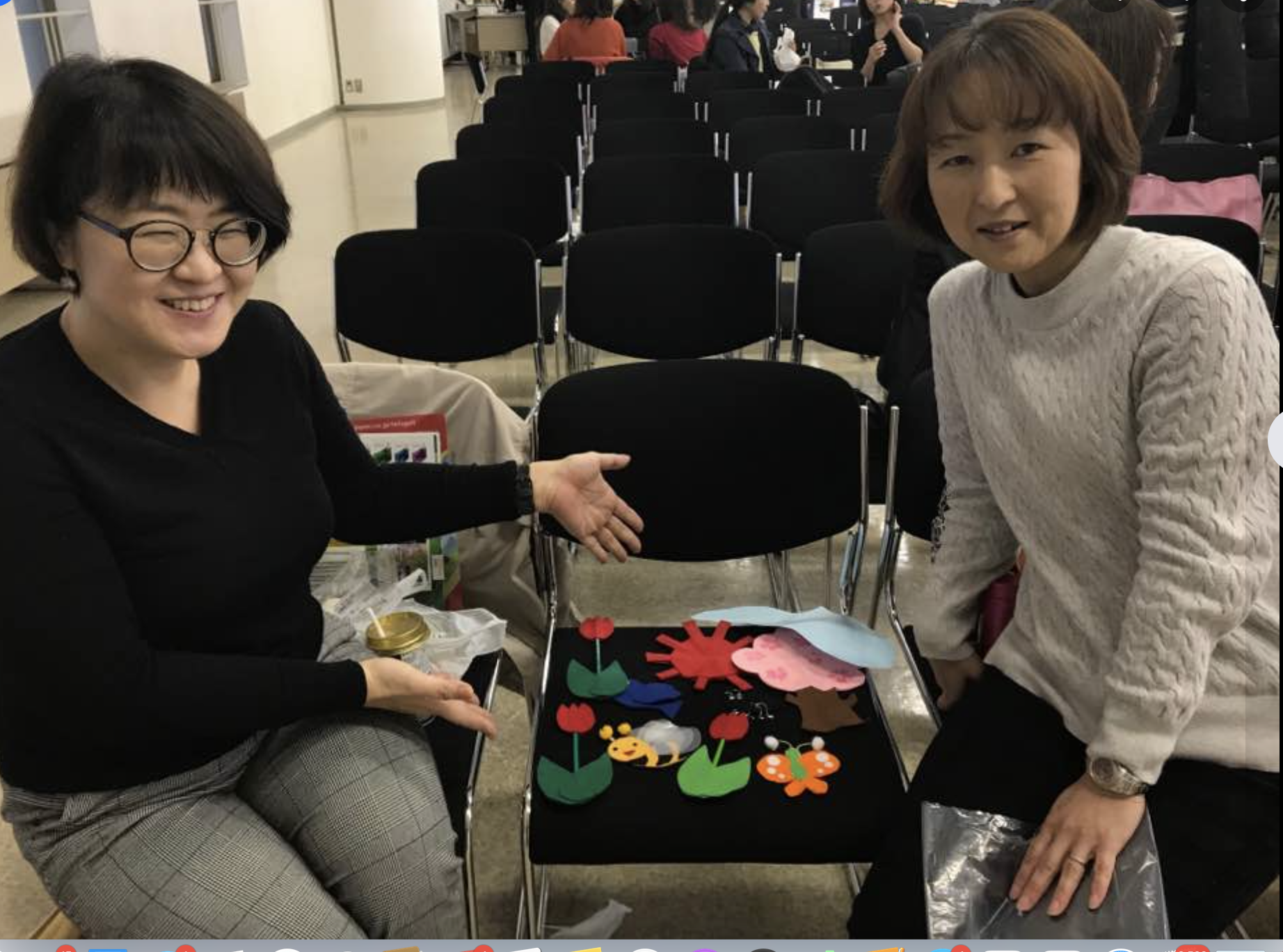
  1. Teach students the vocabulary using the Google images here. You can also create felt images like these creative teachers in Japan.

2. Use my movements from the video, or create your own.

3. I sing the song one part at a time, and the children echo. Then we all sing together.

Feel free to create your own movements. If you’d like some movement ideas, check out my video. We filmed it in Tokyo, Japan at the start of the pandemic in 2020.

Special thanks go out to Andre DiMuzio for his beautiful arrangement. Thanks also to Connor McKeown and Christian Vilina for their help with this video.

You can find this song at iTunes and ETJbookservice. “Hello Spring” is also available on streaming services, such as Spotify and Apple Music.

As an extension to this song, you can create your own lyrics. Ask your students, What do you see in the spring? Arrange the words to create your version of the song. Listen closely to the syllables. so that your song will fit the melody and rhythm. Move the words around to choose the best idea.

Hello, _______ _______. (2 sounds)

Hello, _____ _____ _________. (3 sounds-short-short long)

Hello, _______ _______ _______. ( 3 sounds)

Hello, _____ _____ _________. (3 sounds-short-short long)

Hello, _______ _______. (2 sounds)

Hello, _______ _______. (2 sounds)

Hello, _____ _____ _________. (3 sounds-short-short long)

and orange _____ _____ _________. (3 sounds-short-short long)

If you’re looking for more craft projects to link to this song, try these. You’ll find more ideas on my Pinterest page.

Bugs by Renata. Tulips

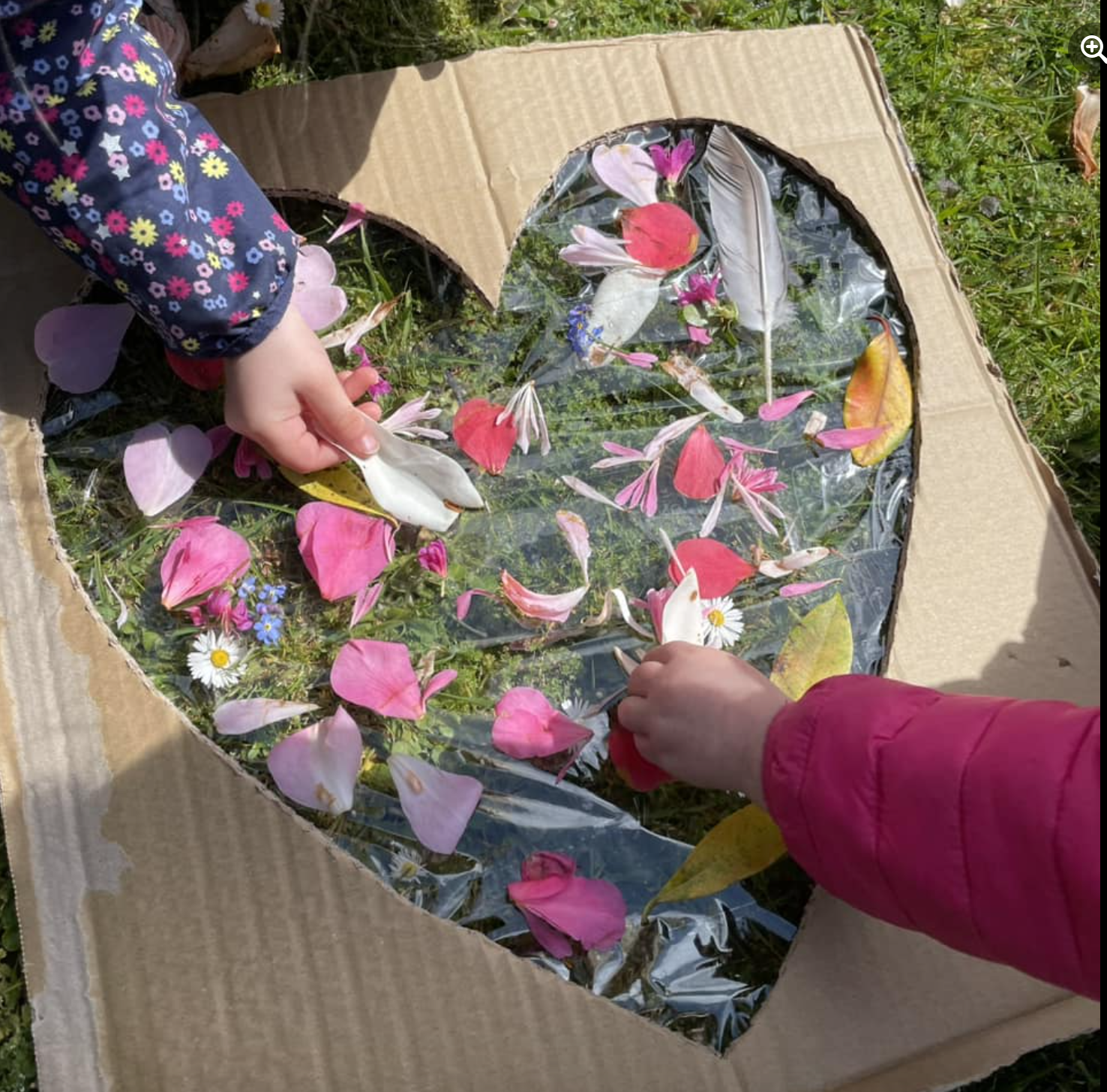
I want to share this beautiful spring project from Jellytots Childcare-Ofsted Registered Childminders.  

They write, “Anyone who follows our page will already know that our tots looooveee found things 🌺🌿🌼🪻🍁 So today we took a homemade heart canvas with us and added tape to make one side sticky. Every time we found something we liked – feathers, fallen petals, leaves, dandelion clocks, daises, etc., we added them to our canvas to create a beautiful floral heart 💖 We’re going to add tape to the open side and keep it up in the playroom so we can watch the changes to the flowers and petals 😍“

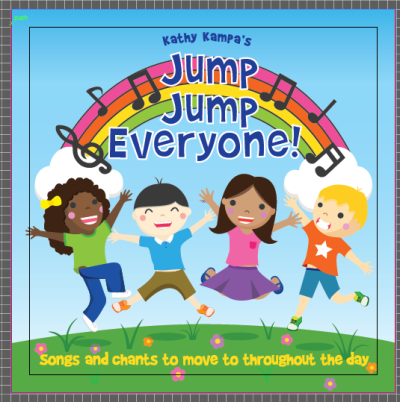
My second album “Jump Jump Everyone” is filled with many happy songs that have grown in my young learner’s classroom. The songs build language with useful patterns and vocabulary. Many songs link to classroom content. There are numerous classroom management songs, too. Children can dance like falling leaves, bloom like a spring flower, move through the butterfly life cycle . . . . you’ll find LOTS of fun and magic in this album.

Jump Jump Everyone

Happy teaching!

Kathy Kampa is a passionate educator of young learners. She seeks to nurture children’s imaginations and spark creativity through fun and engaging activities. Kathy believes music and movement should be a part of every young child’s learning.

Kathy and her husband Chuck have co-authored English language courses for young learners, including Magic Time, Everybody Up, Oxford Discover, Beehive, and Buzz (all published by Oxford University Press). They have also written English-language songs for Tokyo Shoseki. Kathy has taught young learners in Tokyo, Japan for 30 years. She has returned to her home state of Minnesota in the US where she continues to teach young learners.

Kathy is active as a teacher trainer, inspiring teachers around the world. Kathy presents workshops on English language education for children, including Growth Mindset, Multiple Intelligences strategies, inquiry-based learning, creativity, global skills, and music and movement.

If you’re interested in more of Kathy’s work, check out her YouTube channel at Kathy Kampa.

Do you celebrate success in your class?

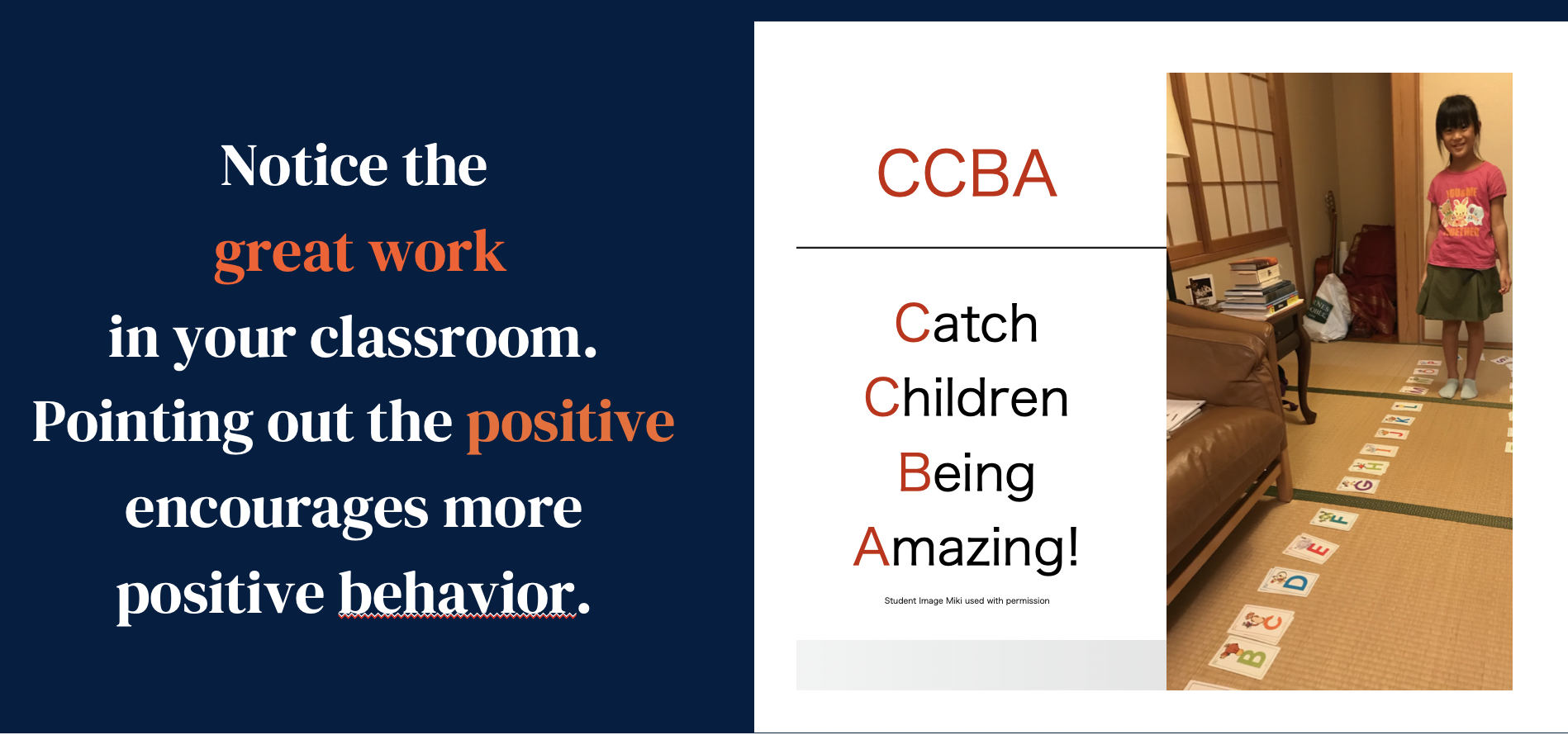
Celebrate success with CCBA. What’s CCBA?

Catch Children Being Amazing! It’s an acronym I created to remind teachers to focus on amazing student work. When we notice the great things happening around us, rather than negative things, more great things can appear. By talking about the wonderful things you see happening in your classroom, young learners will strive to do these wonderful things, too.

How do you do that?

Describe what you see happening in your classroom. What do you see? What do you hear?

-Be specific about what students are doing. Consider your goals for the activity. You can add descriptions to help students come up with more ideas.

For example, the goal of the activity below was for students to make letter shapes in different ways. At first, I’m describing individual student actions. You’ll notice that I’ve pointed out body parts, letter names, size, and students working together.

I see Yuya making the letter d with his fingers.

I see Sara making the letter D with her whole body. She made a big letter shape.

I see Anna and Noah standing back-to-back. They are collaborating by making their letter together.

By describing the many different students’ ideas, students will try out varied ideas, too. Try to acknowledge as many students as possible during your class. That builds self-confidence, too.

You can also acknowledge something that the whole class has done.

Look at how quickly our class tidied up our classroom. Everything has been put away.

Our class now knows all the words to our new song. I listened and heard you singing by yourself.

Celebration Chants

I use Celebration chants with my young learners (and teachers). They’re easy to do and bring positive energy to your space. First, teach them to your students. Then, use them throughout your day. Let’s get started.

Here’s a video with all three chants listed below.

Celebration Chants video

We Did It

My Japanese students used to say, 先生、やりましたよ。Sensei, Teacher, I did it! I wrote this chant to celebrate my students’ successes. It’s called “We Did It!”  Maybe you know this popular chant. It’s available on my Jump Jump Everyone album, too.

     We did it! We did it! We  did  It today!

     Pat. Clap. Pat. Clap. Pat. Clap. Pat. Clap.

We did it! We did it!      Hip, hip,               hooray!

      Pat. Clap. Pat. Clap. Roll your hands. Arms up high.

4-3-2-1

Why not celebrate in a new way? My students loved counting backwards.

                         Four, three, two, one,

Use fingers      4—–3—–2—–1

Hooray for all the things we’ve done.

 Shake hands up  / Clap.    Clap.   Clap.

SUCCESS

This last chant is called “SUCCESS.” This may work best for your elementary students since they know how to spell words and do handclapping games.

S—U—C—C—E—S—S—      That’s the way we spell “success.”

Pat. Clap. Pat. Clap. Pat. Clap. Pat. Clap.      Pat. Clap.    Pat. Clap.      Pat      Jump up high.

My students like to do this chant with a partner, too. Here are several ways students can do it, from the easiest way to the most complicated way.

Variation 1: Pat own legs—clap both partner’s hands.

Variation 2: Pat own legs—clap own hands—clap both partner’s hands—clap own hands

Variation 3: Pat own legs— clap own hands—clap partner’s right hand—clap own hands

—clap partner’s left hand—clap own hands– clap both partner’s hands—clap own hands* (repeat—last time omit last *)

All of these images can be found in the Google Slides here.

Do you have a celebration chant that you do with your students? Share it with Kathy!

magictimekids@gmail.com

Songwriter Kathy Kampa is a passionate educator of young learners. She seeks to nurture children’s imaginations and spark creativity through fun and engaging activities. Kathy believes that music and movement should be a part of every young child’s education. Kathy’s songs for kids (Kathy Kampa’s Special Days and Holidays and Jump Jump Everyone) are available on iTunes.

Kathy uses a globally-minded and inquiry-based approach to teaching through which students develop 21st-century skills. She also supports the development of English language skills by creating songs, chants, and TPR/movement activities targeted to young learners’ needs. Kathy is an author and teacher-trainer with Oxford University Press. She is delighted to be teaching young learners in her hometown.

I’m Your Friend, a Valentine’s Day Song For Kids

Valentine’s Day is a time for children to celebrate friendships! Classroom activities like this can teach young learners how to develop healthy relationships.

To celebrate Valentine’s Day here in the United States, children often make cards or little treats for their friends. I’ve invited my friend Ava to share her thoughts about how she celebrates Valentine’s Day with her friends and classmates.

Ava shares Valentine’s Day traditions in the US

I like to celebrate holidays with music and movement! Today’s song is called “I’m Your Friend,” from my album Jump Jump Everyone. With this song, you can add valuable skills such as phonemic awareness to your lesson while celebrating Valentine’s Day and friendship.

Rhyming words

Listen for the rhyming words at the end of each line. In this song, the words mine, nine, and Valentine all rhyme. Why is rhyming important? Check out this fabulous post by Marissa Labuz. Rhyming aids memory, supports phonemic awareness, and builds listening skills. Children have fun singing songs and chants with rhyming words.

Movement

This song invites children to move in various ways, such as galloping, skipping, jumping, walking, and even skating! Developing gross motor skills is important for young learners. The movements encourage students to move from one place to another. These are called “locomotor movements.” If you have a smaller space, students can move in a small circle in their own spot.

You can sing this song with small or large classes. I usually teach this song to kindergarten and early elementary students.

Here’s a video to teach you the lyrics and the movements:

Here are the lyrics to the song:

3. I’m Your Friend words and music by Kathy Kampa

From Jump Jump Everyone CD

Chorus:

I’m your friend.

(Gesture to chest, then to a person)

You are mine.

(Gesture to person, then to heart)

Will you be my Valentine?

(Swing hands with partner or in the circle)

Repeat.

Let’s walk.

(See the notes below. Children can hold hands in a whole class circle or move with a partner.)

Verse:

  1. Walk, walk, walk with me. Walking, walking, 1-2-3,

4-5-6, 7-8-9,  Will you be my Valentine?

(Clap-4-5-6,-7-8-9) Make a heart shape with your fingers or arms by yourself or with a friend. Or give your partner a hug!

*repeat with skip, jump, slide, skate, dance

Here are Google slides for this song.

Building Social Skills

Here’s the version from the video:

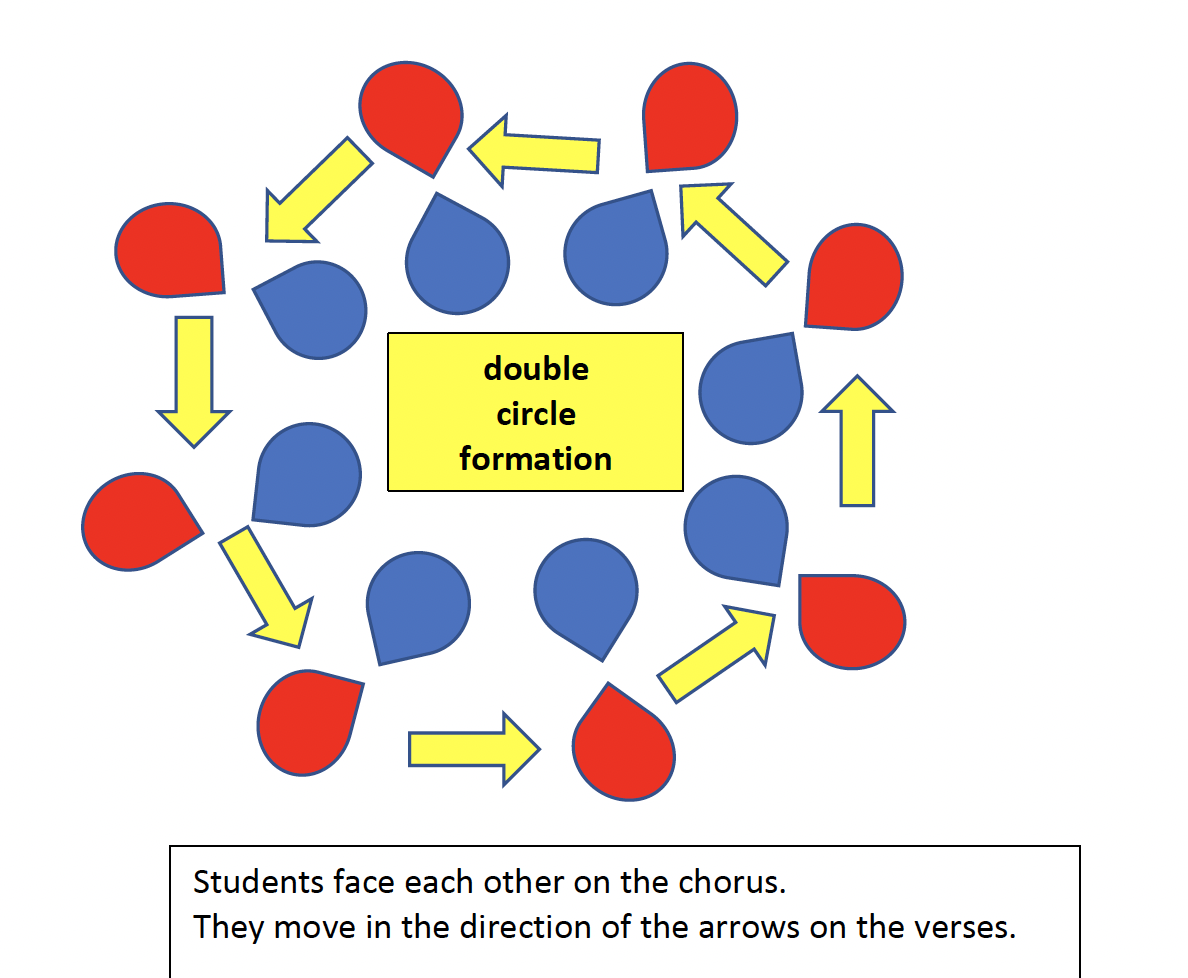
Stand in one big circle. Face the middle for the chorus, and then move around the circle with the whole class for the verses. For the counting part, 4-5-6, 7-8-9, clap your hands on one side and then the other. Finally, make a heart shape using your fingers or arms.

Children face the middle, then hold hands together to move around the circle.

Once your children know this song, you can add some new challenges. Step into my English class in Tokyo, Japan. Check out how my English students added their own ideas.

Children can dance with partners. How can you help them find partners? When children are in a circle, you can walk around the circle. Have two children turn to face each other. They can do all of the movements with their partners.

Or you can use this transitional chant. Pat and clap your legs to keep the beat as you say the chant. Count slowly as you get closer to the number ten.

It’s okay for partners to be scattered around your space and move in their own little group. If you have an odd person out, make a group of three.

For elementary students, you might try this challenge. Make an inside and an outside circle. One partner stands in the inside circle, and the other in an outside circle. Partners face each other. Children can do the movements for the verse holding hands with their partner around the circle. At the end of the verse, the outside circle children move ahead to the next partner.

So you can make this as simple or as fancy as you’d like!

If you’re looking for music to play in your classroom, check out this Spotify playlist for February:

Come back to my blog to discover more fun activities that build language through music and movement. Thank you!

Celebrate Valentine's Day with this delightful song for children.

Songwriter Kathy Kampa is a passionate educator of young learners. She seeks to nurture children’s imaginations and spark creativity through fun and engaging activities. Kathy believes that music and movement should be a part of every young child’s education. Kathy’s songs for kids (Kathy Kampa’s Special Days and Holidays and Jump Jump Everyone) are available on iTunes.

Kathy uses a globally-minded and inquiry-based approach to teaching through which students develop 21st-century skills. She also supports the development of English language skills by creating songs, chants, and TPR/movement activities targeted to young learners’ needs.

For more kid-tested music and movement activities, check out more music on iTunes. Kathy has produced two music CDs for very young learners, Kathy Kampa’s Special Days and Holidays and Jump Jump Everyone, which build English language skills through music and movement while nurturing creativity and imagination! Grown and loved by real kids!

My Fingers Dance!

Fingerplays are a fun way to add movement to your lesson. Students can move their fingers while sitting. When you need an activity to bring the energy level down in your class, consider a fingerplay.

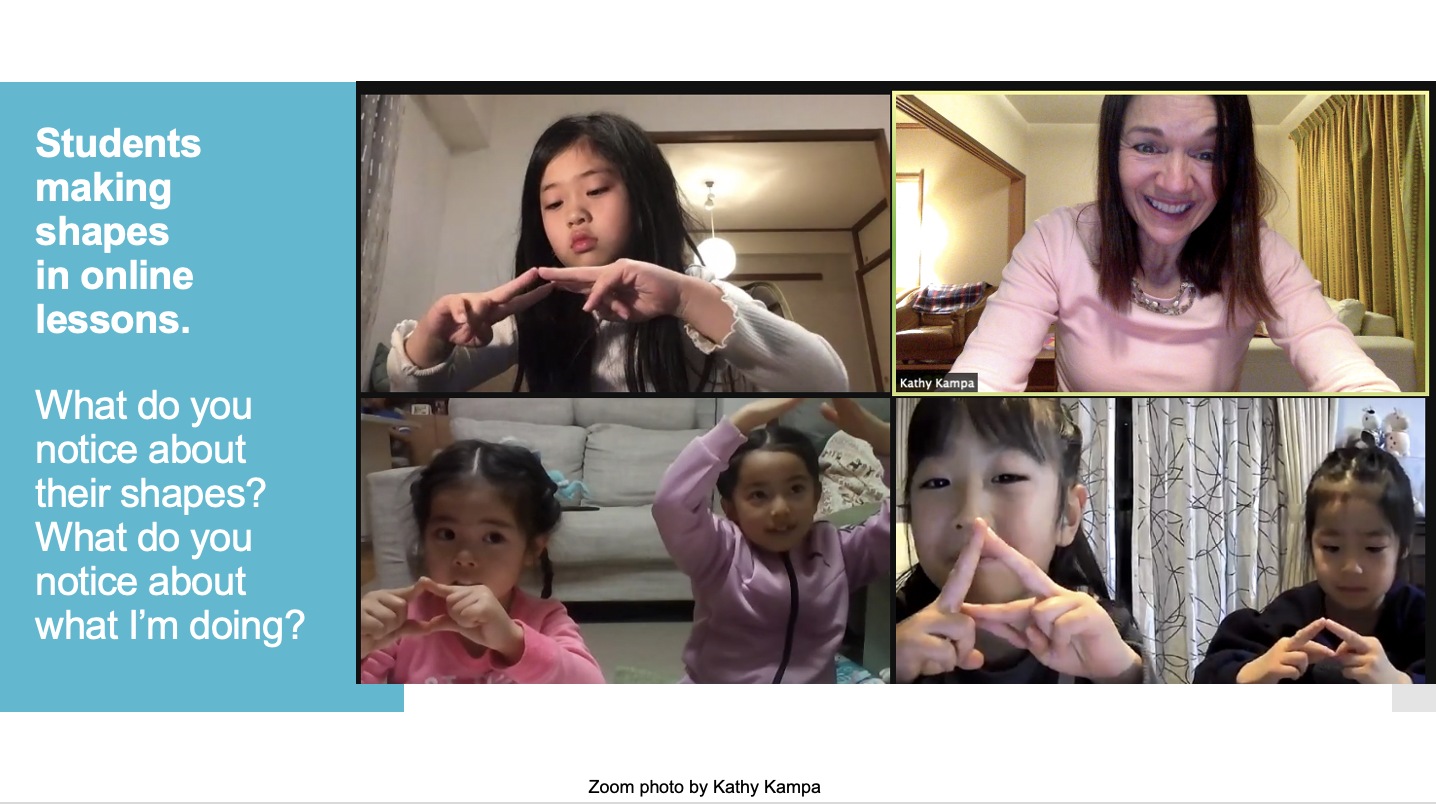
This chant teaches the heart shape (perfect for Valentine’s Day!) as well as other shapes (circle, square, rectangle, triangle, star). Notice the repetition in the phrases, which is important for young learners.

Encourage students to make shapes in different ways to nurture their creativity. Notice the great things your young learners are doing. That’s what I call CCBA–Catch Children Being Amazing!

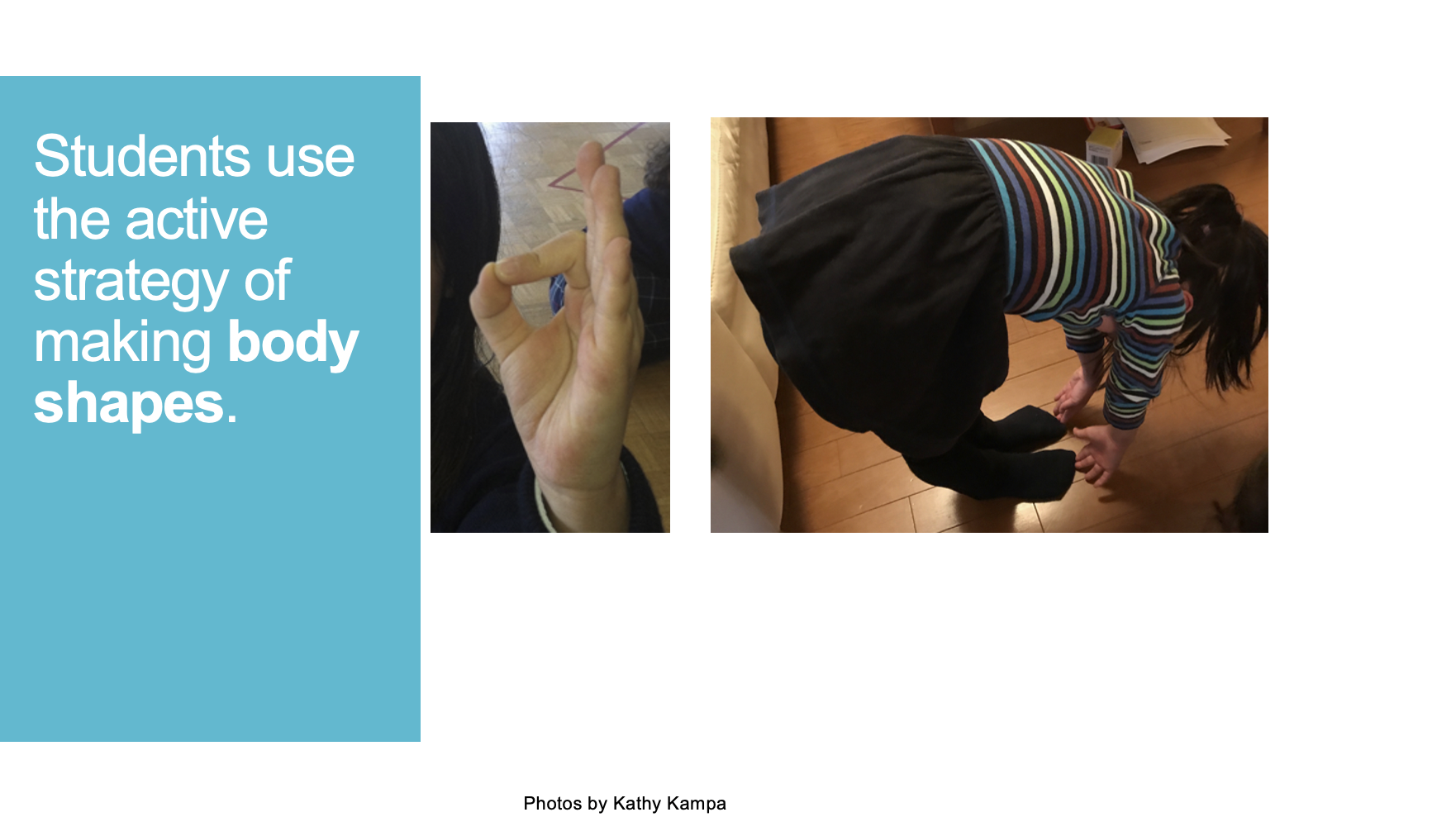
Check out my Japanese students making shapes. Here we are studying together online. (Photos used with permission)

My students just love this chant! I hope that you do, too.

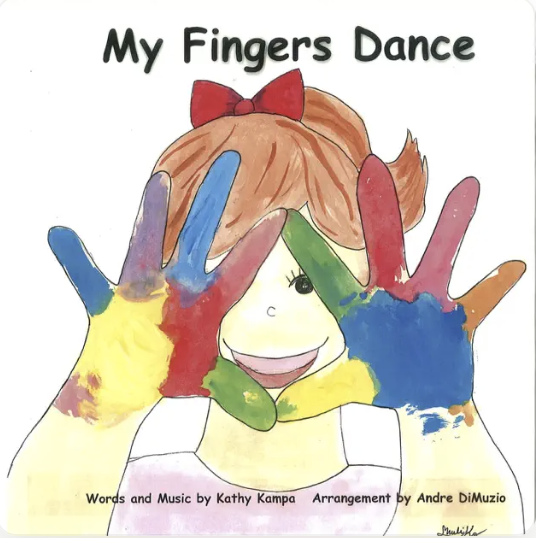
My Fingers Dance

by Kathy Kampa on Jump Jump Everyone. Available on iTunes, Spotify, and other streaming services.

My fingers, fingers, fingers, fingers, fingers dance!

My fingers, fingers, fingers, fingers, fingers dance!

Make a circle! Take a picture. Make a circle! Take a picture.

*Substitute additional shapes for “circle.”

Check out the video below for the simple motions.

This Google slide from the video provides a visual of the shapes.

The music is available on iTunes and on streaming services such as Spotify and Apple Music.

Let’s practice shapes some more!

Time for a surprise! Have students open their hands and close their eyes. Hand them one of the shapes. Use this little chant I just made.

A Big Surprise by Kathy Kampa

Open your hands and close your eyes.

Get ready for a big surprise!

My students enjoy going on a shape hunt. We focus on one shape at a time, and look for things with that shape.

Kids love using the shaped “magnifying glasses” to find shapes in everyday objects around them! You can make these darling shape finders from Amber at Apples to Applique (amber@applestoapplique.com)

Learning something in many ways is fun for young learners! As Dr. Howard Gardner pointed out in his theory of Multiple Intelligences, children can learn more successfully when using many ways to approach a topic. In this lesson, students hear words in rhythm, they move their bodies, they see shapes, and they interact together.

If you’re celebrating Valentine’s Day, students can make cards with LOTS of shapes!

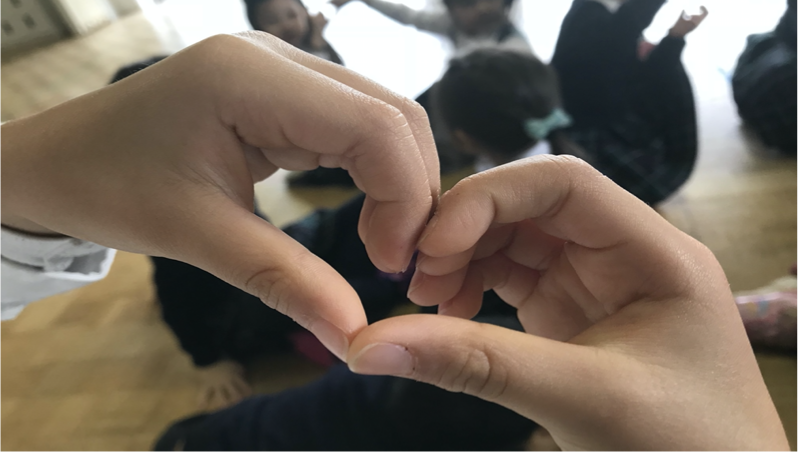
Finally, if you read my last post, you’ll remember how to make a heart shape with your hands. This poem was shared with me by my colleague:

    I put my hands together.  (put the heels of your hands together)

    This is how I start.  (hold)

    I curve my fingers just like this (curve your fingers to touch each other)

    and now I have a heart.  (this should make a heart shape)

    Now, look through the heart to see each of the students in your class.

    Say, “I see you in my heart!”

Songwriter Kathy Kampa is a passionate educator of young learners. She seeks to nurture children’s imaginations and spark creativity through fun and engaging activities. Kathy believes that music and movement should be a part of every young child’s education. Kathy’s songs for kids (Kathy Kampa’s Special Days and Holidays and Jump Jump Everyone) are available on iTunes.

Kathy uses a globally-minded and inquiry-based approach to teaching through which students develop 21st-century skills. She also supports the development of English language skills by creating songs, chants, and TPR/movement activities targeted to young learners’ needs. Kathy is an author and teacher-trainer with Oxford University Press.

For more kid-tested music and movement activities, check out more music on iTunes, Spotify, and Apple Music. Kathy has produced two music CDs for very young learners, Kathy Kampa’s Special Days and Holidays and Jump Jump Everyone, which build English language skills through music and movement while nurturing creativity and imagination. Grown and loved by real kids!

Check out Kathy Kampa’s YouTube channel here.

V-V Valentine!

Valentine’s Day is right around the corner! What activities will you do with your young learners for Valentine’s Day?

Playing with letter sounds is fun for little ones. Let’s explore ways to make the shape of the letter Vv:

-with our fingers

-with our hands

-with our arms

-with our legs

-with our whole body (balance!!)

-with a friend

Each time you make the shape, say the sound /v/. 

*Try to make only the sound /v/ and not /vƏ/ (vuh)

Can you change your V shape into a heart shape?

I created this song with the phrase “/v/ /v/ valentine.” Make the shapes with your fingers or the heels of your hands, then with your arms. Watch the video for more details. I created it with my nieces Shannon and Brooke many years ago. It’s easy to sing and so much fun!

Here are the lyrics:

Be My Valentine

lyrics by Kathy Kampa, melody “Cho Cho”/”Lightly Row” 

I like you. You like me. Will you be my Valentine?

I like you. You like me. Be my Valentine.

[v] [v] Valentine!

[v] [v] Valentine!

I like you. You like me.

Be my Valentine.

Repeat facing a partner.

This song can be found on iTunes and other streaming services, such as Spotify and Apple Music.

Spotify playlist: Songs for Kids for Valentine’s Day and Friendship

Celebrate the joy of Valentine’s Day while building social skills in your classroom. This playlist includes songs for Valentine’s Day and songs about friendship. You’ll find songs to add movement to your class activities, too. Click here to see Kathy’s Spotify channel. for more curated playlists.

Crafts Activities

On Valentine’s Day, kids love to make things for their friends. Check out these simple craft activities.

Can your students find the letter V in these craft activities?

This first craft is a Valentine chain. Cut narrow paper strips about 1″ wide and fold them in half. Look! There’s the letter V! Then curve the tops in to make a heart. This is a great activity for teaching colors and patterns. Try this when you’re sitting with a small group. Students fold the strips, slide a new strip through, then staple the top of the heart. Then, create a color pattern, such as white-red-pink-white-red-pink. Young learners can count the number of hearts in the chain.

When students have the paper strips open, they can write a secret message on the heart.

This idea comes from https://www.teachwithme.com/blogs/getting-to-the-core/item/588-valentine-ideas.

This second craft is like magic! Each student folds a sheet of construction paper in half. Trace around the student’s hand. Be sure that their thumb and pointer finger are touching the folded edge. Students can cut around their fingers. Then decorate a card for someone they love.

This idea comes from https://easypreschoolcraft.blogspot.com/2013/01/top-20-valentines-day-crafts-for-kids.html?m=1

Come back to my blog to discover more fun activities that build language through music and movement.

It’s Time to Tidy Up!

Have you ever struggled to get your children or students to tidy up and clean up the things they’ve taken out? Here’s your secret tool — songs!

Even Mary Poppins knew that! Songs create seamless transitions and make cleaning up a fun, enjoyable task.

Here are some songs that you can play to make your space sparkling clean! You can find this music on iTunes, Spotify, Apple Music, and other streaming sites. Keep them handy for the next time you have a mess to clean up.

  1. Tidy Up is definitely one of my most popular songs. The lyrics are super simple. I wrote it for my Kindergarten students in Japan. The song gets faster and faster. By the time it’s finished, students should have everything cleaned up. Teachers and parents around the world have told me how much they love this song and use it regularly. Ask Alexa to play it for you! You’ll have it ready whenever you need to start tidying up. Or click the arrow below to play it the next time you’re surrounded by a mess!

2. Perhaps you know this cute song from the Barney show. Our children love to sing along!

Clean Up song

Clean up! Clean up! Everybody, everywhere.

Clean up! Clean up! Everybody do your share.

Click the arrow below to play it.

3. Sometimes you have something specific to put away — picture cards, scarves, instruments, etc. Here are some simple songs to play to collect the items.

Cards, Please lyrics by K. Kampa

T: Cards, please. Ss: Here you are!

T: Cards, please. Ss: Here you are!

T: Cards, please. Ss: Here you are!

T/S: Thank you very much!

*What other materials are you using? Instead of singing the word cards, sing a new word such as scarves.

Click the arrow below to play it. Use it in your next English class.

It’s Time to Put the Instruments Away lyrics by K. Kampa

It’s time to put the instruments away! 

Oh, it’s time to put the instruments away!

Oh, we’ve had a lot of fun, and we’ve sung a lot of songs,

But, it’s time to put the instruments away.

Click the arrow below to play it. Use it when you use instruments with your class!

4. I love to celebrate our successes with the “We Did It” chant. My students launch into this chant often in my lessons. We always finish our lessons with this. Send your students off with a positive feeling!

We Did It! by Kathy Kampa

We did it! We did it! We did it today!

We did it! We did it! Hip hip hooray!

Click the arrow below to play it. Play this the next time your students do something great.

For more classroom management songs, check out Kathy’s Spotify playlist.

Songwriter Kathy Kampa is a passionate educator of young learners. She seeks to nurture children’s imaginations and spark creativity through fun and engaging activities. Kathy believes that music and movement should be a part of every young child’s education. Kathy’s songs for kids (Kathy Kampa’s Special Days and Holidays and Jump Jump Everyone) are available on iTunes.

Kathy uses a globally-minded and inquiry-based approach to teaching through which students develop 21st-century skills. She also supports the development of English language skills by creating songs, chants, and TPR/movement activities targeted to young learners’ needs.

For more kid-tested music and movement activities, check out more music on iTunes. Kathy has produced two music CDs for very young learners, Kathy Kampa’s Special Days and Holidays and Jump Jump Everyone, which build English language skills through music and movement while nurturing creativity and imagination! Grown and loved by real kids!