Wiggly Little Worms

Have you ever wondered why worms surface when it rains? Worms appear everywhere!

My students have been fascinated with worms, so I created an activity where we pretend to be worms.

Follow the video to do a fingerplay or a whole-body activity.

The Little Worms

The little worms are in the mud, wiggling, wiggling, wiggling,

They push their heads up out of the mud and say, “Yippee! It’s a rainy day!”

The little worms are in the mud, wiggling, wiggling, wiggling,

They push their heads up out of the mud and cry, “Oh no! It’s a sunny day!”

Invite your students to think about other types of weather–windy, snowy, hot, cold, etc. How do you think the worms will feel?

If you want to learn more about worms:

There are multiple theories about why worms come out when it rains, including:

  • Movement: Wet soil allows worms to move more easily across the surface, which can help them find food, new habitats, or mates. They can also migrate longer distances than they could underground.
  • Survival: Worms need a moist environment to survive, and they can’t travel as fast while burrowing tunnels underground. After a rain, the soil pores and worm burrows fill with water, which allows worms to breathe through their skin.
  • Escape: The vibrations from raindrops hitting the ground can sound similar to vibrations from predators like moles, causing worms to flee to the surface for safety. Birds also take advantage of this behavior by mimicking rain to lure worms to the surface for food.
  • What can you do? If you see worms on the sidewalk after it rains, you can help them by moving them to a nearby patch of dirt or grass so they can burrow back underground more easily. 
  •  For more activities and songs for a rainy day, check out this post.
  • Go to Spotify or Apple Music to find Kathy’s music. You’ll find “Little Worms” on “Jump Jump Everyone.”Jump Jump Everyone, my second album, is filled with many happy songs that have grown in my young learner classroom. The songs encourage children to move. Many songs link to classroom content. Children can dance like falling leaves, bloom like a spring flower, move through the butterfly life cycle . . . . you’ll find LOTS of fun and magic in this album.
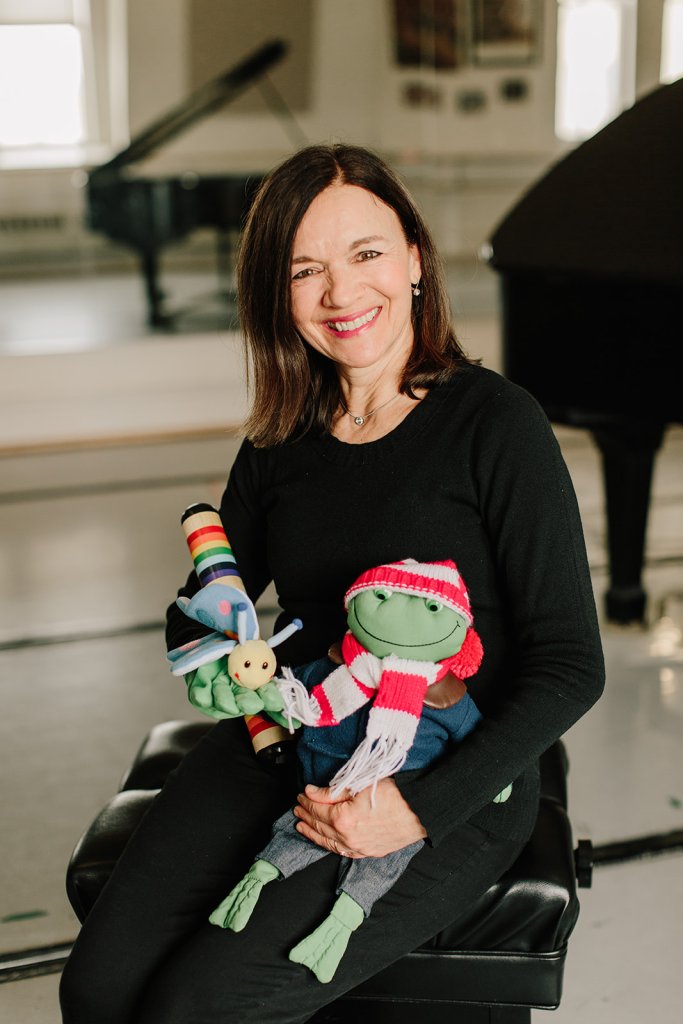
  • Kathy Kampa loves to bring joy to the world through her children’s music and English language books (Oxford University Press). She is passionate about making learning engaging for young learners. You’ll find more music and movement resources on Kathy’s YouTube page.
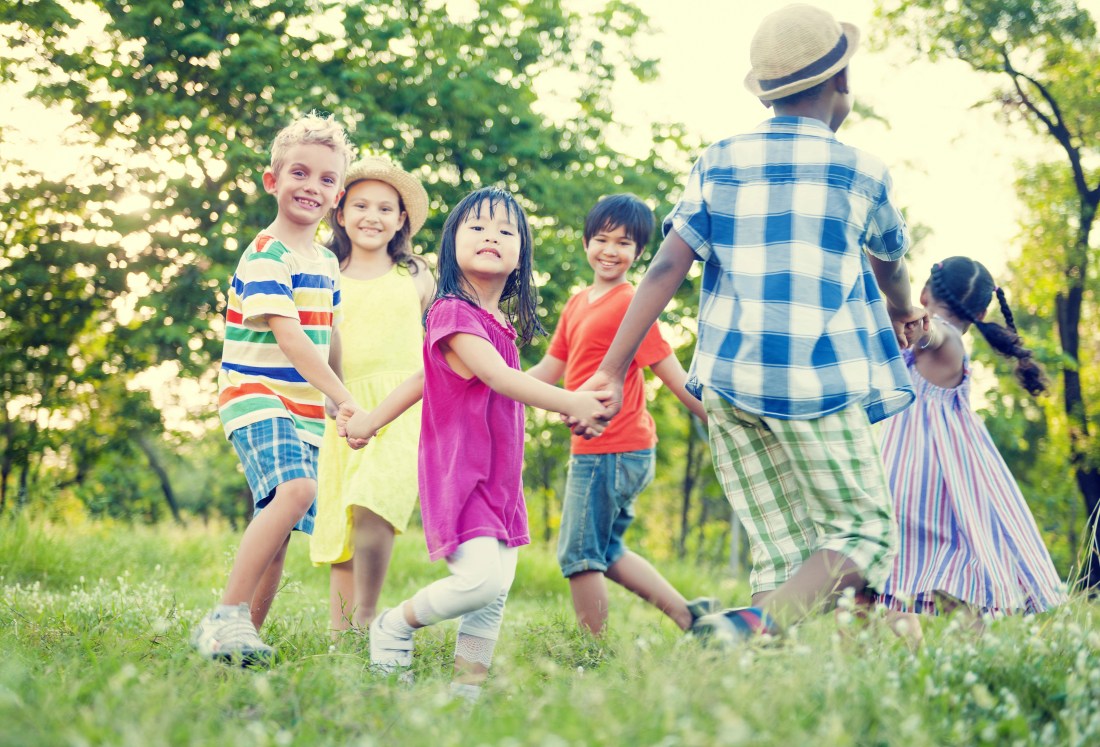
Here We Go Looby Loo!

If you want a fun song to practice the sound /l/, this is for you! Looby Loo is a simple dance song. It encourages listening to the movement directions and dancing together as a group. It invites young learners to add their own ideas, too.

Check out the lyrics to this traditional song from Mother Goose.

Here we go looby loo,

Here we go looby light,

Here we go looby loo,

All on a Saturday night!

For my young students in Japan, distinguishing /r/ and /l/ can be challenging. This is a playful way to practice the /l/ sound. In addition, students hear the rhyming words, light and night.

We sing this song in a circle. Use Let’s Make a Circle to get ready.

The verses invite students to put one part of their body into the middle of the circle. For young learners, we choose body parts, like hands, feet, arms, legs, tummy, head, fingers, thumbs, etc.

Verses:

You put your hands in.
You take (put) your hands out
You give your hand/hands a shake, shake, shake (shake, shake, shake, shake . . . .)
And turn yourself about!

To build learner agency, invite students to share their ideas.

All say: Think, think, think. Think, think, think. What should we do? Think, think, think. Think, think, think. What should we do?

Teacher: Should we put in our legs? Our thumbs? Our elbows?

Student: Legs. Let’s put our legs in the circle.

Here’s a video of my young learner class in Tokyo. These children range in age from three to six. They studied English once a week with me. Listen to how well they sing along! You can see how I’m prompting the next body part to sing about by naming and showing them two or three choices. You’ll also notice that we have a lot of fun shaking longer than the standard version of this song.

For older children, practice right and left with each body part. You may want to use less repetitions of the song.

For older students, it looks like this:

You put your right hand in.
You take (put) your right hand out
You give your hand a shake, shake, shake (shake, shake, shake, shake, shake, shake . . . .)
And turn yourself about!

If you want to learn more about this song, check out the history of it here. The professional version of this song isn’t available yet.

This image has an empty alt attribute; its file name is img_7171.jpeg
About me:

Kathy Kampa is a passionate educator of young learners. She seeks to nurture children’s imaginations and spark creativity through fun and engaging activities. Kathy believes music and movement should be a part of every young child’s learning.

Kathy is the co-author of Magic Time, Everybody Up, Oxford Discover, Beehive, and Buzz (all published by Oxford University Press). She has taught young learners in Tokyo, Japan for over 30 years. Kathy is also active as a teacher trainer, inspiring teachers around the world. She has currently returned to her home state of Minnesota in the US.

If you’re interested in more of Kathy’s work, check out her YouTube channel at Kathy Kampa.

Are you streaming music? Go to Spotify or Apple Music to find Kathy’s music.

This image has an empty alt attribute; its file name is screen-shot-2022-05-11-at-22.56.25.png

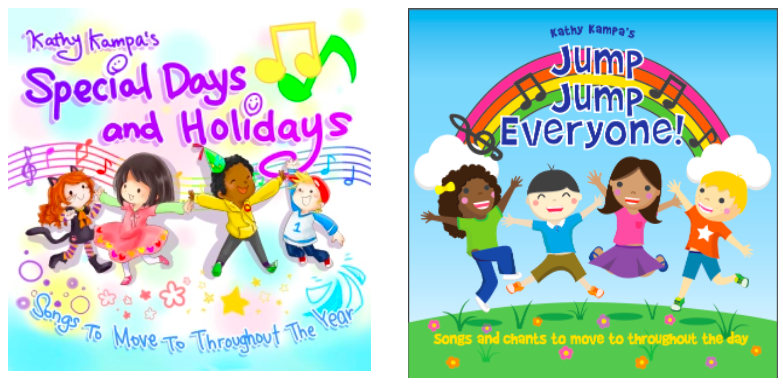
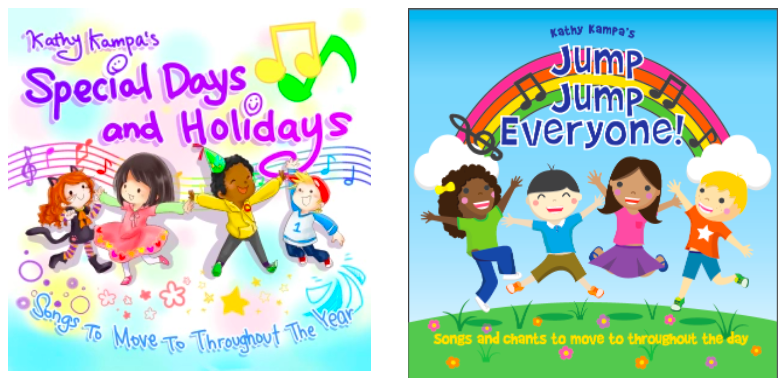
You can find more engaging songs on Kathy Kampa’s Special Days and Holidays and on Jump Jump Everyone

Kathy Kampa’s Special Days and Holidays has songs for the special events in children’s lives, including a loose tooth, birthdays, and many holidays.

Jump Jump Everyone is filled with many happy songs that have grown in my young learner classroom. The songs encourage children to move. Many songs link to classroom content. Children can dance like falling leaves, bloom like a spring flower, move through the butterfly life cycle . . . . you’ll find LOTS of fun and magic in this album.

For more action songs, check out this curated playlist.

Are your students ready to learn? How do you focus their attention?

If you’re starting a new school year or you’re experiencing the excitement of the end of the year, how do you get all of your students’ attention?  Teachers need to guide students to prepare for learning at different times during a class, such as:


Beginning a lesson

Moving to a new space in your classroom 

Introducing an activity

Checking in during an activity

Finishing an activity

First of all, with any strategy you use, you must practice it before you actually use it.

Secondly, the success of each strategy depends on you, your group of students, their age, and their disposition. 

Lastly, choose one or two strategies to start. Figure out what works best. When you’re ready, add a new strategy.

 1. Get attention with something that creates an interesting sound.

screen-shot-2017-03-06-at-9-29-03-pmWhat do you have readily available in your classroom?  A slide whistle is one of the most interesting sounds I have in my classroom.  If you have a big group of students, it quickly gets their attention.  Don’t have a slide whistle?  How about a shaker, a tambourine, or a kazoo?

(Check out West Music for interesting instruments.)

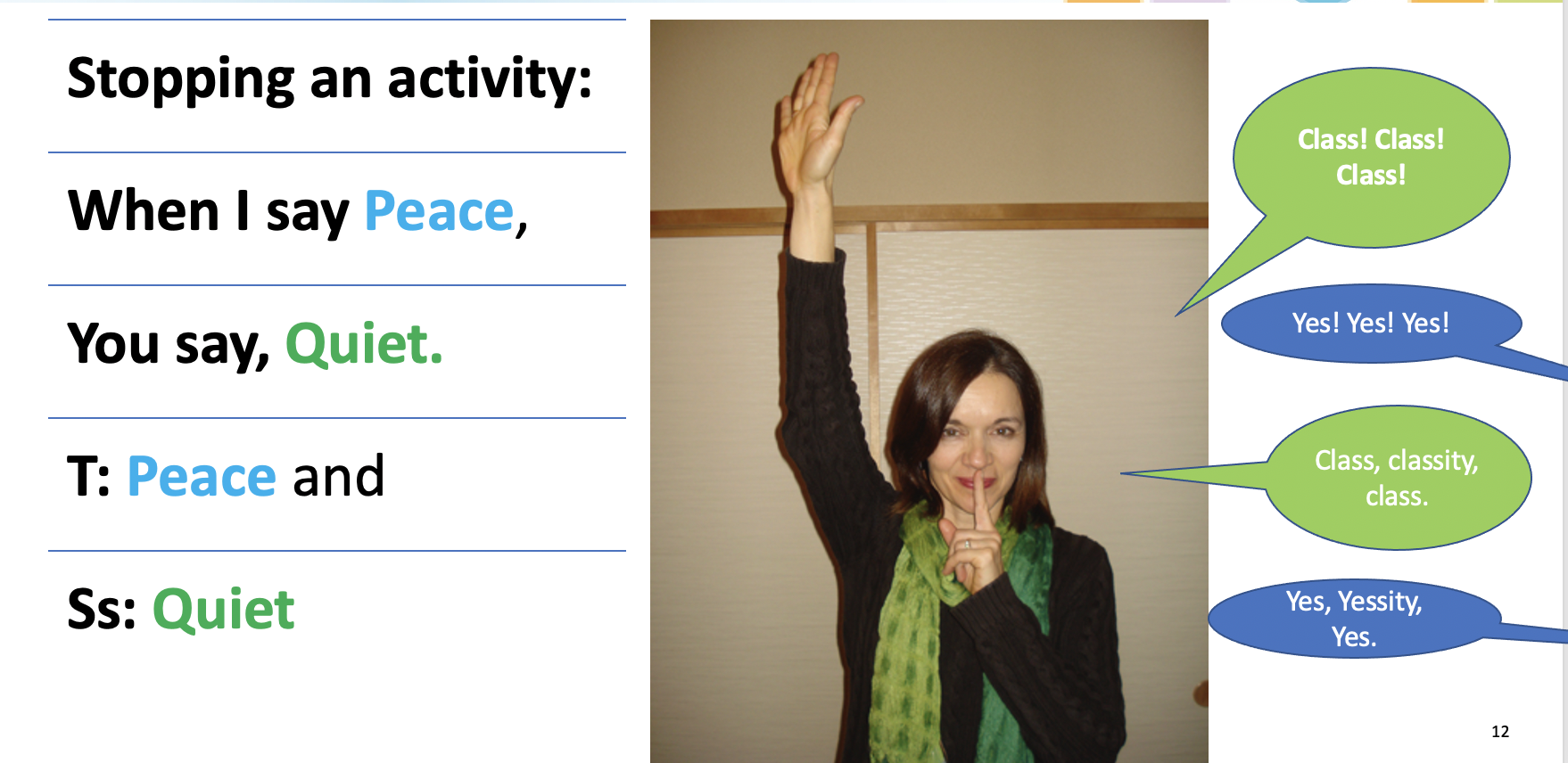
2.  Peace and Quiet

To gesture “peace” you can make a Peace sign with two fingers up. Alternatively, you can just raise your hand.

To gesture “quiet,” put your finger to your lips.

When I say, Peace, you say Quiet. Peace and Quiet.

3. Add a little rhythm and vocal expression to get attention.

Teachers at my school loved this way of getting students’ attention. Nina Septina shared this at the JALT 2023 conference.

a. Echo the same rhythm saying the word, Yes! Change the rhythm, the tempo, your voice, etc.

T: Class, class, class.                                             Echo: Yes, yes, yes!

T: Class, classity, class.                                         Echo: Yes, yessity, yes!

T: (fast) Class, class, class, class, class.             Echo: (fast) Yes, yes, yes, yes, yes.

T: (whisper) Class, class, class.                           Echo: (whisper) Yes, yes, yes!

b. Rhythm Clap (copyright © 2012 by Kathleen Kampa and Charles Vilina)

(Clap on every syllable. Students echo your clap.)

I   like    ba-na-nas.      (I   like    ba-na-nas.)

I   like   po-ta-toes.        (I   like   po-ta-toes.)

I   like   to-ma-toes.     (I   like   to-ma-toes.)

4.   How about trying some rhyming conversations?  These help your students develop phonemic awareness too!

Smiling boy posing in front of a wall

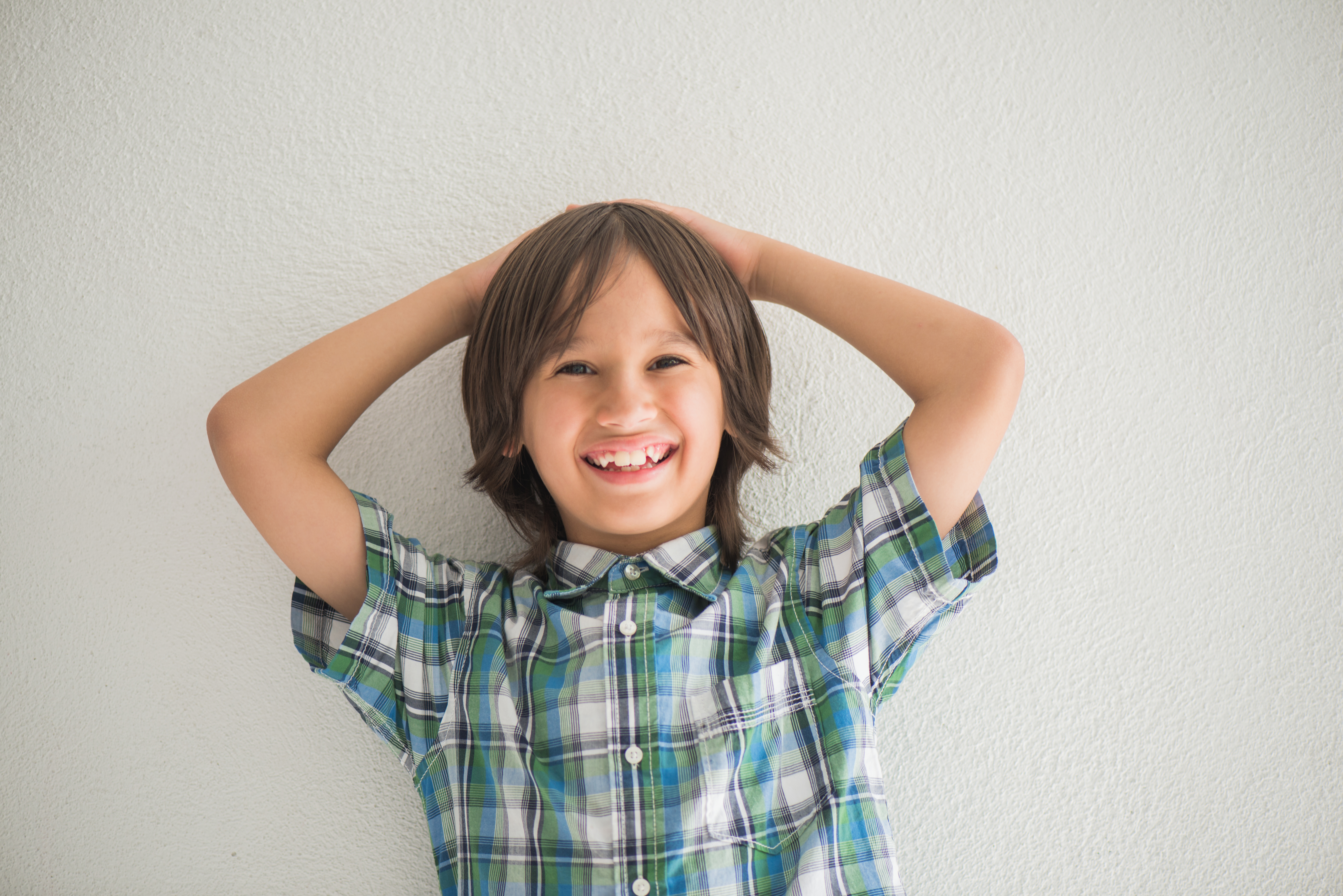
My Grade One students love “Hands on Top.”

The teacher says,  Hands on top! (put your hands on top of your head)

The students answer, That means “Stop!” (students do the same)

One, Two, Three, Eyes on Me is another rhyming conversation.

The teacher sings, “One, two, three, eyes on me.”  (so-so, mi, so-so, mi)

Hold up fingers as if you’re counting to three.  Point to yourself.

The students answer, “One, two, eyes on you!”(so, mi, so-so, mi)

Hold up fingers as if you’re counting to two.  Students point to the teacher.

My students can do “Peace and Quiet” (above) by putting two fingers in the air (peace) and one finger to their lips (quiet).

5. How about fun phrases? 

T: Peanut, peanut butter ——-Ss: JELLY.

T: Macaroni and cheese . . . Ss: everybody freeze!

T: Hocus pocus.  Ss: Everybody focus!

Check out more fun attention-getters here from Jenn at The Teacher Next Door.

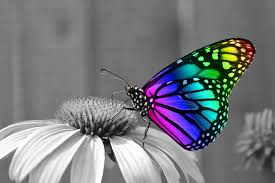
6.  How about making butterfly wings? 

images-1

I love to pretend with my very young students.  Say, Let’s make butterfly wings. What color are your wings today?”  Pretend to paint each arm by gently rubbing it and naming a color.   i.e  This wing is pink, but this one is purple.

Raise and lower your arms to your sides as if you’re flying. Inhale and exhale.

7. Calm students with this breathing activity called “Candles.”

Finally, inhale while raising your arms from your sides to above your head. Put your hands together above your head, then bring them down in front of you.  Exhale when your hands are in front of your mouth.  This is an effective way to calm students after a lively activity. The teachers I worked with in Tokyo loved the way this activity quickly quieted my students.

Remember to practice your strategies first. Add new strategies little by little. Having some strategies in place will help your classes run smoothly.

If you’re looking for Class Management Songs for Kids, check out this collection on Spotify.

Kathy Kampa loves to bring joy to the world through her children’s music. She is passionate about making learning engaging for young learners. You’ll find more resources on Kathy’s YouTube page.

Hello, Spring!

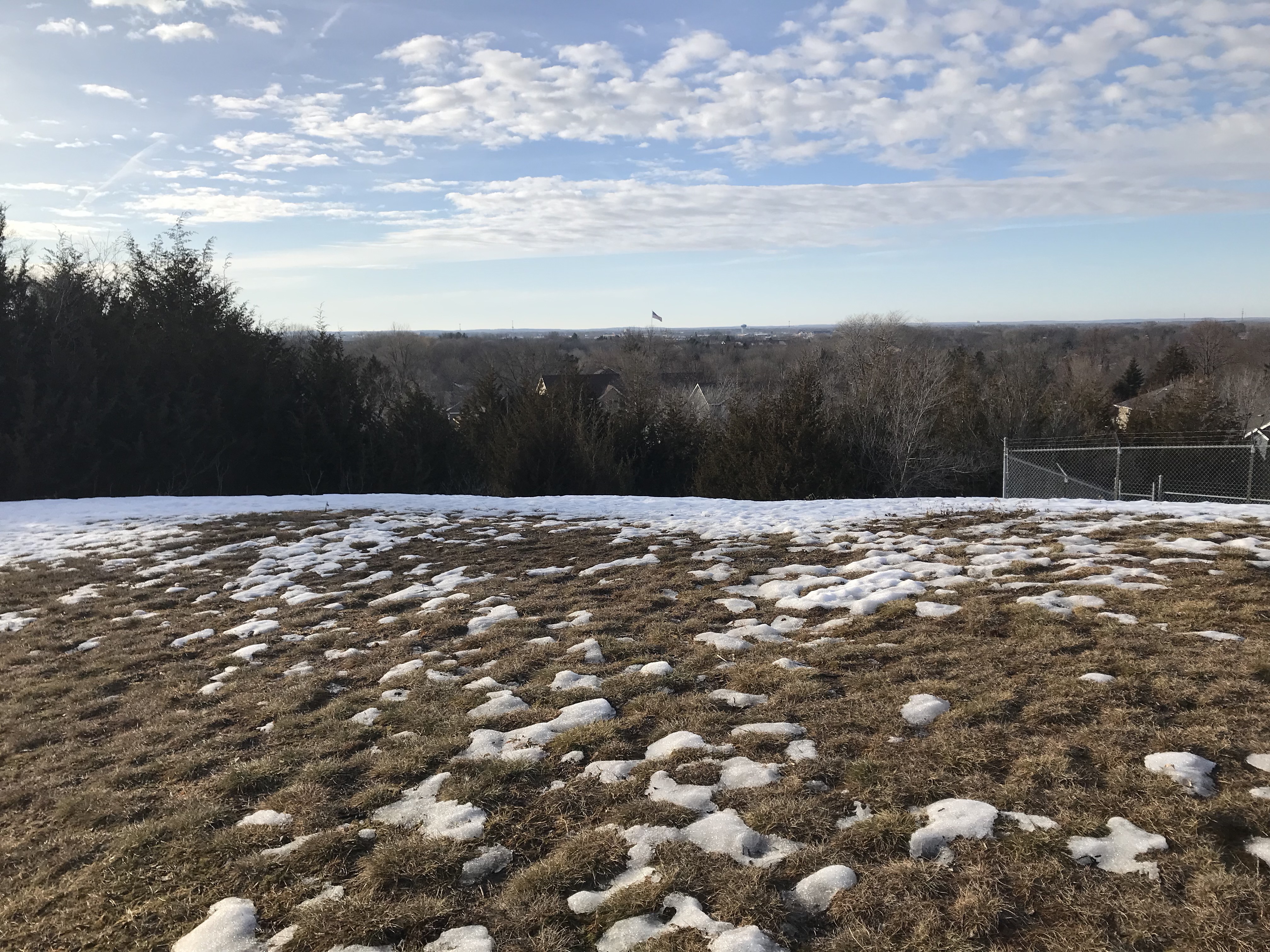
Here in the Northern Hemisphere, spring has officially begun. What does spring look like in Minnesota? The snow has been melting, so we can finally see the ground. It might even snow again tomorrow. Soon, however, we will see many signs of spring we’ve been waiting for!

Our favorite point to stop on our walk, St. Cloud, Minnesota, March, 2022

Many people take walks in my neighborhood. As they stroll past my window, I delight in watching the little ones. I often see them pointing at things–“Look! A butterfly! Look! A puppy!” Their chubby little fingers point to all of the wonderful things around them.

With that thought in mind, I wrote this song called “Hello Spring.” The melody comes from a traditional Scottish song I have always loved called “Ally Bally.” Imagine this song as a greeting to the many things one might see in the spring.

Hello Spring lyrics by Kathy Kampa on Jump Jump Everyone

Hello, bluebirds. Hello, bumblebees.

Hello, red tulips. Hello, cherry trees.

Hello, warm sun. Hello, blue skies.

Hello, little ants and orange butterflies!

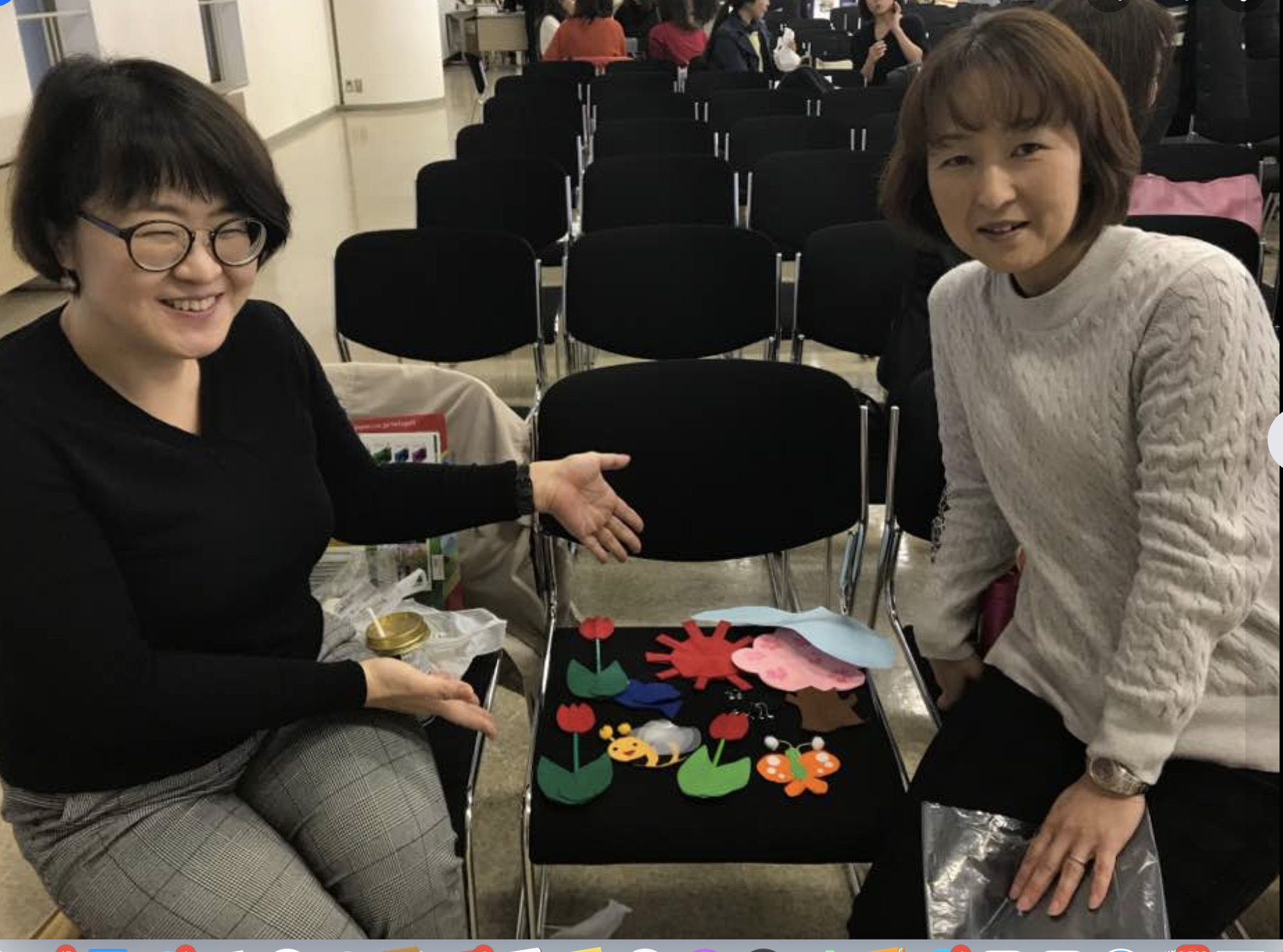
  1. Teach students the vocabulary using the Google images here. You can also create felt images like these creative teachers in Japan.

2. Use my movements from the video, or create your own.

3. I sing the song one part at a time, and the children echo. Then we all sing together.

Feel free to create your own movements. If you’d like some movement ideas, check out my video. We filmed it in Tokyo, Japan at the start of the pandemic in 2020.

Special thanks go out to Andre DiMuzio for his beautiful arrangement. Thanks also to Connor McKeown and Christian Vilina for their help with this video.

You can find this song at iTunes and ETJbookservice. “Hello Spring” is also available on streaming services, such as Spotify and Apple Music.

As an extension to this song, you can create your own lyrics. Ask your students, What do you see in the spring? Arrange the words to create your version of the song. Listen closely to the syllables. so that your song will fit the melody and rhythm. Move the words around to choose the best idea.

Hello, _______ _______. (2 sounds)

Hello, _____ _____ _________. (3 sounds-short-short long)

Hello, _______ _______ _______. ( 3 sounds)

Hello, _____ _____ _________. (3 sounds-short-short long)

Hello, _______ _______. (2 sounds)

Hello, _______ _______. (2 sounds)

Hello, _____ _____ _________. (3 sounds-short-short long)

and orange _____ _____ _________. (3 sounds-short-short long)

If you’re looking for more craft projects to link to this song, try these. You’ll find more ideas on my Pinterest page.

Bugs by Renata. Tulips

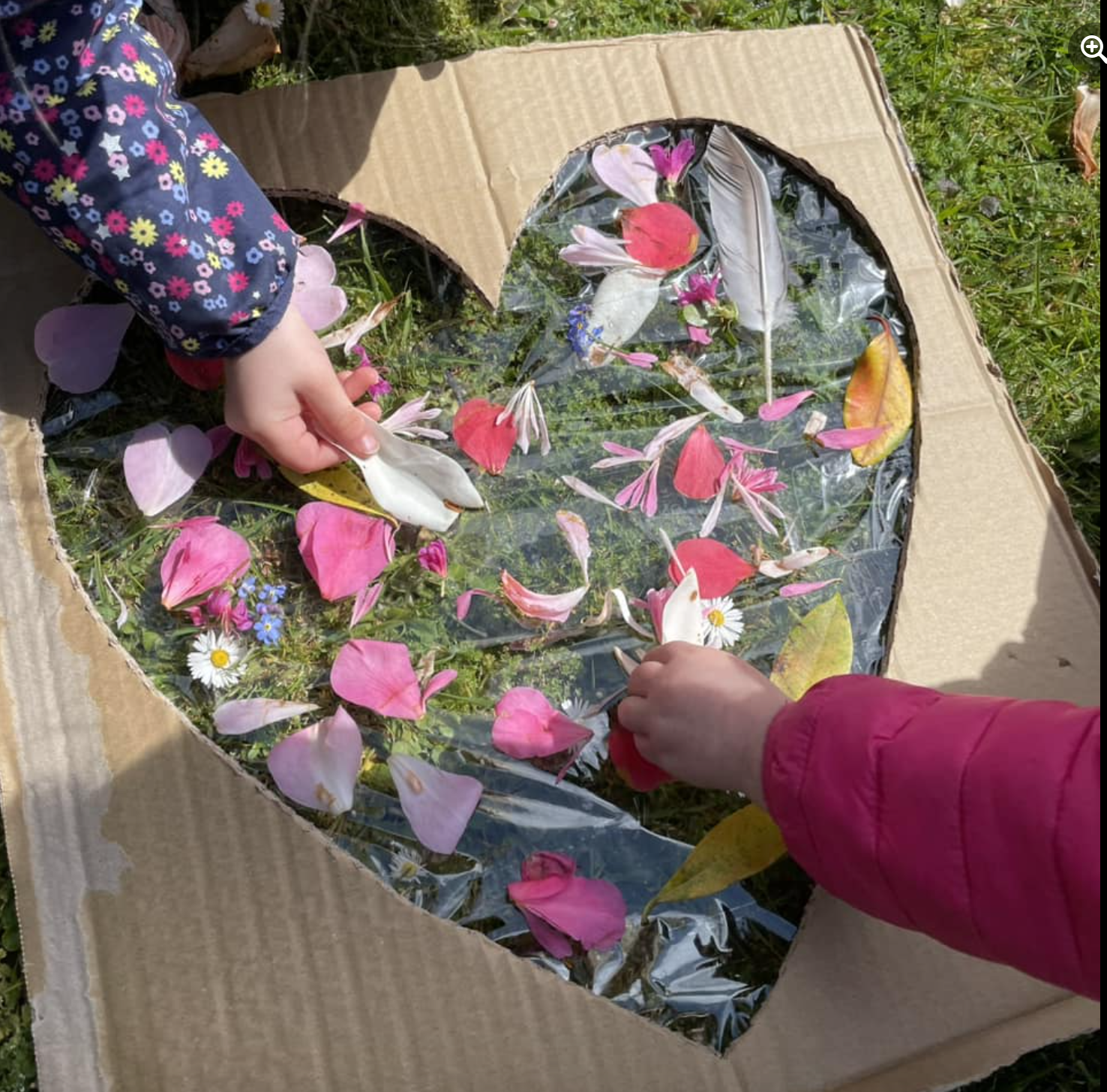
I want to share this beautiful spring project from Jellytots Childcare-Ofsted Registered Childminders.  

They write, “Anyone who follows our page will already know that our tots looooveee found things 🌺🌿🌼🪻🍁 So today we took a homemade heart canvas with us and added tape to make one side sticky. Every time we found something we liked – feathers, fallen petals, leaves, dandelion clocks, daises, etc., we added them to our canvas to create a beautiful floral heart 💖 We’re going to add tape to the open side and keep it up in the playroom so we can watch the changes to the flowers and petals 😍“

My second album “Jump Jump Everyone” is filled with many happy songs that have grown in my young learner’s classroom. The songs build language with useful patterns and vocabulary. Many songs link to classroom content. There are numerous classroom management songs, too. Children can dance like falling leaves, bloom like a spring flower, move through the butterfly life cycle . . . . you’ll find LOTS of fun and magic in this album.

Jump Jump Everyone

Happy teaching!

Kathy Kampa is a passionate educator of young learners. She seeks to nurture children’s imaginations and spark creativity through fun and engaging activities. Kathy believes music and movement should be a part of every young child’s learning.

Kathy and her husband Chuck have co-authored English language courses for young learners, including Magic Time, Everybody Up, Oxford Discover, Beehive, and Buzz (all published by Oxford University Press). They have also written English-language songs for Tokyo Shoseki. Kathy has taught young learners in Tokyo, Japan for 30 years. She has returned to her home state of Minnesota in the US where she continues to teach young learners.

Kathy is active as a teacher trainer, inspiring teachers around the world. Kathy presents workshops on English language education for children, including Growth Mindset, Multiple Intelligences strategies, inquiry-based learning, creativity, global skills, and music and movement.

If you’re interested in more of Kathy’s work, check out her YouTube channel at Kathy Kampa.

Let’s Play In The Snow!

I love the snow! I love the big snowflakes falling from the sky. I love the way it frosts the trees and makes everything look like a winter wonderland.

This winter has been warmer than usual here in Minnesota. On Valentine’s Day morning, we took a walk through the grassy fields wearing our sneakers.

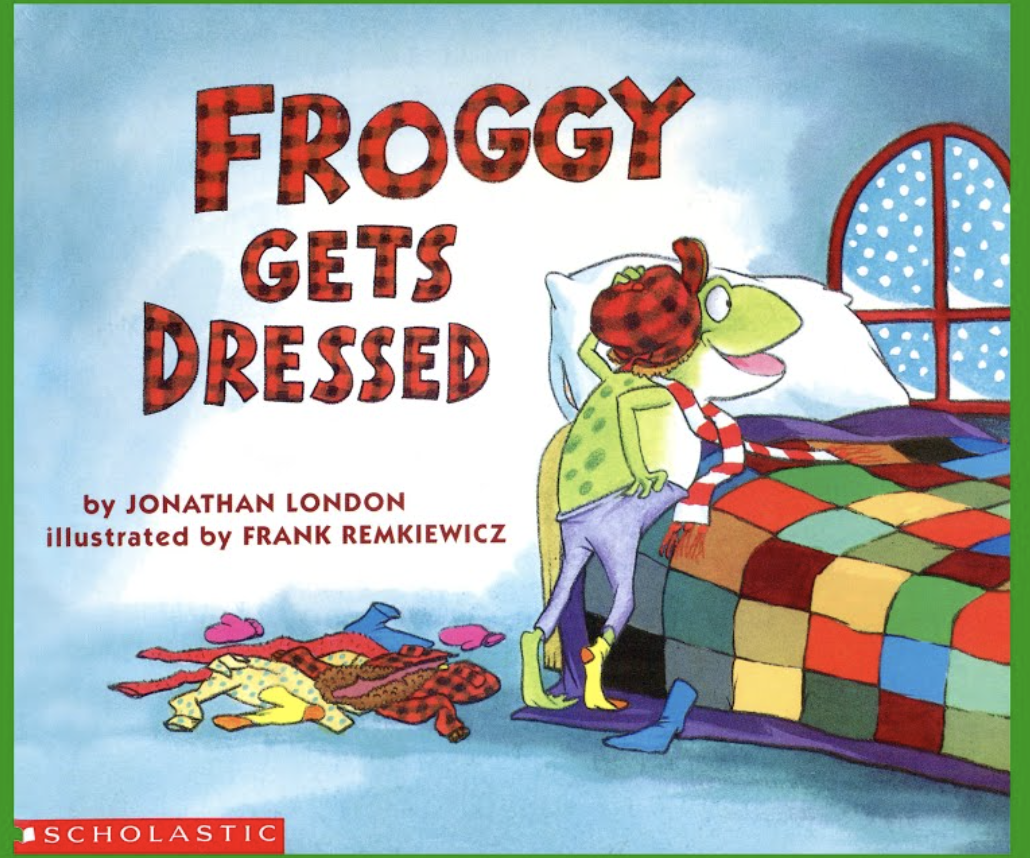
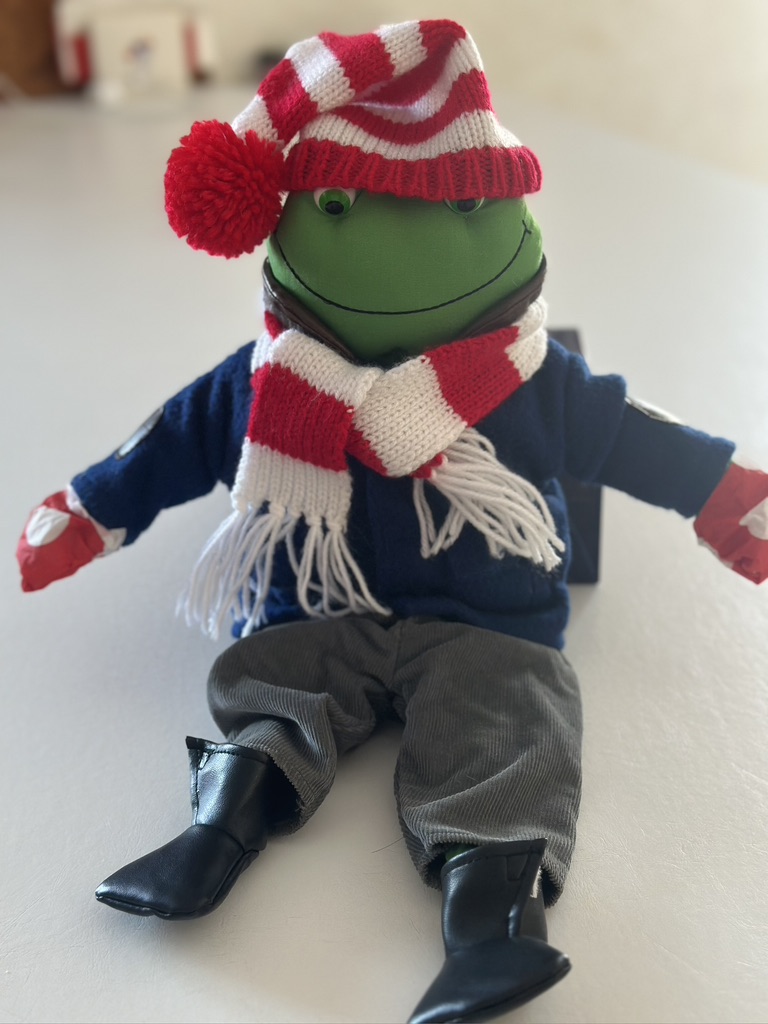
When it snowed last night, I was excited to get outside today to sing this song for little ones who may be “snow lovers” like me. If you’ve read the book Froggy Gets Dressed ( by Jonathan London with illustrations by Frank Remkiewicz), you’ll see how a little frog wants to play outside in the snow. During the story, each time Froggy goes outside, his mother reminds him of the winter clothing he forgot to put on.

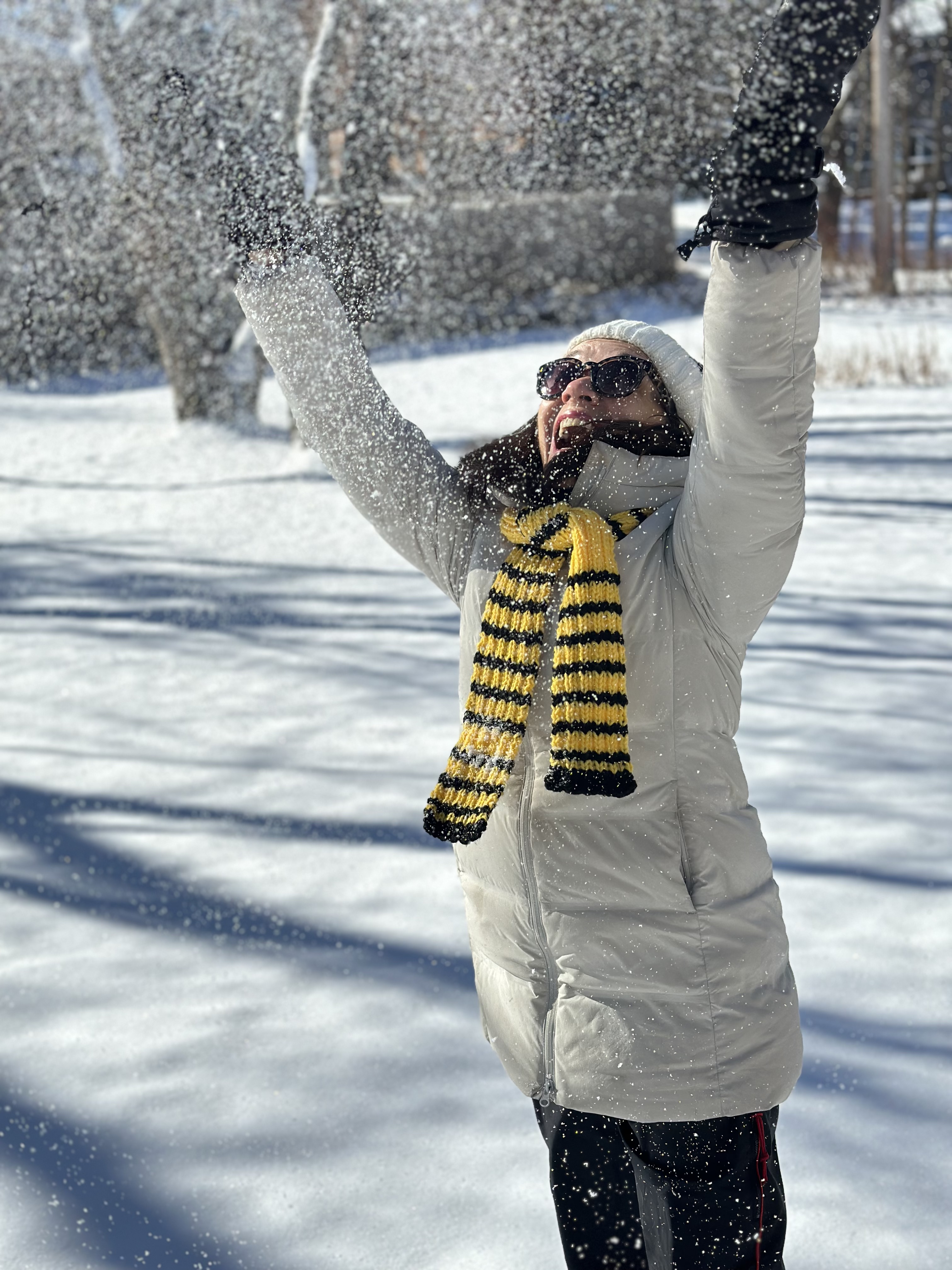
In this song, children can pretend to put on their winter clothing one piece at a time. My young learners LOVE this song! You can watch one video where I’m out in the snow. The other video is the pretend version for the classroom.

Let’s Play In The Snow by Doug Nichols

from the songbook “A Nichol’s Worth of Songs Volume IV “
Put on your boots and come with me.

Pretend to tug on boots. Gesture with your thumb to your chest.

Let’s go out. It’s snowing!

Stretch arms wide. Move your fingers downward to look like snow.

Put on your boots and come with me.

Pretend to tug on boots. Gesture with your thumb to your chest.

Let’s play in the snow!

Pretend to make a snowball. Throw it!

*Substitute each clothing item below into the song. Add your own ideas.

Students can also add their own ideas using my “Think, Think, Think” chant. What clothing items does Froggy wear in the winter? What do you wear? Long underwear? Ear muffs?

Think, Think, Think chant by Kathy Kampa

Think, think, think. Think, think, think.

What should we do?

Think, think, think. Think, think, think.

What should we do?

I know! Let’s put on our jacket!

If you’d like all of the images for this song, download the Google slides. You can see me putting on winter clothing items one by one. It’s fun for the students to put the slides in order and name the new item that was added. You’ll find the musical score here, too.

Here’s a video we took outside with the last item–the mittens.

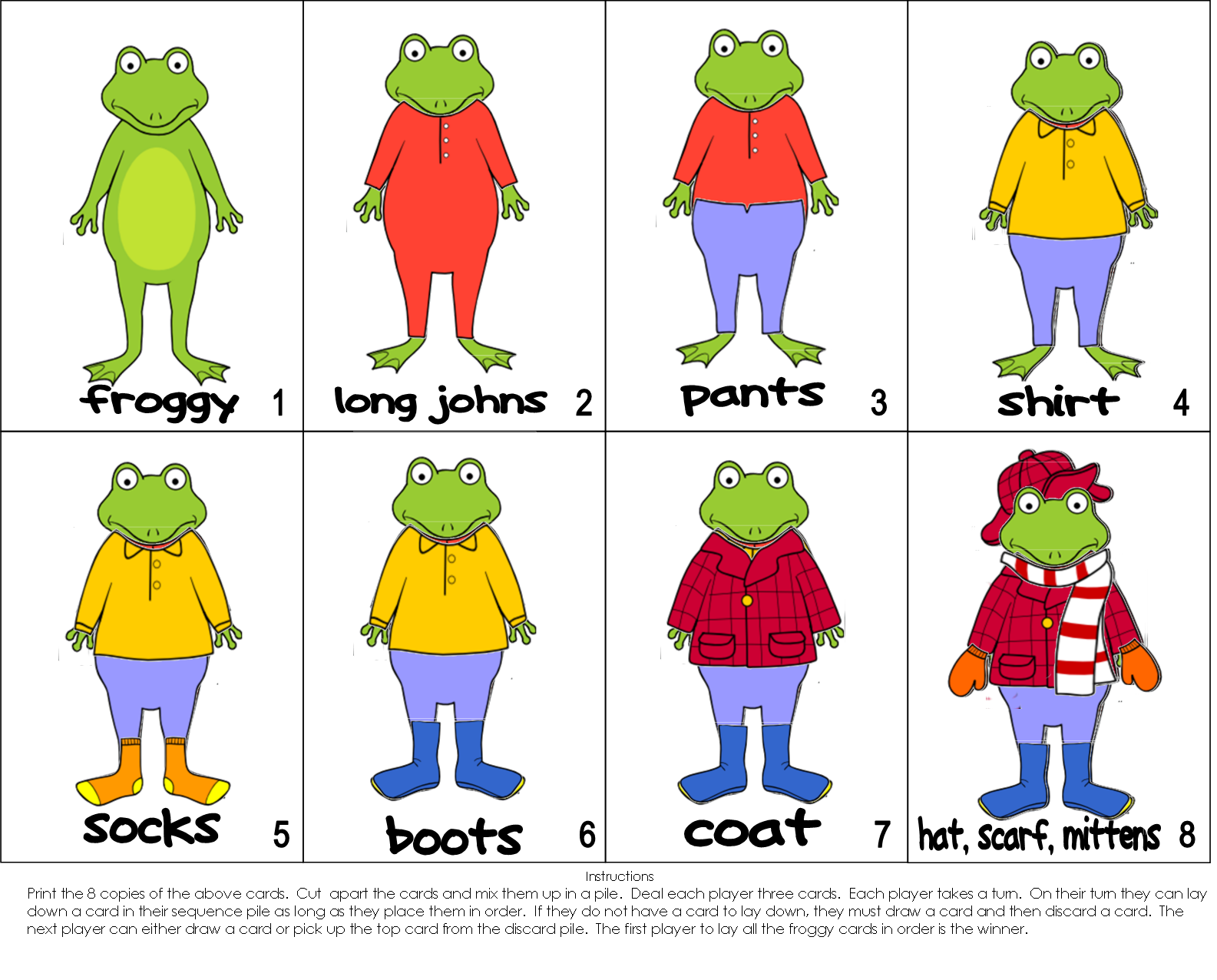
This is a fun reproducible with Froggy’s clothing.

Songwriter Kathy Kampa is a passionate educator of young learners. She seeks to nurture children’s imaginations and spark creativity through fun and engaging activities. Kathy believes that music and movement should be a part of every young child’s education. Kathy’s songs for kids (Kathy Kampa’s Special Days and Holidays and Jump Jump Everyone) are available on iTunes.

Kathy uses a globally-minded and inquiry-based approach to teaching through which students develop 21st-century skills. She also supports the development of English language skills by creating songs, chants, and TPR/movement activities targeted to young learners’ needs. Kathy is an author with Oxford University Press and has co-authored English language courses for young learners (Magic Time, Everybody Up, Oxford Discover, Beehive, and Buzz). Kathy conducts teacher training sessions around the globe.

This song hasn’t been professionally recorded yet. However, for more kid-tested music and movement activities, check out more music on iTunes, Spotify, and Apple Music. Kathy has produced two music CDs for very young learners, Kathy Kampa’s Special Days and Holidays and Jump Jump Everyone, which build English language skills through music and movement while nurturing creativity and imagination. Grown and loved by real kids!

Here’s a playlist with songs for kids to move to:

Are you missing out on Kathy Kampa’s new videos?

Check out Kathy Kampa’s YouTube channel here and subscribe.

Do you celebrate success in your class?

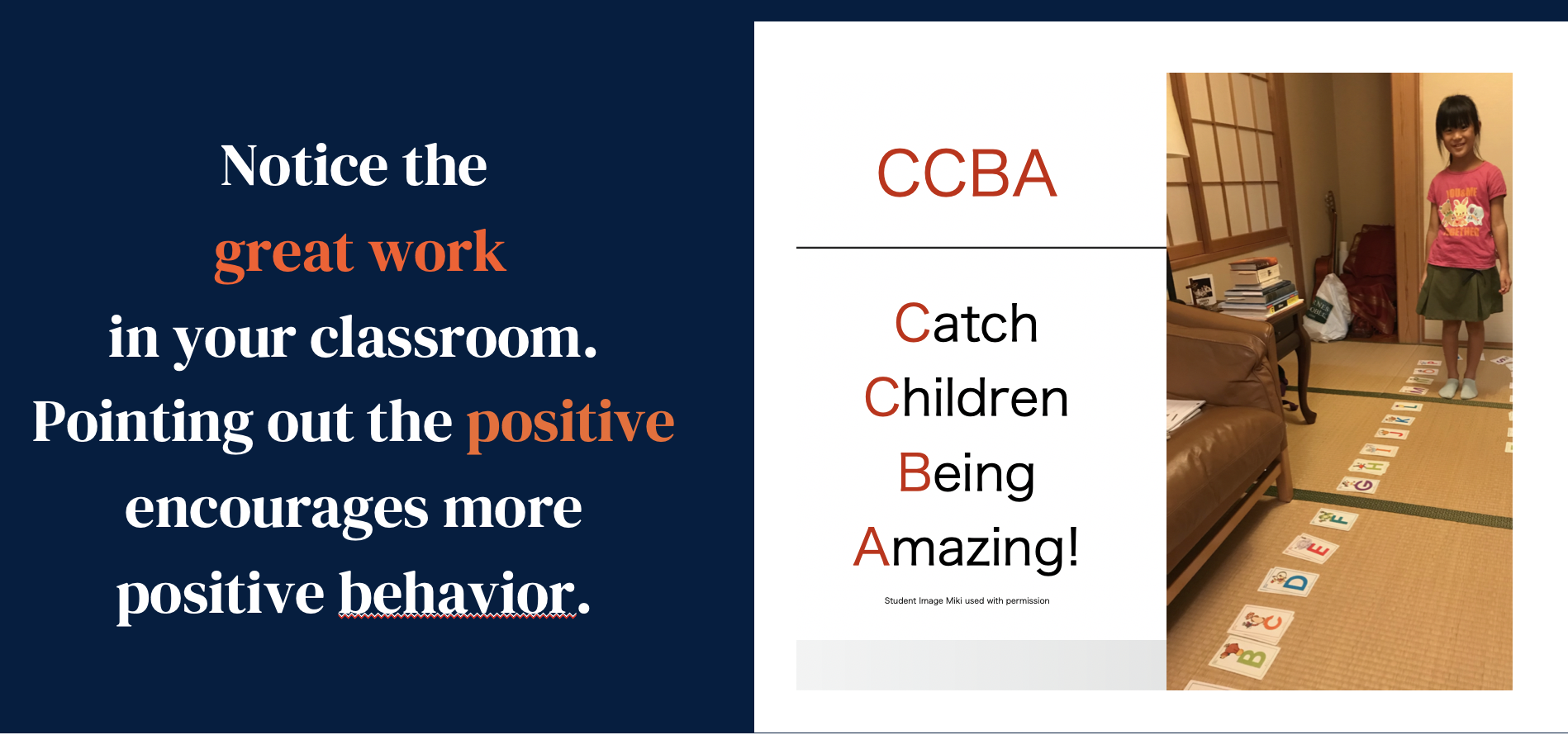
Celebrate success with CCBA. What’s CCBA?

Catch Children Being Amazing! It’s an acronym I created to remind teachers to focus on amazing student work. When we notice the great things happening around us, rather than negative things, more great things can appear. By talking about the wonderful things you see happening in your classroom, young learners will strive to do these wonderful things, too.

How do you do that?

Describe what you see happening in your classroom. What do you see? What do you hear?

-Be specific about what students are doing. Consider your goals for the activity. You can add descriptions to help students come up with more ideas.

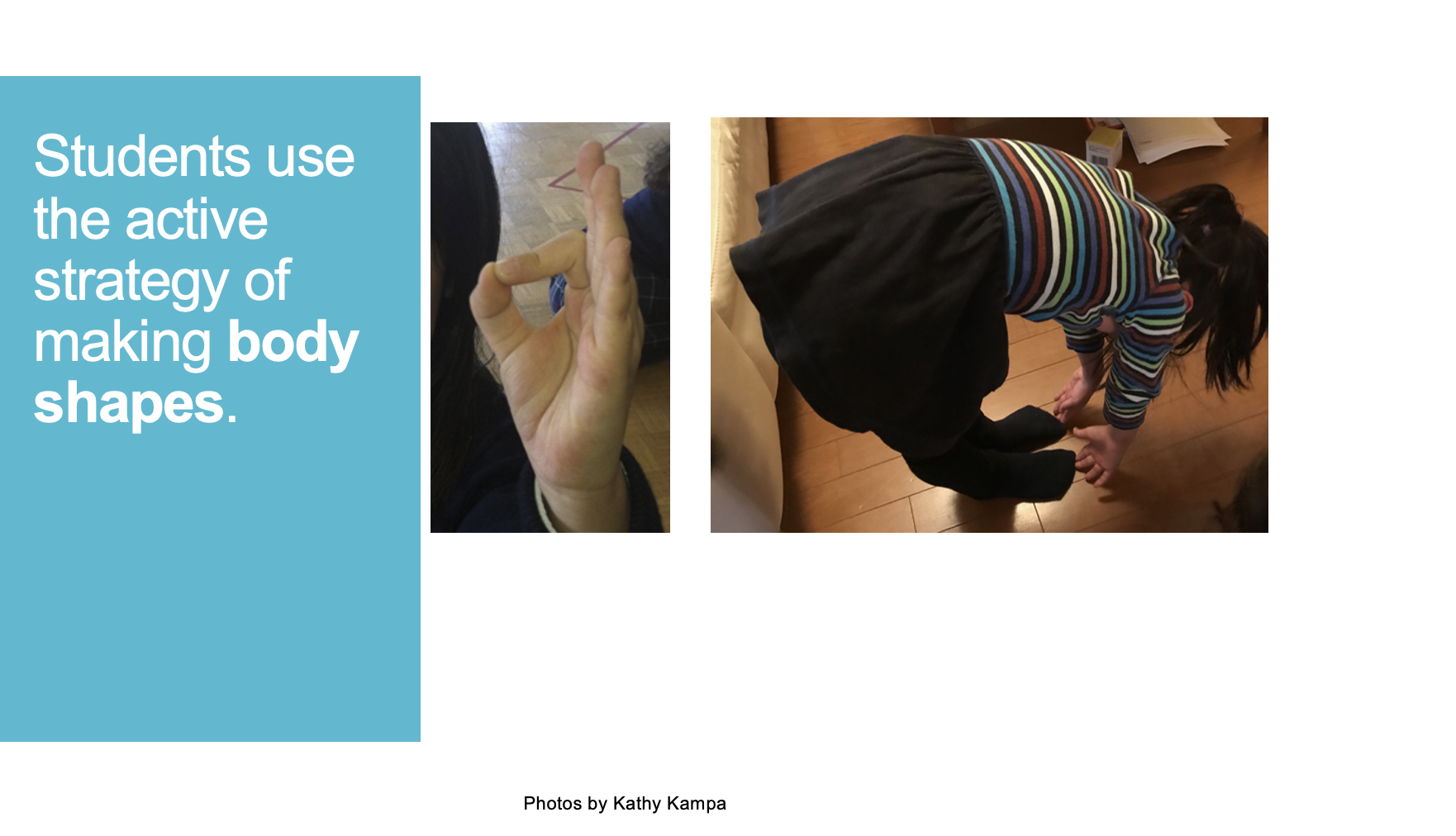
For example, the goal of the activity below was for students to make letter shapes in different ways. At first, I’m describing individual student actions. You’ll notice that I’ve pointed out body parts, letter names, size, and students working together.

I see Yuya making the letter d with his fingers.

I see Sara making the letter D with her whole body. She made a big letter shape.

I see Anna and Noah standing back-to-back. They are collaborating by making their letter together.

By describing the many different students’ ideas, students will try out varied ideas, too. Try to acknowledge as many students as possible during your class. That builds self-confidence, too.

You can also acknowledge something that the whole class has done.

Look at how quickly our class tidied up our classroom. Everything has been put away.

Our class now knows all the words to our new song. I listened and heard you singing by yourself.

Celebration Chants

I use Celebration chants with my young learners (and teachers). They’re easy to do and bring positive energy to your space. First, teach them to your students. Then, use them throughout your day. Let’s get started.

Here’s a video with all three chants listed below.

Celebration Chants video

We Did It

My Japanese students used to say, 先生、やりましたよ。Sensei, Teacher, I did it! I wrote this chant to celebrate my students’ successes. It’s called “We Did It!”  Maybe you know this popular chant. It’s available on my Jump Jump Everyone album, too.

     We did it! We did it! We  did  It today!

     Pat. Clap. Pat. Clap. Pat. Clap. Pat. Clap.

We did it! We did it!      Hip, hip,               hooray!

      Pat. Clap. Pat. Clap. Roll your hands. Arms up high.

4-3-2-1

Why not celebrate in a new way? My students loved counting backwards.

                         Four, three, two, one,

Use fingers      4—–3—–2—–1

Hooray for all the things we’ve done.

 Shake hands up  / Clap.    Clap.   Clap.

SUCCESS

This last chant is called “SUCCESS.” This may work best for your elementary students since they know how to spell words and do handclapping games.

S—U—C—C—E—S—S—      That’s the way we spell “success.”

Pat. Clap. Pat. Clap. Pat. Clap. Pat. Clap.      Pat. Clap.    Pat. Clap.      Pat      Jump up high.

My students like to do this chant with a partner, too. Here are several ways students can do it, from the easiest way to the most complicated way.

Variation 1: Pat own legs—clap both partner’s hands.

Variation 2: Pat own legs—clap own hands—clap both partner’s hands—clap own hands

Variation 3: Pat own legs— clap own hands—clap partner’s right hand—clap own hands

—clap partner’s left hand—clap own hands– clap both partner’s hands—clap own hands* (repeat—last time omit last *)

All of these images can be found in the Google Slides here.

Do you have a celebration chant that you do with your students? Share it with Kathy!

magictimekids@gmail.com

Songwriter Kathy Kampa is a passionate educator of young learners. She seeks to nurture children’s imaginations and spark creativity through fun and engaging activities. Kathy believes that music and movement should be a part of every young child’s education. Kathy’s songs for kids (Kathy Kampa’s Special Days and Holidays and Jump Jump Everyone) are available on iTunes.

Kathy uses a globally-minded and inquiry-based approach to teaching through which students develop 21st-century skills. She also supports the development of English language skills by creating songs, chants, and TPR/movement activities targeted to young learners’ needs. Kathy is an author and teacher-trainer with Oxford University Press. She is delighted to be teaching young learners in her hometown.

My Fingers Dance!

Fingerplays are a fun way to add movement to your lesson. Students can move their fingers while sitting. When you need an activity to bring the energy level down in your class, consider a fingerplay.

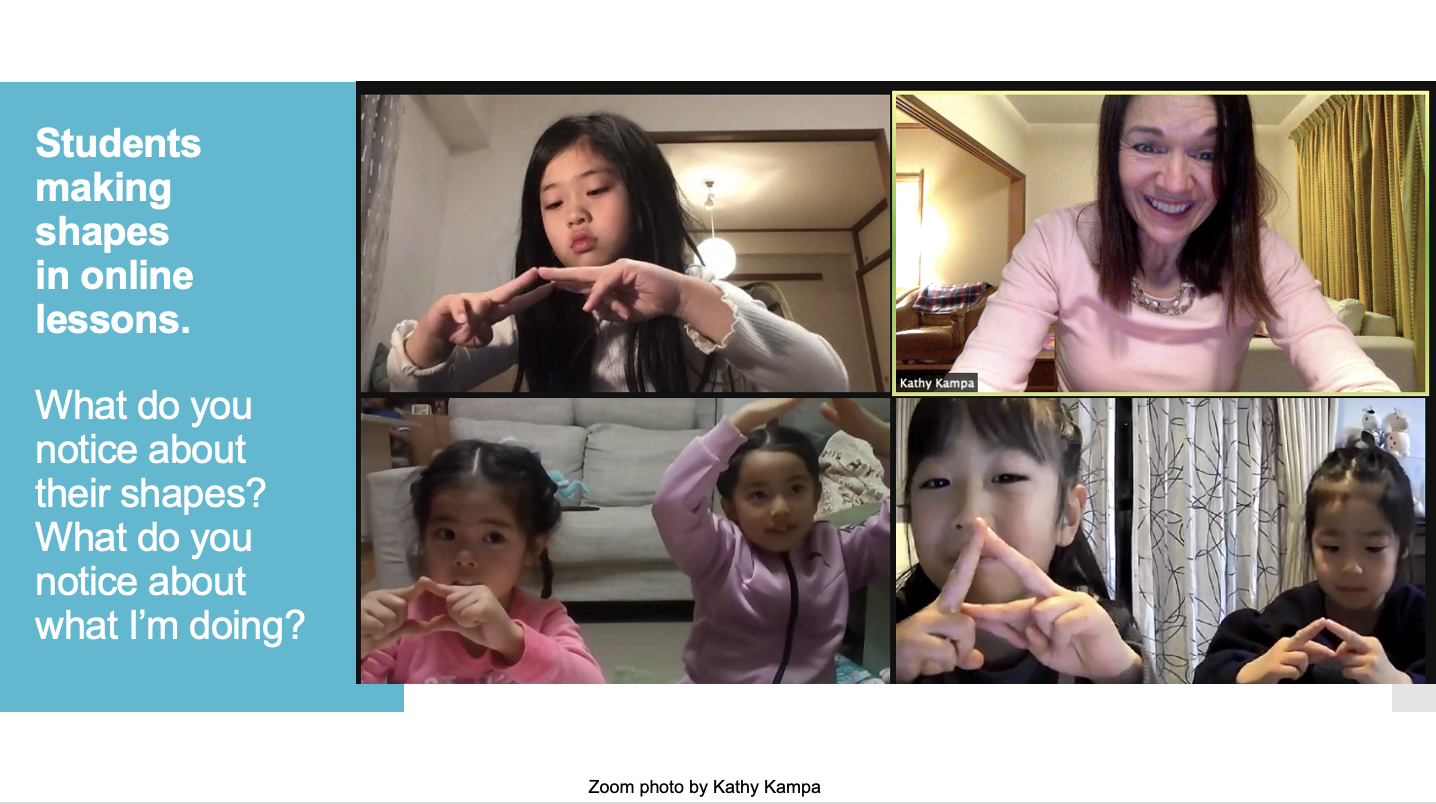
This chant teaches the heart shape (perfect for Valentine’s Day!) as well as other shapes (circle, square, rectangle, triangle, star). Notice the repetition in the phrases, which is important for young learners.

Encourage students to make shapes in different ways to nurture their creativity. Notice the great things your young learners are doing. That’s what I call CCBA–Catch Children Being Amazing!

Check out my Japanese students making shapes. Here we are studying together online. (Photos used with permission)

My students just love this chant! I hope that you do, too.

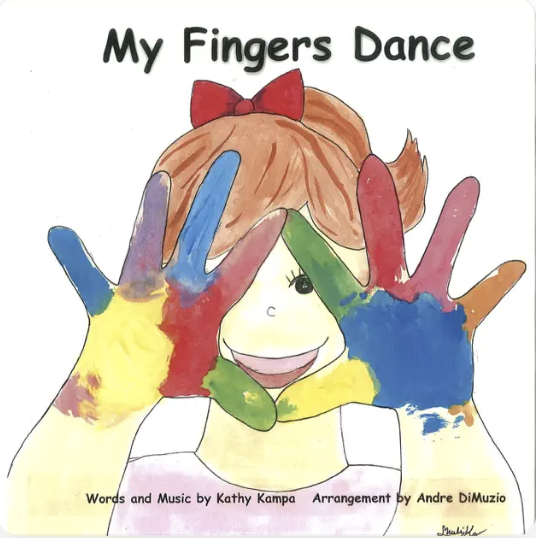
My Fingers Dance

by Kathy Kampa on Jump Jump Everyone. Available on iTunes, Spotify, and other streaming services.

My fingers, fingers, fingers, fingers, fingers dance!

My fingers, fingers, fingers, fingers, fingers dance!

Make a circle! Take a picture. Make a circle! Take a picture.

*Substitute additional shapes for “circle.”

Check out the video below for the simple motions.

This Google slide from the video provides a visual of the shapes.

The music is available on iTunes and on streaming services such as Spotify and Apple Music.

Let’s practice shapes some more!

Time for a surprise! Have students open their hands and close their eyes. Hand them one of the shapes. Use this little chant I just made.

A Big Surprise by Kathy Kampa

Open your hands and close your eyes.

Get ready for a big surprise!

My students enjoy going on a shape hunt. We focus on one shape at a time, and look for things with that shape.

Kids love using the shaped “magnifying glasses” to find shapes in everyday objects around them! You can make these darling shape finders from Amber at Apples to Applique (amber@applestoapplique.com)

Learning something in many ways is fun for young learners! As Dr. Howard Gardner pointed out in his theory of Multiple Intelligences, children can learn more successfully when using many ways to approach a topic. In this lesson, students hear words in rhythm, they move their bodies, they see shapes, and they interact together.

If you’re celebrating Valentine’s Day, students can make cards with LOTS of shapes!

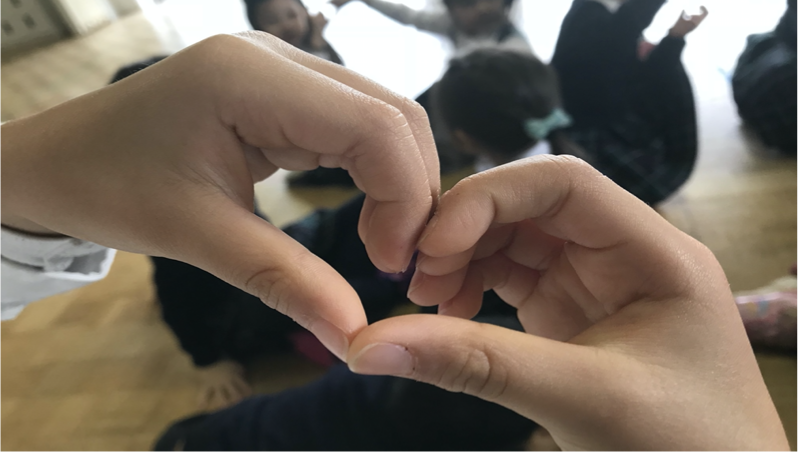
Finally, if you read my last post, you’ll remember how to make a heart shape with your hands. This poem was shared with me by my colleague:

    I put my hands together.  (put the heels of your hands together)

    This is how I start.  (hold)

    I curve my fingers just like this (curve your fingers to touch each other)

    and now I have a heart.  (this should make a heart shape)

    Now, look through the heart to see each of the students in your class.

    Say, “I see you in my heart!”

Songwriter Kathy Kampa is a passionate educator of young learners. She seeks to nurture children’s imaginations and spark creativity through fun and engaging activities. Kathy believes that music and movement should be a part of every young child’s education. Kathy’s songs for kids (Kathy Kampa’s Special Days and Holidays and Jump Jump Everyone) are available on iTunes.

Kathy uses a globally-minded and inquiry-based approach to teaching through which students develop 21st-century skills. She also supports the development of English language skills by creating songs, chants, and TPR/movement activities targeted to young learners’ needs. Kathy is an author and teacher-trainer with Oxford University Press.

For more kid-tested music and movement activities, check out more music on iTunes, Spotify, and Apple Music. Kathy has produced two music CDs for very young learners, Kathy Kampa’s Special Days and Holidays and Jump Jump Everyone, which build English language skills through music and movement while nurturing creativity and imagination. Grown and loved by real kids!

Check out Kathy Kampa’s YouTube channel here.

V-V Valentine!

Valentine’s Day is right around the corner! What activities will you do with your young learners for Valentine’s Day?

Playing with letter sounds is fun for little ones. Let’s explore ways to make the shape of the letter Vv:

-with our fingers

-with our hands

-with our arms

-with our legs

-with our whole body (balance!!)

-with a friend

Each time you make the shape, say the sound /v/. 

*Try to make only the sound /v/ and not /vƏ/ (vuh)

Can you change your V shape into a heart shape?

I created this song with the phrase “/v/ /v/ valentine.” Make the shapes with your fingers or the heels of your hands, then with your arms. Watch the video for more details. I created it with my nieces Shannon and Brooke many years ago. It’s easy to sing and so much fun!

Here are the lyrics:

Be My Valentine

lyrics by Kathy Kampa, melody “Cho Cho”/”Lightly Row” 

I like you. You like me. Will you be my Valentine?

I like you. You like me. Be my Valentine.

[v] [v] Valentine!

[v] [v] Valentine!

I like you. You like me.

Be my Valentine.

Repeat facing a partner.

This song can be found on iTunes and other streaming services, such as Spotify and Apple Music.

Spotify playlist: Songs for Kids for Valentine’s Day and Friendship

Celebrate the joy of Valentine’s Day while building social skills in your classroom. This playlist includes songs for Valentine’s Day and songs about friendship. You’ll find songs to add movement to your class activities, too. Click here to see Kathy’s Spotify channel. for more curated playlists.

Crafts Activities

On Valentine’s Day, kids love to make things for their friends. Check out these simple craft activities.

Can your students find the letter V in these craft activities?

This first craft is a Valentine chain. Cut narrow paper strips about 1″ wide and fold them in half. Look! There’s the letter V! Then curve the tops in to make a heart. This is a great activity for teaching colors and patterns. Try this when you’re sitting with a small group. Students fold the strips, slide a new strip through, then staple the top of the heart. Then, create a color pattern, such as white-red-pink-white-red-pink. Young learners can count the number of hearts in the chain.

When students have the paper strips open, they can write a secret message on the heart.

This idea comes from https://www.teachwithme.com/blogs/getting-to-the-core/item/588-valentine-ideas.

This second craft is like magic! Each student folds a sheet of construction paper in half. Trace around the student’s hand. Be sure that their thumb and pointer finger are touching the folded edge. Students can cut around their fingers. Then decorate a card for someone they love.

This idea comes from https://easypreschoolcraft.blogspot.com/2013/01/top-20-valentines-day-crafts-for-kids.html?m=1

Come back to my blog to discover more fun activities that build language through music and movement.

It’s the Year of the Dragon!

Photo by Pixabay on Pexels.com

January 1st marks the beginning of the year. Each year one of the twelve animals in the Chinese Zodiac calendar is celebrated, and this year’s animal is the Dragon! We have a special place in our home where we display a small ornament for the new year. People celebrating the Lunar or Chinese New Year will welcome the new year of the Dragon on February 10th.

This is a simple song to celebrate the new year. It borrows two familiar melodies to create one new song. The Google slides for this song are here.

It’s the Year of the Dragon  By Kathy Kampa 

Part A: For He’s a Jolly Good Fellow

It’s the year of the Dragon!

It’s the year of the Dragon!

It’s the year of the Dragon,

It’s 2024. (twenty, twenty-four)

Part B: BINGO

I like to have students move with music whenever possible. What kind of movement can you do? Here are some suggestions.

In Part A, on the words “It’s the year” students can stand tall with their hands at their sides.

On the word “DRAGON,” make a dragon pose or movement. My students made a wavy movement with their arms.

For the year 2024 (twenty/ twenty-four), students can write the numbers in the air or hold up their fingers to show the numbers. We made the shapes two-zero-two-four.

In Part B, students can add body percussion sounds. What’s body percussion? Sounds students can make using body parts, such as clapping their hands, patting their legs, stamping their feet, or snapping their fingers. They can play the rhythm of the letters when spelling the word “dragon.” Practice spelling the word with many different sounds. Since this repeats three times, you can repeat it with a different body percussion sound each time. Some of my students even tried body spelling by making each of these letters with their fingers or whole body. Challenging!

If you have unpitched instruments, like rhythm sticks, drums, tambourines, or shakers, play the rhythm with the instruments. You might even add a big cymbal sound on the word, DRAGON.

Since this song comes around once every twelve years, it hasn’t been professionally recorded. Enjoy it with your students to celebrate the new year!

Here’s a video from my online class with my Japanese students. We tried to capture both my students’ movements and my movements.

It’s a cold winter day here! I made a video of the song from the front so that you can see the movements more easily.

Beautiful videos capture authentic dragon dances. Here’s one that you might share with your students.

Go to Kathy’s Spotify playlists to find more music for young learners.

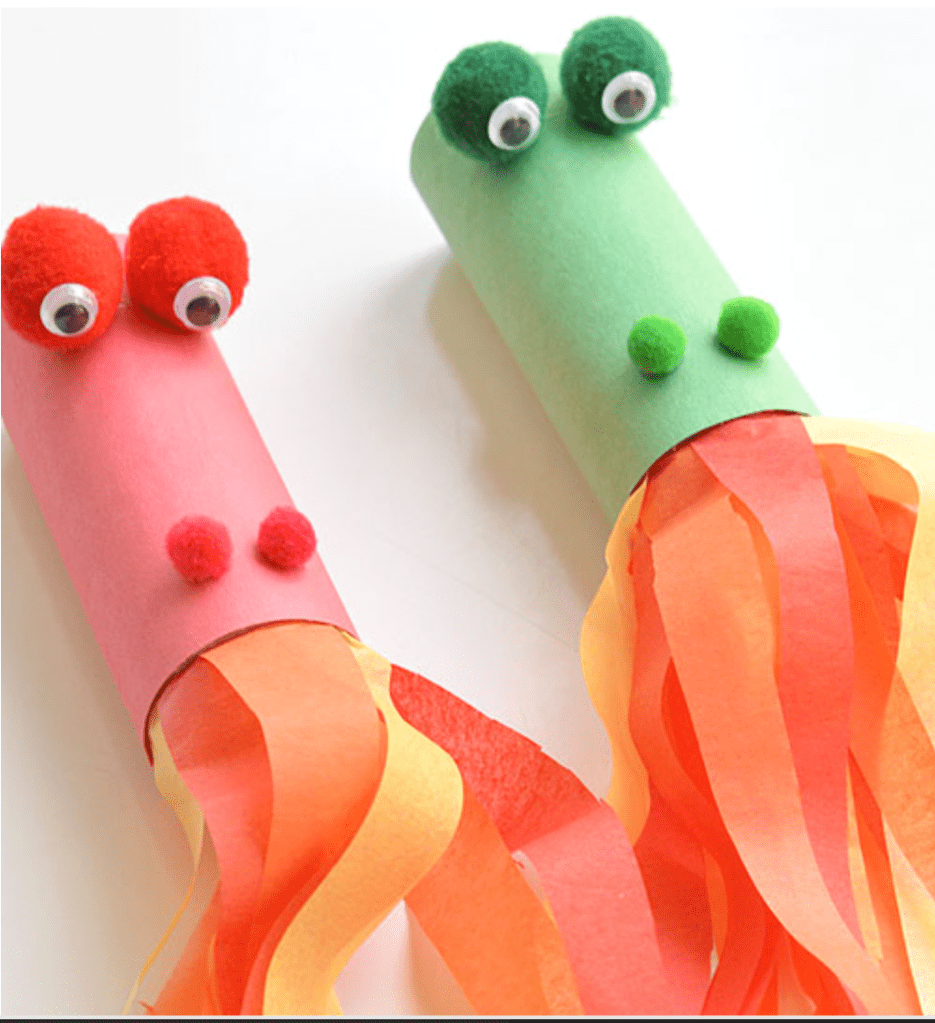
If you’re looking for a craft project, check out this one which uses paper towel rolls. You can use construction paper in lieu of the pom poms.

Kathy currently teaches young learners in her hometown of St. Cloud, Minnesota, USA as well as classes online. She is passionate about creating memorable songs for children that build language as well as music and movement skills. Kathy creates songs that stick in children’s heads long after class. We hope that you enjoy her music, too.

Contact us at magictimekids@gmail.com if you’re looking for a song about a specific idea or topic. We’ll try to write one with that idea in mind.

Don’t Forget to Leave Cookies and Milk for Santa

Our Christmas tree is decorated with ornaments from around the world. Some presents are already under the tree. I’ve been busy baking Christmas cookies and plan to bake some more today. Why? On Christmas Eve, we always leave cookies and milk for Santa.

Even though our children are grown up, we continue to believe in the magic of Christmas. This is one of the traditions that lingers in our lives.

So, here’s the song I wrote to celebrate this.

It’s to the melody of Twinkle, Twinkle Little Star. To thank you for your support through the years, I’m including a complimentary music track of this song from my CD entitled Kathy Kampa’s Special Days and Holidays.

Here are some suggestions for movements for this song.

Santa’s Cookies and Milk Words by Kathleen Kampa and Charles Vilina

Spoken: Dear Santa, Welcome to my house. I’ve been very good this year.

Sung: Have some cookies. (gesture with one hand to the side)

Have some milk. (gesture with the other hand)

Christmas cookies and a glass of milk. (Twist hands like twinkling Christmas stars for the words “Christmas cookies” and then make the shape of a glass for the word “milk.”)

Eat the cookies. 1-2-3 (gesture eating cookies, then fingers 1-2-3)

Drink the milk. It’s from me. (gesture drinking milk, then point to self)

Have some cookies. (gesture with one hand to the side)

Have some milk. (gesture with the other hand)

Christmas cookies and a glass of milk. (Twist hands like twinkling Christmas stars for the words “Christmas cookies” and then make the shape of a glass for the word “milk.”) 

Spoken: Thanks Santa! Have a good night! Good-bye! 

For more tips on performances, see this blog post.

Music and movement are one way for students to learn new words and phrases in English. Art projects are another way.

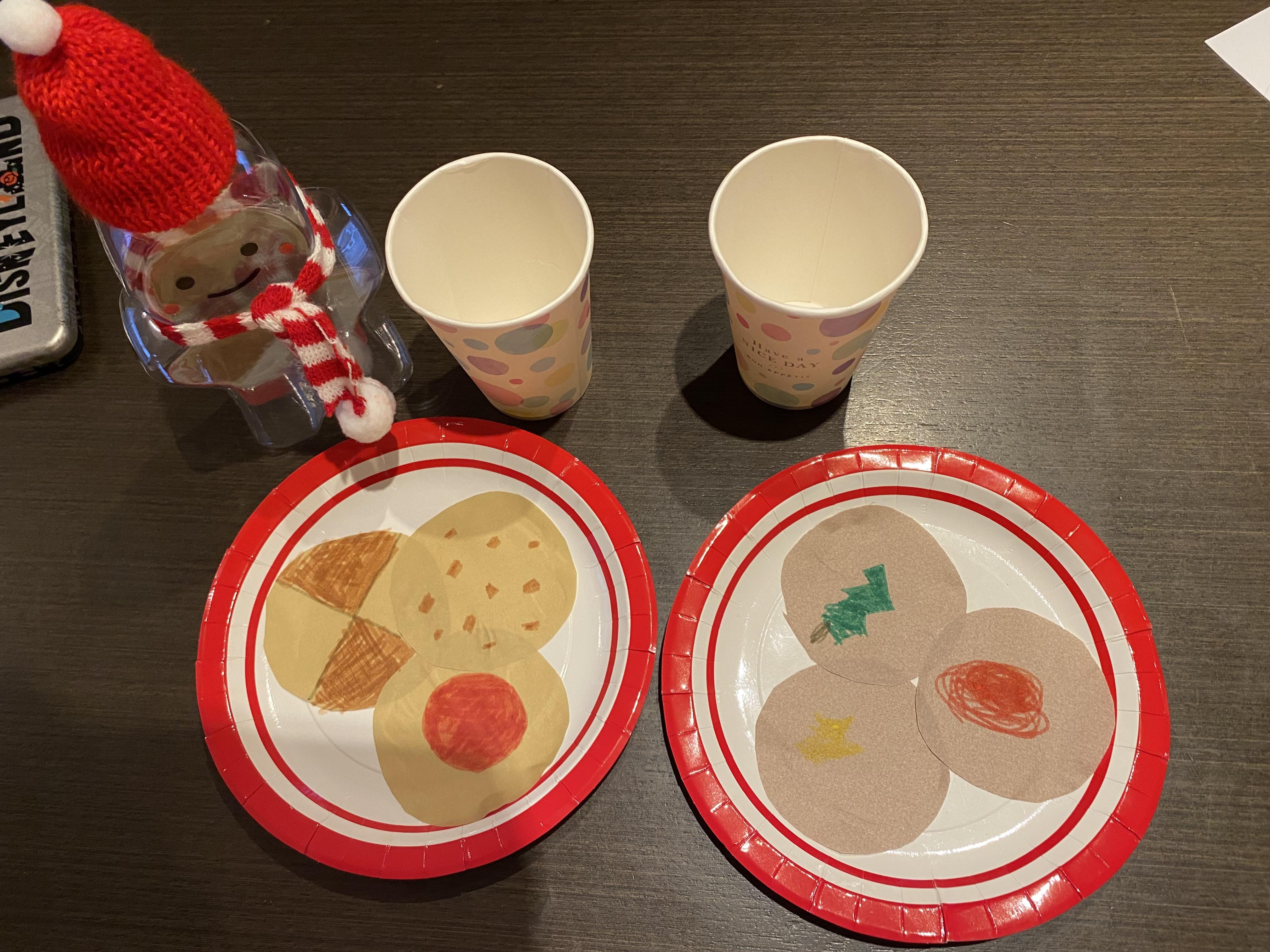
Yoko Matsui created this simple project for her students. They made plates with cookies and milk. Your students could write a little note, too.

If you’re looking for more craft ideas for Christmas, I’ve gathered a bunch of them on my Pinterest page for Christmas.

We wish you all the best for Christmas and throughout the year from our family to yours.  May the magic of Christmas remain in your hearts.

Cookies and Milk left for Santa

Santa's Cookies and Milk is a simple song to celebrate a time-honored tradition of leaving a treat for Santa Claus.

Kathy Kampa is a passionate educator of young learners. She seeks to nurture children’s imaginations and spark creativity through fun and engaging activities. Kathy believes that music and movement should be a part of every young child’s learning.

Kathy is the co-author of Magic Time, Everybody Up, Oxford Discover, Beehive and Buzz (published by Oxford University Press). She has taught young learners in Tokyo, Japan for over 30 years. Kathy is also active as a teacher trainer, inspiring teachers around the world. She has currently returned to her home state of Minnesota in the US.