Let’s Play In The Snow!

I love the snow! I love the big snowflakes falling from the sky. I love the way it frosts the trees and makes everything look like a winter wonderland.
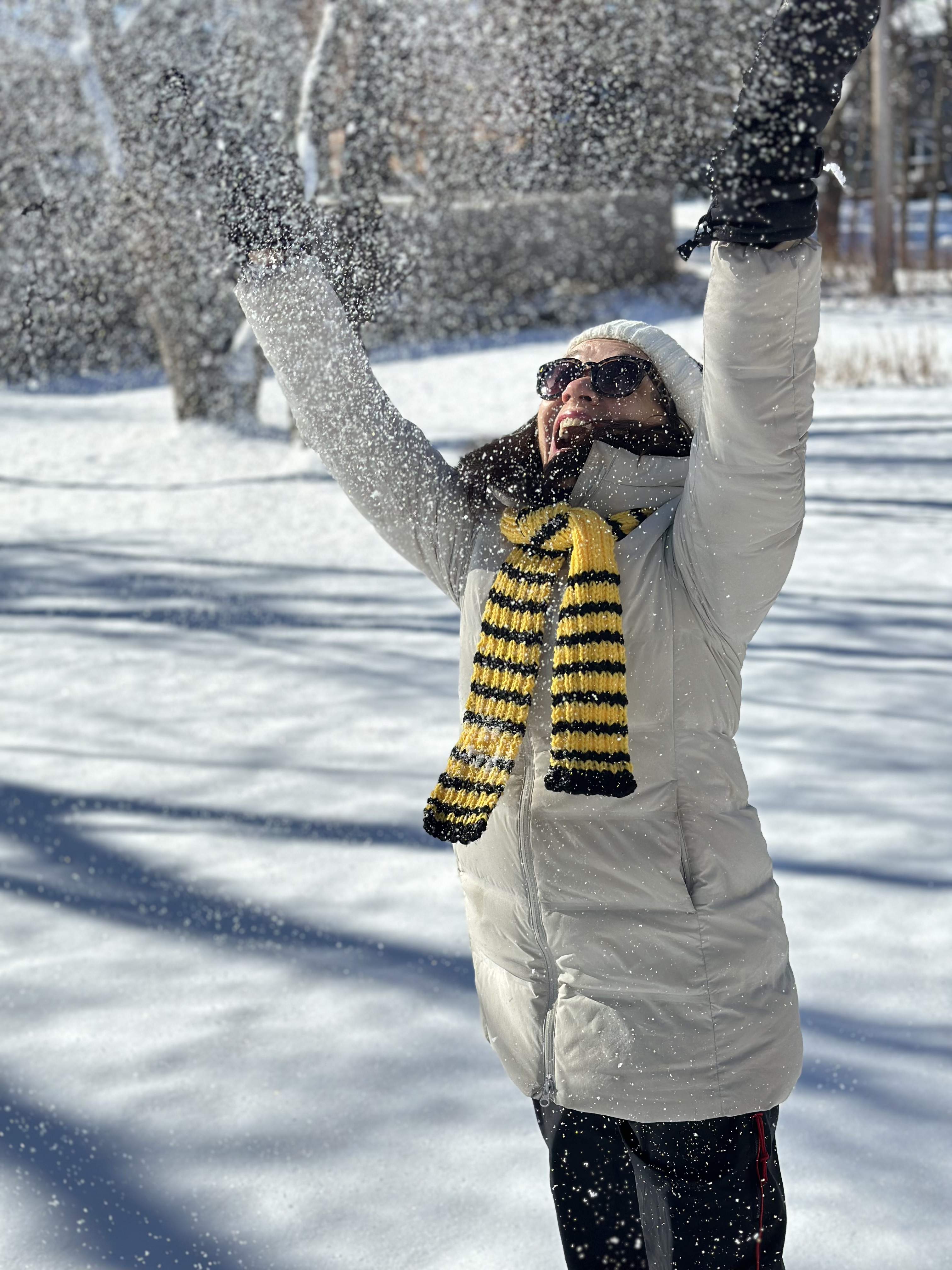
This winter has been warmer than usual here in Minnesota. On Valentine’s Day morning, we took a walk through the grassy fields wearing our sneakers.
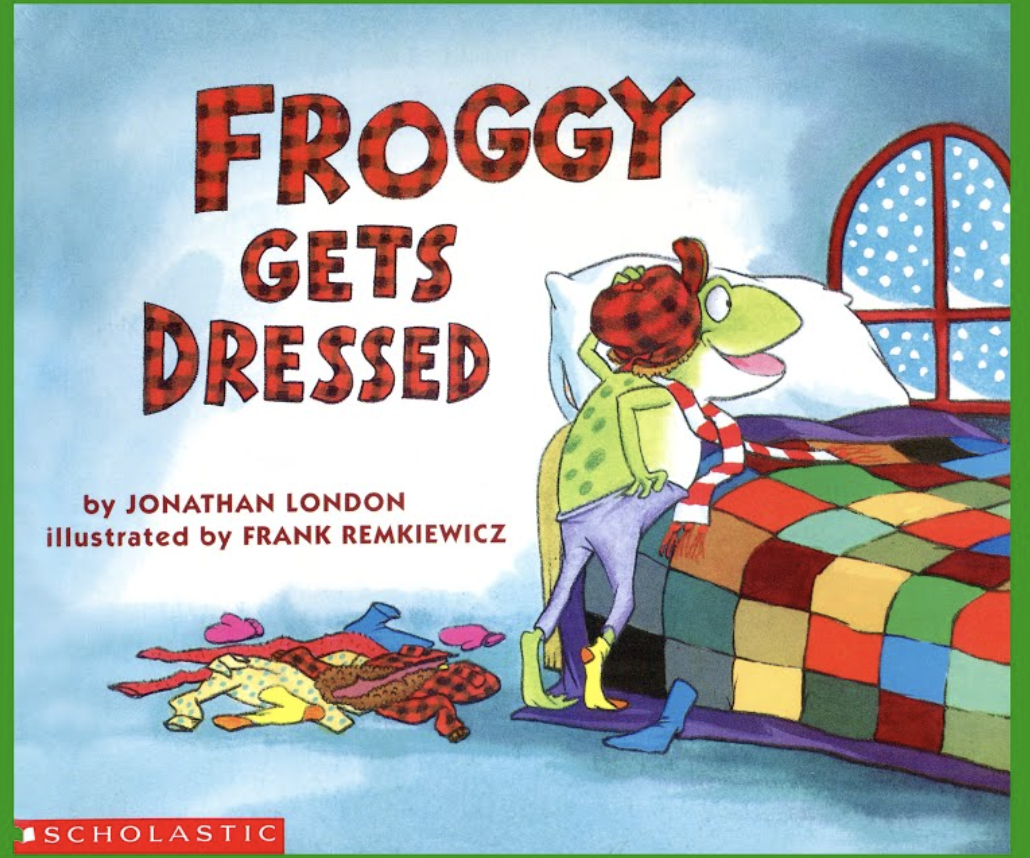
When it snowed last night, I was excited to get outside today to sing this song for little ones who may be “snow lovers” like me. If you’ve read the book Froggy Gets Dressed ( by Jonathan London with illustrations by Frank Remkiewicz), you’ll see how a little frog wants to play outside in the snow. During the story, each time Froggy goes outside, his mother reminds him of the winter clothing he forgot to put on.
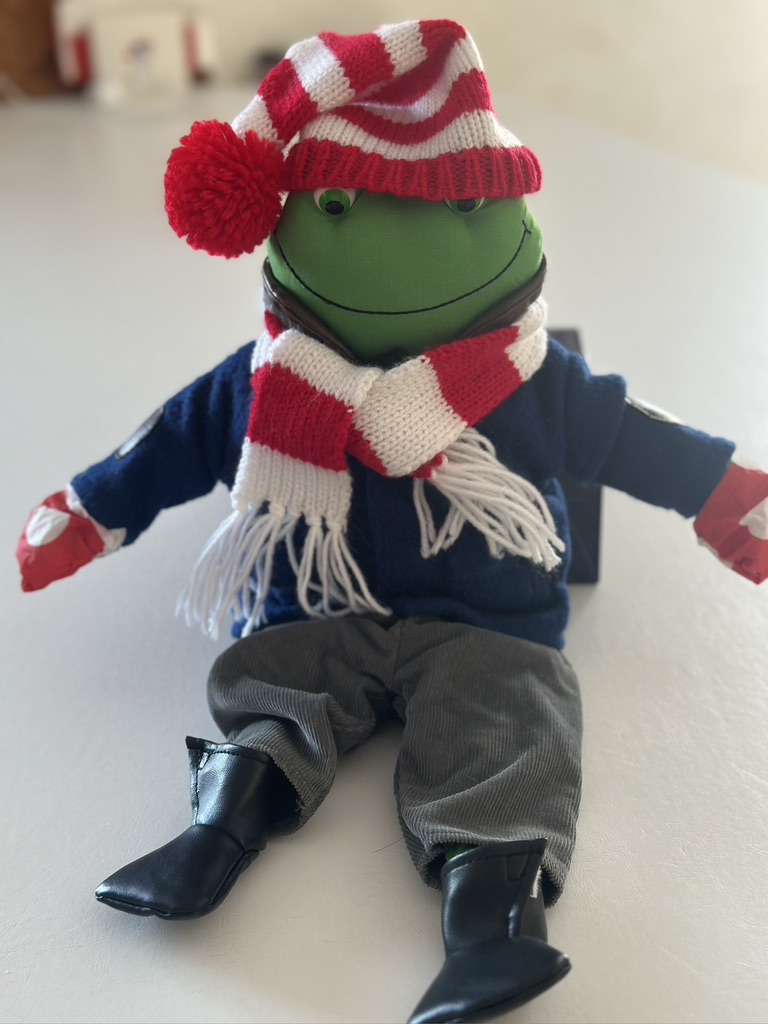
In this song, children can pretend to put on their winter clothing one piece at a time. My young learners LOVE this song! You can watch one video where I’m out in the snow. The other video is the pretend version for the classroom.

Let’s Play In The Snow by Doug Nichols

from the songbook “A Nichol’s Worth of Songs Volume IV “

Put on your boots and come with me.

Pretend to tug on boots. Gesture with your thumb to your chest.

Let’s go out. It’s snowing!

Stretch arms wide. Move your fingers downward to look like snow.

Put on your boots and come with me.

Pretend to tug on boots. Gesture with your thumb to your chest.

Let’s play in the snow!

Pretend to make a snowball. Throw it!

*Substitute each clothing item below into the song. Add your own ideas.

Students can also add their own ideas using my “Think, Think, Think” chant. What clothing items does Froggy wear in the winter? What do you wear? Long underwear? Ear muffs?

Think, Think, Think chant by Kathy Kampa

Think, think, think. Think, think, think.

What should we do?

Think, think, think. Think, think, think.

What should we do?

I know! Let’s put on our jacket!

If you’d like all of the images for this song, download the Google slides. You can see me putting on winter clothing items one by one. It’s fun for the students to put the slides in order and name the new item that was added. You’ll find the musical score here, too.

Here’s a video we took outside with the last item–the mittens.

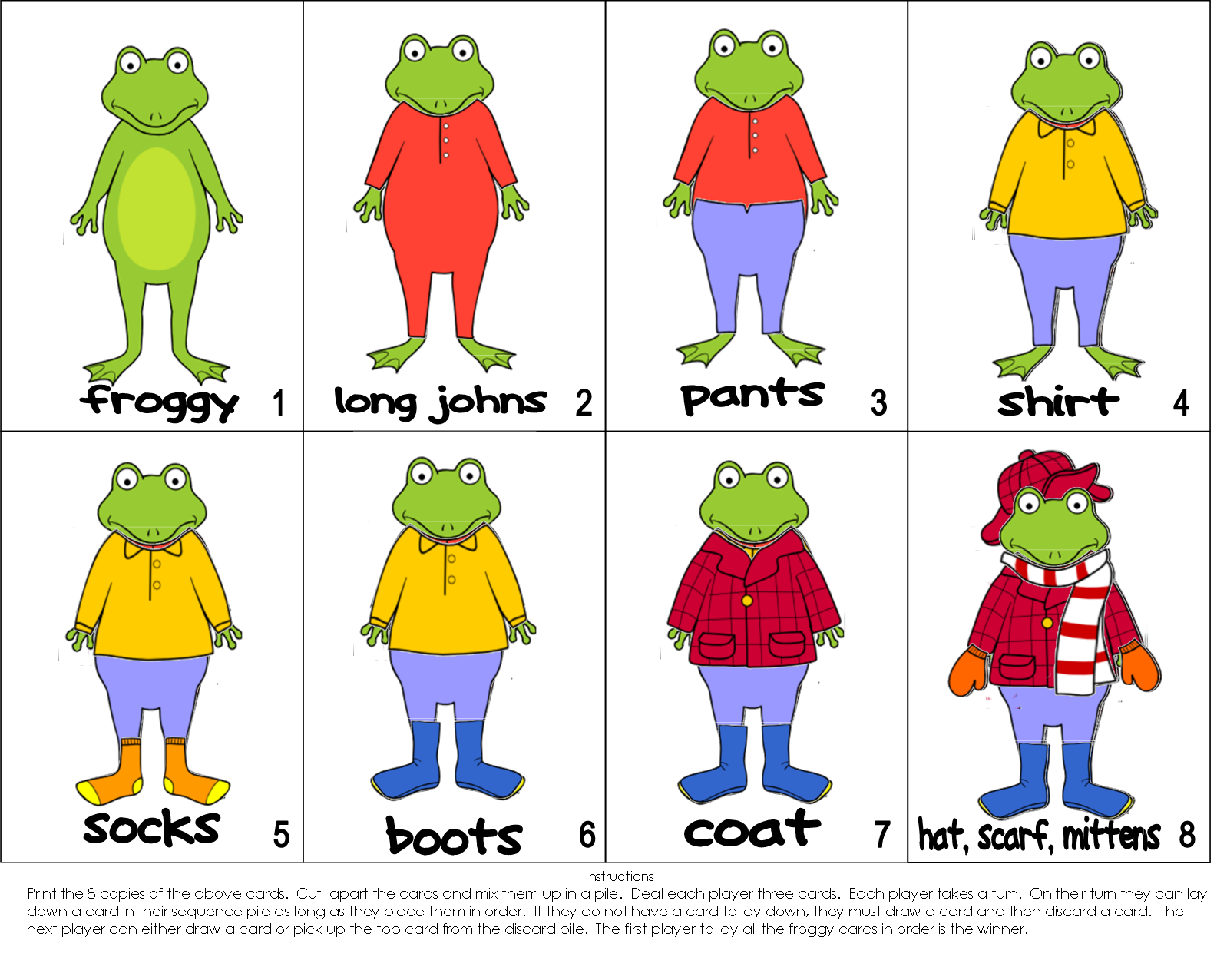
This is a fun reproducible with Froggy’s clothing.

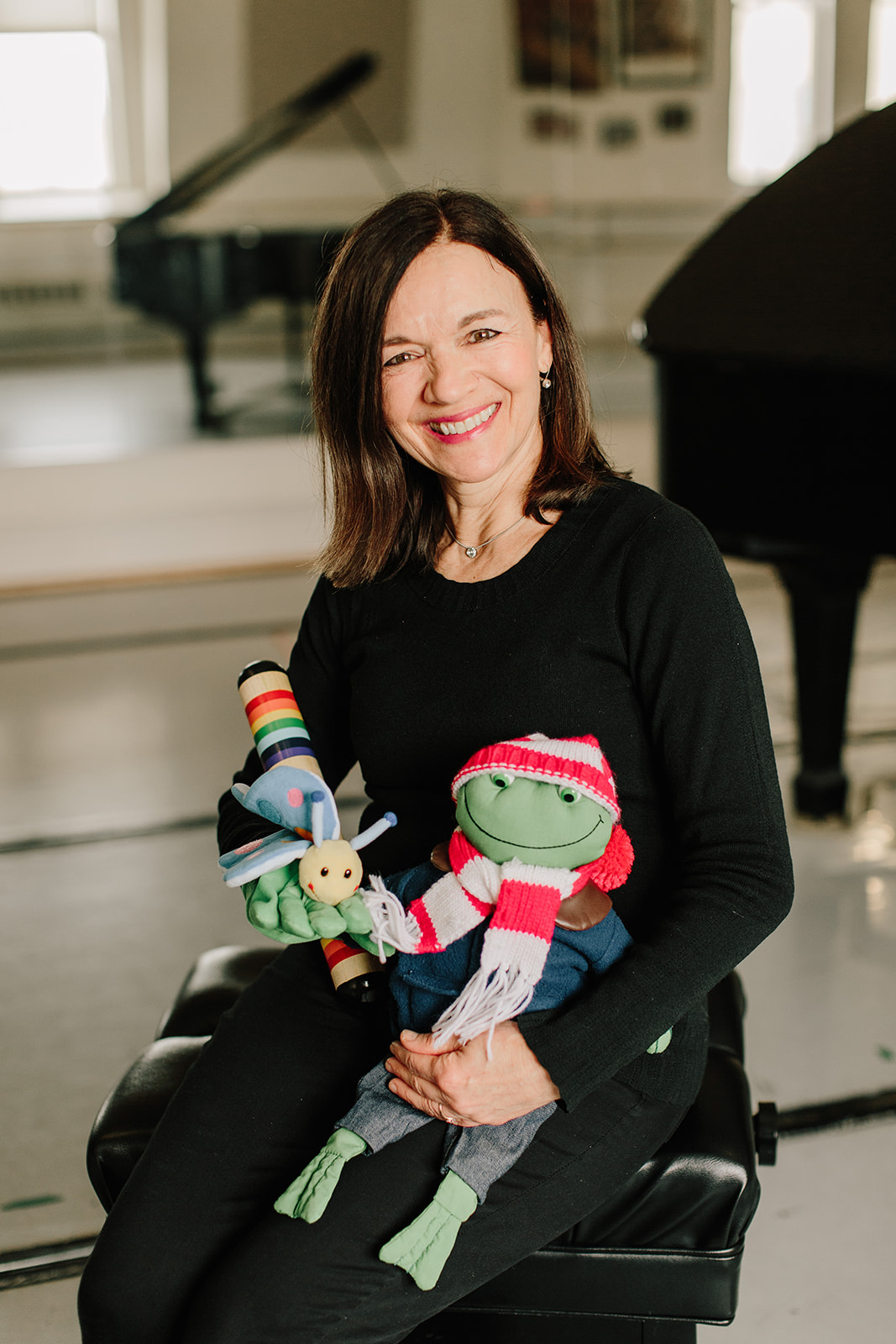
Songwriter Kathy Kampa is a passionate educator of young learners. She seeks to nurture children’s imaginations and spark creativity through fun and engaging activities. Kathy believes that music and movement should be a part of every young child’s education. Kathy’s songs for kids (Kathy Kampa’s Special Days and Holidays and Jump Jump Everyone) are available on iTunes.

Kathy uses a globally-minded and inquiry-based approach to teaching through which students develop 21st-century skills. She also supports the development of English language skills by creating songs, chants, and TPR/movement activities targeted to young learners’ needs. Kathy is an author with Oxford University Press and has co-authored English language courses for young learners (Magic Time, Everybody Up, Oxford Discover, Beehive, and Buzz). Kathy conducts teacher training sessions around the globe.

This song hasn’t been professionally recorded yet. However, for more kid-tested music and movement activities, check out more music on iTunes, Spotify, and Apple Music. Kathy has produced two music CDs for very young learners, Kathy Kampa’s Special Days and Holidays and Jump Jump Everyone, which build English language skills through music and movement while nurturing creativity and imagination. Grown and loved by real kids!

Here’s a playlist with songs for kids to move to:

Are you missing out on Kathy Kampa’s new videos?

Check out Kathy Kampa’s YouTube channel here and subscribe.

Do you celebrate success in your class?

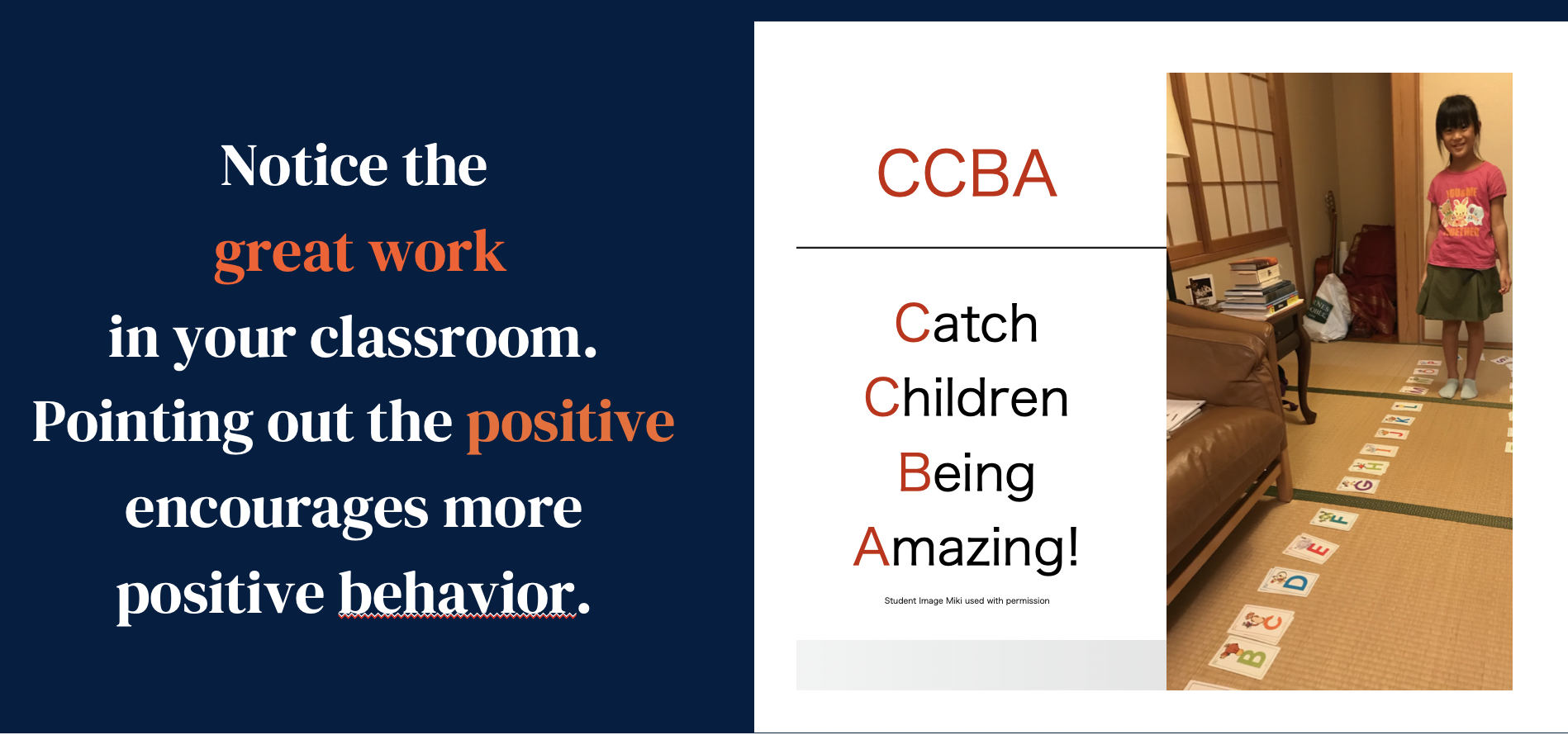
Celebrate success with CCBA. What’s CCBA?

Catch Children Being Amazing! It’s an acronym I created to remind teachers to focus on amazing student work. When we notice the great things happening around us, rather than negative things, more great things can appear. By talking about the wonderful things you see happening in your classroom, young learners will strive to do these wonderful things, too.

How do you do that?

Describe what you see happening in your classroom. What do you see? What do you hear?

-Be specific about what students are doing. Consider your goals for the activity. You can add descriptions to help students come up with more ideas.

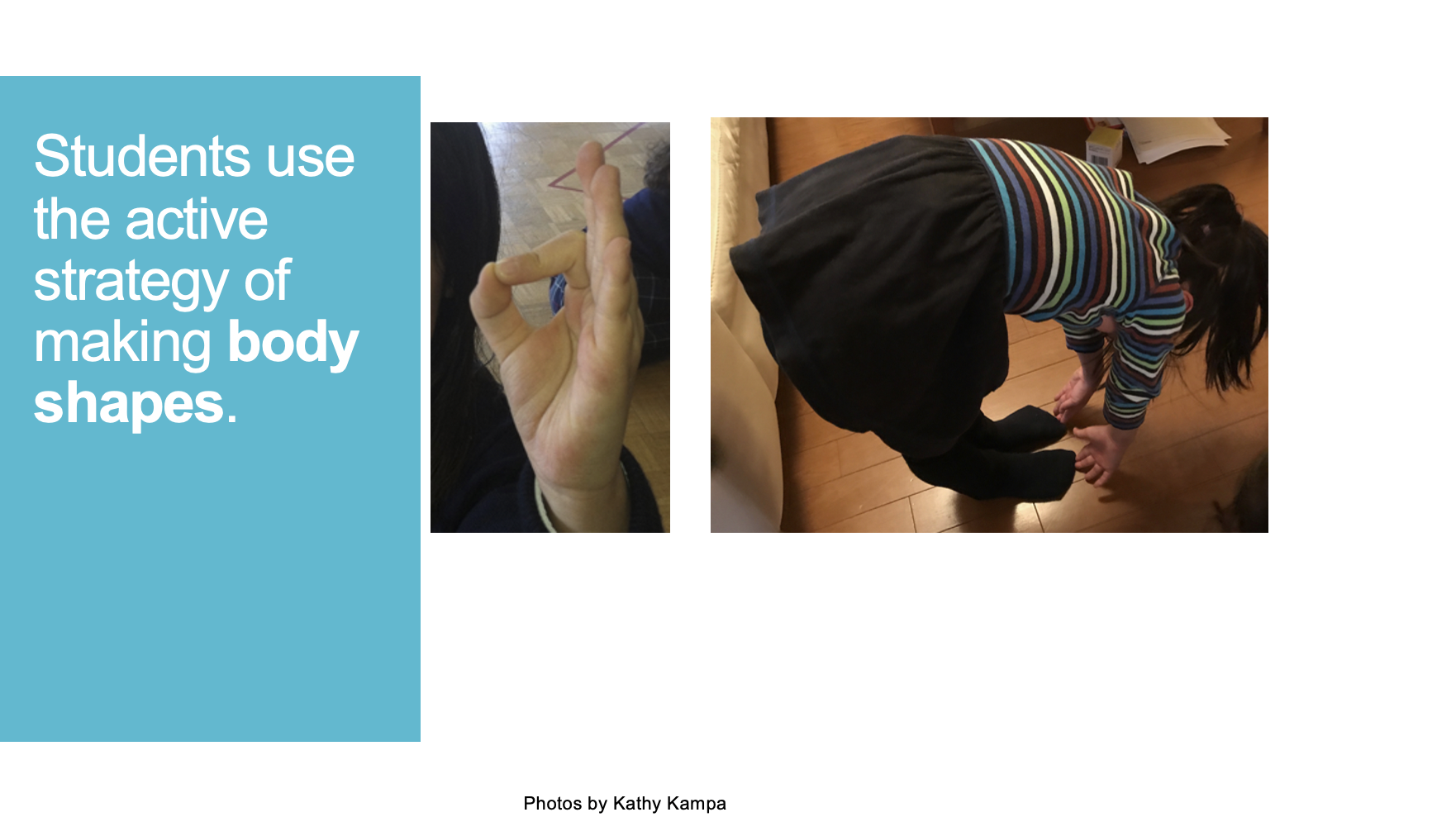
For example, the goal of the activity below was for students to make letter shapes in different ways. At first, I’m describing individual student actions. You’ll notice that I’ve pointed out body parts, letter names, size, and students working together.

I see Yuya making the letter d with his fingers.

I see Sara making the letter D with her whole body. She made a big letter shape.

I see Anna and Noah standing back-to-back. They are collaborating by making their letter together.

By describing the many different students’ ideas, students will try out varied ideas, too. Try to acknowledge as many students as possible during your class. That builds self-confidence, too.

You can also acknowledge something that the whole class has done.

Look at how quickly our class tidied up our classroom. Everything has been put away.

Our class now knows all the words to our new song. I listened and heard you singing by yourself.

Celebration Chants

I use Celebration chants with my young learners (and teachers). They’re easy to do and bring positive energy to your space. First, teach them to your students. Then, use them throughout your day. Let’s get started.

Here’s a video with all three chants listed below.

Celebration Chants video

We Did It

My Japanese students used to say, 先生、やりましたよ。Sensei, Teacher, I did it! I wrote this chant to celebrate my students’ successes. It’s called “We Did It!”  Maybe you know this popular chant. It’s available on my Jump Jump Everyone album, too.

     We did it! We did it! We  did  It today!

     Pat. Clap. Pat. Clap. Pat. Clap. Pat. Clap.

We did it! We did it!      Hip, hip,               hooray!

      Pat. Clap. Pat. Clap. Roll your hands. Arms up high.

4-3-2-1

Why not celebrate in a new way? My students loved counting backwards.

                         Four, three, two, one,

Use fingers      4—–3—–2—–1

Hooray for all the things we’ve done.

 Shake hands up  / Clap.    Clap.   Clap.

SUCCESS

This last chant is called “SUCCESS.” This may work best for your elementary students since they know how to spell words and do handclapping games.

S—U—C—C—E—S—S—      That’s the way we spell “success.”

Pat. Clap. Pat. Clap. Pat. Clap. Pat. Clap.      Pat. Clap.    Pat. Clap.      Pat      Jump up high.

My students like to do this chant with a partner, too. Here are several ways students can do it, from the easiest way to the most complicated way.

Variation 1: Pat own legs—clap both partner’s hands.

Variation 2: Pat own legs—clap own hands—clap both partner’s hands—clap own hands

Variation 3: Pat own legs— clap own hands—clap partner’s right hand—clap own hands

—clap partner’s left hand—clap own hands– clap both partner’s hands—clap own hands* (repeat—last time omit last *)

All of these images can be found in the Google Slides here.

Do you have a celebration chant that you do with your students? Share it with Kathy!

magictimekids@gmail.com

Songwriter Kathy Kampa is a passionate educator of young learners. She seeks to nurture children’s imaginations and spark creativity through fun and engaging activities. Kathy believes that music and movement should be a part of every young child’s education. Kathy’s songs for kids (Kathy Kampa’s Special Days and Holidays and Jump Jump Everyone) are available on iTunes.

Kathy uses a globally-minded and inquiry-based approach to teaching through which students develop 21st-century skills. She also supports the development of English language skills by creating songs, chants, and TPR/movement activities targeted to young learners’ needs. Kathy is an author and teacher-trainer with Oxford University Press. She is delighted to be teaching young learners in her hometown.

My Fingers Dance!

Fingerplays are a fun way to add movement to your lesson. Students can move their fingers while sitting. When you need an activity to bring the energy level down in your class, consider a fingerplay.

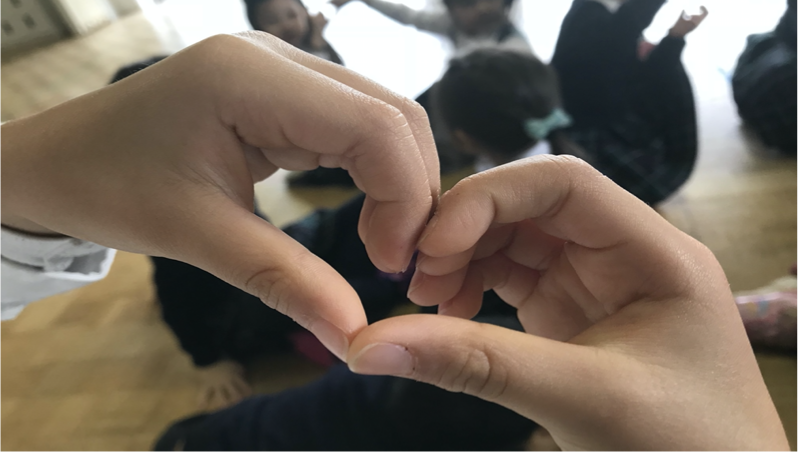
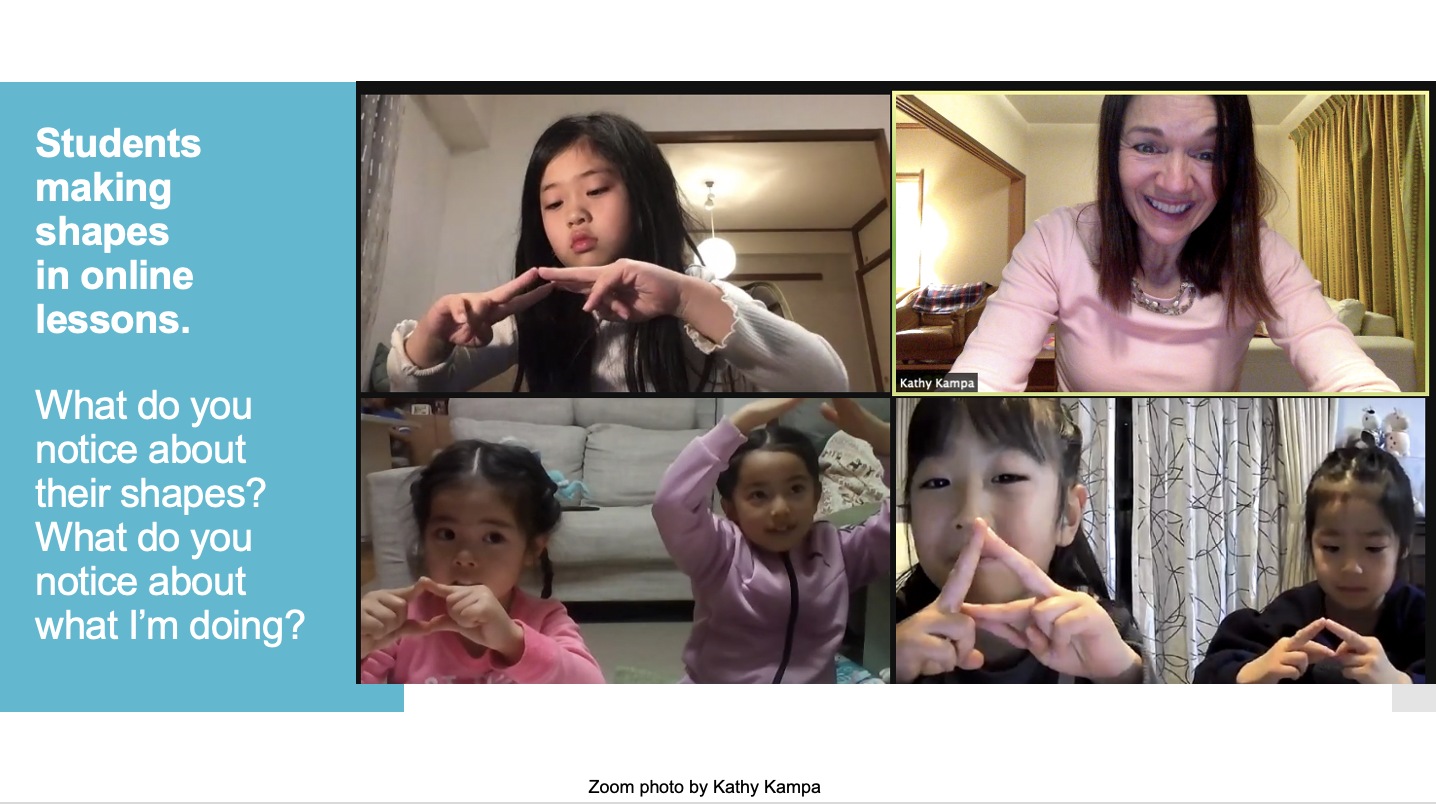
This chant teaches the heart shape (perfect for Valentine’s Day!) as well as other shapes (circle, square, rectangle, triangle, star). Notice the repetition in the phrases, which is important for young learners.

Encourage students to make shapes in different ways to nurture their creativity. Notice the great things your young learners are doing. That’s what I call CCBA–Catch Children Being Amazing!

Check out my Japanese students making shapes. Here we are studying together online. (Photos used with permission)

My students just love this chant! I hope that you do, too.

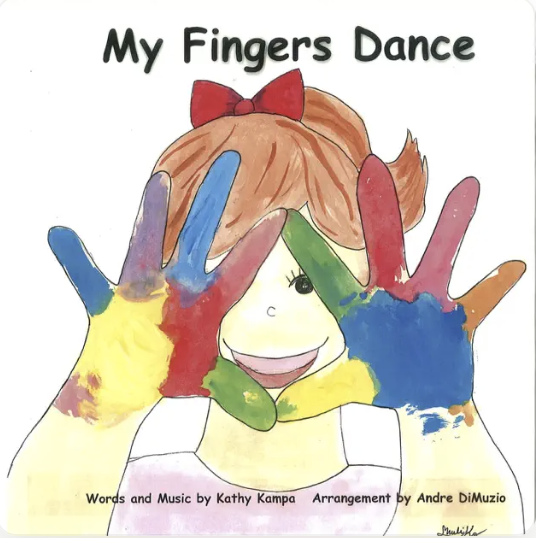
My Fingers Dance

by Kathy Kampa on Jump Jump Everyone. Available on iTunes, Spotify, and other streaming services.

My fingers, fingers, fingers, fingers, fingers dance!

My fingers, fingers, fingers, fingers, fingers dance!

Make a circle! Take a picture. Make a circle! Take a picture.

*Substitute additional shapes for “circle.”

Check out the video below for the simple motions.

This Google slide from the video provides a visual of the shapes.

The music is available on iTunes and on streaming services such as Spotify and Apple Music.

Let’s practice shapes some more!

Time for a surprise! Have students open their hands and close their eyes. Hand them one of the shapes. Use this little chant I just made.

A Big Surprise by Kathy Kampa

Open your hands and close your eyes.

Get ready for a big surprise!

My students enjoy going on a shape hunt. We focus on one shape at a time, and look for things with that shape.

Kids love using the shaped “magnifying glasses” to find shapes in everyday objects around them! You can make these darling shape finders from Amber at Apples to Applique (amber@applestoapplique.com)

Learning something in many ways is fun for young learners! As Dr. Howard Gardner pointed out in his theory of Multiple Intelligences, children can learn more successfully when using many ways to approach a topic. In this lesson, students hear words in rhythm, they move their bodies, they see shapes, and they interact together.

If you’re celebrating Valentine’s Day, students can make cards with LOTS of shapes!

Finally, if you read my last post, you’ll remember how to make a heart shape with your hands. This poem was shared with me by my colleague:

    I put my hands together.  (put the heels of your hands together)

    This is how I start.  (hold)

    I curve my fingers just like this (curve your fingers to touch each other)

    and now I have a heart.  (this should make a heart shape)

    Now, look through the heart to see each of the students in your class.

    Say, “I see you in my heart!”

Songwriter Kathy Kampa is a passionate educator of young learners. She seeks to nurture children’s imaginations and spark creativity through fun and engaging activities. Kathy believes that music and movement should be a part of every young child’s education. Kathy’s songs for kids (Kathy Kampa’s Special Days and Holidays and Jump Jump Everyone) are available on iTunes.

Kathy uses a globally-minded and inquiry-based approach to teaching through which students develop 21st-century skills. She also supports the development of English language skills by creating songs, chants, and TPR/movement activities targeted to young learners’ needs. Kathy is an author and teacher-trainer with Oxford University Press.

For more kid-tested music and movement activities, check out more music on iTunes, Spotify, and Apple Music. Kathy has produced two music CDs for very young learners, Kathy Kampa’s Special Days and Holidays and Jump Jump Everyone, which build English language skills through music and movement while nurturing creativity and imagination. Grown and loved by real kids!

Check out Kathy Kampa’s YouTube channel here.

It’s the Year of the Dragon!

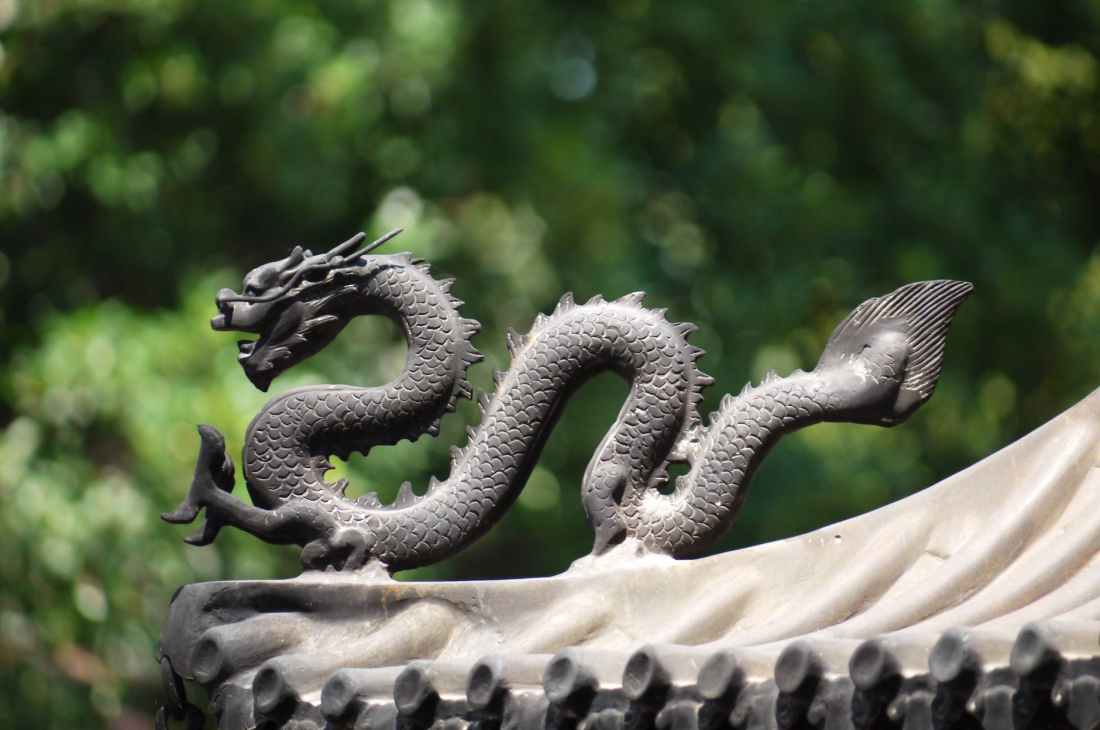
Photo by Pixabay on Pexels.com

January 1st marks the beginning of the year. Each year one of the twelve animals in the Chinese Zodiac calendar is celebrated, and this year’s animal is the Dragon! We have a special place in our home where we display a small ornament for the new year. People celebrating the Lunar or Chinese New Year will welcome the new year of the Dragon on February 10th.

This is a simple song to celebrate the new year. It borrows two familiar melodies to create one new song. The Google slides for this song are here.

It’s the Year of the DragonBy Kathy Kampa 

Part A: For He’s a Jolly Good Fellow

It’s the year of the Dragon!

It’s the year of the Dragon!

It’s the year of the Dragon,

It’s 2024. (twenty, twenty-four)

Part B: BINGO

I like to have students move with music whenever possible. What kind of movement can you do? Here are some suggestions.

In Part A, on the words “It’s the year” students can stand tall with their hands at their sides.

On the word “DRAGON,” make a dragon pose or movement. My students made a wavy movement with their arms.

For the year 2024 (twenty/ twenty-four), students can write the numbers in the air or hold up their fingers to show the numbers. We made the shapes two-zero-two-four.

In Part B, students can add body percussion sounds. What’s body percussion? Sounds students can make using body parts, such as clapping their hands, patting their legs, stamping their feet, or snapping their fingers. They can play the rhythm of the letters when spelling the word “dragon.” Practice spelling the word with many different sounds. Since this repeats three times, you can repeat it with a different body percussion sound each time. Some of my students even tried body spelling by making each of these letters with their fingers or whole body. Challenging!

If you have unpitched instruments, like rhythm sticks, drums, tambourines, or shakers, play the rhythm with the instruments. You might even add a big cymbal sound on the word, DRAGON.

Since this song comes around once every twelve years, it hasn’t been professionally recorded. Enjoy it with your students to celebrate the new year!

Here’s a video from my online class with my Japanese students. We tried to capture both my students’ movements and my movements.

It’s a cold winter day here! I made a video of the song from the front so that you can see the movements more easily.

Beautiful videos capture authentic dragon dances. Here’s one that you might share with your students.

Go to Kathy’s Spotify playlists to find more music for young learners.

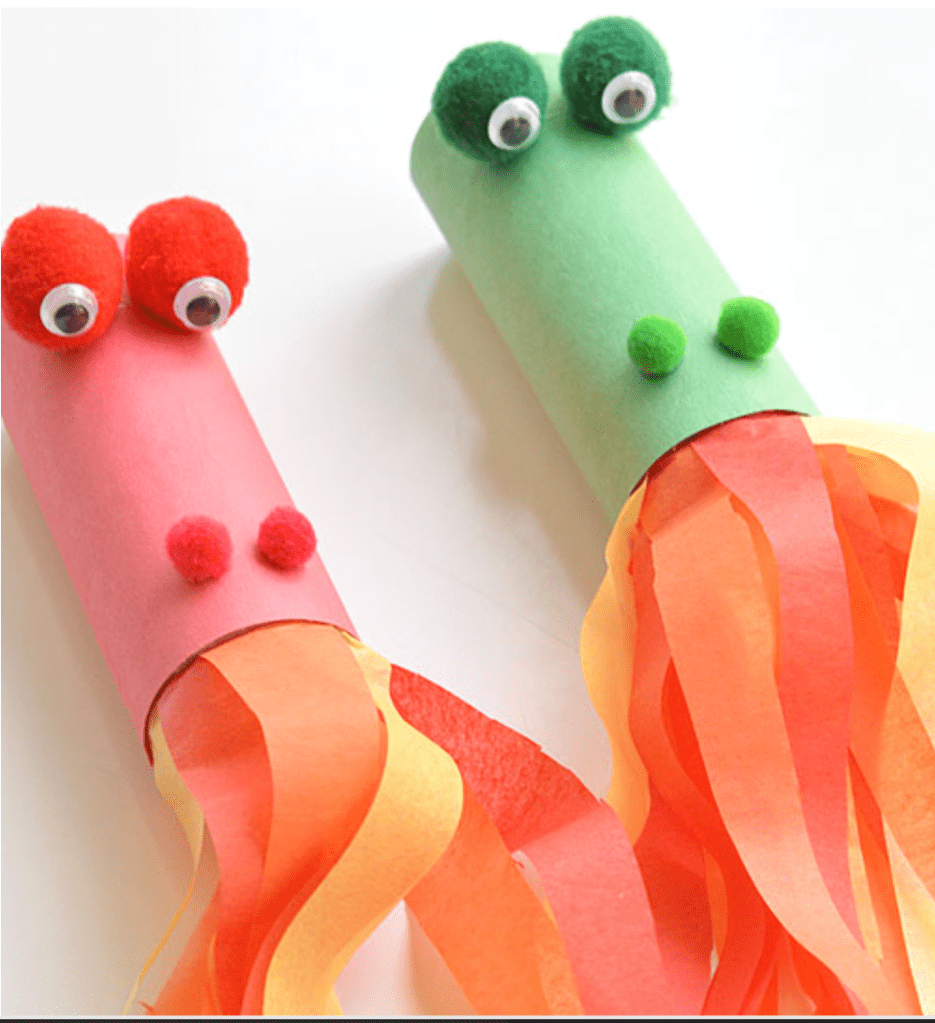
If you’re looking for a craft project, check out this one which uses paper towel rolls. You can use construction paper in lieu of the pom poms.

Kathy currently teaches young learners in her hometown of St. Cloud, Minnesota, USA as well as classes online. She is passionate about creating memorable songs for children that build language as well as music and movement skills. Kathy creates songs that stick in children’s heads long after class. We hope that you enjoy her music, too.

Contact us at magictimekids@gmail.com if you’re looking for a song about a specific idea or topic. We’ll try to write one with that idea in mind.

Falling Leaves of Autumn

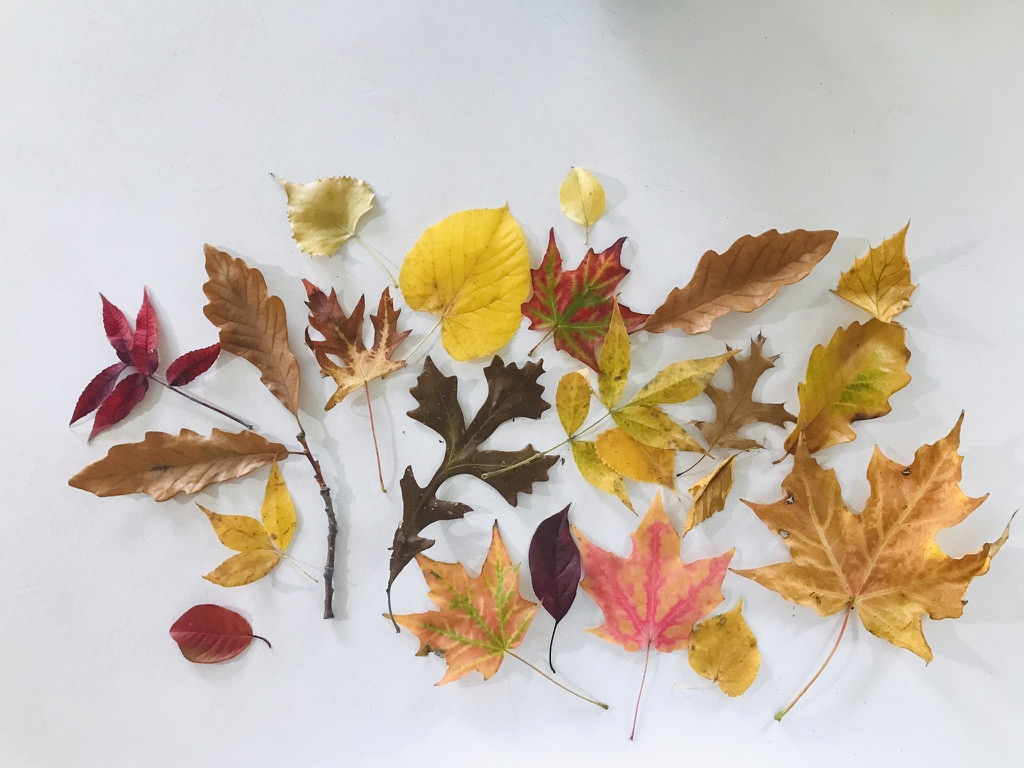
Autumn is one of my favorite times of the year. Here in Minnesota, we can see red maple leaves, yellow aspen, and brown oaks. When we lived in Tokyo, we witnessed such beautiful autumn leaves. Here’s a photo I took in Japan as the leaves started to change colors. People celebrate the season outside by enjoying picnics, taking hikes, and taking lots of pictures!

Photo by Kathleen Kampa, 2020, Showa Kinen Park

My Kindergarten students and my English students delighted in gathering the fallen leaves. Every morning they brought a collection of leaves to school. They enjoyed watching different kinds of leaves falling to the ground. We sang many songs about autumn leaves, but this one is my favorite. I especially love the incredible instrumentation that Andre DiMuzio created to accompany this.

Here are the free Google slides to accompany this song.

It’s fun to teach this song with a xylophone or glockenspiel. You can play it by starting at the shortest bar (C) (do’), and going step by step to the longest bar. If you turn the instrument on its side with the shortest bar on top, it’s easy to see and hear the melody descending.

Falling Leaves Adapted by Kathy Kampa

Down, down, down, down, the leaves are falling to the ground. 

    do       ti        la       sol             fa              mi        re        do

Whoosh!

Red, yellow, orange, and brown, the leaves are falling to the ground. 

  do       ti        la         sol             fa              mi        re        do

Whoosh!

My students will sing this song over and over again. On the recording, the last time just slows down to signal the end of the song.

When I arranged this song, the children first sang the words to build their understanding of autumn. I also created a section where children can create their own movements. It’s important to give children opportunities to express themselves freely. They can spin fast or slow. They can pretend to blow in the wind.

Children love dancing with lightweight scarves. The color doesn’t seem to matter. They just love the way the scarves float so lightly. As students sing, they float their scarves back and forth (crossing their midline) moving their bodies lower and lower, just like the music. When they sing “Whoosh!” they scoop up the scarves.

After this part of the song, we toss the scarves. My students laugh when the scarf lands on their arm, their head, their shoulder . . . . You can model this action with your students. I usually do this twice. Look! The scarf is on my head! Look the scarf is on my elbow! Then encourage students to spin around, a great vestibular movement! This feels so smooth with the scarves.

Here’s a video of my young learners in Tokyo.

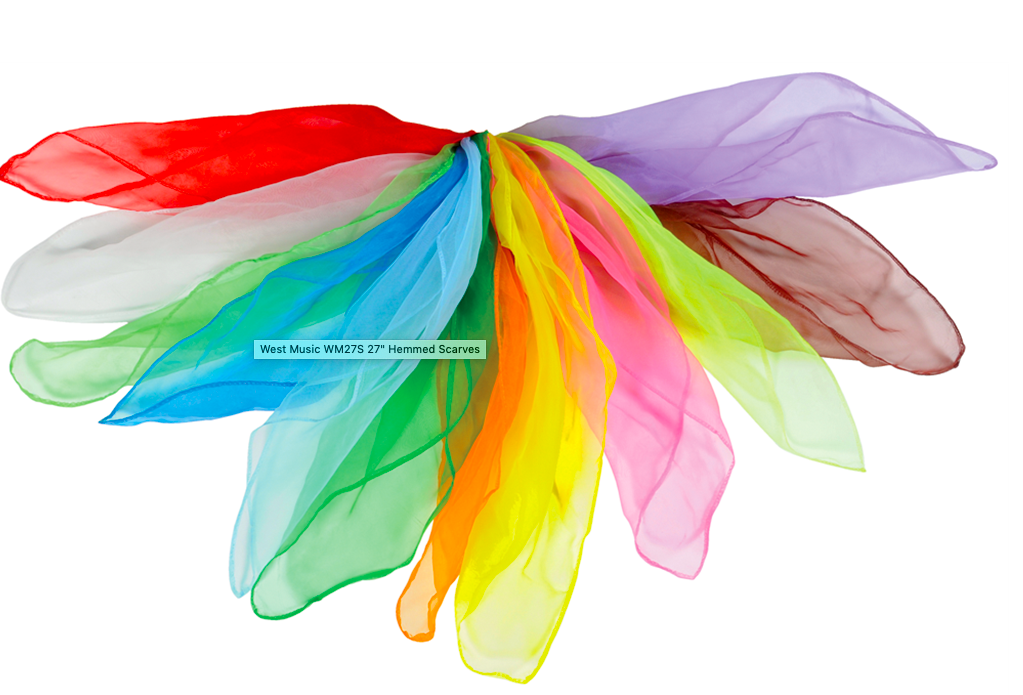
I use small, lightweight hemmed scarves like these. Search for “hemmed scarves” or “juggling scarves.” Check the reviews. I like mine! Young children can practice naming the color, too.

Screen Shot 2020-03-19 at 16.55.57

Check out my Pinterest board for more autumn activities. This song is available on my album “Jump Jump Everyone.” For more kid-tested music and movement activities, check out my music on iTunes.

Jump Jump Everyone
Kathy has produced two music CDs for very young learners, Kathy Kampa’s Special Days and Holidays and Jump Jump Everyone, which build English language skills through movement while nurturing creativity and imagination! Grown and loved by real kids!

Kathy Kampa is a teacher, author, and teacher-trainer who specializes in working with young learners. She taught at Seisen International School in Tokyo, Japan in the PYP (Primary Years Program) and continues to teach young learners in Minnesota. Kathy uses a globally-minded and inquiry-based approach to teaching through which students develop 21st-century skills. She also supports the development of English language skills by creating songs, chants, and TPR/movement activities targeted to young learners’ needs.

Kathy and her husband Charles Vilina are also co-authors of Magic TimeEverybody Up, Oxford Discover, Beehive and Buzz, all published by Oxford University Press.

#AUTUMN #FALLINGLEAVES #KIDSMUSIC #AUTUMNDAYS #AUTUMNCOLORS #NURSERYRHYMES #ENGLISHSONGS #KINDERGARTEN

Marching Monsters?

4089923322_05f94d8340_o (1)

Are you ready for Halloween? Add “Marching Monsters” to your Halloween activities  It builds phonemic awareness and is super fun to do!

I’m gifting you with these Google slides. You can print them or just share on your device.  You can easily sync your music to these slides.

Marching Monsters Halloween Slide Show: Kathy Kampa’s Special Days and Holidays

There are four Halloween characters in this song–monsters, skeletons, witches, and jack-o-lanterns. Have fun pretending to be the four characters. Practice the four verbs– march, skip, sway side-to-side in a waltz, and jump! Now put them together.

“How can we march like monsters? (Who doesn’t love marching like monsters???!)

How can we skip like skeletons? 

How do you waltz? How can we waltz like witches? (sway side to side)

How can we jump like jack-o-lanterns?”

Practice “Turn around and stop!”

Note: Moving and stopping is an essential movement skill for very young learners.

For very little ones, skipping is a new skill. Try walking with a little hop. Or galloping.

Here are the lyrics.  You can also find them in the slide show above.

Marching Monsters   

Words and music by Kathleen Kampa

1. Marching monsters! Happy Halloween! Boo!

Marching monsters! Happy Halloween! Boo!

Marching monsters, Turn around and stop! (hold)

Marching monsters Happy Halloween! Boo!

2. Skipping skeletons! Happy Halloween! Boo! . . .

3. Waltzing witches! Happy Halloween! Boo! . . . .

4. Jumping jack-o-lanterns! Happy Halloween! Boo! . . . .

Just watch the video and have fun!

Did you notice that you can build phonemic awareness with this song too?  The word pairs begin with the same initial sound.  You can separate the verbs and nouns.  Students match.

Marching Monsters worksheet and flashcards

For a bigger challenge, write the letters m, sk, w, j, and h on the board. What pair of words begins with these letters in the song?

m-> marching monsters

sk-> skipping skeletons

w-> waltzing witches

j-> jumping jack-o-lanterns

h-> Happy Halloween! 

Picture9-10

Want to add a cute monster craft? http://acupcakefortheteacher.blogspot.jp/2012/07/my-frankenstein-craftivity.html

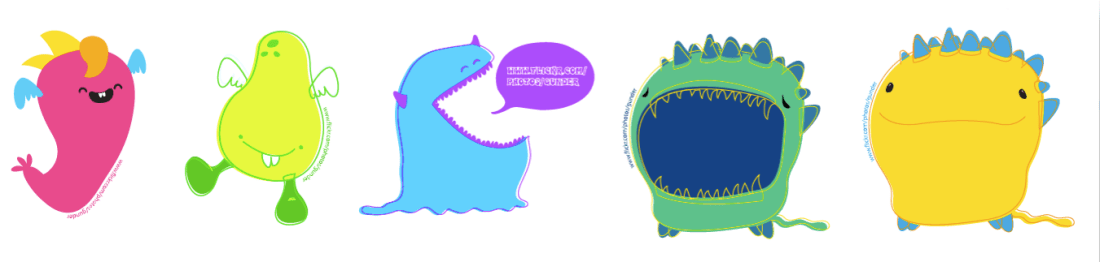
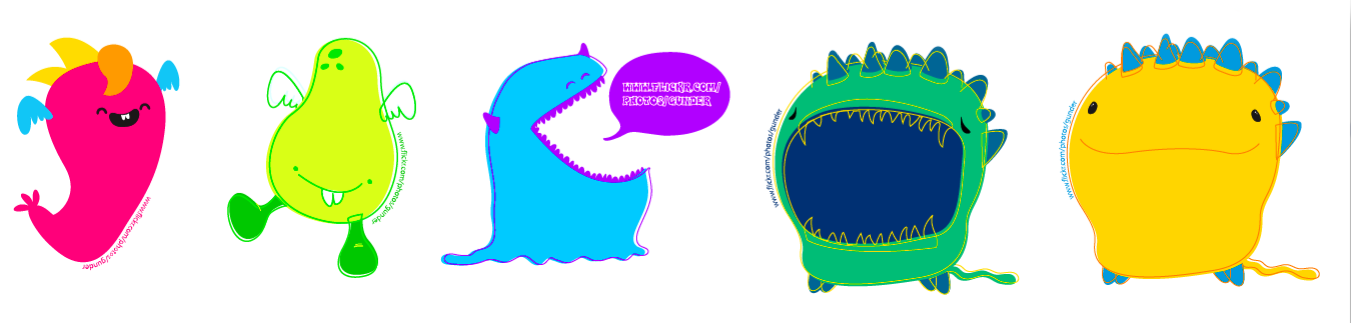
4089923322_05f94d8340_o (1)Monsters by Gunder on Flickr Attribution CC 2.0 license

http://bit.ly/Gundermonstersdrawing

We hope that your students enjoy singing and dancing throughout the month of October.   The music for this song and other Halloween favorites (Pumpkin, Pumpkin, Skeleton Dance, Marching Monsters, I’m A Witch) are available on Kathy Kampa’s Special Days and Holidays.

Special Days and Holidays

You can search for my music on iTunes. or Apple Music.

If you like this, my second album has more happy songs for children that have grown in my young learner classroom. Dance like falling leaves, bloom like a spring flower, move through the butterfly life cycle . . . . you’ll find LOTS of fun and magic in this album, too.

Jump Jump Everyone

Happy teaching!

Kathy Kampa

Kathy's bio photo

Kathy Kampa is a passionate educator of young learners. She seeks to nurture children’s imaginations and spark creativity through fun and engaging activities. Kathy believes that movement should be a part of every young child’s learning.

Kathy is the co-author of Magic Time, Everybody Up, Oxford Discover, and Beehive (all by Oxford University Press). She has composed music for Tokyo Shoseki’s English language courses.