Subscribe to continue reading
Subscribe to get access to the rest of this post and other subscriber-only content.

Motivating young learners of English through music, movement, multiple intelligences, and much more!
Subscribe to get access to the rest of this post and other subscriber-only content.
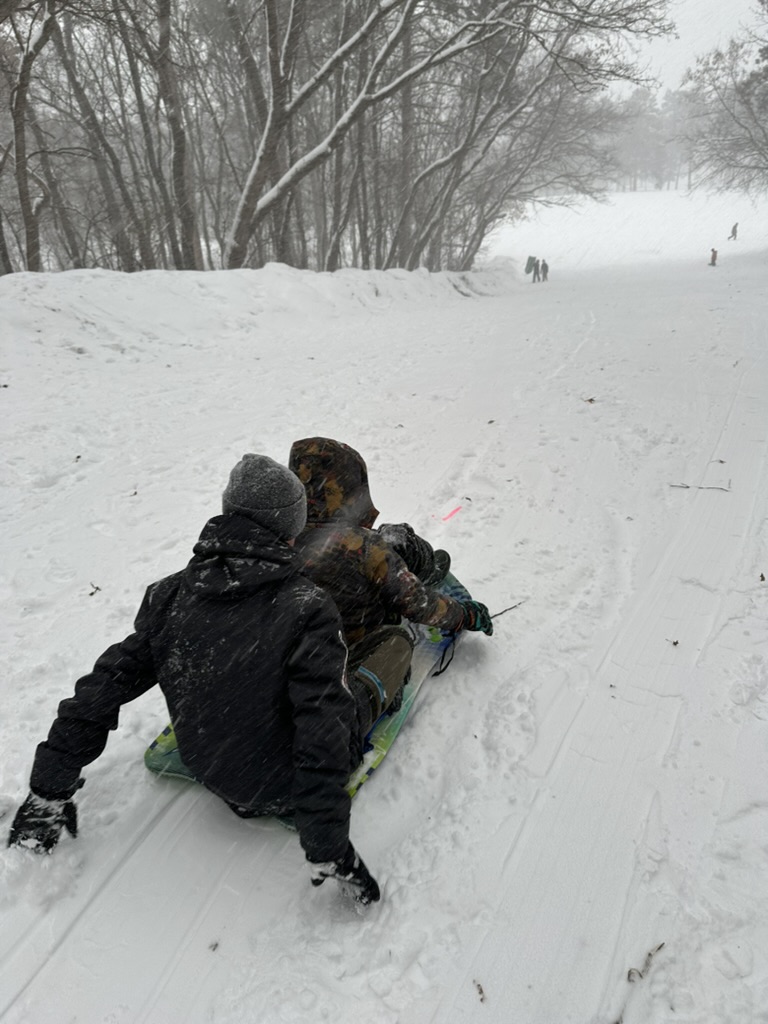
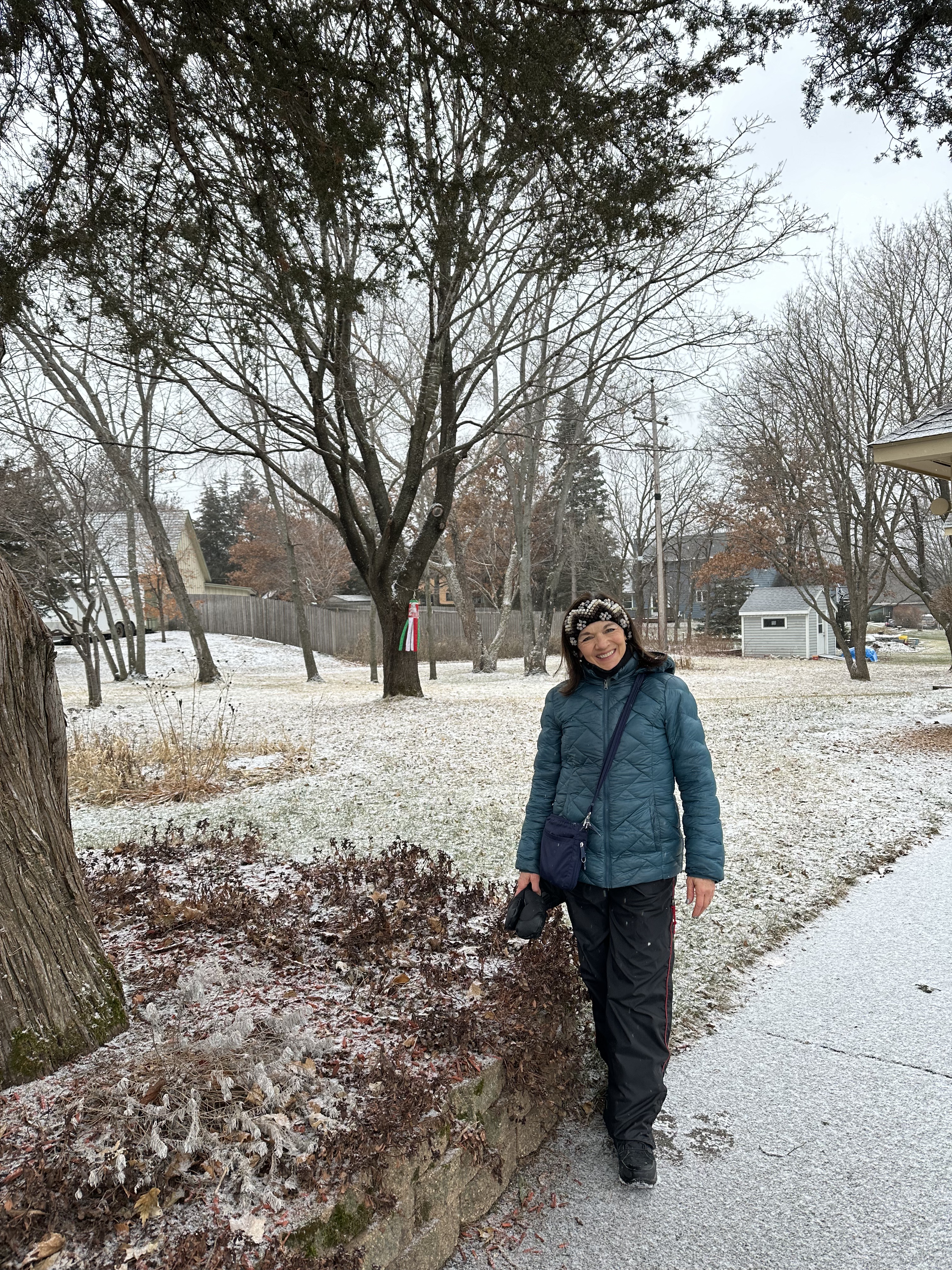
It’s winter 2025 here in Minnesota. We’ve had a lot of snow already! And every time it snows, I start to sing this song in my head. (You might, too!)
A snowy winter is a dream for us here in Minnesota. And today–it’s been snowing all day long! I went sledding with my neighbor’s children. With about eight inches of snow, we have to say that it was a winter wonderland!
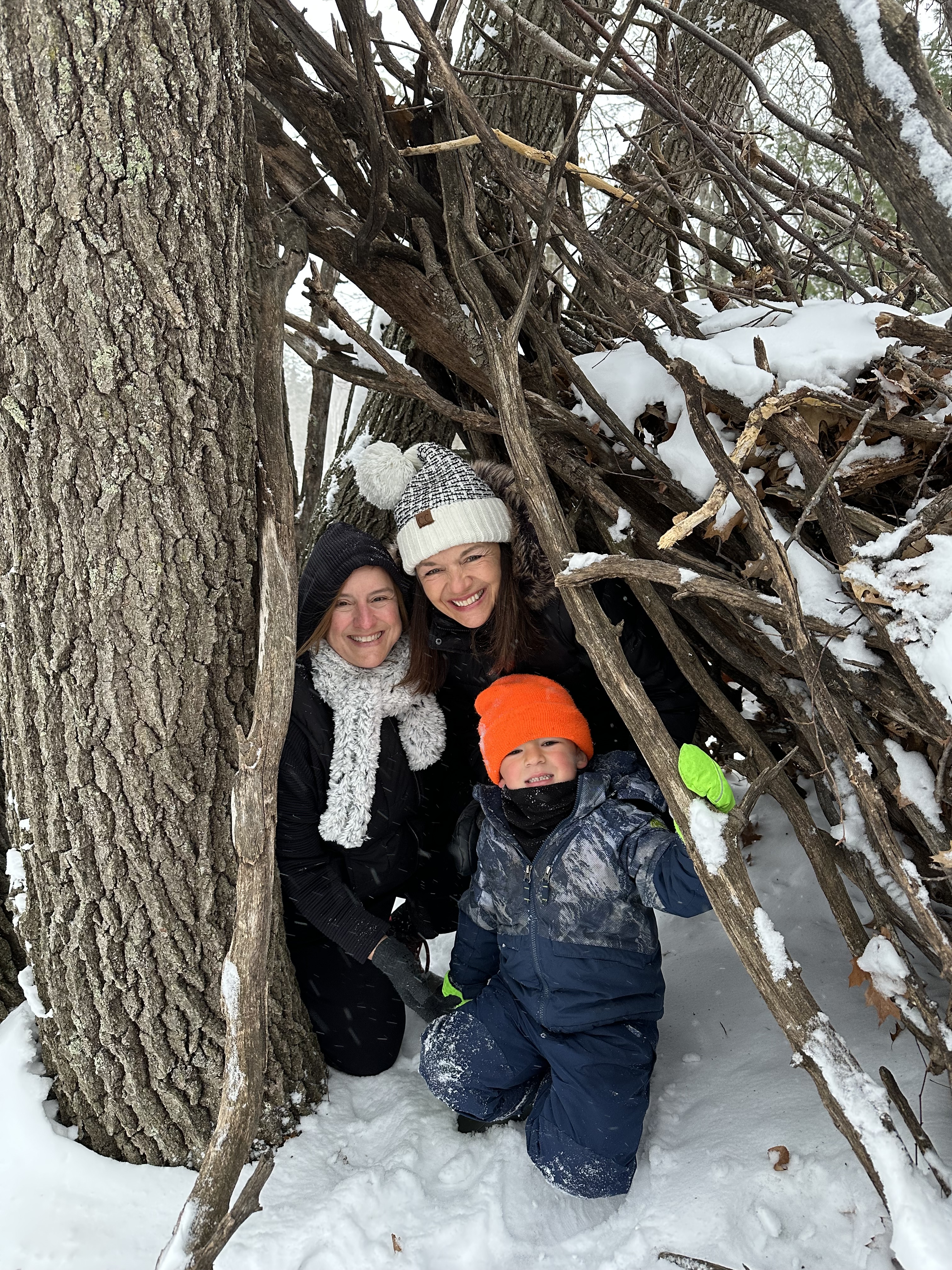
Look at this magical fort! I had a delightful time playing there with my great-nephew and my sister.
I started writing this song during our first snowfall in November 2024. I taught it to all my students last winter, and it quickly became a favorite. My cousin stopped by with her daughter and her granddaughter. I brought some toys for her to play with. We also sang this song with scarves. I gave each of them a scarf to take home.
This is what my cousin wrote: “We were checking to see if you had recorded it (Snow Is Falling Down) yet. We sang your song so much today that we honestly started searching for it so we could get a little break🤣🤪. Let’s just say the song and the scarves are a real hit with Lucy💝💝💝💝💝💝💝. “

Things you may notice:
-You’ll find repetition in the lyrics to help children learn the song quickly.
– I featured the /l/ sound to support ESL language development (especially for Japanese students) (la, la, la, la, la/ falling/ gently/ whirling)
-I taught this first as a seated song, then as a dance standing in one place.
-I added variety by inviting students to add playful movements with their scarves and dancing with the scarf on a different body part. Scarves are easy for young learners to manipulate.
You can add, Think, think, think, Think, think, think, what should we do? Let’s dance with the scarf on our elbows!
-Movements include toss/catch, crossing the midline with the scarf (standing), and vestibular (turning).

Here are the lyrics. You can choose which body part to put the scarf on.
You can find the Google slides here.
*Note: I use scarves like this for this song.
Snow Is Falling Down by Kathy Kampa
A: (Sit with children and toss scarves)

Snow is falling down, la-la-la-la-la, Falling gently from the sky,
Snow is falling down, la-la-la-la-la,
Falling to the ground. Falling on my head.
(Scarves cover the children’s heads, sit and move with continuous flow)
B. See it falling down, Whirling all around, Dancing on my head. (2X)
Peek-a-peek-a- peek-a-boo! ( Toss!!)
(Sit and toss scarves or stand and dance.)
2. Snow is falling down, la-la-la-la-la, Falling gently from the sky,
Snow is falling down, la-la-la-la-la,
Falling to the ground. Falling on my shoulder.
(Scarves rest on children’s shoulders)
B. See it falling down, Whirling all around, Dancing on my shoulder. (2X)
(toss it in the air . . . Whee!)

3. Snow is falling down, la-la-la-la-la, Falling gently from the sky,
Snow is falling down, la-la-la-la-la,
Falling to the ground. Falling on my hand.
(Children hold the scarf in one hand)
B: See it falling down, Whirling all around, Dancing in my hand. (2X)
(Sit and toss scarves)

Snow is falling down, la-la-la-la-la, Falling gently from the sky,
Snow is falling down, la-la-la-la-la, Falling to the ground.
Falling to the ground. (scrunch up the scarf, make a snowball, and toss!)
* Variation: Add other body parts.
*Try part or all of this song standing. Make sure that children have enough space to move.
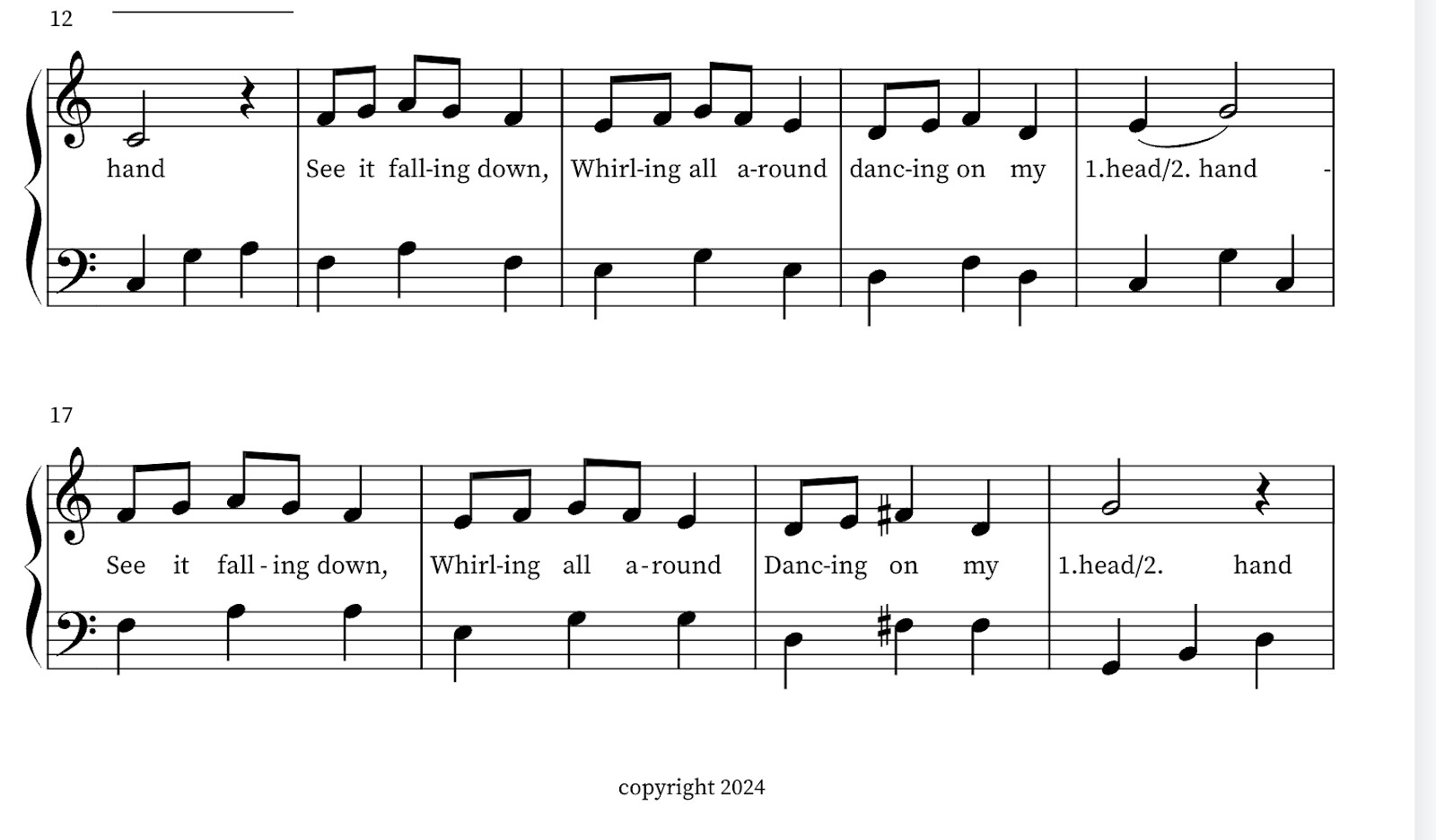
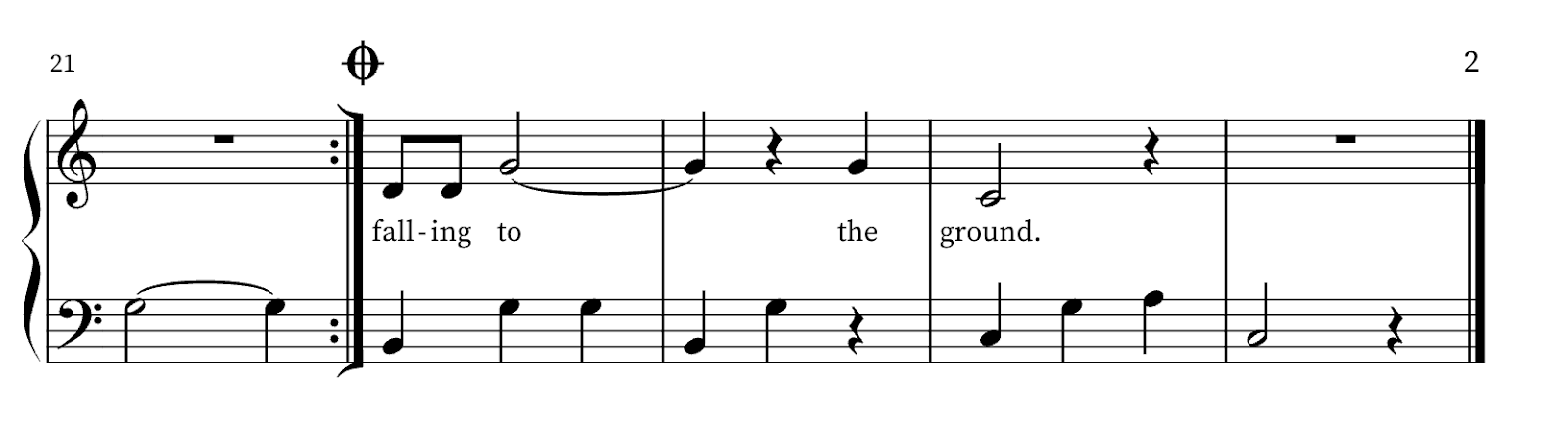
Here’s the notation. Enjoy!

Are you streaming music? Go to Spotify or Apple Music to find Kathy’s additional music. You’ll find these albums there.
Jump Jump Everyone, Kathy’s second album, is filled with many happy songs that have grown in my young learner classroom. The songs encourage children to move. Many songs link to classroom content. Children can dance like falling leaves, bloom like a spring flower, move through the butterfly life cycle . . . . you’ll find LOTS of fun and magic in this album.
This song will be on Kathy’s next album. If you have song requests, let her know.
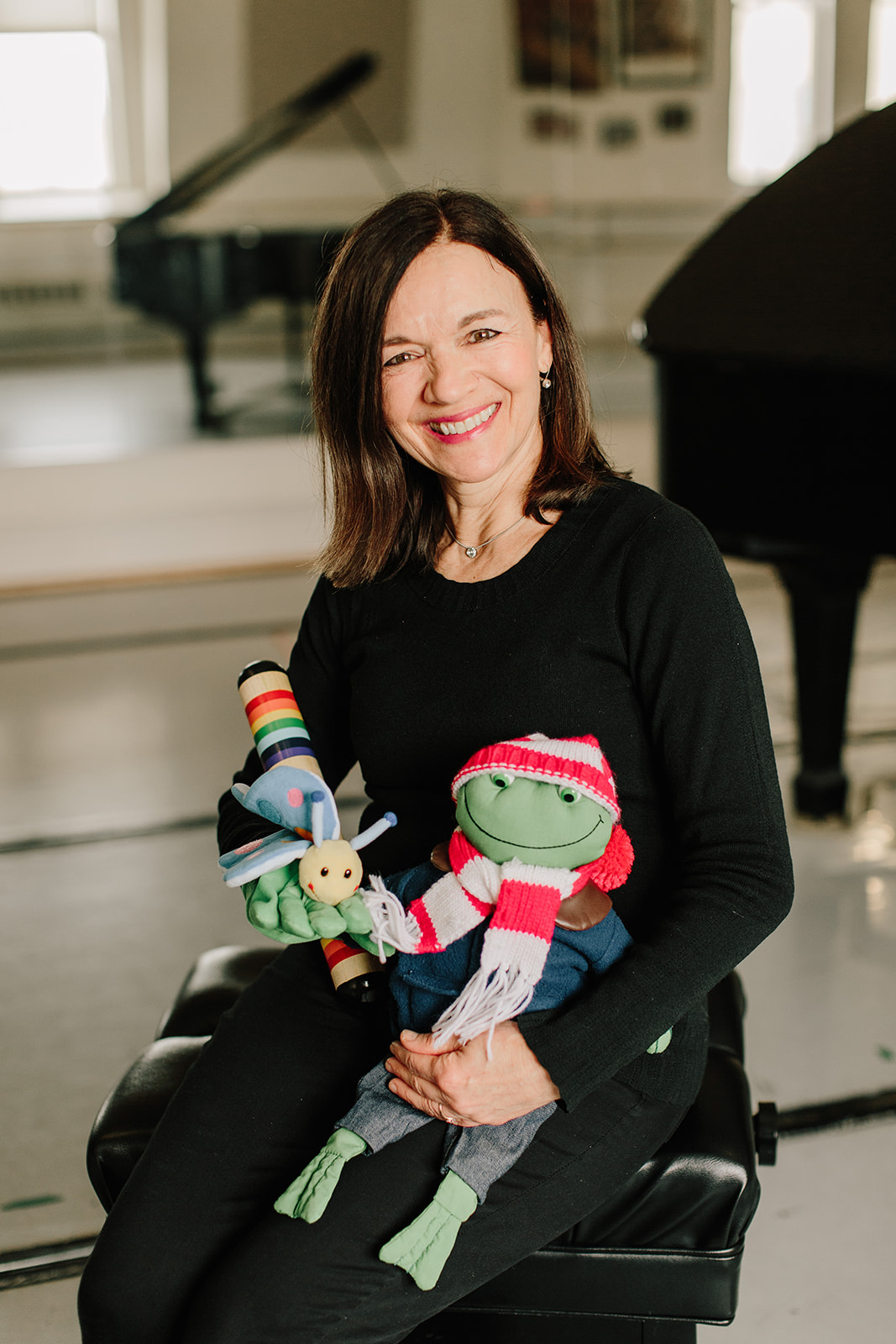
Kathy Kampa loves to bring joy to the world through her children’s music. She is passionate about making learning engaging for young learners. You’ll find more resources on Kathy’s YouTube page. Kathy seeks to nurture children’s imaginations and spark creativity through fun and engaging activities. She also supports the development of English language skills by creating songs, chants, and TPR/movement activities targeted to young learners’ needs. She believes music and movement should be a part of every young child’s education. Kathy’s songs for kids (Kathy Kampa’s Special Days and Holidays and Jump Jump Everyone) are available on iTunes and streaming services like Spotify.
Kathy uses a globally-minded and concept-based inquiry approach to teaching and learning through which students develop 21st-century skills. Kathy is an author and teacher-trainer with Oxford University Press. Together with her husband, Charles Vilina, their new course Blue Dot will be released in 2025.

Christmas Day is just around the corner! Here’s a simple song for your little ones!!
You’ll find everything you need to teach this song–a handout, lyrics, movement suggestions, and a video. You can find this song on Apple Music, Spotify, or iTunes.
My dear friend and Oxford co-author, Setsuko Toyama from Niigata, Japan, created this wonderful activity sheet and picture cards. Just click below and print them!
It’s Christmas Time-Song by K. Kampa, Handout by S. Toyama
It’s Christmas Time
Words by Kathleen Kampa, copyright © 2013 by Kathleen Kampa
(music adapted from The Muffin Man)
1. Do you hear the jingle bells,
 the jingle bells, the jingle bells?
Do you hear the jingle bells?
It’s Christmas time!
Chorus:
Christmas! Christmas! Time to celebrate.
Christmas! Christmas! We can hardly wait.
2. Do you see the Christmas tree,
the Christmas tree, the Christmas tree?
Do you see the Christmas tree?
It’s Christmas time!
Chorus:
Christmas! Christmas! Time to celebrate.
Christmas! Christmas! We can hardly wait.
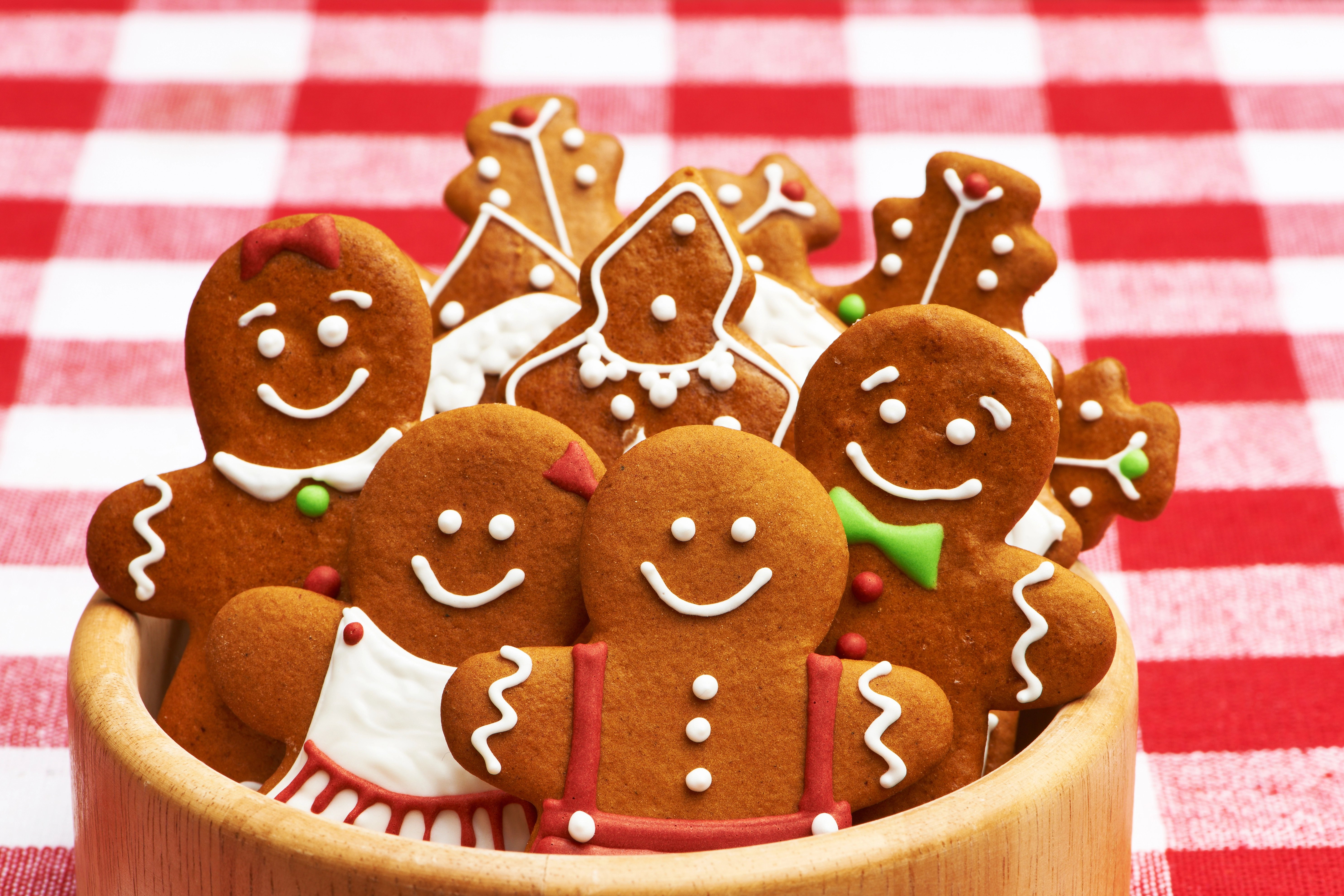
Do you smell the gingerbread,
The gingerbread, the gingerbread?
Do you smell the gingerbread?
It’s Christmas time!
Chorus:
Christmas! Christmas! Time to celebrate.
Christmas! Christmas! We can hardly wait.
4. We feel joy and happiness,
happiness, happiness,
We feel joy and happiness,
It’s Christmas time!
The steps to the activity are as follows:
1. Teach the six new words using the picture cards.
It’s Christmas Time-Song by K. Kampa, Handout by S. Toyama
Create a gesture for each word.
2. As a critical thinking activity, place the pictures for hear, smell, and see in a column on the left side of the board. Place the images for gingerbread, jingle bells, and Christmas tree in a column on the right side. Point to the “hear” card as you ask students, “What can you hear?” When students answer, “jingle bells,” draw a line from hear to jingle bells. Continue in the same way with the other words. In addition, you may ask questions such as, “Can you smell a Christmas tree? Can you see jingle bells?” and so on.
3. Hand out a copy of the activity sheet to each student. Play the song. As students listen, they point to the lyrics with illustrations (known as a rebus).
4. Play the song again, with students standing in a circle or at their desks. On each verse, pantomime the movement with your students. For a performance, you could have different groups perform each of the verses.
5. There are so many possibilities for movements. For example, on the chorus, on Christmas, Christmas, students can a) make a big circle with their arms, b) wave their arms side to side, or c) choose their own idea.
On time to celebrate, students clap their hands five times, once for each syllable.
On We can hardly wait, students hug themselves, then reach their hands up on the word wait!
For the interlude music, pretend to make it snow by moving your fingers gently from up high to the ground!
We hope you enjoy this wonderful Christmas song and activity.
Here’s a video that I made with some amazing kids! They jumped right into the song and we recorded this video at a park.
For the studio version of my song, go to iTunes and click on Track #13 of Kathy Kampa’s Special Days and Holidays. (Just click on iTunes above or the album cover below.)
This music is also available on streaming services.
I have collected numerous Christmas craft activities here on Pinterest.
Happy Teaching, and have a very Merry Christmas!
Kathy Kampa
Kathy Kampa is a passionate educator of young learners. She seeks to nurture children’s imaginations and spark creativity through fun and engaging activities. Kathy believes that music and movement should be a part of every young child’s learning.
Kathy is the co-author of Magic Time, Everybody Up, Oxford Discover, Beehive and Buzz , and Blue Dot(all published by Oxford University Press). She has taught young learners in Tokyo, Japan for over 30 years. Kathy is also active as a teacher trainer, inspiring teachers around the world. She has currently returned to her home state of Minnesota in the US.
“Christmas Gingerbreads” image courtesy of nuchylee / FreeDigitalPhotos.net

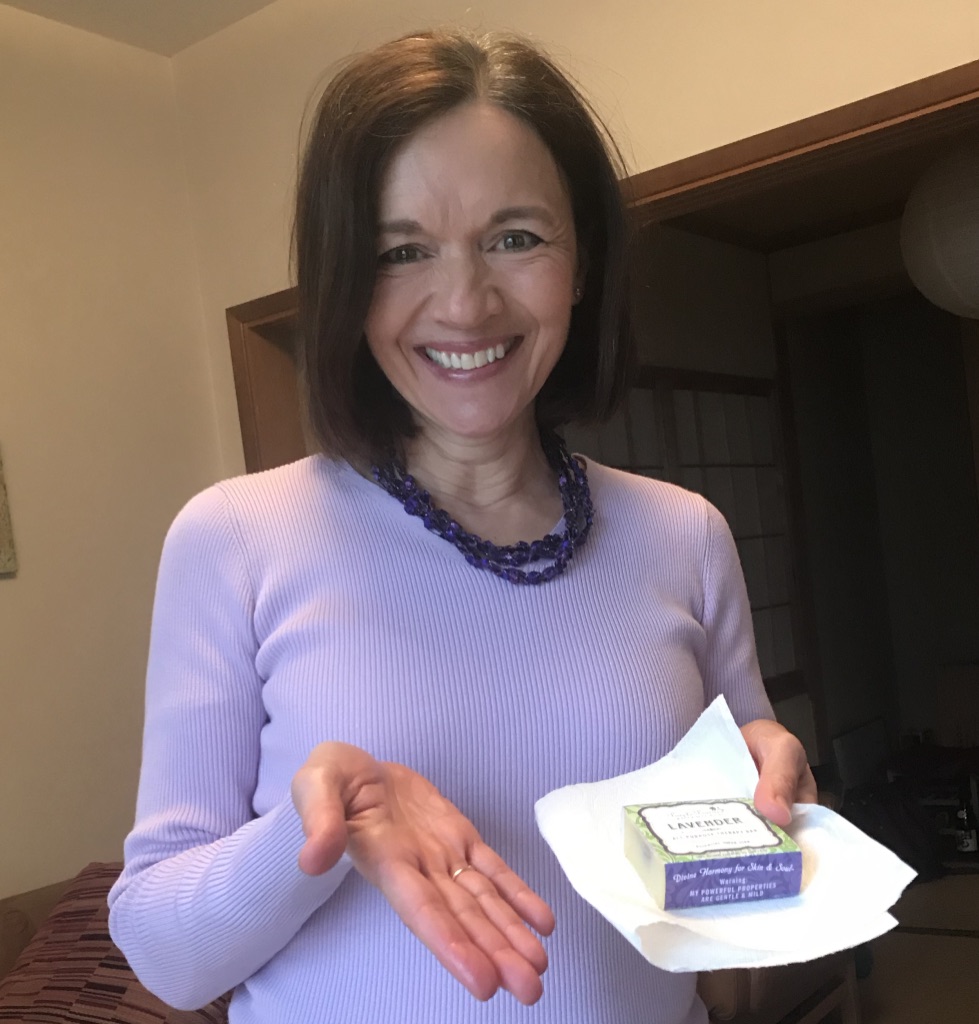
Do you know the five steps to washing your hands well? Wash Those Germs Away, written by children’s songwriter Kathy Kampa, was inspired by the COVID-19 virus and a call to better hand washing by our school nurse. This song will teach you (and those you love!) how to wash your hands thoroughly.
You’ll find a video created for young learners at my school. This might help your very young learners. The other video is a compilation of people who joined me in a “handwashing mission.”
Here are some suggestions for teaching this song:
For young learners, check their knowledge of the different parts of their hands. Here are two ways to do this.
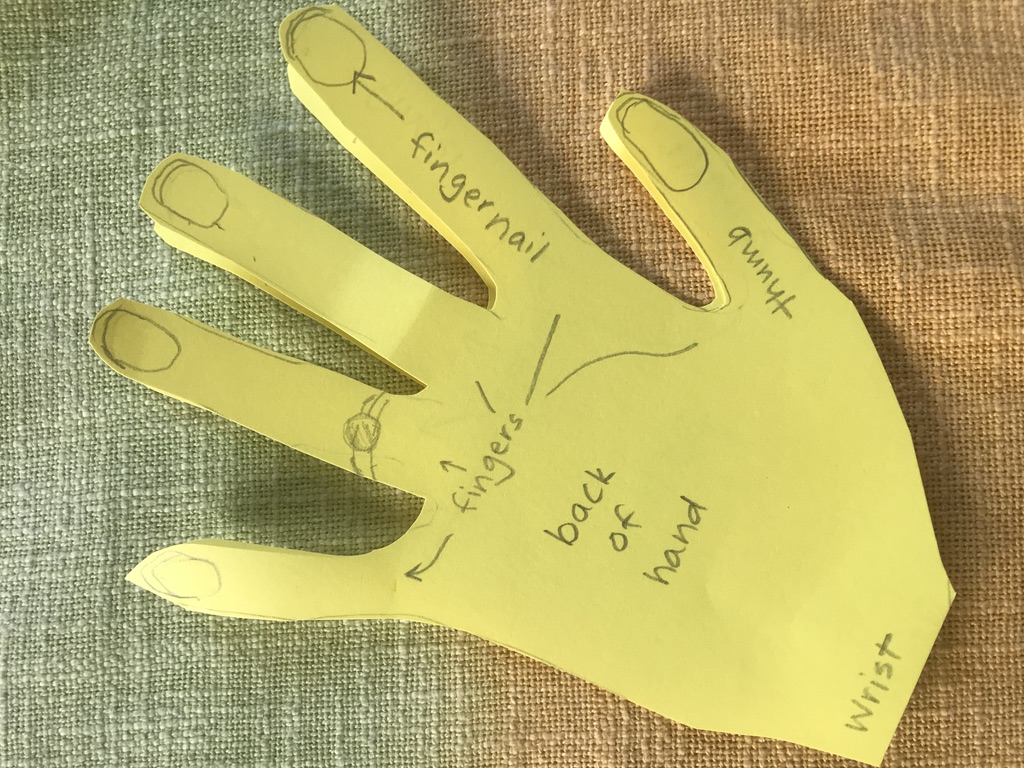

Now, prepare soap and a towel or paper towel. Pretend to turn on the water.
| Get started: Turn on the water. Get the soap. Rub your hands together. Let’s wash our hands. Turn off the water. |
| Sing: 1. Wash between, wash between, wash between your fingers, Wash between, wash between, wash between your fingers. |
| 2. Wash the back of each hand, Wash those germs away! |
| 3. (Start with your pinkie and work towards your thumb, then start with your thumb to your pinkie.) Then wash your fingers one by one, Wash each finger, Wash your thumbs, 1-2-3-4-5-6-7-8-9-10, almost done! |
| 4. (Bend your fingers to wash your fingernails in your palm.) Now you wash your fingernails and wash your palms, wash your fingernails and wash your palms, |
| 5. Wash your wrists, both right and left, Wash those germs away! |
| Wash those germs away! Wash – those – germs – away . . . . . . . . . YEAH! Shake off that water and dry your hands. |
Thanks to creative artists

—- Andre DiMuzio for arranging this song
—–Brady Foster for compiling all of the videos!
To ensure that everyone knows how to wash their hands well, we’ve provided additional resources for you. Both the vocal version and the karaoke version are available for free!
Karaoke Version
Thanks to everyone who joined in this hand-washing compilation.
Thatcher Buck
Karoline Buck
Brady Foster
Yuzuho Fujisawa
Emma Hayashi
Maiko Hayashi
Barbara Hoskins-Sakamoto
Patrick Jackson
Kathy Kampa
Brooke Kearney
Lori Kampa Kearney
Shannon Kearney
Yoko Matsui
Dina Mitchell
Nao Oshima
Callie Sisel
Tomoko Tanaka
Christian Vilina
Chuck Vilina
Craig Wright
Special Thanks to Taruna Kapoor and students:
Kindergarten children:
Pushti Bhatti
Vihaan Singh
Pre-Nursery
Prince Rana
Arubhav Shishodia
Ranya Goel
Want to see some fun outtakes? Thanks to dogs Addie and Allie who joined in the fun! We also thank the pair of feet for trying to do this song.
For more kid-tested music and movement activities, check out more music on iTunes. Kathy has produced two music CDs for very young learners, Kathy Kampa’s Special Days and Holidays and Jump Jump Everyone, which build English language skills through movement while nurturing creativity and imagination! Grown and loved by real kids!

Songwriter Kathy Kampa is a passionate educator of young learners. She seeks to nurture children’s imaginations and spark creativity through fun and engaging activities. Kathy believes that music and movement should be a part of every young child’s education. Kathy’s Songs for Kids (Kathy Kampa’s Special Days and Holidays and Jump Jump Everyone) are available on iTunes.
Kathy uses a globally-minded and inquiry-based approach to teaching through which students develop 21st-century skills. She also supports the development of English language skills by creating songs, chants, and TPR/movement activities targeted to young learners’ needs.
Kathy and her husband Charles Vilina are also co-authors of Magic Time, Everybody Up, and the ELTon award-winning course Oxford Discover, all published by Oxford University Press. They recently published Beehive and Buzz, courses for young English Language Learners.
#handwashing #COVID #coronavirus #washyourhands #socialdistancing #corona #handwash #KIDSMUSIC #CHILDRENSMUSIC #KATHYKAMPA #MAGICTIMEKIDS CHILDRENSSONGS #MOVEMENT #MUSICFORKIDS #KIDS #FAMILYMUSIC #MUSICCLASS #BABYMUSIC #TODDLERMUSIC #KIDSMUSICCLASS #preschool
Hand washing image Designed by brgfx / Freepik

I often feel that every day should be Earth Day. Our planet is precious, and we can help children learn how to care for it.
Earth Day is now celebrated around the world on April 22nd. Since its inception in the US in 1970, it is now observed by more than a billion people globally every year. Earth Day is a day to take action and make changes. We can create global, national, and local policy changes to protect our beautiful planet Earth. UNESCO has created a list of Sustainable Development Goals. As educators, we can create a greater awareness in our classrooms by including activities from this list.
What can we do with our young learners? Our friend Patrick Jackson has started a movement with his materials called “Picker Pals.” You can help your students learn about ways to clean up our planet.
If you can’t get outside with your students, we can use music and movement resources that help our young learners recognize ways they can take action. Here are some of my favorites.
2. Protect Our Planet is a simple song with a short chorus. It gives children ideas of the actions they can do.
3. My song Hello Spring teaches children to appreciate the beauty of the world around them. Follow this link for the video.
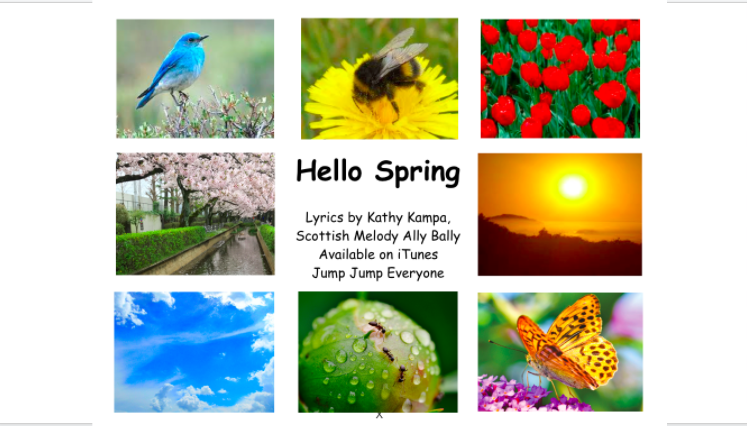
Hello Spring lyrics by Kathy Kampa on Jump Jump Everyone
Hello bluebirds. Hello bumblebees.
Hello red tulips. Hello cherry trees.
Hello warm sun. Hello blue skies.
Hello little ants, and orange butterflies!
For Earth Day, students can sing this version, then think about the things that they appreciate about their world. Write your own class song called “We Love The Earth” by adding seven new ideas. My song has two sets of rhyming words: (bumble)bees and trees, skies and (butter)flies.
We Love The Earth
Your version:
We love _______________. We love _____________________.
We love _______________. We love _____________________.
We love _______________. We love _____________________.
We love _______________ and ______________________.
4. Ms. Katie has a fun episode with lots of songs, a story, and activities related to Earth Day. I have heard people compare her to Mr. Rogers. Enjoy!
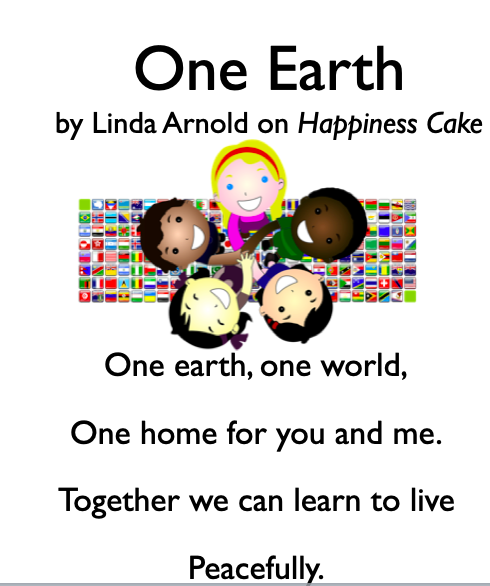
5.One Earth, One World is definitely one of my favorite songs by children’s singer/songwriter, Linda Arnold! It reminds children that our earth needs people who can live together peacefully. I created this simple choreography for a workshop in Hiroshima where we celebrated world peace. We made concentric circles. The innermost circle started by performing the dance below. When they finished, the second circle began, and so on. After each group performed the dance, they walked around a circle holding hands. Circles walked in opposite directions to add interest.
You’ll find the lyrics followed by the audio track below.
One Earth, one world (make circle shapes with arms first in front of body, then overhead),
One home (keep arms overhead, bend elbows to look like a roof), for you and me (point)
Together we can learn to live (gesture to friends or turn in a circle)
Peacefully (fold hands together).
I’ve been singing and dancing to this song at the end of my volunteer lessons with children in Ukraine. They performed this song for an international music celebration. You can watch my video of this song from my online class. Perhaps the first step to having a beautiful planet is having peace.
There are many beautiful songs to help you celebrate Earth Day! I hope that you can help your children make a difference in the world.
You can find Kathy’s music at iTunes, Apple Music and Spotify.
My second album is filled with many happy songs that have grown in my young learner classroom. The songs encourage children to move. Many songs link to classroom content. Children can dance like falling leaves, bloom like a spring flower, move through the butterfly life cycle . . . . you’ll find LOTS of fun and magic in this album.
Happy teaching!
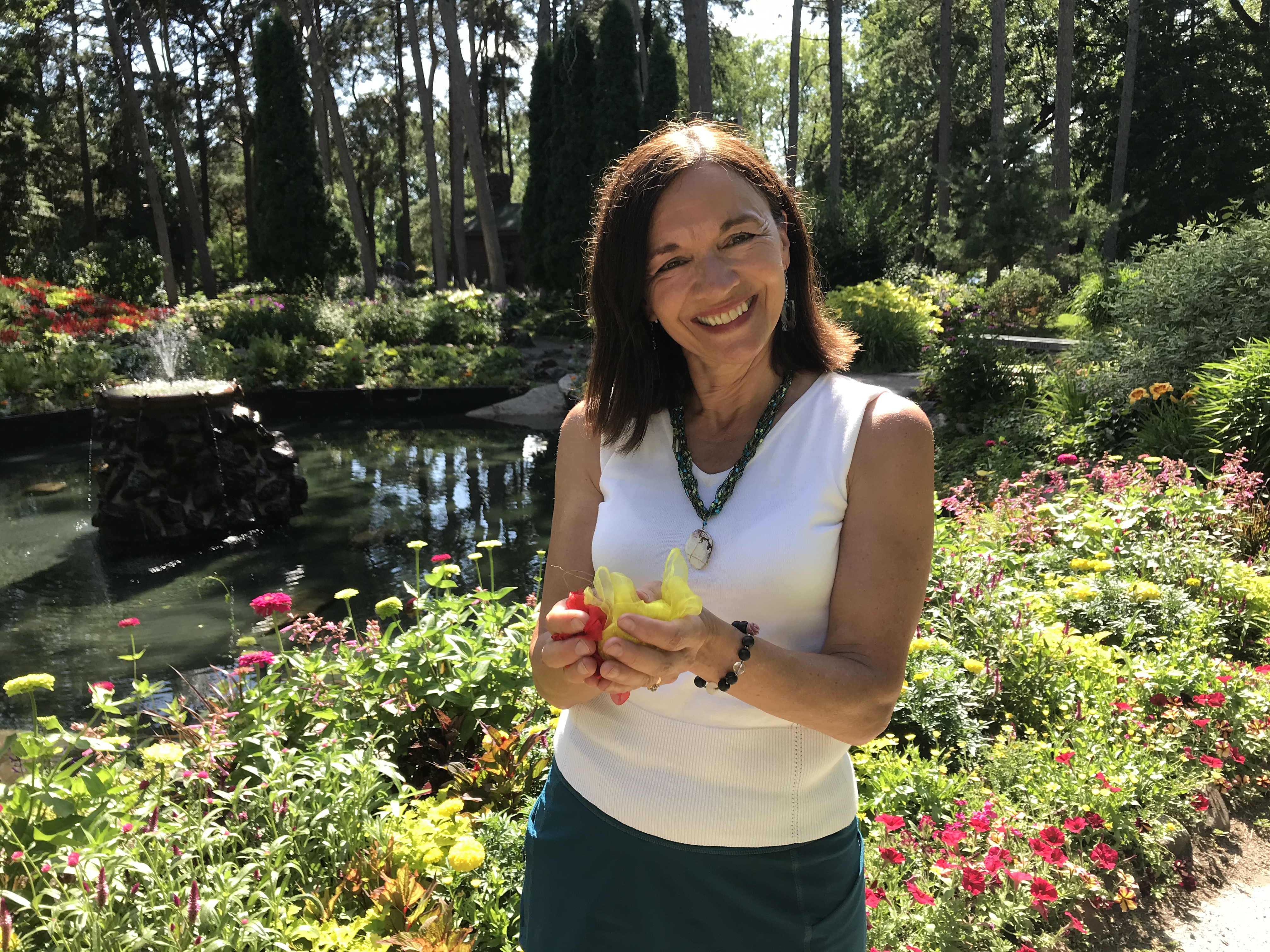
Kathy Kampa is a passionate educator of young learners. She seeks to nurture children’s imaginations and spark creativity through fun and engaging activities. Kathy believes that music and movement should be a part of every young child’s learning.
Kathy is the co-author of Magic Time, Everybody Up, Oxford Discover, Beehive, Buzz, and Blue Dot (all published by Oxford University Press). Our new course Blue Dot helps students take action in the world.
Kathy has taught young learners in Tokyo, Japan for over 30 years. She’s also active as a teacher trainer, inspiring teachers around the world. She has currently returned to her home state of Minnesota in the US.
If you’re interested in more of Kathy’s work, check out her YouTube channel at Kathy Kampa. Kathy has collected numerous activities to link with her here on Pinterest.
Easter is just around the corner! Holidays give us an opportunity to teach students about holiday traditions as well as teach some new vocabulary. I always love to find ways to get my students moving with a song.
In this post you’ll find:
How will you teach your students about Easter? Look at the picture below. What do you see? What does it tell you about Easter? (rabbits, colored eggs, spring flowers, chocolates)
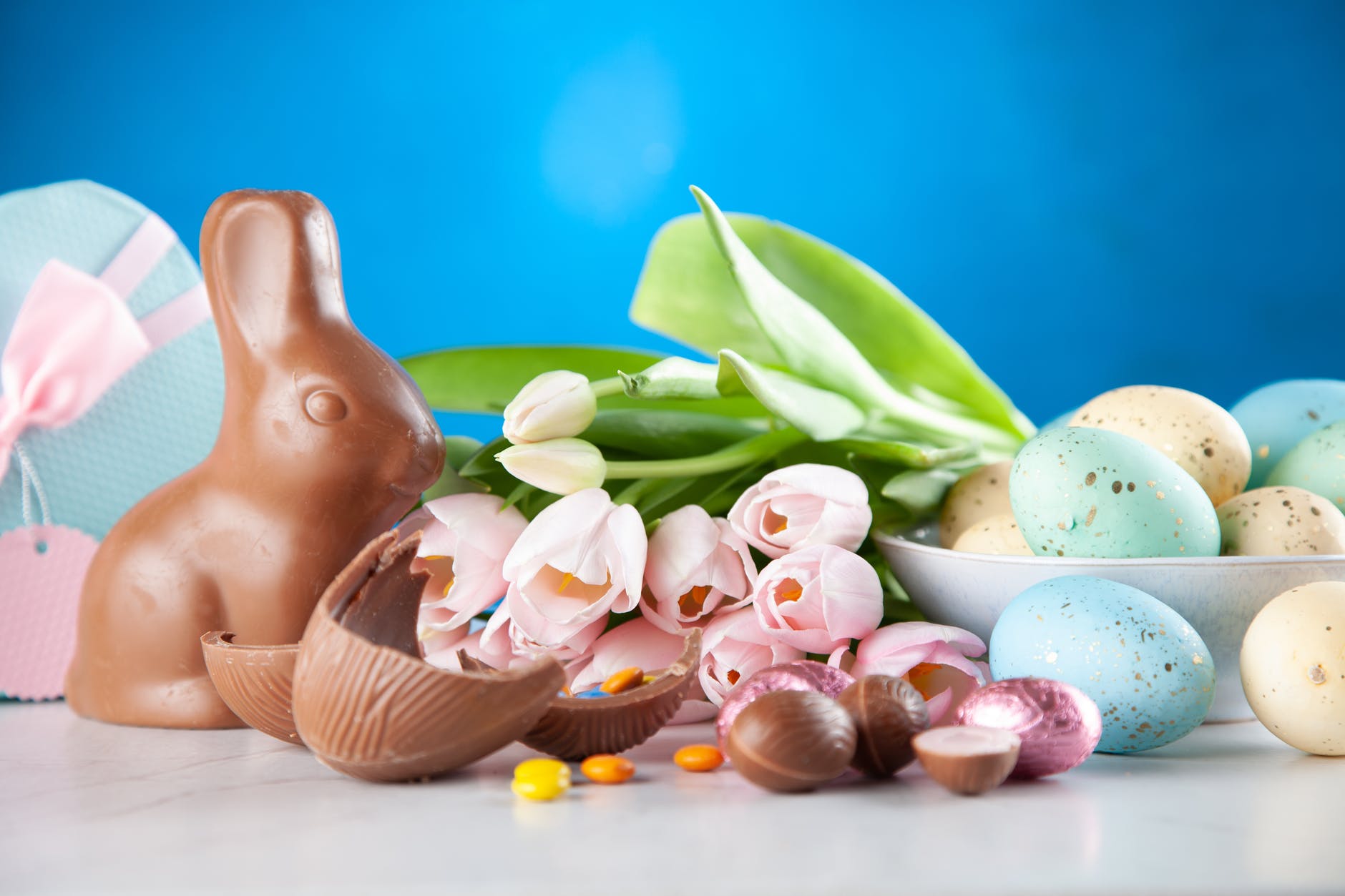
When I teach young learners, I use many ways to introduce, practice, and review new language. Use props. Then do this song in three different ways–first as a fingerplay, then moving around a circle, and finally, moving around the classroom. I’ve made a simple video for you to help you learn it as a fingerplay.
Hop along Easter Bunny, hop along.
Hop along Easter Bunny, hop along.
Hop along Easter Bunny, Hop along Easter Bunny,
Hop along Easter Bunny, hop along.
Young children love surprises. Each time I sing one line, I quickly bring my fingers back to where I started. On the longer line, continue hopping. My students find it funny when I bring my fingers over my head and along my arm.
On the second verse, pretend to tiptoe using your fingers.
Tiptoe Easter Bunny, tiptoe.
Tiptoe Easter Bunny, tiptoe.
Tiptoe Easter Bunny, Tiptoe Easter Bunny,
Tiptoe Easter Bunny, tiptoe.
On the third verse, pretend to pick up an egg and hide it beside you, behind you, or under your legs.
Hide the eggs Easter Bunny, hide the eggs.
Hide the eggs Easter Bunny, hide the eggs.
Hide the eggs Easter Bunny, Hide the eggs Easter Bunny,
Hide the eggs Easter Bunny, hide the eggs.
On the last verse, pretend to run away.
Run away Easter Bunny, run away.
Run away Easter Bunny, run away.
Run away Easter Bunny, Run away Easter Bunny,
Run away Easter Bunny, run away.

2. Around the circle movement: Stand up and magically turn all of your students into Easter Bunnies. Say, Put on your ears, your whiskers, your tails, and your great big feet!
If you have bunny ears like Brooke, put them on!
Make a circle with your students. Sing this transitional song from Jump Jump Everyone to get ready.
Transitional Song: Let’s make a circle big and round (4X)
https://magictimekids.com/2013/09/23/transitional-songs-part-one/
Moving around the circle together in the same direction. Do you remember the four movements?
1. hop like a bunny (They might use their hands to make bunny ears or a bunny tail.)
2. tiptoe quietly
3. pretend to hide eggs
4. run
3. Around the Classroom: Students can move more freely around the classroom. The Easter Bunnies dance the song by moving around the children.
Here’s a simple video of my students in my classroom moving in a circle to this music.
For the studio version of this song, go to iTunes and click on Track #6 of Kathy Kampa’s Special Days and Holidays.
4. Follow-up Activity: In this activity created by Setsuko Toyama, students use critical thinking skills to figure out which egg has been chosen. Students need to know colors, shapes, and numbers. They also need to know words like “polka dots” and “stripes.”

Secretly choose one egg. Give one clue at a time, such as It’s pink. Students can guess, Is it number three? Add another clue. It has blue polka dots. Students guess again. Is it number one?
After modeling this activity for the class, have students work in small groups or with partners. Make a copy for each student. Have fun celebrating Easter!
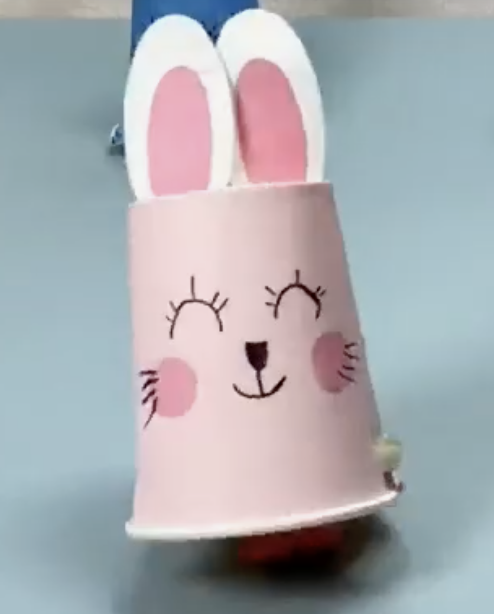
5. Art/Craft Activity This is a fun Easter Bunny activity from Nghia.Odin.DIY.
Look at how this cute bunny moves! The bottle tops and rubberband make this bunny run away!
If you’re looking for something super simple, try out these Easter cutting activities or Easter Egg Name Basket from Sam.
Kathy Kampa is a passionate educator of young learners. She seeks to nurture children’s imaginations and spark creativity through fun and engaging activities. Kathy believes that music and movement should be a part of every young child’s learning.
Kathy is the co-author of Magic Time, Everybody Up, Oxford Discover, Beehive, and Buzz (all published by Oxford University Press). She has taught young learners in Tokyo, Japan for over 30 years. Kathy is also active as a teacher trainer, inspiring teachers around the world. She has currently returned to her home state of Minnesota in the US.
If you’re interested in more of Kathy’s work, check out her YouTube channel at Kathy Kampa.
Are you streaming music? Go to Spotify or Apple Music to find Kathy’s music.

You can find more engaging songs on Jump Jump Everyone
Jump Jump Everyone, my second album, is filled with many happy songs that have grown in my young learner classroom. The songs encourage children to move. Many songs link to classroom content. Children can dance like falling leaves, bloom like a spring flower, move through the butterfly life cycle . . . . you’ll find LOTS of fun and magic in this album.
If you’re looking for more action songs, check out these curated playlists.
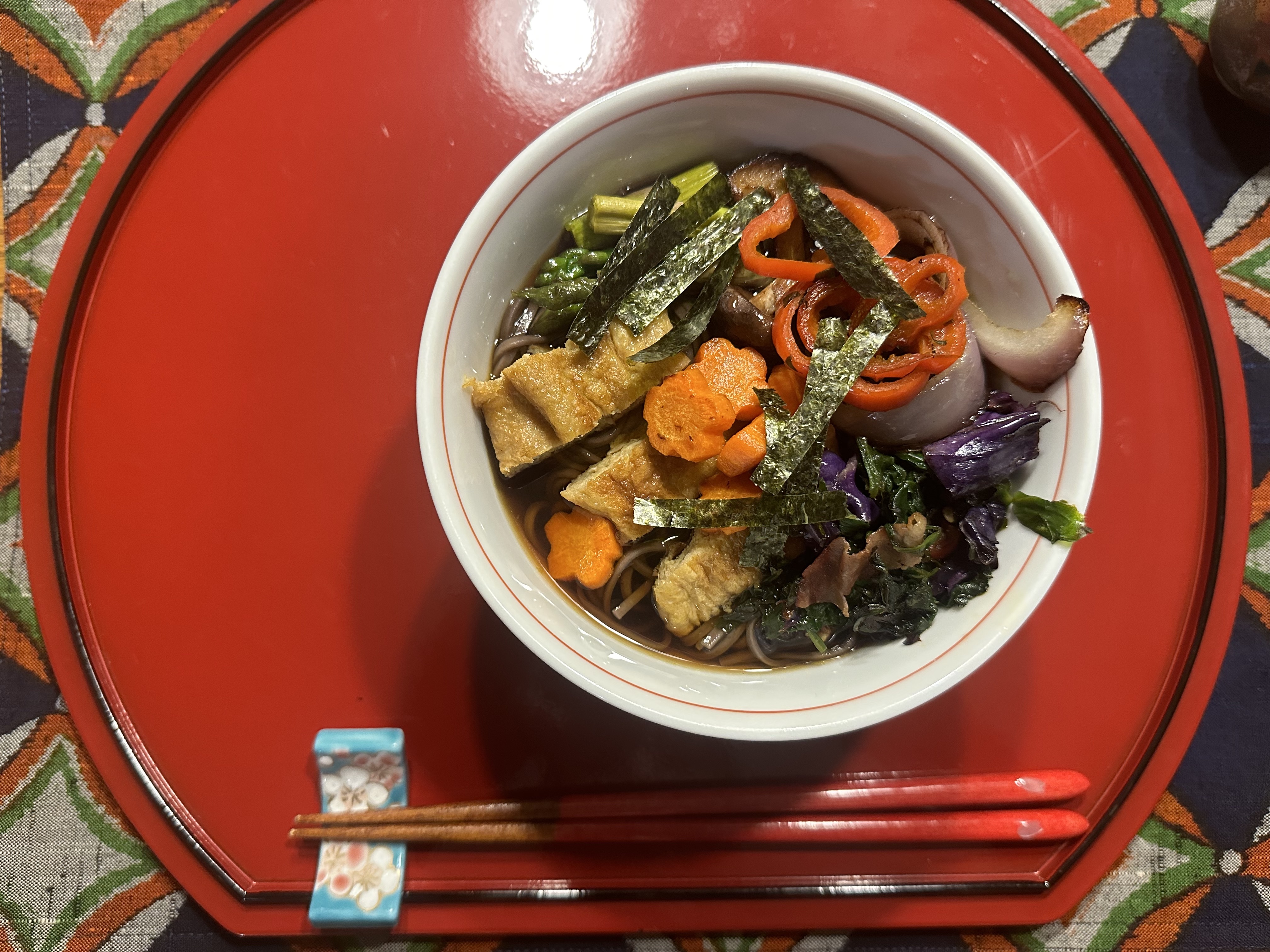
Happy New Year 2025! New Year’s Eve traditions in the US are different from those we celebrated when we lived in Japan. On New Year’s Eve, one of our dear Japanese friends used to bring us homemade soba from a famous restaurant. So delicious! Last year Chuck and I created our own version of toshikoshi soba for New Year’s Eve. Not quite the same, but still a taste of “home.” This year we enjoyed Chinese lo mein.
In this blog, I’d like to share my “Happy New Year” song. It’s quite special to me. When our son Christian was in elementary school, he started playing this simple melody on our piano. This song will stick in your head! Now he’s grown up and is performing in Hollywood! I love this recording of Christian and my husband Chuck singing it at home.

(picture taken at a Red Carpet event for his Indie film “Gift of Fear”)
Now you can also go to Spotify to get the professional recording.
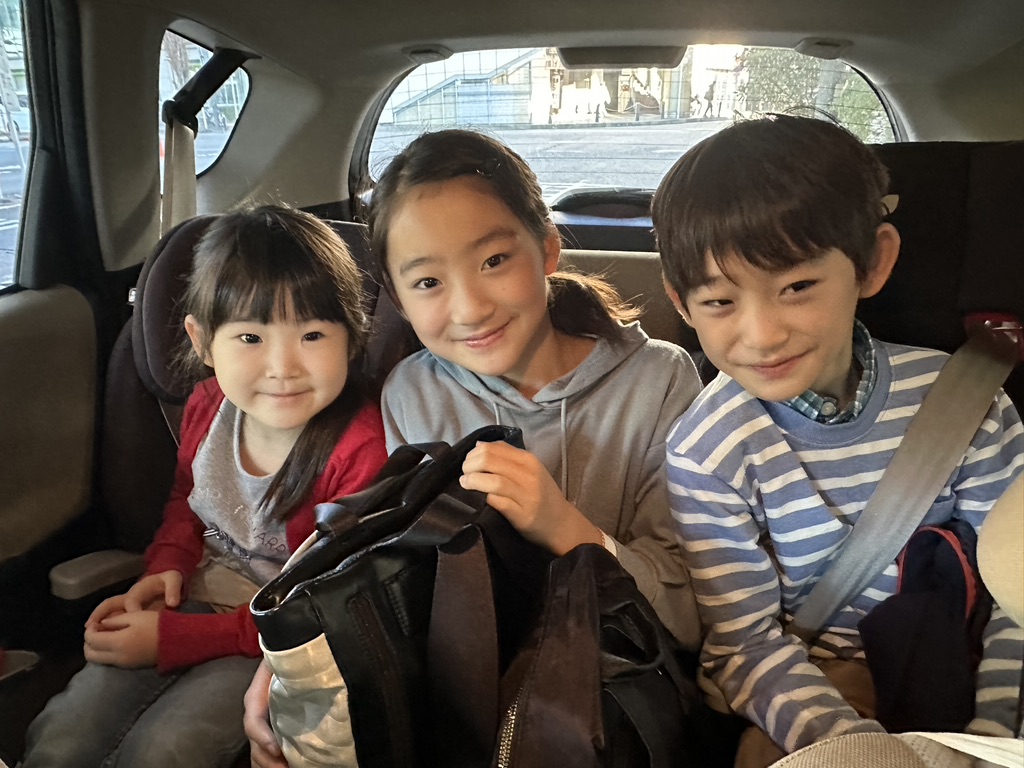
No matter how you get my music, it’s great to play it often for children. My friend Kumi plays my CDs in her car. When she brings her three children to different activities, they sing along to songs in English. During my recent trip to Japan, the kids were singing along to my songs when she picked me up in her car. What a precious moment!!
Here are the lyrics to the song. For the Google Slides, click here.
Words and Music by Christian Vilina and Kathleen Kampa © 2013
Happy New Year! Happy New Year!
Happy New Year! Happy New Year!
Happy New Year! Happy New Year!
Happy New Year! Hip hip hooray!
When I first teach the words to this song, students keep a “steady beat” by patting their legs or clapping their hands. I don’t worry about teaching the words first. I lead them through some movements while students listen to the words. Then, I add more challenging movements. Students can pat their legs once, then clap their hands. Think “pat-clap-pat-clap” or “down-up-down-up.” Do this for the first three lines. Before you know it, the students are singing along.
You can ask your students for other steady beat ideas to do during the repeated section.
Try this:
Think, think, think! Think, think, think! What should we do?
If students need help with ideas, offer two choices: Should we do jumping jack jumps or scissor jumps? Should we snap our fingers or pound our fists?
We like to do something special on the last line:
— On Happy New Year! my students like to shake their hands above their heads. Some students like to turn around quickly!
— On Hip hip hooray! students roll their hands, then jump once in place.
For an even bigger challenge, students can do the pat-clap pattern with a partner by patting their own legs, and then “air clapping” both hands with a partner.
Check out this video to see what my students did! Students stand in a circle facing their partner. First they pat their own legs, then clap with their partner. Then they turn to the person on the other side (called a “corner” in folk dance), repeating the pat-clap. They repeat the pattern with their partner, then corner until the Hip hip hooray.
During COVID, every student used a set of sticks, something like the Indian Dandiya dance. This gave students a chance to interact with a partner, but at a distance. Tap my sticks, your sticks, my sticks, your sticks.
Happy New Year 2025! We hope that you keep a song in your heart and a smile on your face. May this year be filled with lots of joy!
Kathy
Happy New Year is one of 15 great songs for kids on Kathy Kampa’s Special Days and Holidays. The CD includes a handy attached booklet with lyrics, and is available for teachers in Japan at ETJ Book Service.
The songs are available for download through iTunes. To hear the studio version of this song, go to iTunes, and click on Track #3.
Kathy’s second CD Jump Jump Everyone is filled with songs to get students moving! Songs and chants build English language skills through simple movement activities. They nurture a child’s imagination and creativity. There are beautiful seasonal songs, lively gross motor movement songs, plus effective transitional songs. Grab a scarf and play along. Grown in the young learner classroom, you’ll find that your children will ask for these songs over and over again.
All of Kathy’s music is now available on many streaming platforms, such as Spotify.
For some of Kathy’s favorite music, check out these Spotify playlists.
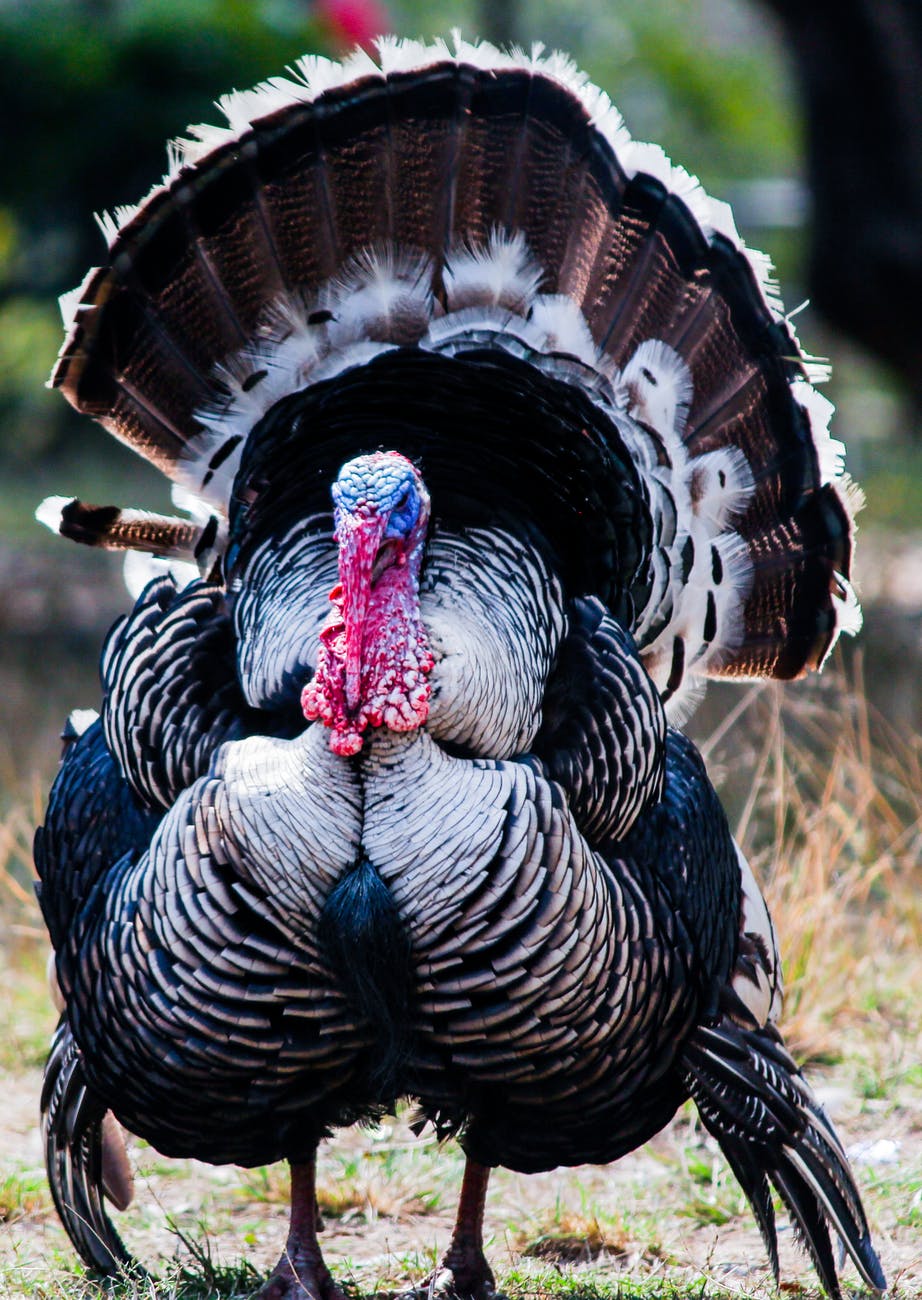
If you teach young learners, you’ve got to check out this simple song and dance. It’s called The Turkey Dance, and as you can imagine, it gives children a chance to dance like . . . . turkeys!!
While many countries give thanks at this time of year, an American tradition is turkeys. When I was a child, we made turkey drawings by tracing along the edge of our hand. These hand drawings became turkeys! So celebrate turkeys and try out the The Turkey Dance. It’s really easy to do.
Here are the lyrics, which go to the tune of “Turkey in the Straw.”
Words by Kathleen Kampa and Charles Vilina, music adapted from Turkey in the Straw
copyright © 2013 by Kathleen Kampa
Spoken: It’s Thanksgiving Day. Let’s move like turkeys.
First, move your elbows! (Imagine that these are your wings.)
Move your elbows, do the Turkey Dance.
Move your elbows, do the Turkey Dance.
Stamp your feet and shout “Hooray!”
It’s Thanksgiving Day.
2. Now move your hips. . . (Imagine that this is your tail.)
Move your hips, do the Turkey Dance.
Move your hips, do the Turkey Dance.
Stamp your feet and shout “Hooray!”
It’s Thanksgiving Day.
3. Now move your knees. . . .
4. Now move your head . . . .
5. Now move your whole body!
Here’s a video to show you the movements.
Teacher’s Notes:
In this dance, students are pretending to be turkeys.
Before you put on the music, show students a picture of a turkey like the one in this blog.
I usually start by teaching this part of the song first–
“Stamp your feet, then shout ‘Hooray!'” Stamp your feet, then jump in the air on “Hooray.”
On “It’s Thanksgiving Day!” put your hands together.
My students added their own ideas between the verses. Some children enjoyed saying “Gobble! Gobble!” while others liked to say “Thank You” in a language they know.
Now teach the body part movements. Say “Move your elbows.” These are the turkey’s wings.
Repeat with each body part listed below: hips/tail, knees, head, and whole body.
1. Make turkey wings by moving your elbows.
2. Make a tail by putting your hands behind your back and moving your hips.
3. Move your knees like you’re strutting.
4. Move your head forward and back.
5. Choose your favorite movements or make some new ones. Dance!
Here is a very, very short clip of young learners from my English class dancing to The Turkey Dance. It’s easy to do. They love this song!
For this catchy “hoedown” professional version that children LOVE to dance to, listen to The Turkey Dance on iTunes and on streaming services, such as Spotify!
If you’re looking for craft activities for Thanksgiving, check out my Pinterest page. In addition, check out Marnie’s blog, Carrots are Orange for some autumn Montessori activities focusing on turkeys. Here’s a cute craft idea from Sam. I especially like the Zentangle turkeys from Laura Hutchinson.
Happy Thanksgiving everyone! No matter where we live, we all give thanks this season for the blessings we have.
Kathy and Chuck
Kathy has produced two music CDs for very young learners, Kathy Kampa’s Special Days and Holidays and Jump Jump Everyone, which build English language skills through movement while nurturing creativity and imagination! Grown and loved by real kids!
Kathy’s second children’s CD, Jump Jump Everyone, includes songs to move to, seasonal songs, and lots of transitional songs. For more kid-tested music and movement activities, check out my music on iTunes.
Kathy’s CD’s and downloads are available at these locations:
iTunes Streaming sites, such as Spotify.

Kathy Kampa is a teacher, author, and teacher-trainer who specializes in working with young learners. As a former PYP (Primary Years Program) teacher in Tokyo, Japan, she uses a globally-minded and inquiry-based approach to teaching through which students develop 21st-century skills. She also supports the development of English language skills by creating songs, chants, and TPR/movement activities targeted to young learners’ needs.
Kathy and her husband Charles Vilina are also co-authors of Magic Time, Everybody Up, the Oxford Discover(ELTon award), Beehive and Buzz, all published by Oxford University Press.

Skeleton Dance is definitely one of my students’ favorite songs! Why should you love it, too?
Skeleton Dance is one of the first children’s songs that I wrote. And it’s certainly been requested over and over by children and teachers around the globe. I’ve taught Skeleton Dance to students in pre-kindergarten through junior high school. It was a favorite song with my online students from Ukraine. I’ve shared this song with teachers in the US, Japan, Korea, Taiwan, Thailand, Vietnam, The Philippines, Mainland China, Indonesia, Mexico, Finland, and Turkey.
Kathy Kampa’s Skeleton Dance has been performed by many students around the world. You can watch some of my students in Japan doing the Skeleton Dance, and read the lyrics below:
Here’s how you do the Skeleton Dance:
In this song, students will move four different body parts: shoulders, elbows, knees, and feet.
First, students move their shoulders to the beat. Explore different ways of moving each of these body parts.
Move your shoulders . . .
A. Skeleton, skeleton, skeleton dance,
Move your shoulders, do the skeleton dance.
Skeleton, skeleton, skeleton dance,
Move your shoulders, do the skeleton dance.
Next, students move their whole bodies to the front, to the back, and to the side. I usually start by moving only my arms, but my students love to jump in each direction.
B. To the front, to the back, to the side, side, side,
To the front, to the back, to the side, side, side,
Next, students move their shoulders up, down, and around. Each time they repeat the song, they will move a different body part in these directions. When I teach this, I point with my finger to show the directions.
C. Put your shoulders up. Put your shoulders down.
Move them up and down and all around.
Put your shoulders up. Put your shoulders down.
Move them up and down and all around.
Finally, students move their shoulders in their own way.
D. Shoulders dance . .ch ch ch ch ch ch ch ch
Shoulders dance . .ch ch ch ch ch ch ch ch
This dance is repeated with the following body parts.
Before I play the music, my students and I figure out how we’ll move up, down, and around using each of these body parts.
2. Move your elbows . . .
3. Move your knees . . .
4. Move your feet . . .
You can download this song from iTunes (Track #15).
Why use this song in your class?
It teaches body parts.
It teaches directional movements.
It’s a great way to start your school day!
It’s an easy, energizing Brain Break.
It’s a perfect rainy day, get-your-wiggles-out song.!
It’s an effective activity for a health unit.
The song will stick in students’ heads.
It’s just what you need for your Halloween celebrations!
And you can invite parents to have fun dancing with their children!
The kids will ask for it again and again.
It’s so much fun!
Bonus activities
What else can you do with this song?
Reading and Writing:
If you’d like to practice reading the lyrics, check out these fabulous reading and writing activities by Yoko Oho. It’s a fun way to read the words! Click through to see all of the pages to see what Yoko created.
Coloring
Here’s a fun coloring activity from Daria. You can see skeletons for Dia Los Muertos (Day Of The Dead). Have fun coloring “calaveras.” Get these activities on Daria’s TPT page
Pinterest ideas: Here are some fun songs, worksheets, blogs, craft activities, games, costumes, and simple cooking ideas for Halloween.
So, grab your costumes and get ready for one of my favorite holidays.
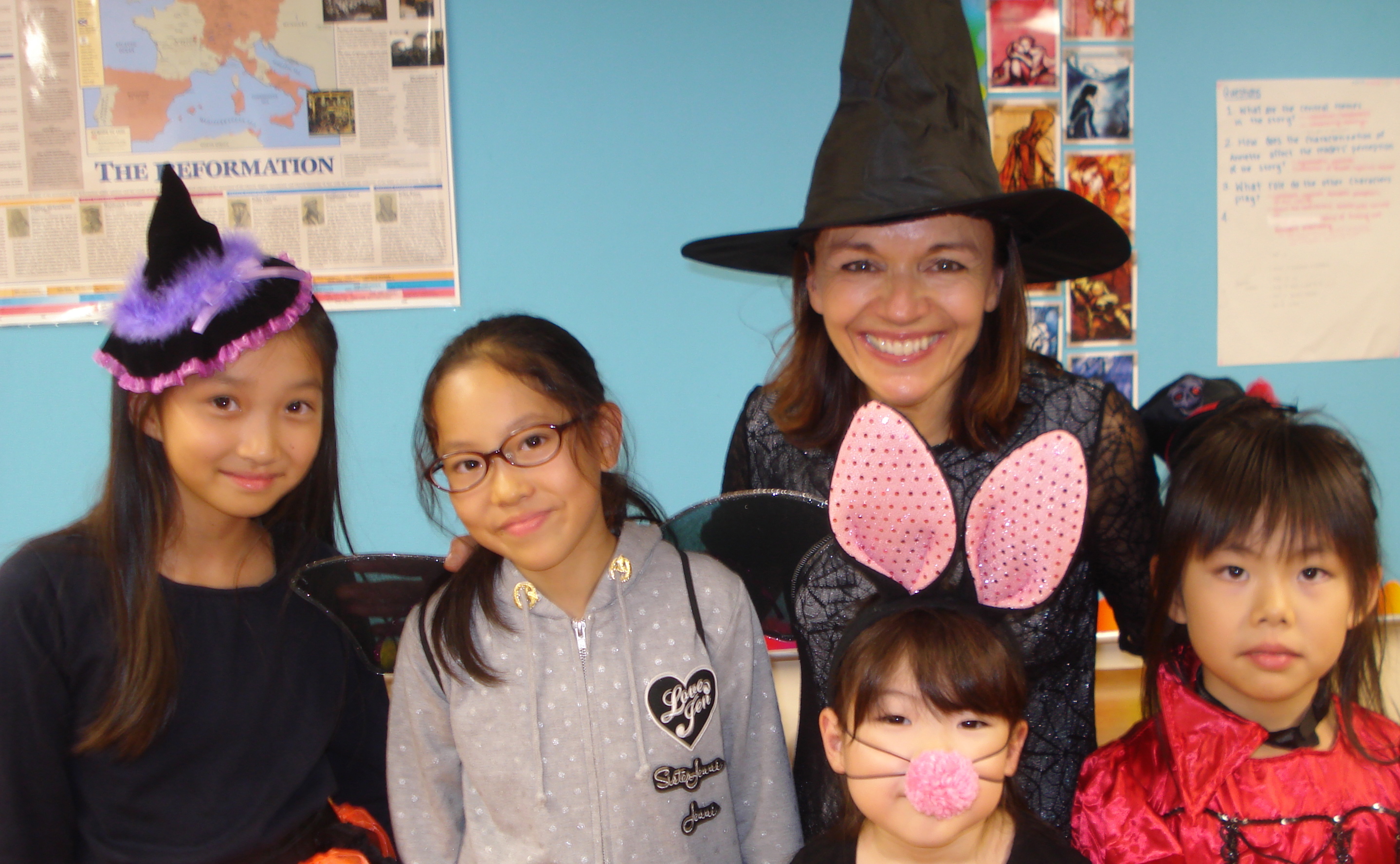
Kathy Kampa is a passionate educator of young learners. She seeks to nurture children’s imaginations and spark creativity through fun and engaging activities. Kathy believes that music and movement should be a part of every young child’s learning.
Kathy is the co-author of Magic Time, Everybody Up, Oxford Discover (ELTon winner), Beehive/Buzz and Blue Dot(published by Oxford University Press). She has taught young learners in Tokyo, Japan for over 30 years. Kathy has composed educational music for Tokyo Shoseki and recorded songs for Learning World. She is active as a teacher trainer, inspiring teachers around the world. Kathy and her husband are working in Minnesota.
If you’re interested in more of Kathy’s work, check out her YouTube channel at Kathy Kampa.
Happy Mother’s Day! These are our two sons. I’m spending Mother’s Day with them this year! It’s a blessing to have family who love and care for each other.
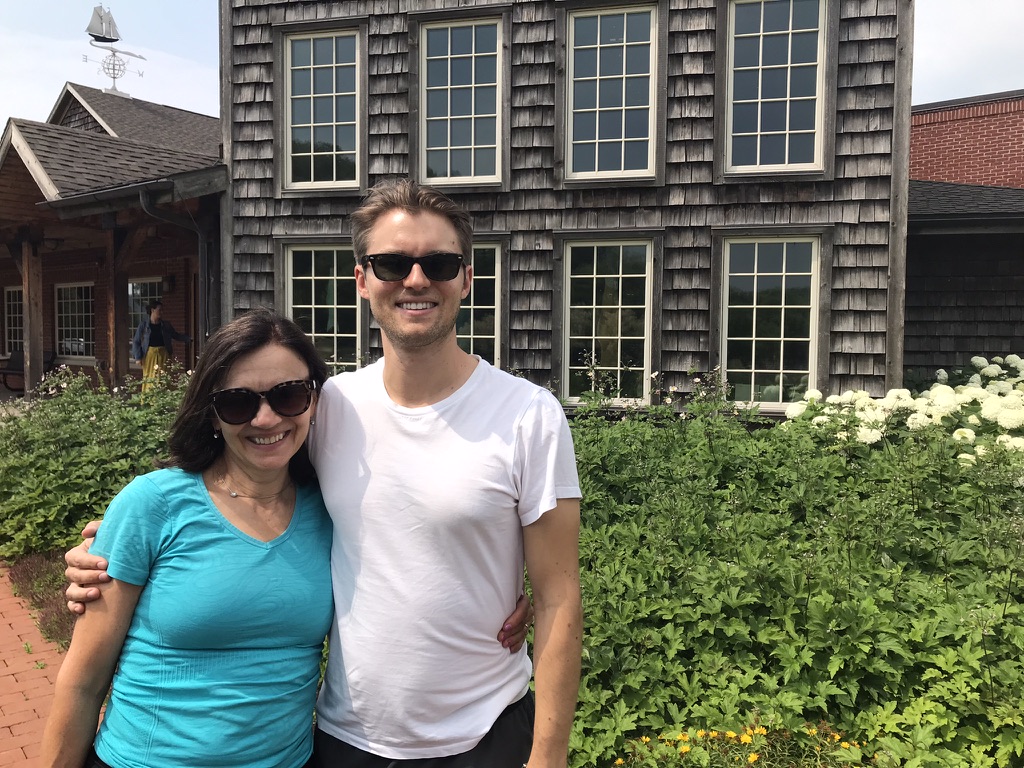
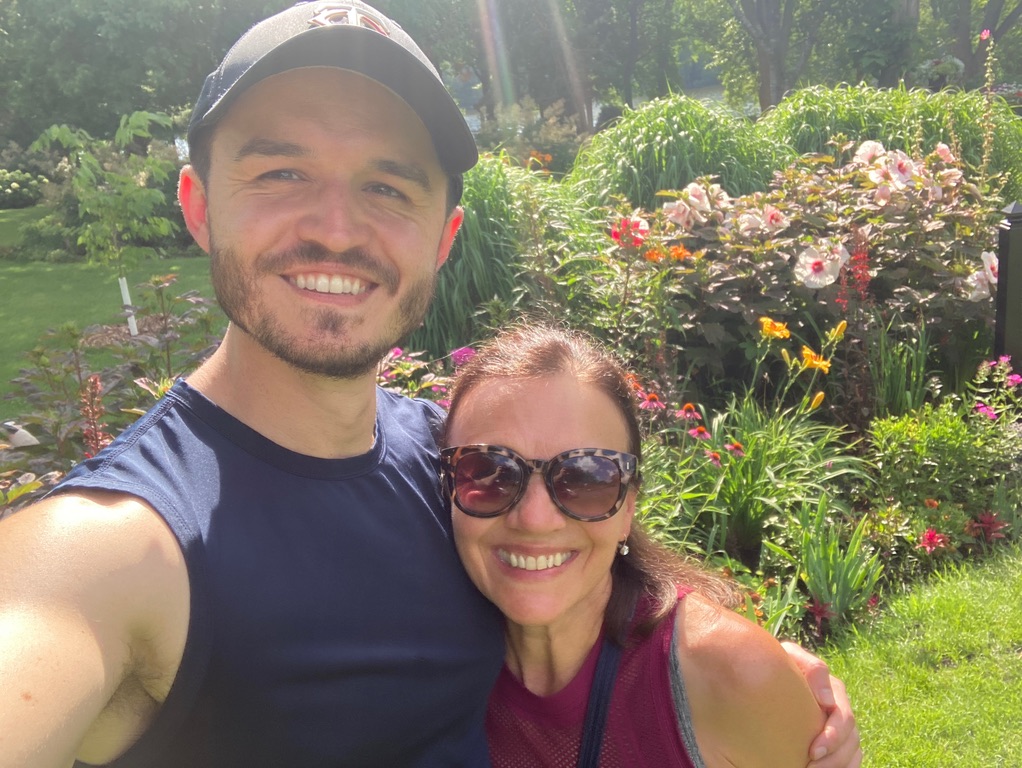
With many types of families in our schools, how will you celebrate Mother’s Day? Here in the US, we’ll celebrate Mother’s Day on May 12th.
Here are some songs that your young learners can share with moms, grandmas, or that significant person in their lives.
Peek-A-Boo
by Kathy Kampa, melody based on Skip to my Lou
Hold onto the corners of a scarf. Cover your face.
When you sing “boo,” drop the scarf down. Hug.
Peek-a-boo, I see you!
Peek-a-boo, I see you!
Peek-a-boo, I see you!
Here’s a hug ’cause I love you.
Here’s a video demonstrating how to do this. I really love using juggling scarves for this song.
2. I shared “I Love You” earlier this year, but it’s a perfect song for Mother’s Day. Children might rock from side to side, hold a stuffed animal, or even get a hug. They can sing it for their mom, grandma, or caregiver.
For parents at home, this is a lovely lullaby to sing before your child falls asleep. When our two sons were little boys, we loved to snuggle up and sing lullabies to them.
Here are the lyrics to my song:
I Love You!
a calming song by Kathy Kampa (Copyright © 2024 Kathleen A. Kampa)
I love you, I really, really do! I love you.
I love you, I really, really do! I love you.
I love you in the morning,
I love you at night,
I love you through the day when the sun shines bright.
I love you, I really, really do. I really love you.
Here’s the video.
I’ve been studying French with Duolingo. I started to wonder if I could write this song in French. With a little help from my French-speaking friends, we’ve created this version of the first verse.
Je t’aime. Encore, toujours, Je t’aime. (Or Je t’aime d’amour– pronounced: J’t’em d’a-mour)
Je t’aime. Encore, toujours, Je t’aime. (Or Je t’aime d’amour)
Je t’aime le matin. Je t’aime la nuit,
Et toute la journée quand le soleil sourit,
Je t’aime. Encore, toujours. Je t’aime. (Or Je t’aime d’amour)
3. I love to end an early childhood class with this lovely song.
May There Always Be Sunshine
composed by Arkady Ostrovsky, lyrics written by Lev Oshanin
May there always be sunshine,
May there always be blue skies,
May there always be mama/daddy/grandma/grandpa/someone,
May there always be me/ OR Who always loves me.
Here’s a beautiful video of Raffi singing this song.
As Raffi mentions, “May There Always Be Sunshine” (Russian: “Пусть всегда будет солнце!” or “Солнечный круг”) is a popular Soviet children’s song created in 1962. The music was composed by Arkady Ostrovsky and the lyrics written by Lev Oshanin. Korney Chukovsky, a writer and immensely popular children’s poet, later wrote that the inspiration for the song had been the four lines of the refrain, which were composed in 1928 by the four-year-old boy Kostya Barannikov. (source: Wikipedia)
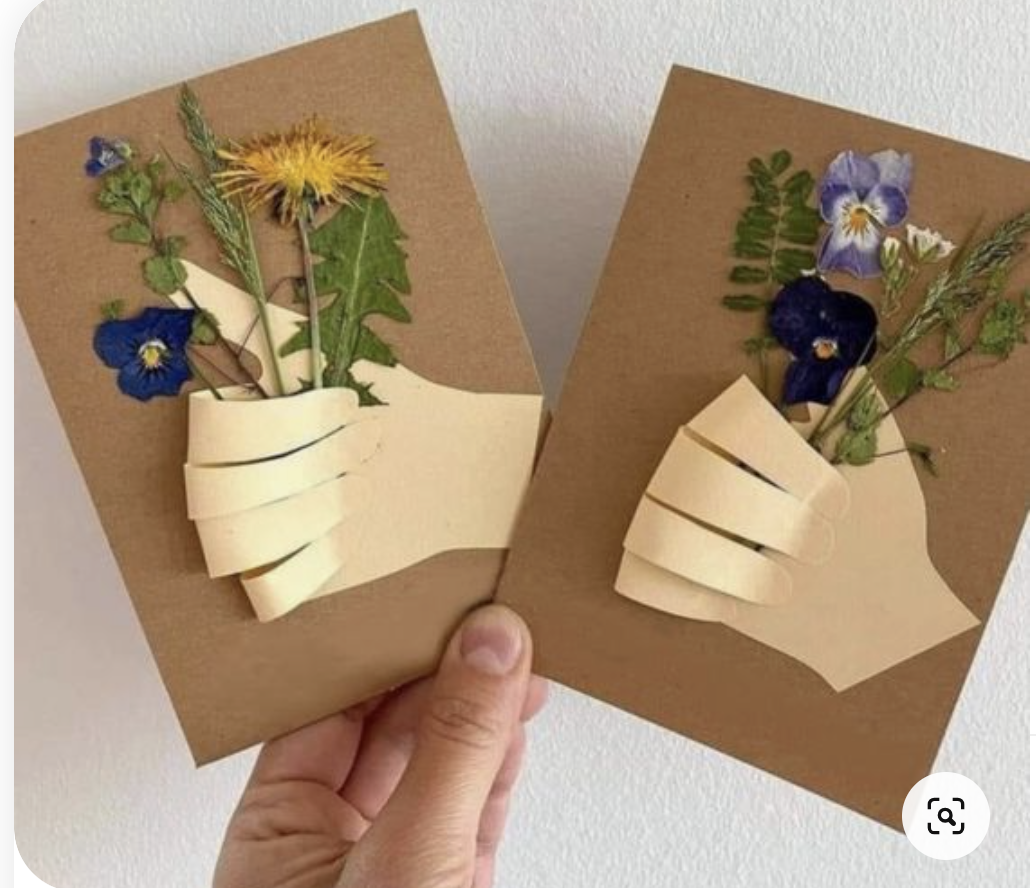
If you’re looking for a simple craft, this one shared by Abby is inexpensive. Children trace around their hands and choose flowers for a bouquet. Paper flowers or stickers would work too.
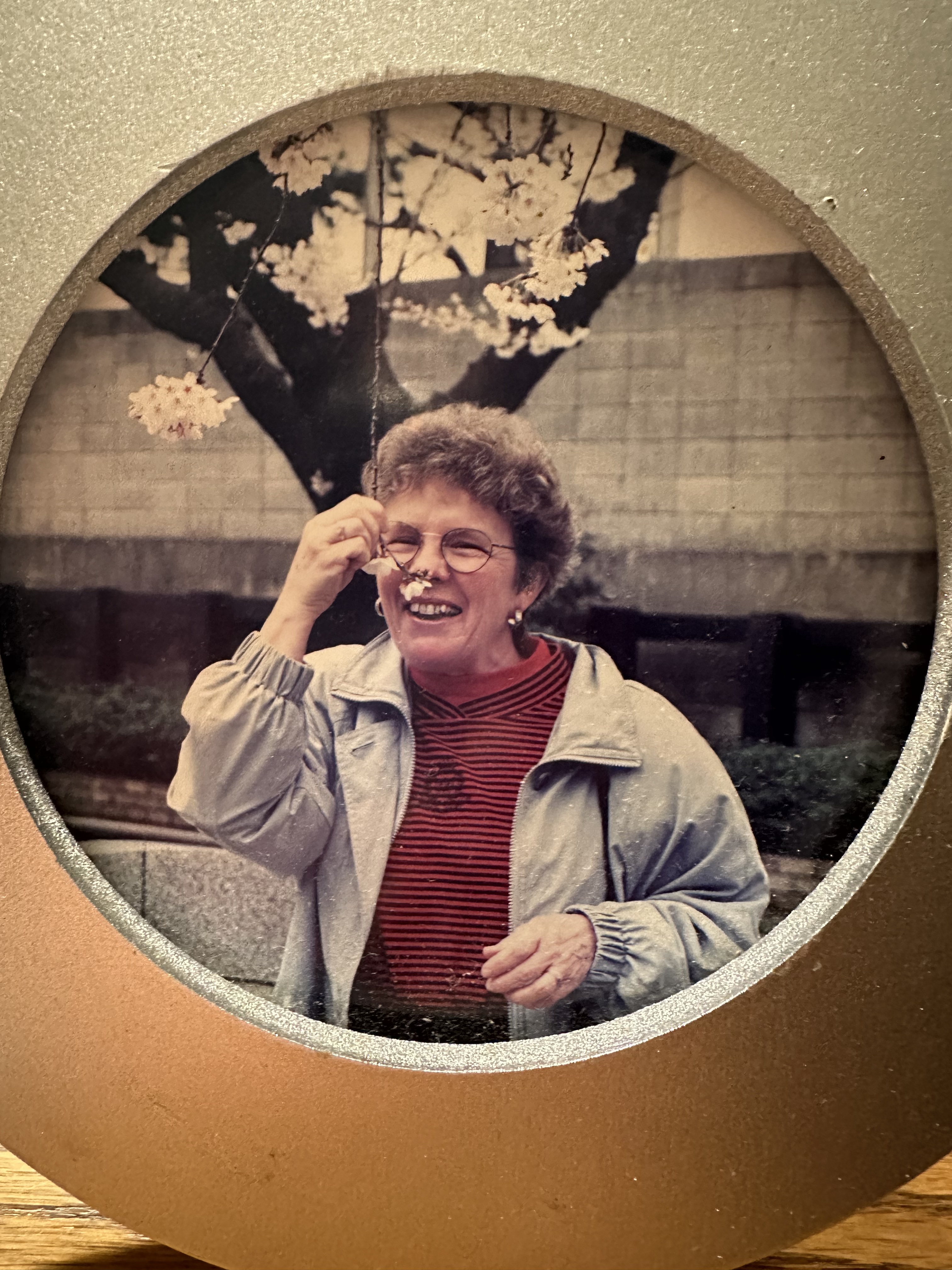
Last of all, I want to share a favorite photo of my mom, Betty Kampa Miller. She visited us in Japan on four different occasions. Mom always encouraged me to write songs. Can you write a song for your grandma? How about a song for . . .? I thought everyone wrote songs. I continue to write songs that tickle the imaginations and hearts of little ones.
Songwriter Kathy Kampa is a passionate educator of young learners. She seeks to nurture children’s imaginations and spark creativity through fun and engaging activities. Kathy believes music and movement should be a part of every young child’s education. Kathy’s songs for kids (Kathy Kampa’s Special Days and Holidays and Jump Jump Everyone) are available on iTunes.
Kathy uses a globally-minded and inquiry-based approach to teaching through which students develop 21st-century skills. She also supports the development of English language skills by creating songs, chants, and TPR/movement activities targeted to young learners’ needs. Kathy is an author and teacher-trainer with Oxford University Press.
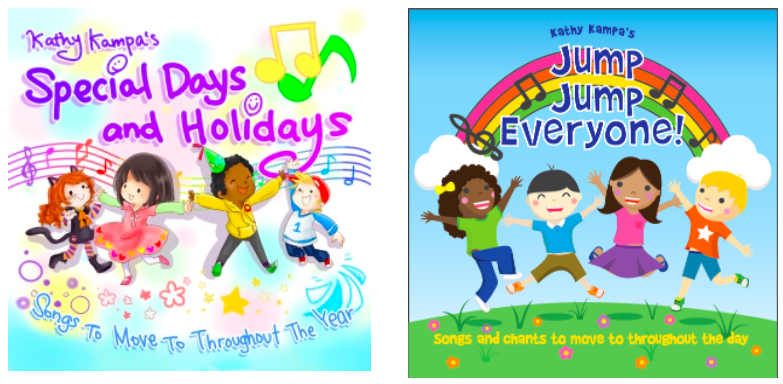
For more kid-tested music and movement activities, check out more music on iTunes, Spotify, and Apple Music. Kathy has produced two music CDs for very young learners, Kathy Kampa’s Special Days and Holidays and Jump Jump Everyone, which build English language skills through music and movement while nurturing creativity and imagination. Grown and loved by real kids!
Check out Kathy Kampa’s YouTube channel here.
If you teach young learners, you know that they love to move! In some classrooms, students need to move in a small space. You might have circle time with students standing on a spot. Your students might just stand beside their desks. This is a movement chant that you can do in ONE SPOT.
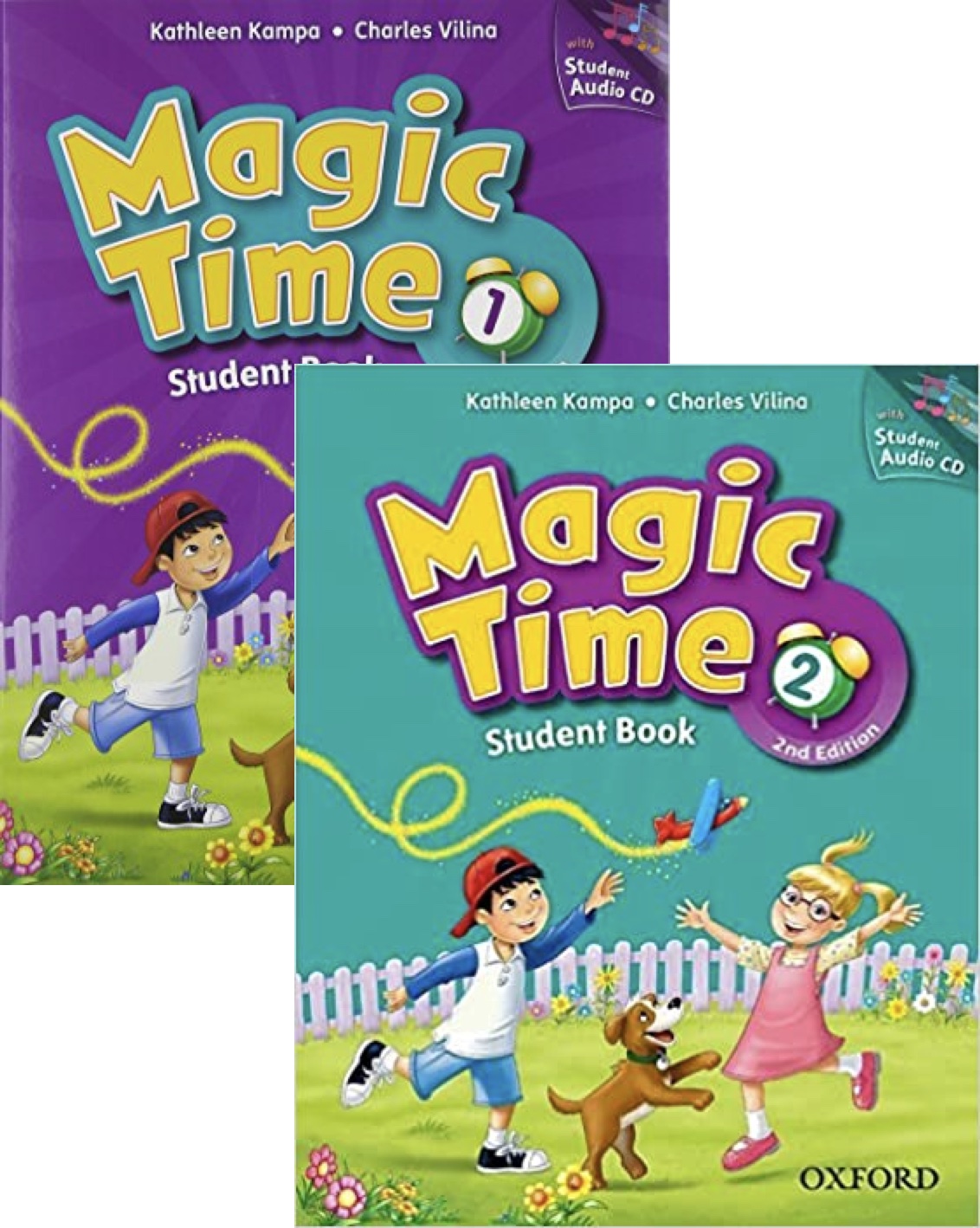
This chant comes from OUP’s Magic Time, Book One. There are just verbs–jump, run, hop, fly, stop. Once you and your students know the pattern, add your ideas. Here are some ideas: march, wiggle, twist, spin, stretch, bend, shake.
In Unit 10, students learned animal names. When they flip the page, the animals are moving. Here are the words to this simple chant.
Run, Run, Run
by Kathleen Kampa and Charles Vilina, Magic Time One
Jump! Jump! Run, run, run.
Jump! Jump! Run, run, run.
Jump! Jump! Run, run, run.
Jump! Jump! Stop!
The second time, substitute hop for the word jump.
Hop! Hop! Run, run, run. (3X)
Hop! Hop! Stop!
Last of all, substitute fly for the word hop.
Fly! Fly! Run, run, run. (3X)
Fly! Fly! Stop!
Students do all of the movements on their spot. When they say, Stop! they can make an interesting pose. Watch how my students create their own ideas.
We need to practice moving and stopping with our young learners. This develops their focus and self-control. Plus, it’s a fun activity for our little ones.
Here are my young learners in Tokyo, Japan. I placed the picture cards on the floor as a reminder of the order, similar to a rebus reading. This chant helps them practice their /r/ sound.
Songwriter Kathy Kampa is a passionate educator of young learners. She seeks to nurture children’s imaginations and spark creativity through fun and engaging activities. Kathy believes music and movement should be a part of every young child’s education.

Kathy uses a globally-minded and inquiry-based approach to teaching through which students develop 21st-century skills. She also supports the development of English language skills by creating songs, chants, and TPR/movement activities targeted to young learners’ needs. Kathy is an author and teacher-trainer with Oxford University Press. She is delighted to be teaching young learners in her hometown.
This chant comes from Magic Time 1, by Oxford University Press. Each lesson has a simple chant or song to practice the language. Many of these chants and songs invite children to move
For more fun and engaging songs that have been loved by many kids, check out these albums. Kathy’s songs for kids (Kathy Kampa’s Special Days and Holidays and Jump Jump Everyone) are available on iTunes, Spotify, and other streaming services.
What do you do with young learners on a rainy day? Sing! Dance! Make inside recess a lot of fun!
In this post you’ll find three different rain songs, all perfect for young learners. You’ll find movement suggestions, videos, and Spotify playlists for more rainy-day songs. Enjoy!
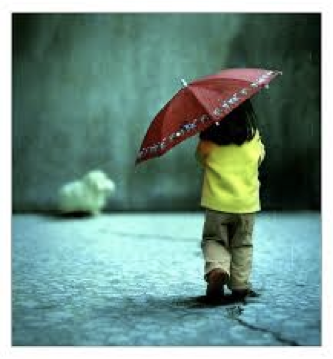
This first song is called “It Is Raining.” It’s a song that encourages noticing, a first step in learning. It invites students to listen to the various sounds created by patting on different body parts. These sounds are called “body percussion.” They can listen to the similarities and differences in the sounds. Is the sound loud or quiet/soft? Is the sound high or low?
Students learn the names of body parts, like head, arms, legs, chest, cheeks, and tummy. They can pat the rhythm of the words.
by Kathy Kampa on Jump Jump Everyone
(Goals: body part names, listening for different types of sounds, rhythm of the words)
It is raining. It is raining.
Wiggle your fingers from high to low to look like it’s raining.
On my legs. On my legs.
Pat your legs to the rhythm of the words.
Pitter patter raindrops. Pitter patter raindrops.
Tap that body part (legs) to the rhythm of the words.
I’m all wet! I’m all wet!
Brush your hands along your legs. Pretend to shake off the water.
Step inside my classroom in Japan to see my young learners singing and moving to this song.
Once your students have learned this song, take it a step further.
Think, think, think. Think, think, think. What should we do?
Tap your finger to the side of your forehead. Put your hands out to the side.
Let’s sing about our elbows!
Tap your elbows. How does that sound? Loud? Soft? High? Low? I think that sounds soft or quiet. Sing in the same way.
Let’s sing about our back(s)!
Tap your back. How does that sound? Loud? Soft? High? Low? I think that sounds kind of low. Sing in the same way.
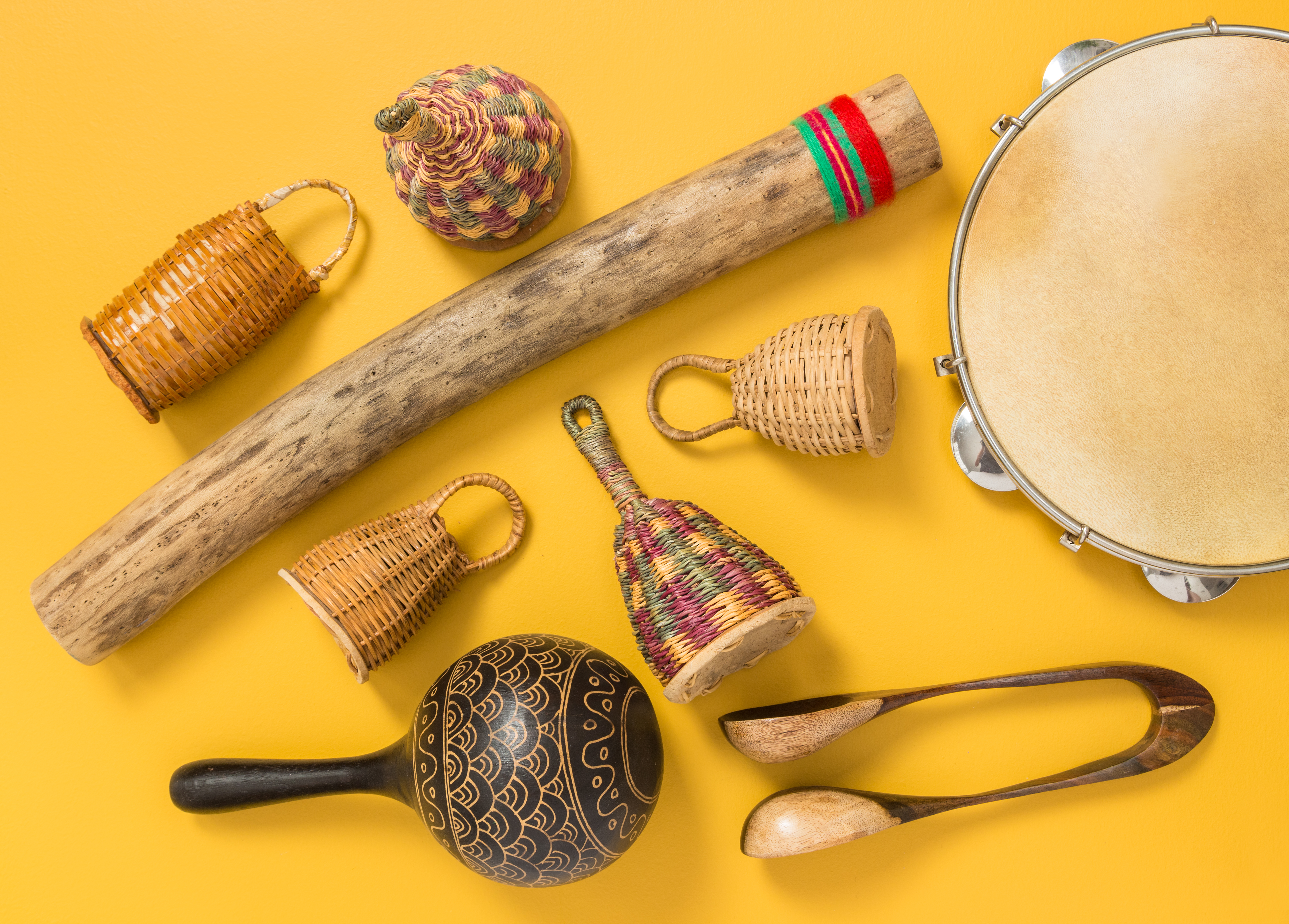
Get a rainstick or shaker if you want to add an interesting sound.
Our second song is called “Ame, Ame.” After living in Japan for over thirty years, I grew to love this traditional song. There are many different translations for it. Here’s mine.
Japanese Rain Song “Ame, Ame”
Beth’s Notes shares this notation as well as some delightful videos.

Pitter patter falling falling, Rain is falling down,
Tap on your legs. Wiggle fingers to look like rain falling.
Mother brings me my umbrella, Rain is falling down,
Pretend to open an umbrella. Wiggle fingers to look like rain falling.
Pi-chi Pi-chi, cha-pu, cha-pu, ran, ran, ran, (らん、らん、らん)
Tap on your legs.
If you have instruments, it’s fun for students to make their own rainstorm. First the wind and gentle rain, thunder, pouring rain, then returning to the wind and gentle rain.
Students can create this with body percussion sounds, too.

Lastly, a traditional rain song is “Rain Rain Go Away.”
Rain, Rain Go Away
Rain, rain, go away! Come again another day.
Make rain movements. Show “Go away.” Show “Come again.”
All the children want to play.
Clap your hands.
Rain, rain, go away!
Make rain movements. Show “Go away.”
There are many videos for this song. This one by Cocomelon shows how we can be creative while we wait for the rain to stop.
And if three songs aren’t enough for your rainy-day plans, check out these Spotify Playlists with lots of music for kids.
Are you streaming music? Go to Spotify or Apple Music to find Kathy’s music. You’ll find “It Is Raining” on “Jump Jump Everyone.”
Jump Jump Everyone, my second album, is filled with many happy songs that have grown in my young learner classroom. The songs encourage children to move. Many songs link to classroom content. Children can dance like falling leaves, bloom like a spring flower, move through the butterfly life cycle . . . . you’ll find LOTS of fun and magic in this album.
Kathy Kampa loves to bring joy to the world through her children’s music. She is passionate about making learning engaging for young learners. You’ll find more resources on Kathy’s YouTube page.
If you want a fun song to practice the sound /l/, this is for you! Looby Loo is a simple dance song. It encourages listening to the movement directions and dancing together as a group. It invites young learners to add their own ideas, too.

Check out the lyrics to this traditional song from Mother Goose.
Here we go looby loo,
Here we go looby light,
Here we go looby loo,
All on a Saturday night!
For my young students in Japan, distinguishing /r/ and /l/ can be challenging. This is a playful way to practice the /l/ sound. In addition, students hear the rhyming words, light and night.
We sing this song in a circle. Use Let’s Make a Circle to get ready.
The verses invite students to put one part of their body into the middle of the circle. For young learners, we choose body parts, like hands, feet, arms, legs, tummy, head, fingers, thumbs, etc.
Verses:
You put your hands in.
You take (put) your hands out
You give your hand/hands a shake, shake, shake (shake, shake, shake, shake . . . .)
And turn yourself about!
To build learner agency, invite students to share their ideas.
All say: Think, think, think. Think, think, think. What should we do? Think, think, think. Think, think, think. What should we do?
Teacher: Should we put in our legs? Our thumbs? Our elbows?
Student: Legs. Let’s put our legs in the circle.
Here’s a video of my young learner class in Tokyo. These children range in age from three to six. They studied English once a week with me. Listen to how well they sing along! You can see how I’m prompting the next body part to sing about by naming and showing them two or three choices. You’ll also notice that we have a lot of fun shaking longer than the standard version of this song.
For older children, practice right and left with each body part. You may want to use less repetitions of the song.
For older students, it looks like this:
You put your right hand in.
You take (put) your right hand out
You give your hand a shake, shake, shake (shake, shake, shake, shake, shake, shake . . . .)
And turn yourself about!
If you want to learn more about this song, check out the history of it here. The professional version of this song isn’t available yet.
Kathy Kampa is a passionate educator of young learners. She seeks to nurture children’s imaginations and spark creativity through fun and engaging activities. Kathy believes music and movement should be a part of every young child’s learning.
Kathy is the co-author of Magic Time, Everybody Up, Oxford Discover, Beehive, and Buzz (all published by Oxford University Press). She has taught young learners in Tokyo, Japan for over 30 years. Kathy is also active as a teacher trainer, inspiring teachers around the world. She has currently returned to her home state of Minnesota in the US.
If you’re interested in more of Kathy’s work, check out her YouTube channel at Kathy Kampa.
Are you streaming music? Go to Spotify or Apple Music to find Kathy’s music.
You can find more engaging songs on Kathy Kampa’s Special Days and Holidays and on Jump Jump Everyone
Kathy Kampa’s Special Days and Holidays has songs for the special events in children’s lives, including a loose tooth, birthdays, and many holidays.
Jump Jump Everyone is filled with many happy songs that have grown in my young learner classroom. The songs encourage children to move. Many songs link to classroom content. Children can dance like falling leaves, bloom like a spring flower, move through the butterfly life cycle . . . . you’ll find LOTS of fun and magic in this album.
For more action songs, check out this curated playlist.

First of all, with any strategy you use, you must practice it before you actually use it.
Secondly, the success of each strategy depends on you, your group of students, their age, and their disposition.
Lastly, choose one or two strategies to start. Figure out what works best. When you’re ready, add a new strategy.
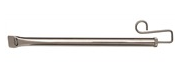 What do you have readily available in your classroom? A slide whistle is one of the most interesting sounds I have in my classroom. If you have a big group of students, it quickly gets their attention. Don’t have a slide whistle? How about a shaker, a tambourine, or a kazoo?
(Check out West Music for interesting instruments.)
To gesture “peace” you can make a Peace sign with two fingers up. Alternatively, you can just raise your hand.
To gesture “quiet,” put your finger to your lips.
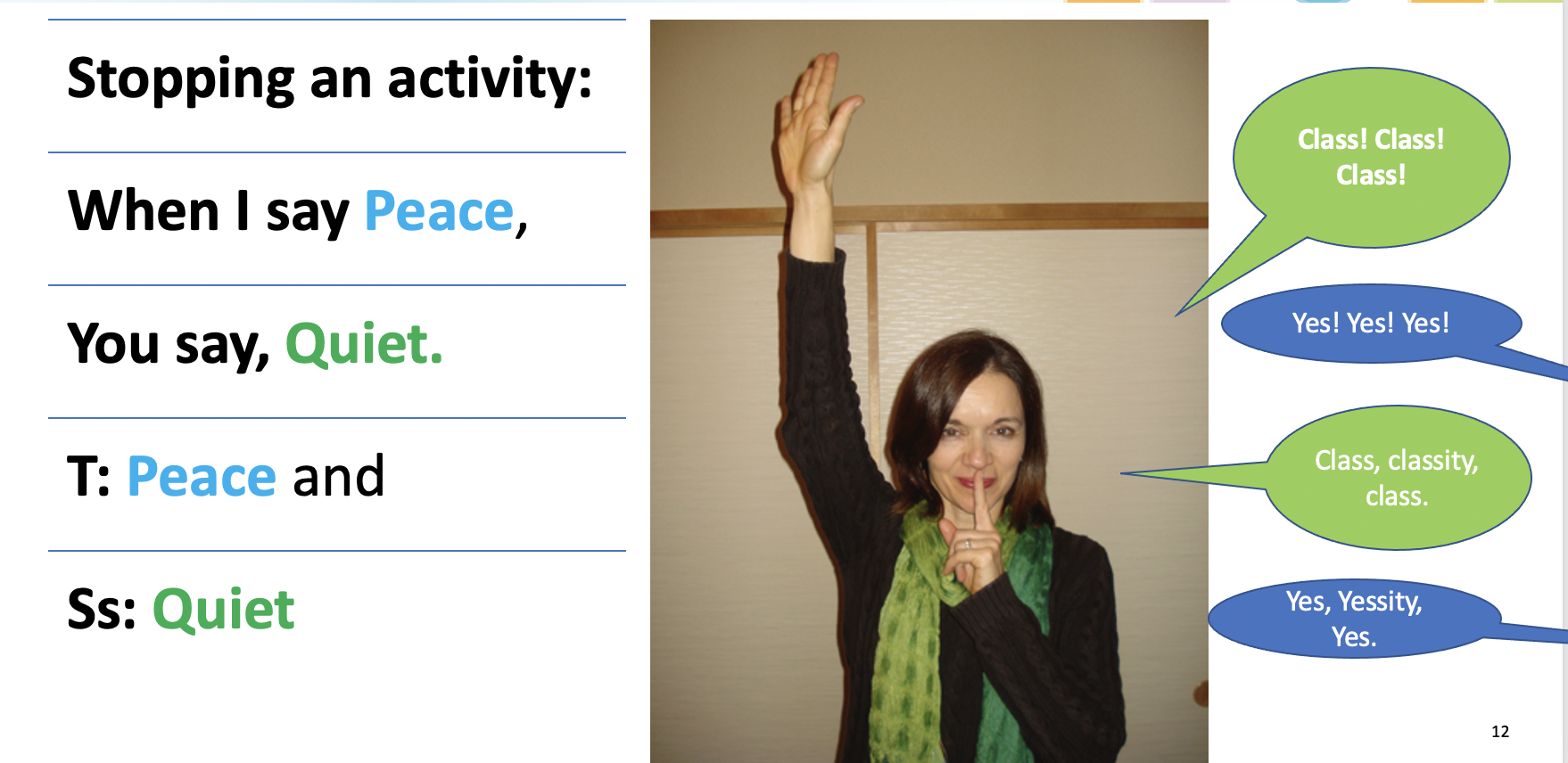
Teachers at my school loved this way of getting students’ attention. Nina Septina shared this at the JALT 2023 conference.
a. Echo the same rhythm saying the word, Yes! Change the rhythm, the tempo, your voice, etc.
T: Class, class, class. Echo: Yes, yes, yes!
T: Class, classity, class. Echo: Yes, yessity, yes!
T: (fast) Class, class, class, class, class. Echo: (fast) Yes, yes, yes, yes, yes.
T: (whisper) Class, class, class. Echo: (whisper) Yes, yes, yes!
b. Rhythm Clap (copyright © 2012 by Kathleen Kampa and Charles Vilina)
(Clap on every syllable. Students echo your clap.)
I like ba-na-nas. (I like ba-na-nas.)
I like po-ta-toes. (I like po-ta-toes.)
I like to-ma-toes. (I like to-ma-toes.)
My Grade One students love “Hands on Top.”
The teacher says, Hands on top! (put your hands on top of your head)
The students answer, That means “Stop!” (students do the same)
One, Two, Three, Eyes on Me is another rhyming conversation.
The teacher sings, “One, two, three, eyes on me.” (so-so, mi, so-so, mi)
Hold up fingers as if you’re counting to three. Point to yourself.
The students answer, “One, two, eyes on you!”(so, mi, so-so, mi)
Hold up fingers as if you’re counting to two. Students point to the teacher.
My students can do “Peace and Quiet” (above) by putting two fingers in the air (peace) and one finger to their lips (quiet).
T: Peanut, peanut butter ——-Ss: JELLY.
T: Macaroni and cheese . . . Ss: everybody freeze!
T: Hocus pocus. Ss: Everybody focus!
Check out more fun attention-getters here from Jenn at The Teacher Next Door.
I love to pretend with my very young students. Say, Let’s make butterfly wings. What color are your wings today?” Pretend to paint each arm by gently rubbing it and naming a color. i.e This wing is pink, but this one is purple.
Raise and lower your arms to your sides as if you’re flying. Inhale and exhale.
Finally, inhale while raising your arms from your sides to above your head. Put your hands together above your head, then bring them down in front of you. Exhale when your hands are in front of your mouth. This is an effective way to calm students after a lively activity. The teachers I worked with in Tokyo loved the way this activity quickly quieted my students.
Remember to practice your strategies first. Add new strategies little by little. Having some strategies in place will help your classes run smoothly.
If you’re looking for Class Management Songs for Kids, check out this collection on Spotify.
Kathy Kampa loves to bring joy to the world through her children’s music. She is passionate about making learning engaging for young learners. You’ll find more resources on Kathy’s YouTube page.
Let’s get hopping! Put on your bunny ears and do the Easter Bunny Hop.
Say to your students, Let’s pretend to be Easter Bunnies. Look at this picture.

Let’s pretend to be the Easter Bunny. We need . . .
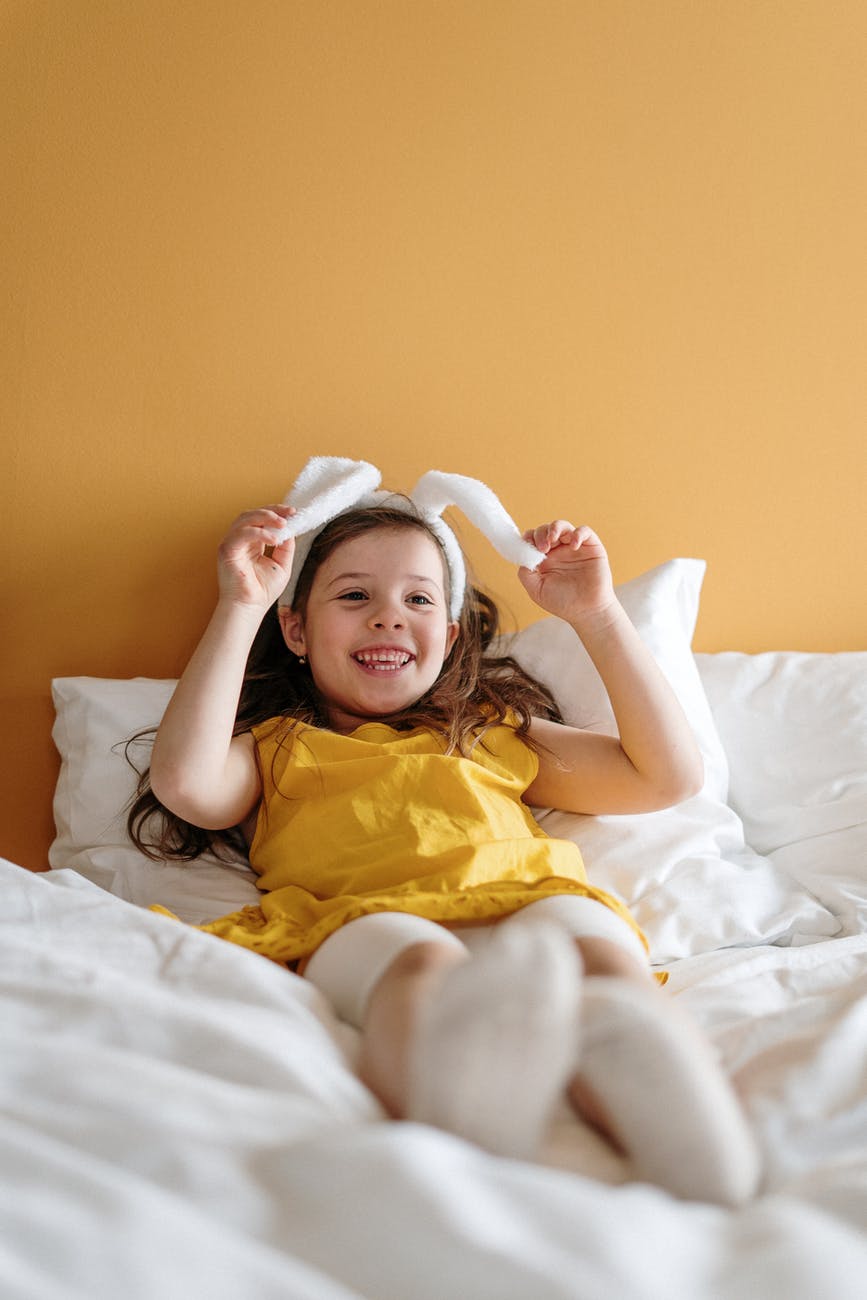 Students may say, such as two long ears, two big feet, a bunny tail, bunny paws, and a bunny nose. This song teaches ears, feet, tail, tummy, and whole self as well as the directional movements in, out, and around. Students have a lot of fun jumping and shaking. There’s a slow version, followed by a fast one. It’s easy to just turn on the music and dance!
Students can stand in their spots or you can make a circle together. Sing Let’s Make A Circle. (Click here for this song.)
Here are the movements.
Say, Show me your Easter Bunny ears.
Put your bunny ears in. Put your bunny ears out.
Let’s shake our Easter Bunny ears.
Jump like a bunny. Then, turn around and say, Happy Easter!
Click here to watch the video of my former students dancing to this song. Grab the recording to listen to the entire song. It’s a great way to teach body parts and directional movements. Use this as a brain break, an energizer, or an Easter celebration son.
Easter Bunny Hop
Words by Kathy Kampa, Music Hokey Pokey
on Kathy Kampa’s Special Days and Holidays, available through iTunes
Slowly: You put your bunny ears in.
You put your bunny ears out.
You put your bunny ears in. And you shake them all about.
Shake, shake, shake, shake, shake, shake, shake!
Jump like a bunny. Jump, jump, jump!
Turn around and shout! Happy Easter!
Then sing quickly . . .
You put your bunny ears in.
You put your bunny ears out.
You put your bunny ears in. And you shake them all about.
Shake, shake, shake! (* three shakes!)
Jump like a bunny. Jump, jump, jump!
Turn around and shout! Happy Easter!
Repeat each verse slowly, then quickly with these body parts.
2. You put your bunny feet in.
3. You put your bunny tail in.
4. You put your bunny tummy in.
5. You put your whole self in.
Click here to get this song on iTunes on Kathy Kampa’s Special Days and Holidays, track #7. You can find it on Spotify and Apple Music, too.

Kathy Kampa loves to bring joy to the world through her children’s music. She is passionate about making learning engaging for young learners. You’ll find more resources on Kathy’s YouTube page.
Looking for more Easter songs? Check out this super simple song for little ones. It’s called “Hop Along Easter Bunny.”
After your young learners wiggle about, check out this quieting activity. This simple reproducible is from Julissa Mora. For more hands-on Easter resources, check out my Pinterest page.


Here in the Northern Hemisphere, spring has officially begun. What does spring look like in Minnesota? The snow has been melting, so we can finally see the ground. It might even snow again tomorrow. Soon, however, we will see many signs of spring we’ve been waiting for!
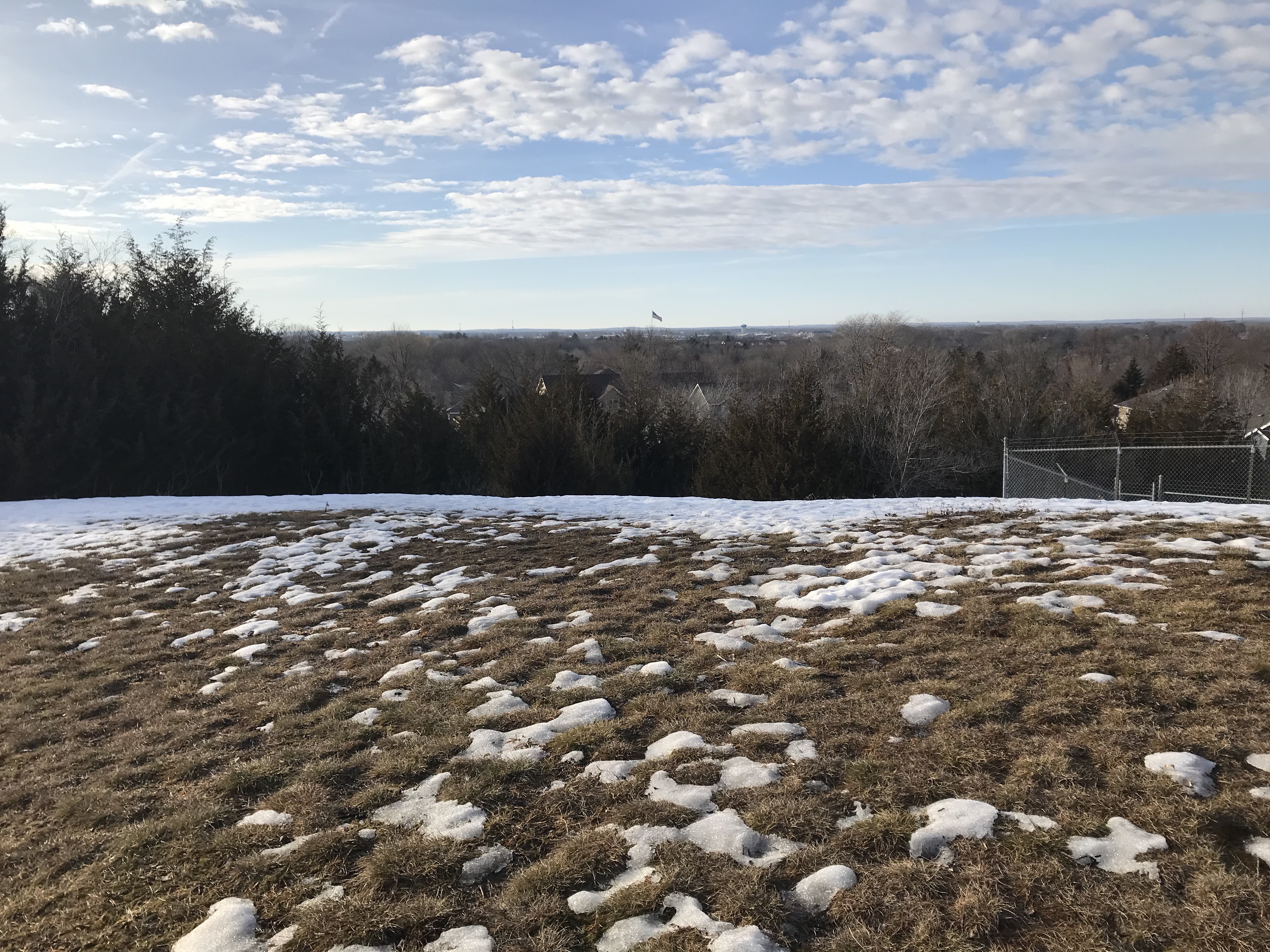
Many people take walks in my neighborhood. As they stroll past my window, I delight in watching the little ones. I often see them pointing at things–“Look! A butterfly! Look! A puppy!” Their chubby little fingers point to all of the wonderful things around them.
With that thought in mind, I wrote this song called “Hello Spring.” The melody comes from a traditional Scottish song I have always loved called “Ally Bally.” Imagine this song as a greeting to the many things one might see in the spring.
Hello Spring lyrics by Kathy Kampa on Jump Jump Everyone
Hello, bluebirds. Hello, bumblebees.
Hello, red tulips. Hello, cherry trees.
Hello, warm sun. Hello, blue skies.
Hello, little ants and orange butterflies!
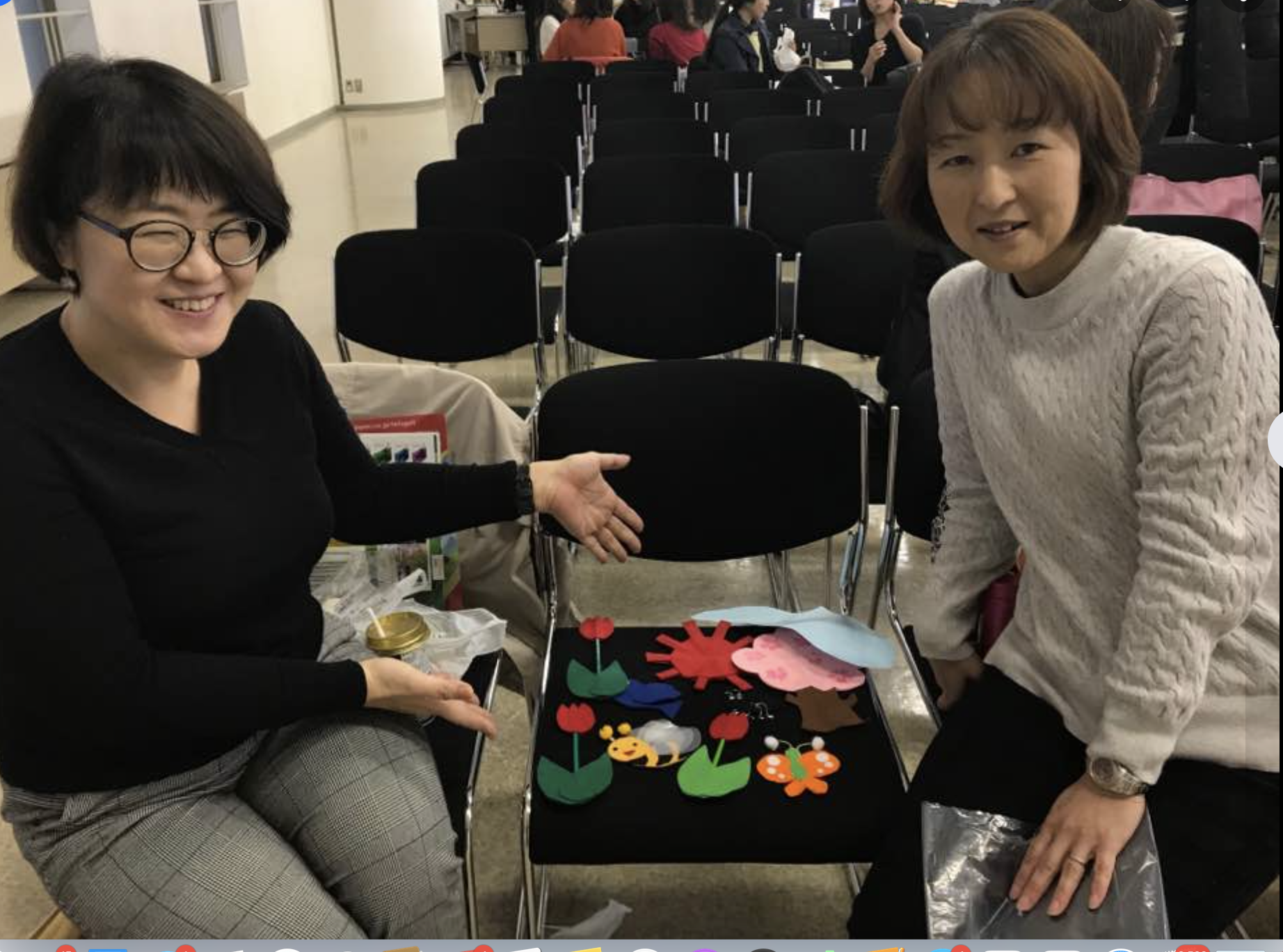

2. Use my movements from the video, or create your own.
3. I sing the song one part at a time, and the children echo. Then we all sing together.
Feel free to create your own movements. If you’d like some movement ideas, check out my video. We filmed it in Tokyo, Japan at the start of the pandemic in 2020.
Special thanks go out to Andre DiMuzio for his beautiful arrangement. Thanks also to Connor McKeown and Christian Vilina for their help with this video.
You can find this song at iTunes and ETJbookservice. “Hello Spring” is also available on streaming services, such as Spotify and Apple Music.
As an extension to this song, you can create your own lyrics. Ask your students, What do you see in the spring? Arrange the words to create your version of the song. Listen closely to the syllables. so that your song will fit the melody and rhythm. Move the words around to choose the best idea.
Hello, _______ _______. (2 sounds)
Hello, _____ _____ _________. (3 sounds-short-short long)
Hello, _______ _______ _______. ( 3 sounds)
Hello, _____ _____ _________. (3 sounds-short-short long)
Hello, _______ _______. (2 sounds)
Hello, _______ _______. (2 sounds)
Hello, _____ _____ _________. (3 sounds-short-short long)
and orange _____ _____ _________. (3 sounds-short-short long)
If you’re looking for more craft projects to link to this song, try these. You’ll find more ideas on my Pinterest page.


I want to share this beautiful spring project from Jellytots Childcare-Ofsted Registered Childminders.
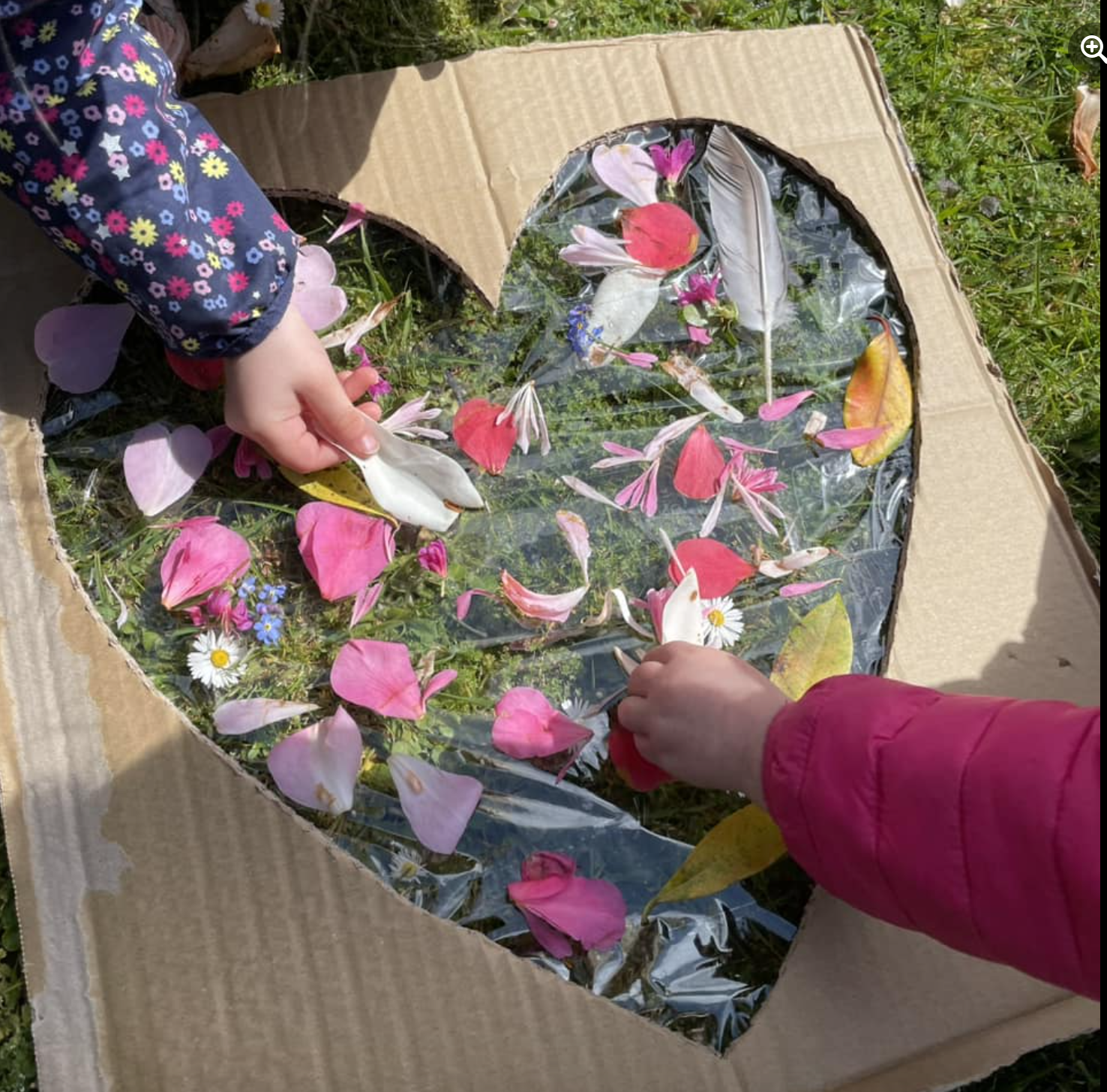
They write, “Anyone who follows our page will already know that our tots looooveee found things 


 So today we took a homemade heart canvas with us and added tape to make one side sticky. Every time we found something we liked – feathers, fallen petals, leaves, dandelion clocks, daises, etc., we added them to our canvas to create a beautiful floral heart
  We’re going to add tape to the open side and keep it up in the playroom so we can watch the changes to the flowers and petals
  “
“
My second album “Jump Jump Everyone” is filled with many happy songs that have grown in my young learner’s classroom. The songs build language with useful patterns and vocabulary. Many songs link to classroom content. There are numerous classroom management songs, too. Children can dance like falling leaves, bloom like a spring flower, move through the butterfly life cycle . . . . you’ll find LOTS of fun and magic in this album.
Happy teaching!
Kathy Kampa is a passionate educator of young learners. She seeks to nurture children’s imaginations and spark creativity through fun and engaging activities. Kathy believes music and movement should be a part of every young child’s learning.
Kathy and her husband Chuck have co-authored English language courses for young learners, including Magic Time, Everybody Up, Oxford Discover, Beehive, and Buzz (all published by Oxford University Press). They have also written English-language songs for Tokyo Shoseki. Kathy has taught young learners in Tokyo, Japan for 30 years. She has returned to her home state of Minnesota in the US where she continues to teach young learners.
Kathy is active as a teacher trainer, inspiring teachers around the world. Kathy presents workshops on English language education for children, including Growth Mindset, Multiple Intelligences strategies, inquiry-based learning, creativity, global skills, and music and movement.
If you’re interested in more of Kathy’s work, check out her YouTube channel at Kathy Kampa.
If you teach young learners, you know that they love to move! As teachers, we can provide opportunities for children to explore movement in bigger spaces. What kinds of movement should we practice with young learners? We’re going to explore LOCOMOTOR MOVEMENTS. Locomotor movements are not done in one place; children move from one place to another. You might know these as “gross motor movements.”
Add some Locomotor Movements to your Leap Year / Leap Day celebrations!

LOCOMOTOR MOVEMENTS.
If this is the first time your students are doing these types of movements, I recommend practicing them. Make sure that your students have ample room to move. Then, say each locomotor movement word and have students move with you before playing the music.
Alternatively, you can dive right in! Put on the music and move with your students around a circle. Model each of the movements.
If your students are used to doing movement, they can move freely around the space. Here are the locomotor movements used in the song.
walk. Use your imagination! Walk with a puppy or an elephant. Walk like a dinosaur or a princess. Walk happily!
march. Pick up your knees. Imagine that you’re playing a big drum.
tiptoe. Sh! Lift up your heels and move quietly. Maybe someone or something is sleeping.
gallop. Put your hands behind your back to make a tail. Gallop like a horse.
skip. Skipping is like a step and a hop. It can be a little challenging for young learners. Once children learn it, they’ll love skipping.
jump. Jumping is moving off of both feet at the same time. You can jump in different ways–jumping feet apart and together, turning around, or jumping super high! You can jump forward or backward.
hop. Hopping is like jumping, but you have to move by balancing on one foot. If one foot gets tired, just change to the other foot. You can hop in a straight line, a zigzag line, or even in your own circle.
leap. Imagine having to leap over a big puddle. Swing one foot out and fly in the air! You can put things on the floor to leap over, such as beanbags, small hula hoops, or spots
Now practice the letters and their sounds.
In this song, we’ll be making the letter shapes. If your students don’t know these letter sounds, try this.
When I first teach letters and their corresponding sounds to young learners, I like to use the Montessori approach with the Montessori Three-Period Lesson.
Step 1: Choose two letters to introduce. This sound is /m/. This sound is /t/.
We can show students things that begin with these two sounds, such as . . .
Mm: milk, monkey, mouse, mother, mirror, me
Tt: table, tail, teacher, teddy bear, tiger, T-shirt, toy
Step 2: Point to /m/. Point to /t/.
Step 3: What’s this? It’s /m/. It’s /t/.
What sound does monkey start with?
What sounds does tiger start with?
Movement
We can also do movement to practice letter sounds and their corresponding shapes.
Here are Melissa Bailey’s Moving Little Letters flashcards. The cards connect movement with letter sounds. Check out her beautiful work.

My young learners really love to make letter shapes. They visualize the letters in their heads and create their own ideas. If your students need ideas, here are some images for you. The images at the right are from the Phonics Section of our course, Magic Time Two by Oxford University Press. We believe that children learn best by having opportunities to move their bodies. It provides an MI (Multiple Intelligences/ kinesthetic) approach.
The additional photos included below are of my students. I hope that they inspire your imagination and creativity. So . . . make shapes with your fingers, arms, whole body, or a partner. Sit. Stand. Lie down.

When you demonstrate to your students, imagine that you are the letter on the whiteboard. Make the letter from that perspective. What does it look like?
I always write the letters on my board to help my students visualize the letter shape. I don’t worry if their letters look reversed. From their perspective, it’s probably okay. Have fun creating letters in different ways.
Song
This song comes from my album Jump Jump Everyone. You can find it on iTunes as well as other streaming sites. You’ll find the Spotify link below.
Here are the lyrics for the first verse. The recording will tell you what’s coming next. Great listening activity! Refer to the locomotor movement list above if you really want to know what’s coming next.
We’re walking all around. We’re walking all around.
Walking, walking.
We’re walking all around.
We’re walking all around. We’re walking all around.
Get ready! Get ready!
Make the letter Ww. /w/ /w/ /w/.
It looks like I might be making the letter i! Or the letter j if you could see my feet!
Songwriter Kathy Kampa is a passionate educator of young learners. She seeks to nurture children’s imaginations and spark creativity through fun and engaging activities. Kathy believes that music and movement should be a part of every young child’s education. Kathy’s songs for kids (Kathy Kampa’s Special Days and Holidays and Jump Jump Everyone) are available on iTunes.
Kathy uses a globally-minded and inquiry-based approach to teaching through which students develop 21st-century skills. She also supports the development of English language skills by creating songs, chants, and TPR/movement activities targeted to young learners’ needs. Kathy is an author and teacher-trainer with Oxford University Press. She is delighted to be teaching young learners in her hometown.
Spotify:
Here are some Google slides, just in case you want to use them in your classroom.
I love the snow! I love the big snowflakes falling from the sky. I love the way it frosts the trees and makes everything look like a winter wonderland.

This winter has been warmer than usual here in Minnesota. On Valentine’s Day morning, we took a walk through the grassy fields wearing our sneakers.
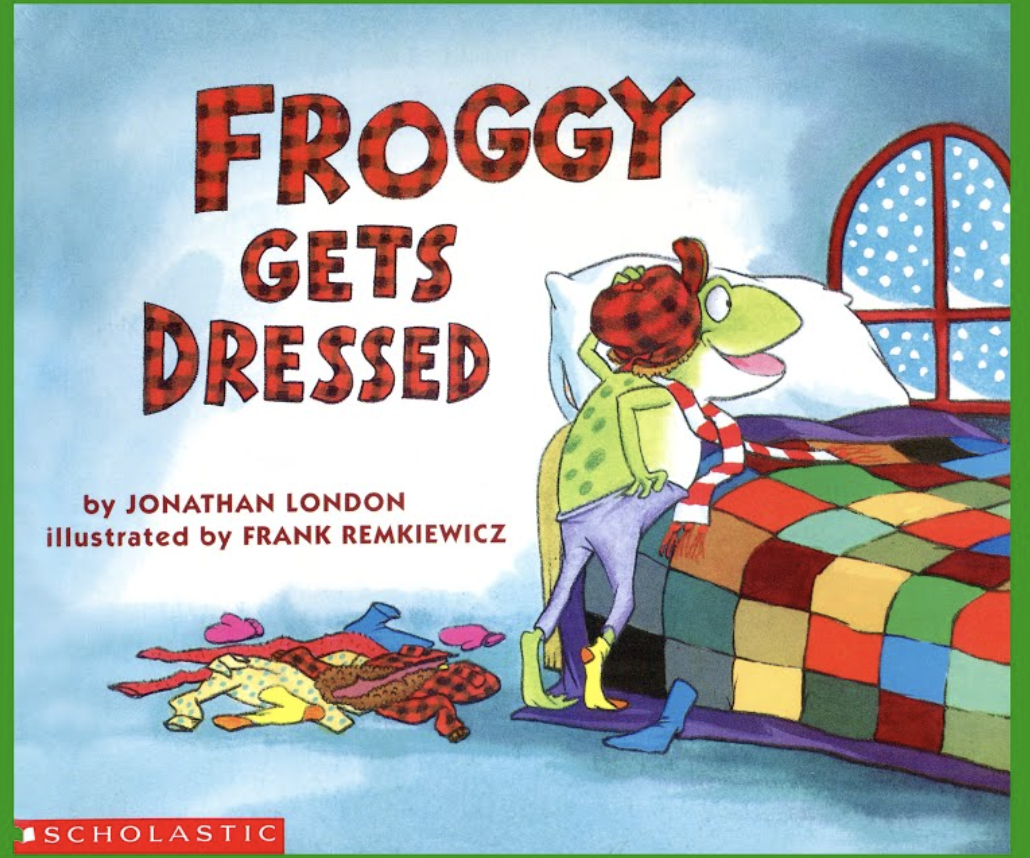
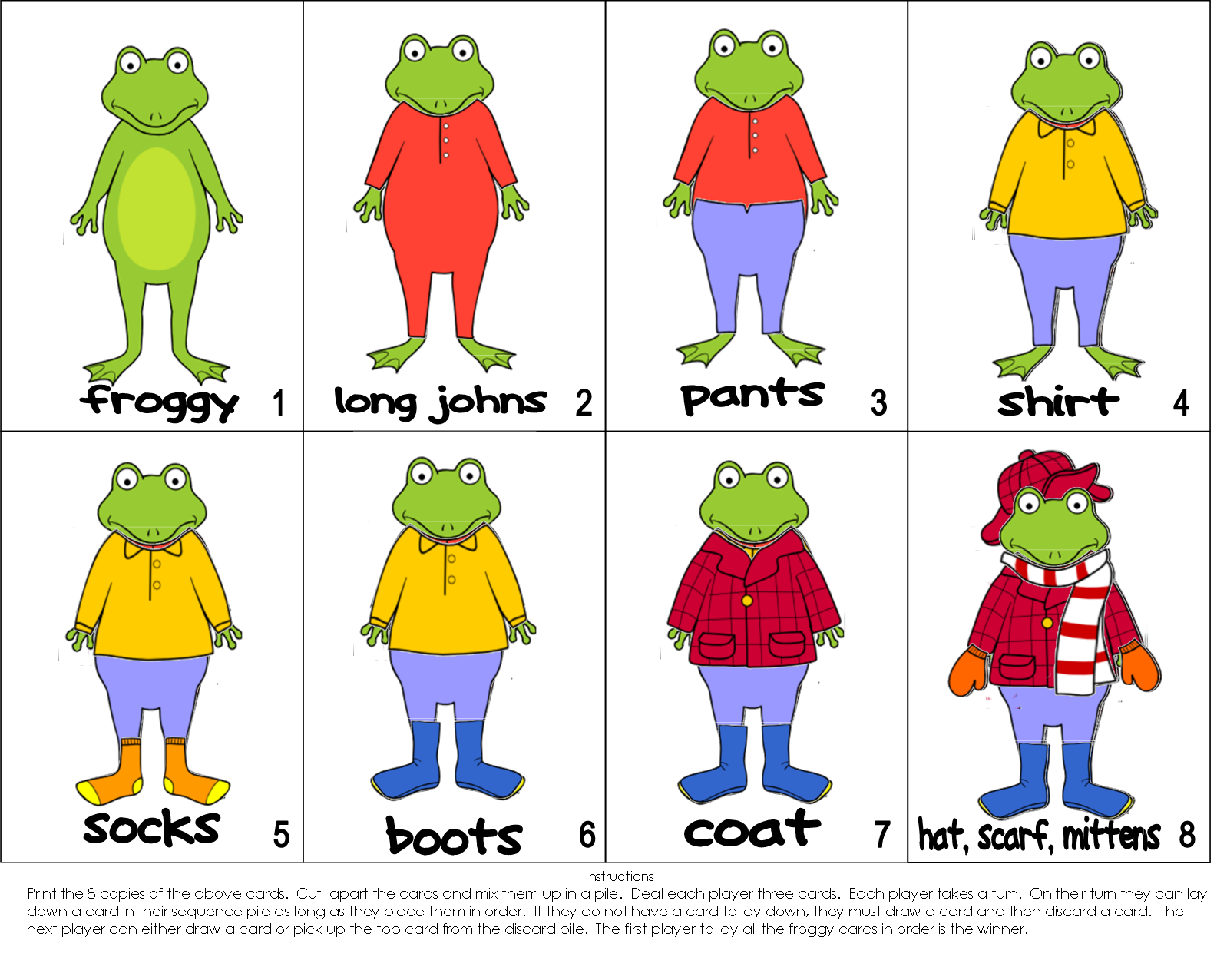
When it snowed last night, I was excited to get outside today to sing this song for little ones who may be “snow lovers” like me. If you’ve read the book Froggy Gets Dressed ( by Jonathan London with illustrations by Frank Remkiewicz), you’ll see how a little frog wants to play outside in the snow. During the story, each time Froggy goes outside, his mother reminds him of the winter clothing he forgot to put on.
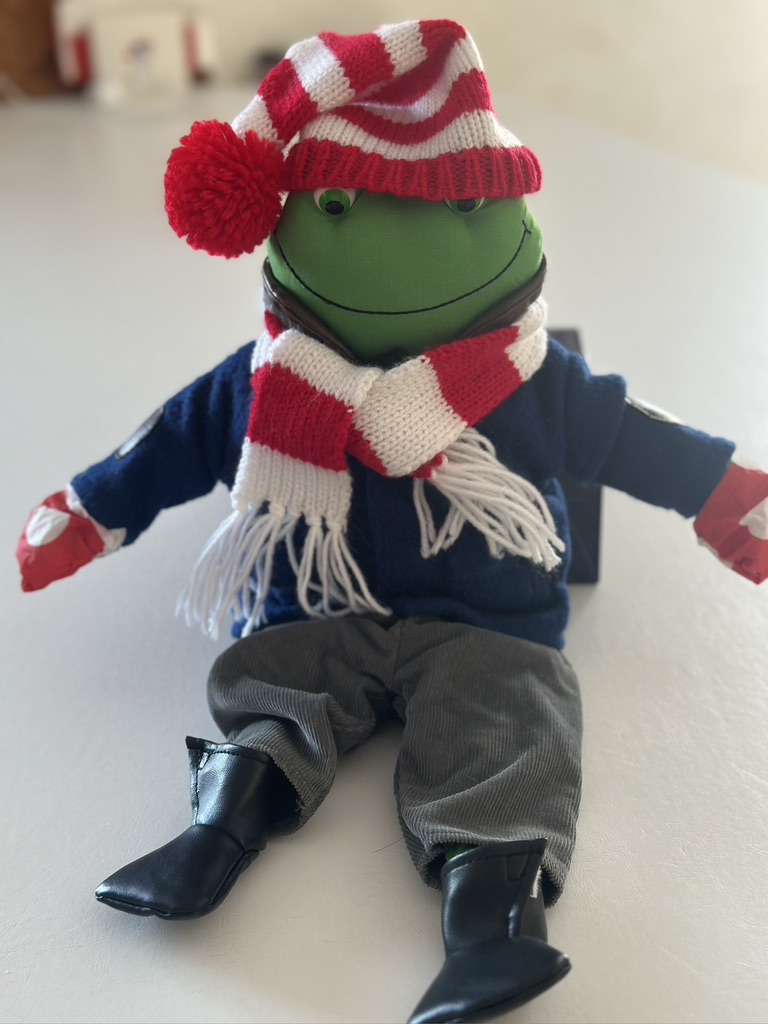
In this song, children can pretend to put on their winter clothing one piece at a time. My young learners LOVE this song! You can watch one video where I’m out in the snow. The other video is the pretend version for the classroom.
Let’s Play In The Snow by Doug Nichols
from the songbook “A Nichol’s Worth of Songs Volume IV “
Put on your boots and come with me.
Pretend to tug on boots. Gesture with your thumb to your chest.
Let’s go out. It’s snowing!
Stretch arms wide. Move your fingers downward to look like snow.
Put on your boots and come with me.
Pretend to tug on boots. Gesture with your thumb to your chest.
Let’s play in the snow!
Pretend to make a snowball. Throw it!
*Substitute each clothing item below into the song. Add your own ideas.
Students can also add their own ideas using my “Think, Think, Think” chant. What clothing items does Froggy wear in the winter? What do you wear? Long underwear? Ear muffs?
Think, Think, Think chant by Kathy Kampa
Think, think, think. Think, think, think.
What should we do?
Think, think, think. Think, think, think.
What should we do?
I know! Let’s put on our jacket!

If you’d like all of the images for this song, download the Google slides. You can see me putting on winter clothing items one by one. It’s fun for the students to put the slides in order and name the new item that was added. You’ll find the musical score here, too.
Here’s a video we took outside with the last item–the mittens.
This is a fun reproducible with Froggy’s clothing.


Songwriter Kathy Kampa is a passionate educator of young learners. She seeks to nurture children’s imaginations and spark creativity through fun and engaging activities. Kathy believes that music and movement should be a part of every young child’s education. Kathy’s songs for kids (Kathy Kampa’s Special Days and Holidays and Jump Jump Everyone) are available on iTunes.
Kathy uses a globally-minded and inquiry-based approach to teaching through which students develop 21st-century skills. She also supports the development of English language skills by creating songs, chants, and TPR/movement activities targeted to young learners’ needs. Kathy is an author with Oxford University Press and has co-authored English language courses for young learners (Magic Time, Everybody Up, Oxford Discover, Beehive, and Buzz). Kathy conducts teacher training sessions around the globe.
This song hasn’t been professionally recorded yet. However, for more kid-tested music and movement activities, check out more music on iTunes, Spotify, and Apple Music. Kathy has produced two music CDs for very young learners, Kathy Kampa’s Special Days and Holidays and Jump Jump Everyone, which build English language skills through music and movement while nurturing creativity and imagination. Grown and loved by real kids!
Here’s a playlist with songs for kids to move to:
Are you missing out on Kathy Kampa’s new videos?
Check out Kathy Kampa’s YouTube channel here and subscribe.
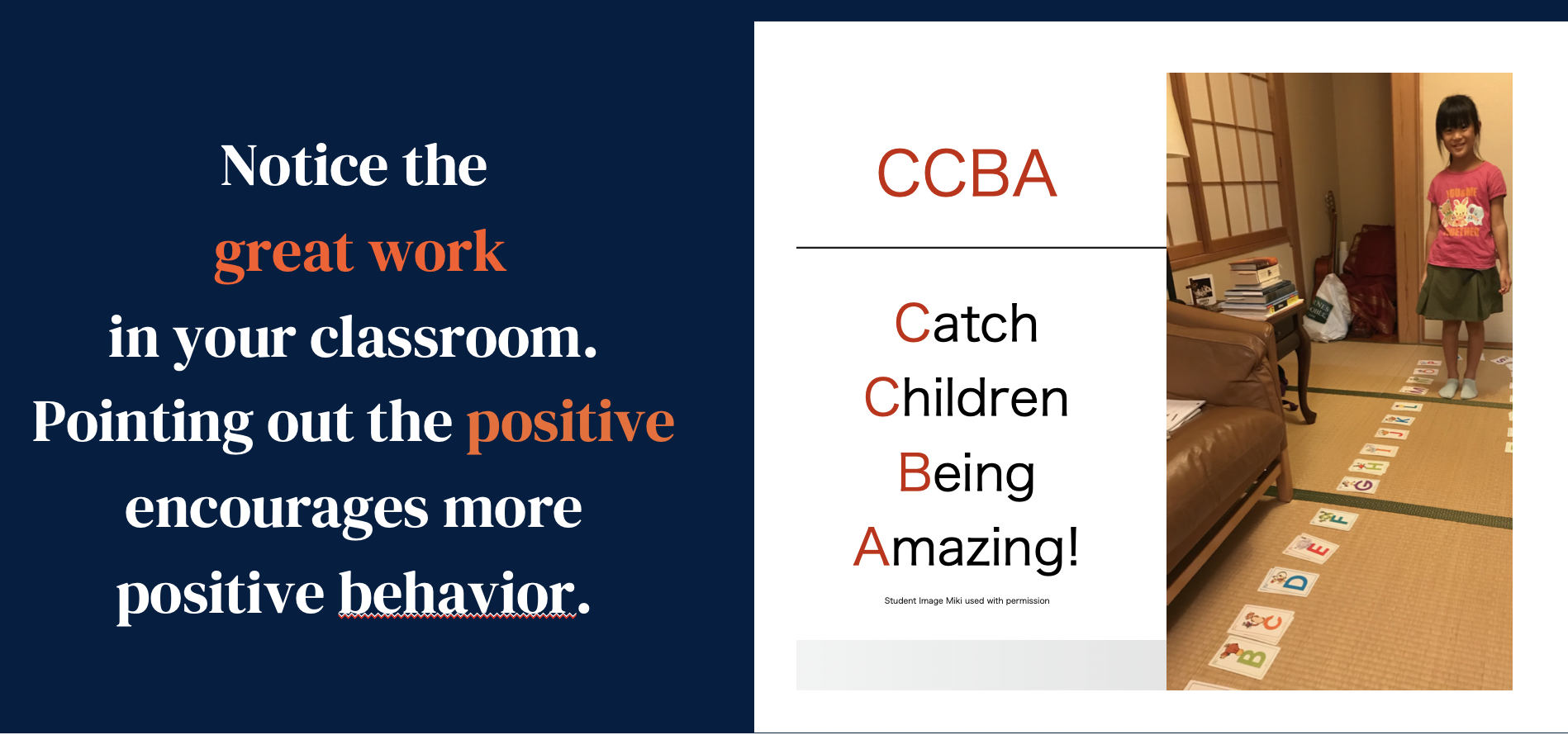
Celebrate success with CCBA. What’s CCBA?
Catch Children Being Amazing! It’s an acronym I created to remind teachers to focus on amazing student work. When we notice the great things happening around us, rather than negative things, more great things can appear. By talking about the wonderful things you see happening in your classroom, young learners will strive to do these wonderful things, too.
How do you do that?
Describe what you see happening in your classroom. What do you see? What do you hear?
-Be specific about what students are doing. Consider your goals for the activity. You can add descriptions to help students come up with more ideas.
For example, the goal of the activity below was for students to make letter shapes in different ways. At first, I’m describing individual student actions. You’ll notice that I’ve pointed out body parts, letter names, size, and students working together.
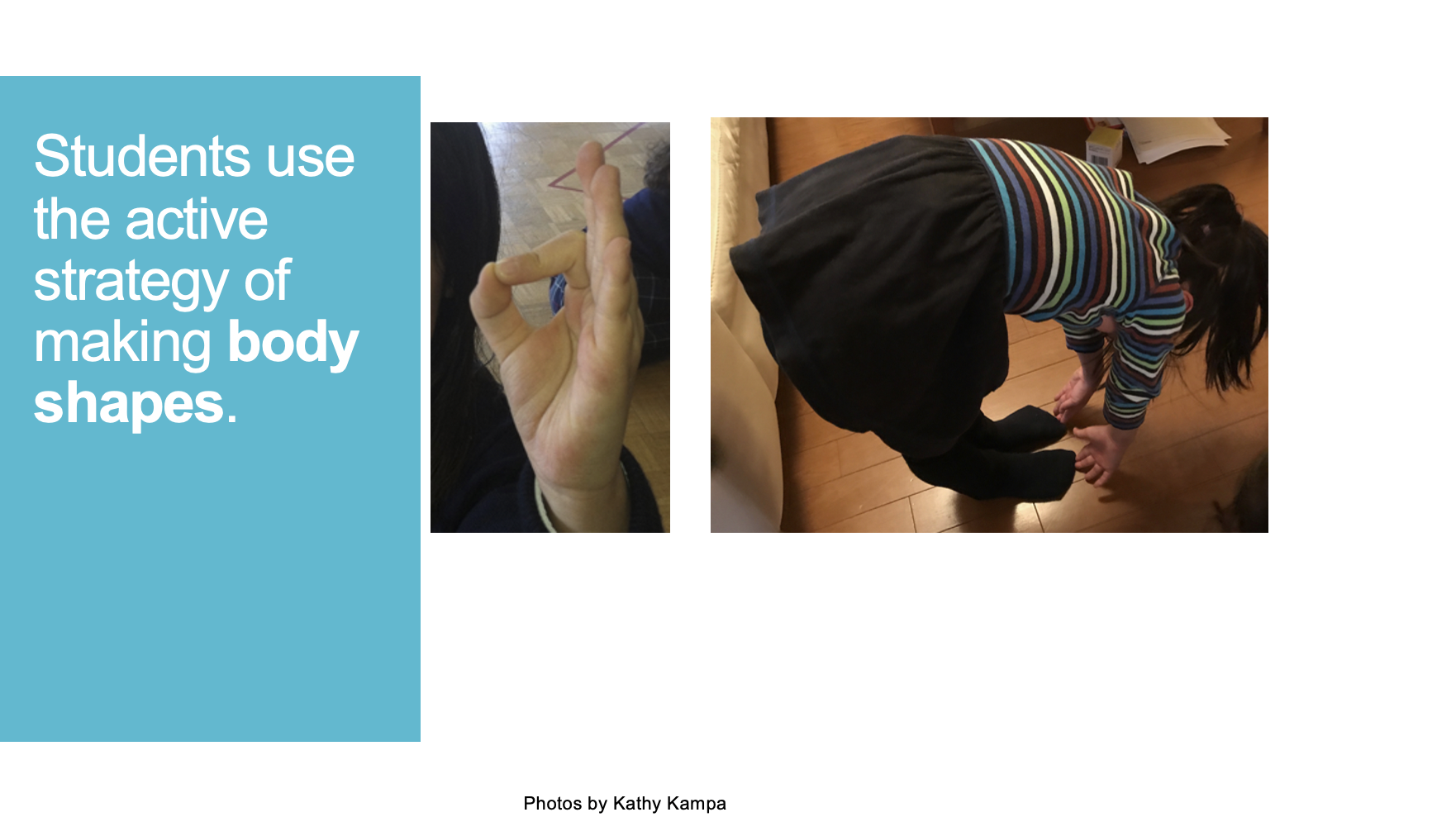
I see Yuya making the letter d with his fingers.
I see Sara making the letter D with her whole body. She made a big letter shape.
I see Anna and Noah standing back-to-back. They are collaborating by making their letter together.
By describing the many different students’ ideas, students will try out varied ideas, too. Try to acknowledge as many students as possible during your class. That builds self-confidence, too.
You can also acknowledge something that the whole class has done.
Look at how quickly our class tidied up our classroom. Everything has been put away.
Our class now knows all the words to our new song. I listened and heard you singing by yourself.
Celebration Chants
I use Celebration chants with my young learners (and teachers). They’re easy to do and bring positive energy to your space. First, teach them to your students. Then, use them throughout your day. Let’s get started.
Here’s a video with all three chants listed below.
We Did It
My Japanese students used to say, 先生、やりましたよ。Sensei, Teacher, I did it! I wrote this chant to celebrate my students’ successes. It’s called “We Did It!” Maybe you know this popular chant. It’s available on my Jump Jump Everyone album, too.

We did it! We did it! We did It today!
Pat. Clap. Pat. Clap. Pat. Clap. Pat. Clap.
We did it! We did it! Hip, hip, hooray!
Pat. Clap. Pat. Clap. Roll your hands. Arms up high.
4-3-2-1
Why not celebrate in a new way? My students loved counting backwards.

Four, three, two, one,
Use fingers 4—–3—–2—–1
Hooray for all the things we’ve done.
Shake hands up / Clap. Clap. Clap.
SUCCESS
This last chant is called “SUCCESS.” This may work best for your elementary students since they know how to spell words and do handclapping games.

S—U—C—C—E—S—S— That’s the way we spell “success.”
Pat. Clap. Pat. Clap. Pat. Clap. Pat. Clap. Pat. Clap. Pat. Clap. Pat Jump up high.
My students like to do this chant with a partner, too. Here are several ways students can do it, from the easiest way to the most complicated way.
Variation 1: Pat own legs—clap both partner’s hands.
Variation 2: Pat own legs—clap own hands—clap both partner’s hands—clap own hands
Variation 3: Pat own legs— clap own hands—clap partner’s right hand—clap own hands
—clap partner’s left hand—clap own hands– clap both partner’s hands—clap own hands* (repeat—last time omit last *)
All of these images can be found in the Google Slides here.
Do you have a celebration chant that you do with your students? Share it with Kathy!
magictimekids@gmail.com
Songwriter Kathy Kampa is a passionate educator of young learners. She seeks to nurture children’s imaginations and spark creativity through fun and engaging activities. Kathy believes that music and movement should be a part of every young child’s education. Kathy’s songs for kids (Kathy Kampa’s Special Days and Holidays and Jump Jump Everyone) are available on iTunes.
Kathy uses a globally-minded and inquiry-based approach to teaching through which students develop 21st-century skills. She also supports the development of English language skills by creating songs, chants, and TPR/movement activities targeted to young learners’ needs. Kathy is an author and teacher-trainer with Oxford University Press. She is delighted to be teaching young learners in her hometown.
Valentine’s Day is a special time for us to express our love or friendship. Here are two of my new songs.
How do I write songs? Sometimes when I’m driving in my car or out for a walk, I’ll hear a song in my head. I’ll keep singing it until I have a place to stop and record it on my phone. Sometimes a song wakes me up from my sleep, and I’ll write notes on a sheet of paper next to my bed. Children often ask me to sing a song about something they are interested in. I’ll ponder that topic until their special song appears.
After a song is born, I use it with lots of young learners to see what works, what variations appear, what we can do with it, what vocabulary and concepts it teaches, and what makes it fun and special. A song is often filled with surprises!
My first new song is called “I Love You.” I love writing songs for young learners to move to. “Jump” by Patty Shukla invites children to move. But children also need time to be calm and quiet. That’s what Patty’s song does. So does mine.

My song “I Love You” can be used to help children feel cozy, calm, and quiet, especially at the end of a class. Children might rock from side to side, hold a stuffed animal, or even get a hug.
For parents at home, this is a lovely lullaby to sing before your child falls asleep.
When our two sons were little boys, we loved to snuggle up and sing lullabies to them.
And if you’re wondering about this photo, our children spent most of their young lives in Japan. We were invited to participate in our local autumn festival by carrying the o-mikoshi, making rice balls, and spending time with our neighbors in Nakamachi.

Here are the lyrics to my song:
I Love You! a calming song by Kathy Kampa (Copyright © 2024 Kathleen A. Kampa)
I love you, I really, really do! I love you.
I love you, I really, really do! I love you.
I love you in the morning,
I love you at night,
I love you through the day when the sun shines bright.
I love you, I really, really do. I really love you.
Here’s the video.
Variations:
SEL (Social Emotional Learning) is now part of many curriculums at school. Use this variation to affirm young learners.
I like me, I really, really do. I like me.
I like me, I really, really do. I like me.
I like me in the morning,
I like me at night,
I like me through the day when the sun shines bright.
I like me, I really, really do. I really like me.
Or JUST CHANGE “ME” to “YOU.” Children can sing this to each other.
I’ve been studying French with Duolingo. I started to wonder if I could write this song in French. With a little help from my French-speaking friends, we’ve come up with this version of the first verse.
Je t’aime. Encore, toujours, Je t’aime. (Or Je t’aime d’amour– pronounced: J’t’em d’a-mour)
Je t’aime. Encore, toujours, Je t’aime. (Or Je t’aime d’amour)
Je t’aime le matin. Je t’aime la nuit,
Et toute la journée quand le soleil sourit,
Je t’aime. Encore, toujours. Je t’aime. (Or Je t’aime d’amour)
___________________________________________________
Here’s a more active song for young learners called “A Little Heart, A Big Heart.” They can sing and dance to it alone, with a partner, or with their whole class.
When I first teach this, I cut out a small heart and show it to my students. I sing, I made a little heart.
Then I do the same making a big heart, singing, I made a big heart.
Then I put them together, singing, See, it’s a Valentine.
Then I hand this Valentine to someone, singing, Please say you’ll be mine.
Now let’s add some simple movements!
Here’s the video. The lyrics and Google slides will follow.
A Little Heart, A Big Heart lyrics by Kathy Kampa (Copyright © 2024 Kathleen A. Kampa) melody inspired from the traditional Bahamian song, Big Bunch of Roses
I made a little heart, (make a little heart shape, or just a small shape)
I made a big heart, (make a big heart shape, or just a big shape)
See, it’s a Valentine. (little by little open your arms to make a big V shape on “Valentine”)
Please say you’ll be mine. (hug)
Think, think, think. Think, think, think. What should we do?
In Place movements: clap, swing, twist, jump, march, hop, turn around, wiggle . . .
Children can dance alone or with a partner. They can also move together as a class.
Sing the melody above using the syllable “la”
La la la la la la!
La la la la la!
La la la la la la !
La la la la la!
Here are the Google slides to help you teach this.
Here’s a BIG heart, little heart craft activity.
Songwriter Kathy Kampa is a passionate educator of young learners. She seeks to nurture children’s imaginations and spark creativity through fun and engaging activities. Kathy believes that music and movement should be a part of every young child’s education. Kathy’s songs for kids (Kathy Kampa’s Special Days and Holidays and Jump Jump Everyone) are available on iTunes.
Kathy uses a globally-minded and inquiry-based approach to teaching through which students develop 21st-century skills. She also supports the development of English language skills by creating songs, chants, and TPR/movement activities targeted to young learners’ needs. Kathy is an author and teacher-trainer with Oxford University Press.
For more kid-tested music and movement activities, check out more music on iTunes, Spotify, and Apple Music. Kathy has produced two music CDs for very young learners, Kathy Kampa’s Special Days and Holidays and Jump Jump Everyone, which build English language skills through music and movement while nurturing creativity and imagination. Grown and loved by real kids!
Check out Kathy Kampa’s YouTube channel here.
Valentine’s Day is a time for children to celebrate friendships! Classroom activities like this can teach young learners how to develop healthy relationships.

To celebrate Valentine’s Day here in the United States, children often make cards or little treats for their friends. I’ve invited my friend Ava to share her thoughts about how she celebrates Valentine’s Day with her friends and classmates.
I like to celebrate holidays with music and movement! Today’s song is called “I’m Your Friend,” from my album Jump Jump Everyone. With this song, you can add valuable skills such as phonemic awareness to your lesson while celebrating Valentine’s Day and friendship.
Rhyming words
Listen for the rhyming words at the end of each line. In this song, the words mine, nine, and Valentine all rhyme. Why is rhyming important? Check out this fabulous post by Marissa Labuz. Rhyming aids memory, supports phonemic awareness, and builds listening skills. Children have fun singing songs and chants with rhyming words.
Movement
This song invites children to move in various ways, such as galloping, skipping, jumping, walking, and even skating! Developing gross motor skills is important for young learners. The movements encourage students to move from one place to another. These are called “locomotor movements.” If you have a smaller space, students can move in a small circle in their own spot.
You can sing this song with small or large classes. I usually teach this song to kindergarten and early elementary students.
Here’s a video to teach you the lyrics and the movements:
Here are the lyrics to the song:
3. I’m Your Friend words and music by Kathy Kampa
From Jump Jump Everyone CD
Chorus:
I’m your friend.
(Gesture to chest, then to a person)
You are mine.
(Gesture to person, then to heart)
Will you be my Valentine?
(Swing hands with partner or in the circle)
Repeat.
Let’s walk.
(See the notes below. Children can hold hands in a whole class circle or move with a partner.)
Verse:
4-5-6, 7-8-9, Will you be my Valentine?
(Clap-4-5-6,-7-8-9) Make a heart shape with your fingers or arms by yourself or with a friend. Or give your partner a hug!
*repeat with skip, jump, slide, skate, dance
Here are Google slides for this song.
Building Social Skills
Here’s the version from the video:
Stand in one big circle. Face the middle for the chorus, and then move around the circle with the whole class for the verses. For the counting part, 4-5-6, 7-8-9, clap your hands on one side and then the other. Finally, make a heart shape using your fingers or arms.
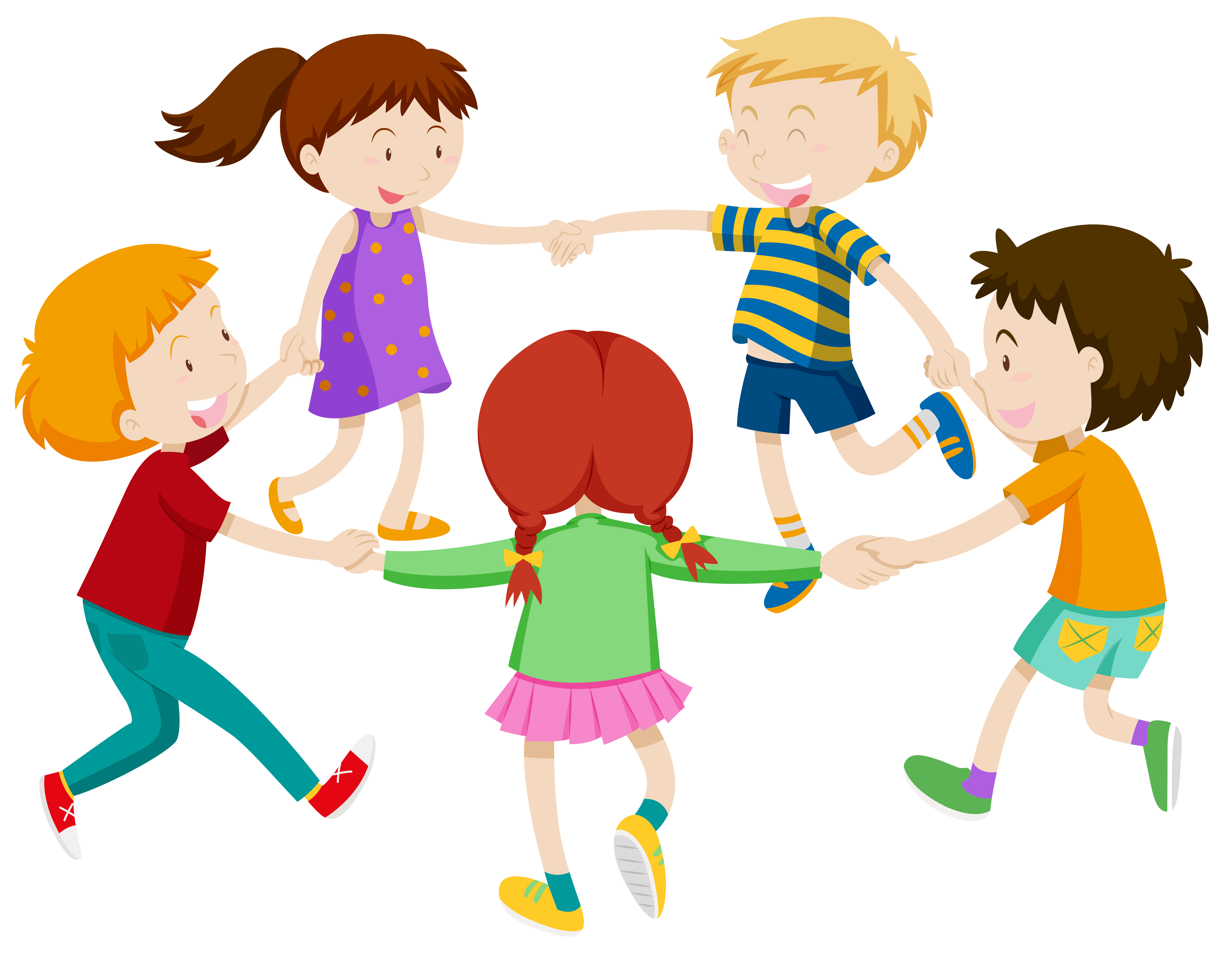
Once your children know this song, you can add some new challenges. Step into my English class in Tokyo, Japan. Check out how my English students added their own ideas.
Children can dance with partners. How can you help them find partners? When children are in a circle, you can walk around the circle. Have two children turn to face each other. They can do all of the movements with their partners.

Or you can use this transitional chant. Pat and clap your legs to keep the beat as you say the chant. Count slowly as you get closer to the number ten.
It’s okay for partners to be scattered around your space and move in their own little group. If you have an odd person out, make a group of three.
For elementary students, you might try this challenge. Make an inside and an outside circle. One partner stands in the inside circle, and the other in an outside circle. Partners face each other. Children can do the movements for the verse holding hands with their partner around the circle. At the end of the verse, the outside circle children move ahead to the next partner.
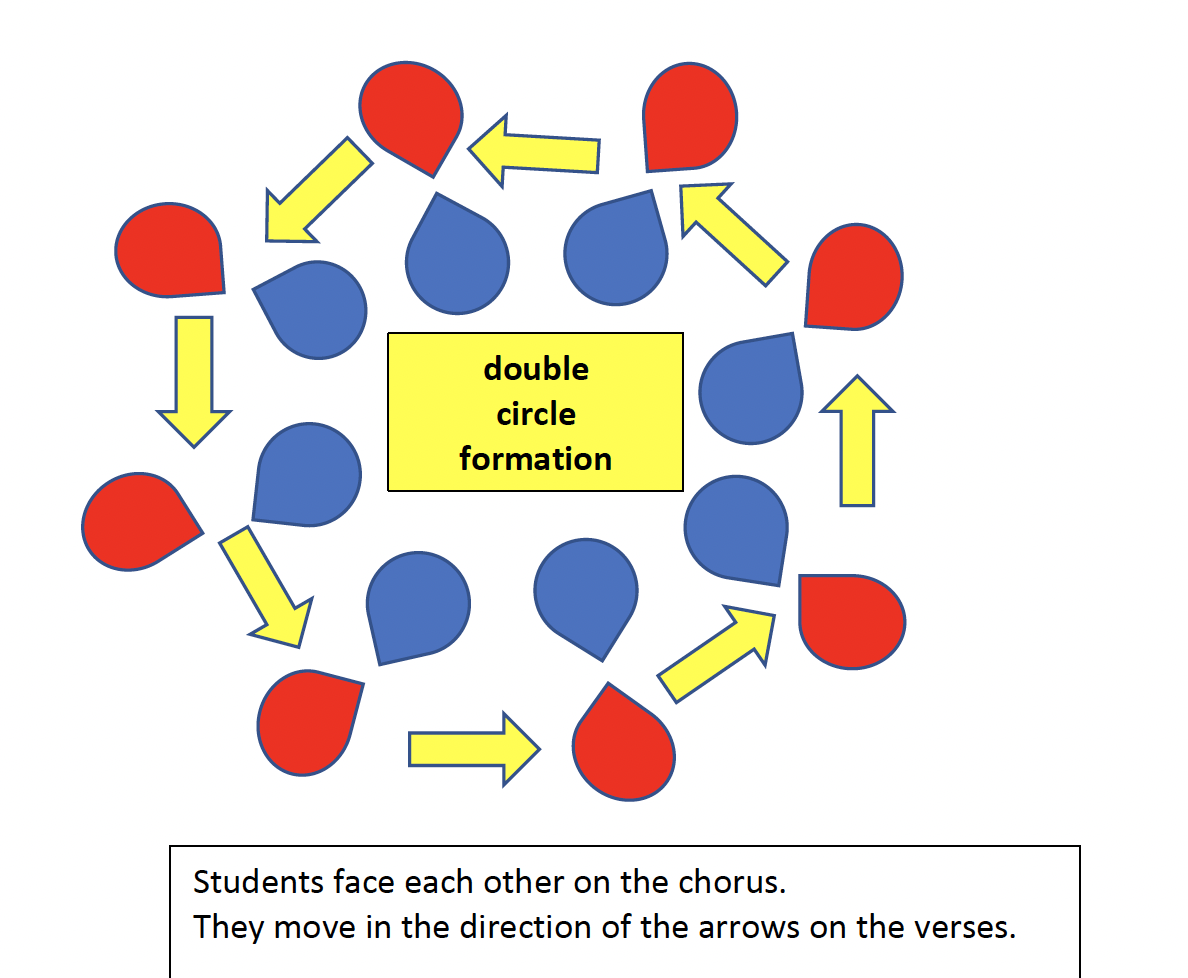
So you can make this as simple or as fancy as you’d like!
If you’re looking for music to play in your classroom, check out this Spotify playlist for February:
Come back to my blog to discover more fun activities that build language through music and movement. Thank you!
Songwriter Kathy Kampa is a passionate educator of young learners. She seeks to nurture children’s imaginations and spark creativity through fun and engaging activities. Kathy believes that music and movement should be a part of every young child’s education. Kathy’s songs for kids (Kathy Kampa’s Special Days and Holidays and Jump Jump Everyone) are available on iTunes.
Kathy uses a globally-minded and inquiry-based approach to teaching through which students develop 21st-century skills. She also supports the development of English language skills by creating songs, chants, and TPR/movement activities targeted to young learners’ needs.
For more kid-tested music and movement activities, check out more music on iTunes. Kathy has produced two music CDs for very young learners, Kathy Kampa’s Special Days and Holidays and Jump Jump Everyone, which build English language skills through music and movement while nurturing creativity and imagination! Grown and loved by real kids!
Fingerplays are a fun way to add movement to your lesson. Students can move their fingers while sitting. When you need an activity to bring the energy level down in your class, consider a fingerplay.
This chant teaches the heart shape (perfect for Valentine’s Day!) as well as other shapes (circle, square, rectangle, triangle, star). Notice the repetition in the phrases, which is important for young learners.
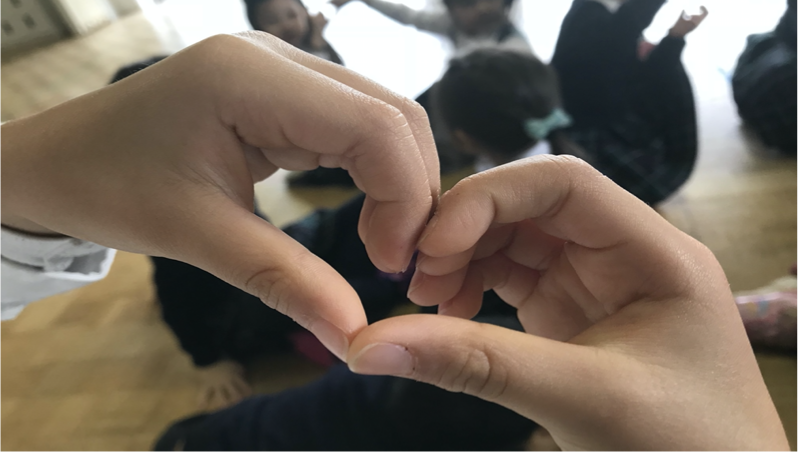
Encourage students to make shapes in different ways to nurture their creativity. Notice the great things your young learners are doing. That’s what I call CCBA–Catch Children Being Amazing!
Check out my Japanese students making shapes. Here we are studying together online. (Photos used with permission)
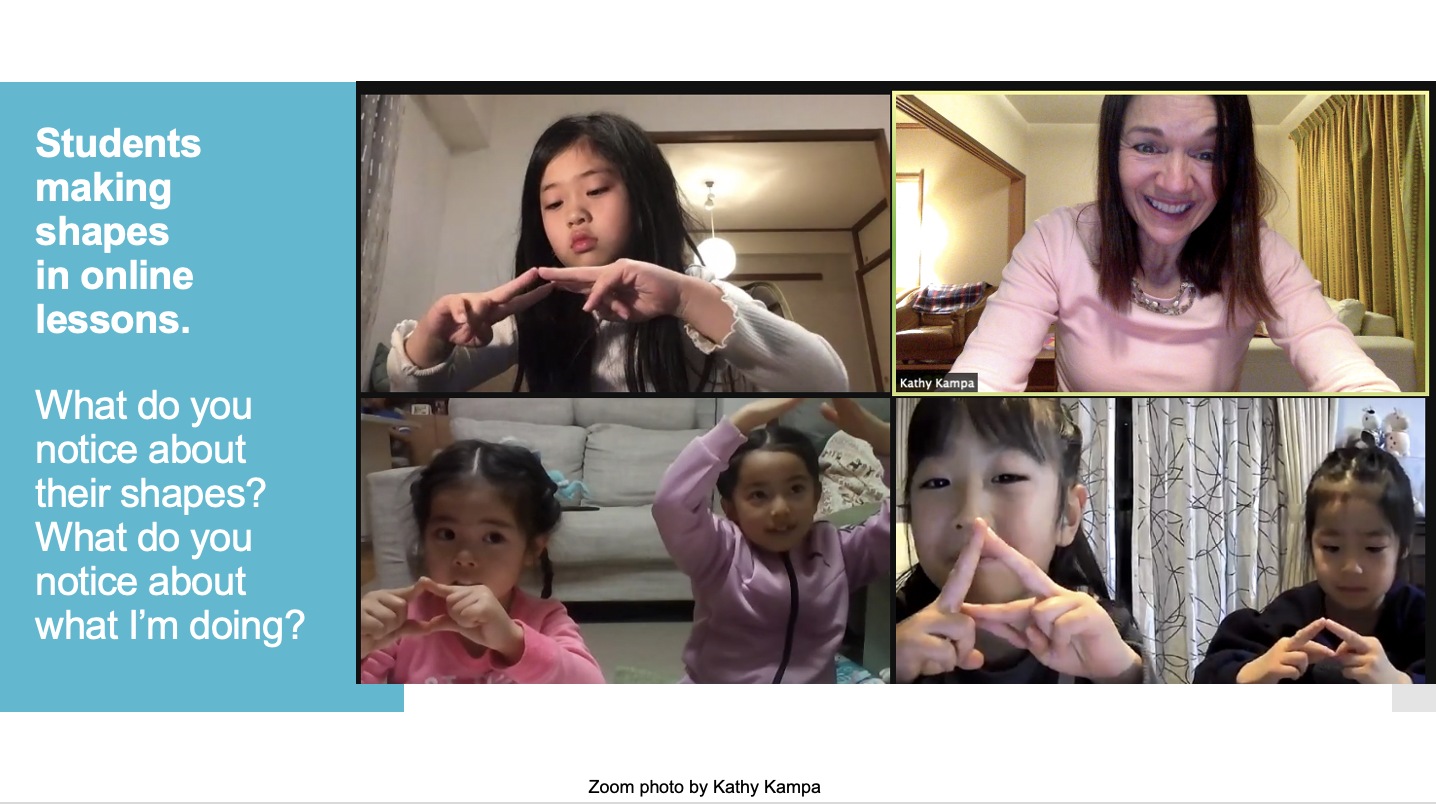
My students just love this chant! I hope that you do, too.

My Fingers Dance
by Kathy Kampa on Jump Jump Everyone. Available on iTunes, Spotify, and other streaming services.
My fingers, fingers, fingers, fingers, fingers dance!
My fingers, fingers, fingers, fingers, fingers dance!
Make a circle! Take a picture. Make a circle! Take a picture.
*Substitute additional shapes for “circle.”
Check out the video below for the simple motions.
This Google slide from the video provides a visual of the shapes.
The music is available on iTunes and on streaming services such as Spotify and Apple Music.
Let’s practice shapes some more!
Time for a surprise! Have students open their hands and close their eyes. Hand them one of the shapes. Use this little chant I just made.
A Big Surprise by Kathy Kampa
Open your hands and close your eyes.
Get ready for a big surprise!

My students enjoy going on a shape hunt. We focus on one shape at a time, and look for things with that shape.

Kids love using the shaped “magnifying glasses” to find shapes in everyday objects around them! You can make these darling shape finders from Amber at Apples to Applique (amber@applestoapplique.com)
Learning something in many ways is fun for young learners! As Dr. Howard Gardner pointed out in his theory of Multiple Intelligences, children can learn more successfully when using many ways to approach a topic. In this lesson, students hear words in rhythm, they move their bodies, they see shapes, and they interact together.
If you’re celebrating Valentine’s Day, students can make cards with LOTS of shapes!
Finally, if you read my last post, you’ll remember how to make a heart shape with your hands. This poem was shared with me by my colleague:
I put my hands together. (put the heels of your hands together)
This is how I start. (hold)
I curve my fingers just like this (curve your fingers to touch each other)
and now I have a heart. (this should make a heart shape)
Now, look through the heart to see each of the students in your class.
Say, “I see you in my heart!”
Songwriter Kathy Kampa is a passionate educator of young learners. She seeks to nurture children’s imaginations and spark creativity through fun and engaging activities. Kathy believes that music and movement should be a part of every young child’s education. Kathy’s songs for kids (Kathy Kampa’s Special Days and Holidays and Jump Jump Everyone) are available on iTunes.
Kathy uses a globally-minded and inquiry-based approach to teaching through which students develop 21st-century skills. She also supports the development of English language skills by creating songs, chants, and TPR/movement activities targeted to young learners’ needs. Kathy is an author and teacher-trainer with Oxford University Press.
For more kid-tested music and movement activities, check out more music on iTunes, Spotify, and Apple Music. Kathy has produced two music CDs for very young learners, Kathy Kampa’s Special Days and Holidays and Jump Jump Everyone, which build English language skills through music and movement while nurturing creativity and imagination. Grown and loved by real kids!
Check out Kathy Kampa’s YouTube channel here.

Valentine’s Day is right around the corner! What activities will you do with your young learners for Valentine’s Day?
Playing with letter sounds is fun for little ones. Let’s explore ways to make the shape of the letter Vv:
-with our fingers
-with our hands
-with our arms
-with our legs
-with our whole body (balance!!)
-with a friend
Each time you make the shape, say the sound /v/.
*Try to make only the sound /v/ and not /vƏ/ (vuh)
Can you change your V shape into a heart shape?

I created this song with the phrase “/v/ /v/ valentine.” Make the shapes with your fingers or the heels of your hands, then with your arms. Watch the video for more details. I created it with my nieces Shannon and Brooke many years ago. It’s easy to sing and so much fun!
Here are the lyrics:
Be My Valentine
lyrics by Kathy Kampa, melody “Cho Cho”/”Lightly Row”
I like you. You like me. Will you be my Valentine?
I like you. You like me. Be my Valentine.
[v] [v] Valentine!
[v] [v] Valentine!
I like you. You like me.
Be my Valentine.
Repeat facing a partner.
This song can be found on iTunes and other streaming services, such as Spotify and Apple Music.
Spotify playlist: Songs for Kids for Valentine’s Day and Friendship
Celebrate the joy of Valentine’s Day while building social skills in your classroom. This playlist includes songs for Valentine’s Day and songs about friendship. You’ll find songs to add movement to your class activities, too. Click here to see Kathy’s Spotify channel. for more curated playlists.
Crafts Activities
On Valentine’s Day, kids love to make things for their friends. Check out these simple craft activities.
Can your students find the letter V in these craft activities?

This first craft is a Valentine chain. Cut narrow paper strips about 1″ wide and fold them in half. Look! There’s the letter V! Then curve the tops in to make a heart. This is a great activity for teaching colors and patterns. Try this when you’re sitting with a small group. Students fold the strips, slide a new strip through, then staple the top of the heart. Then, create a color pattern, such as white-red-pink-white-red-pink. Young learners can count the number of hearts in the chain.
When students have the paper strips open, they can write a secret message on the heart.
This idea comes from https://www.teachwithme.com/blogs/getting-to-the-core/item/588-valentine-ideas.
This second craft is like magic! Each student folds a sheet of construction paper in half. Trace around the student’s hand. Be sure that their thumb and pointer finger are touching the folded edge. Students can cut around their fingers. Then decorate a card for someone they love.

This idea comes from https://easypreschoolcraft.blogspot.com/2013/01/top-20-valentines-day-crafts-for-kids.html?m=1
Come back to my blog to discover more fun activities that build language through music and movement.
Have you ever struggled to get your children or students to tidy up and clean up the things they’ve taken out? Here’s your secret tool — songs!
Even Mary Poppins knew that! Songs create seamless transitions and make cleaning up a fun, enjoyable task.
Here are some songs that you can play to make your space sparkling clean! You can find this music on iTunes, Spotify, Apple Music, and other streaming sites. Keep them handy for the next time you have a mess to clean up.
2. Perhaps you know this cute song from the Barney show. Our children love to sing along!
Clean Up song
Clean up! Clean up! Everybody, everywhere.
Clean up! Clean up! Everybody do your share.
Click the arrow below to play it.
3. Sometimes you have something specific to put away — picture cards, scarves, instruments, etc. Here are some simple songs to play to collect the items.
Cards, Please lyrics by K. Kampa
T: Cards, please. Ss: Here you are!
T: Cards, please. Ss: Here you are!
T: Cards, please. Ss: Here you are!
T/S: Thank you very much!
*What other materials are you using? Instead of singing the word cards, sing a new word such as scarves.
Click the arrow below to play it. Use it in your next English class.
It’s Time to Put the Instruments Away lyrics by K. Kampa
It’s time to put the instruments away!
Oh, it’s time to put the instruments away!
Oh, we’ve had a lot of fun, and we’ve sung a lot of songs,
But, it’s time to put the instruments away.
Click the arrow below to play it. Use it when you use instruments with your class!
4. I love to celebrate our successes with the “We Did It” chant. My students launch into this chant often in my lessons. We always finish our lessons with this. Send your students off with a positive feeling!
We Did It! by Kathy Kampa
We did it! We did it! We did it today!
We did it! We did it! Hip hip hooray!
Click the arrow below to play it. Play this the next time your students do something great.
For more classroom management songs, check out Kathy’s Spotify playlist.
Songwriter Kathy Kampa is a passionate educator of young learners. She seeks to nurture children’s imaginations and spark creativity through fun and engaging activities. Kathy believes that music and movement should be a part of every young child’s education. Kathy’s songs for kids (Kathy Kampa’s Special Days and Holidays and Jump Jump Everyone) are available on iTunes.
Kathy uses a globally-minded and inquiry-based approach to teaching through which students develop 21st-century skills. She also supports the development of English language skills by creating songs, chants, and TPR/movement activities targeted to young learners’ needs.
For more kid-tested music and movement activities, check out more music on iTunes. Kathy has produced two music CDs for very young learners, Kathy Kampa’s Special Days and Holidays and Jump Jump Everyone, which build English language skills through music and movement while nurturing creativity and imagination! Grown and loved by real kids!

January 1st marks the beginning of the year. Each year one of the twelve animals in the Chinese Zodiac calendar is celebrated, and this year’s animal is the Dragon! We have a special place in our home where we display a small ornament for the new year. People celebrating the Lunar or Chinese New Year will welcome the new year of the Dragon on February 10th.
This is a simple song to celebrate the new year. It borrows two familiar melodies to create one new song. The Google slides for this song are here.
It’s the Year of the Dragon By Kathy Kampa
Part A: For He’s a Jolly Good Fellow
It’s the year of the Dragon!
It’s the year of the Dragon!
It’s the year of the Dragon,
It’s 2024. (twenty, twenty-four)
Part B: BINGO

I like to have students move with music whenever possible. What kind of movement can you do? Here are some suggestions.
In Part A, on the words “It’s the year” students can stand tall with their hands at their sides.
On the word “DRAGON,” make a dragon pose or movement. My students made a wavy movement with their arms.
For the year 2024 (twenty/ twenty-four), students can write the numbers in the air or hold up their fingers to show the numbers. We made the shapes two-zero-two-four.
In Part B, students can add body percussion sounds. What’s body percussion? Sounds students can make using body parts, such as clapping their hands, patting their legs, stamping their feet, or snapping their fingers. They can play the rhythm of the letters when spelling the word “dragon.” Practice spelling the word with many different sounds. Since this repeats three times, you can repeat it with a different body percussion sound each time. Some of my students even tried body spelling by making each of these letters with their fingers or whole body. Challenging!
If you have unpitched instruments, like rhythm sticks, drums, tambourines, or shakers, play the rhythm with the instruments. You might even add a big cymbal sound on the word, DRAGON.
Since this song comes around once every twelve years, it hasn’t been professionally recorded. Enjoy it with your students to celebrate the new year!
Here’s a video from my online class with my Japanese students. We tried to capture both my students’ movements and my movements.
It’s a cold winter day here! I made a video of the song from the front so that you can see the movements more easily.
Beautiful videos capture authentic dragon dances. Here’s one that you might share with your students.
Go to Kathy’s Spotify playlists to find more music for young learners.
If you’re looking for a craft project, check out this one which uses paper towel rolls. You can use construction paper in lieu of the pom poms.
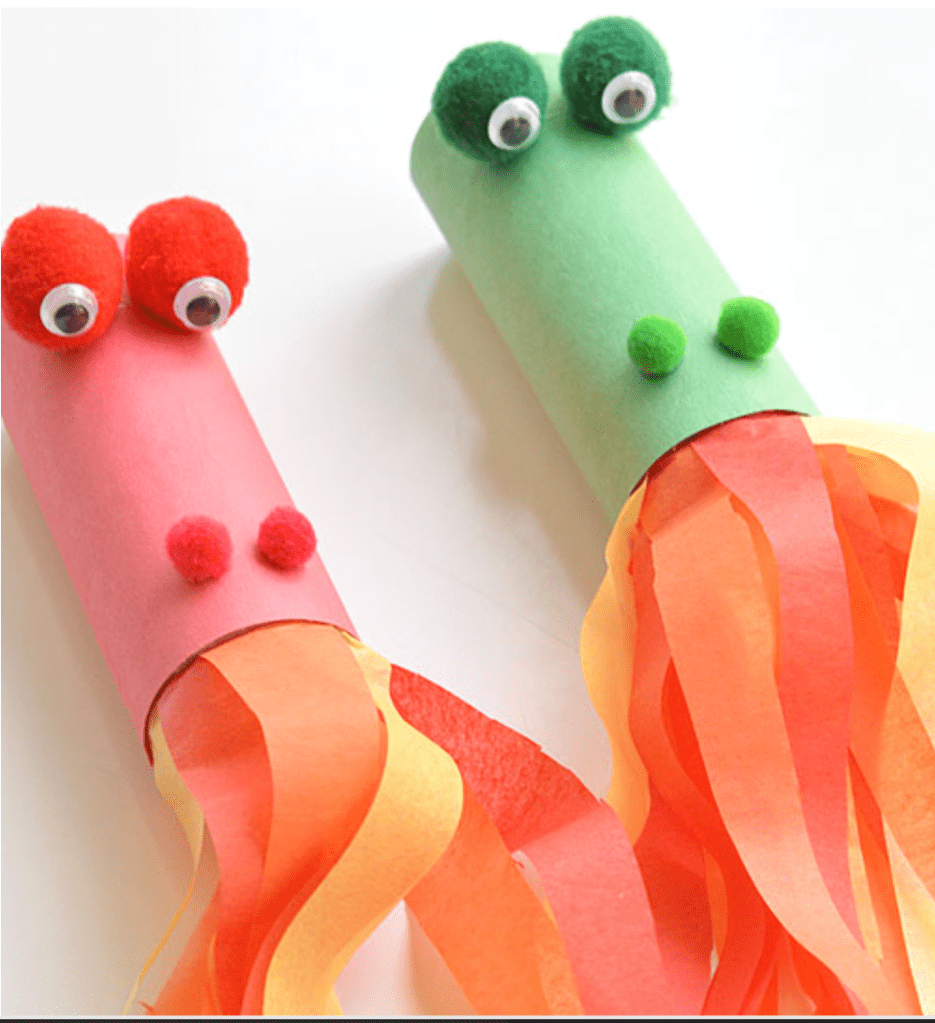
Kathy currently teaches young learners in her hometown of St. Cloud, Minnesota, USA as well as classes online. She is passionate about creating memorable songs for children that build language as well as music and movement skills. Kathy creates songs that stick in children’s heads long after class. We hope that you enjoy her music, too.
Contact us at magictimekids@gmail.com if you’re looking for a song about a specific idea or topic. We’ll try to write one with that idea in mind.
Our Christmas tree is decorated with ornaments from around the world. Some presents are already under the tree. I’ve been busy baking Christmas cookies and plan to bake some more today. Why? On Christmas Eve, we always leave cookies and milk for Santa.

Even though our children are grown up, we continue to believe in the magic of Christmas. This is one of the traditions that lingers in our lives.
So, here’s the song I wrote to celebrate this.
It’s to the melody of Twinkle, Twinkle Little Star. To thank you for your support through the years, I’m including a complimentary music track of this song from my CD entitled Kathy Kampa’s Special Days and Holidays.
Here are some suggestions for movements for this song.
Santa’s Cookies and Milk Words by Kathleen Kampa and Charles Vilina
Spoken: Dear Santa, Welcome to my house. I’ve been very good this year.
Sung: Have some cookies. (gesture with one hand to the side)
Have some milk. (gesture with the other hand)
Christmas cookies and a glass of milk. (Twist hands like twinkling Christmas stars for the words “Christmas cookies” and then make the shape of a glass for the word “milk.”)
Eat the cookies. 1-2-3 (gesture eating cookies, then fingers 1-2-3)
Drink the milk. It’s from me. (gesture drinking milk, then point to self)
Have some cookies. (gesture with one hand to the side)
Have some milk. (gesture with the other hand)
Christmas cookies and a glass of milk. (Twist hands like twinkling Christmas stars for the words “Christmas cookies” and then make the shape of a glass for the word “milk.”)
Spoken: Thanks Santa! Have a good night! Good-bye!
For more tips on performances, see this blog post.
Music and movement are one way for students to learn new words and phrases in English. Art projects are another way.
Yoko Matsui created this simple project for her students. They made plates with cookies and milk. Your students could write a little note, too.
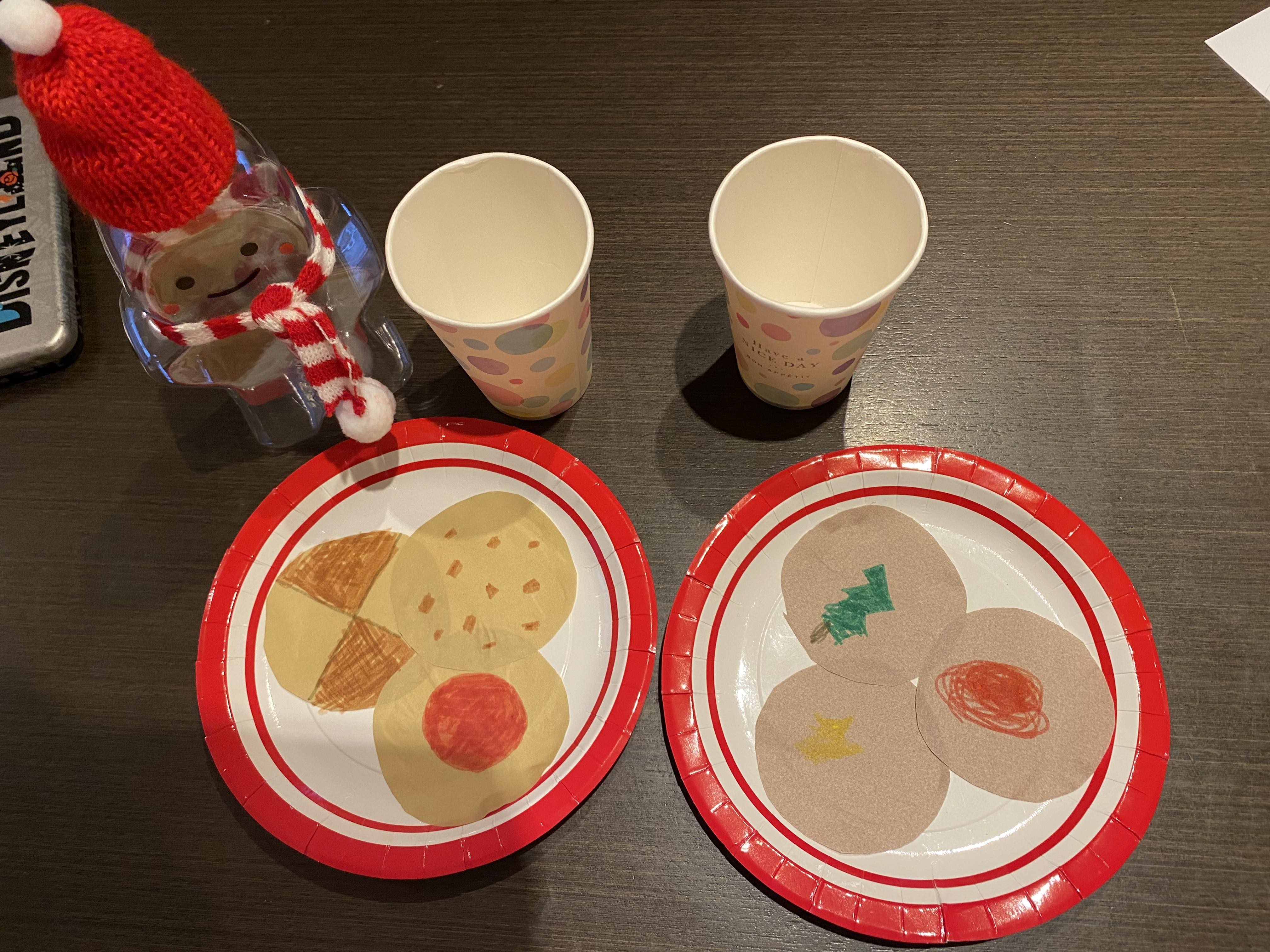
If you’re looking for more craft ideas for Christmas, I’ve gathered a bunch of them on my Pinterest page for Christmas.
We wish you all the best for Christmas and throughout the year from our family to yours. May the magic of Christmas remain in your hearts.

Kathy Kampa is a passionate educator of young learners. She seeks to nurture children’s imaginations and spark creativity through fun and engaging activities. Kathy believes that music and movement should be a part of every young child’s learning.
Kathy is the co-author of Magic Time, Everybody Up, Oxford Discover, Beehive and Buzz (published by Oxford University Press). She has taught young learners in Tokyo, Japan for over 30 years. Kathy is also active as a teacher trainer, inspiring teachers around the world. She has currently returned to her home state of Minnesota in the US.

Celebrate Thanksgiving with this lively song for children! This song is called “The Turkey Dance” and it’s one of my students’ favorite songs.
So use your imaginations and dance like . . . . turkeys!! Get a little silly and have a lot of fun!
Here are the lyrics, which go to the tune “Turkey in the Straw.”
Words by Kathleen Kampa and Charles Vilina, music adapted from Turkey in the Straw
copyright © 2013 by Kathleen Kampa
Spoken: It’s Thanksgiving Day. Let’s move like turkeys.
First, Move your elbows! (Imagine that these are wings!)
Move your elbows, do the Turkey dance
Move your elbows, do the Turkey dance
Stamp your feet and shout “Hooray!”
It’s Thanksgiving Day.
(You can add “Thank You” in any language you know. Or add a “Gobble! Gobble!)
2. Now move your hips. (Imagine that this is your tail.)
Move your hips, do the Turkey dance
Move your hips, do the Turkey dance
Stamp your feet and shout “Hooray!”
It’s Thanksgiving Day.
(You can add a “Thank You” in any language you know.)
3. Now move your knees. . . .
4. Now move your head . . . .
5. Now move your whole body!
Teacher’s Notes:
In this dance, students are pretending to be turkeys.
Before playing the music, show students a picture of a turkey like the one in this blog.
I usually start with a little TPR by teaching this part of the song first– “Stamp your feet, then shout ‘Hooray!'” Stamp your feet, then jump in the air on “Hooray.” On “It’s Thanksgivixng Day!” put your hands together.
My students added their own ideas between the verses. Some children enjoyed saying “Gobble! Gobble!” while others liked to say “Thank You” in a language they know.
Now teach the body part movements. Say “Move your elbows.” These are the turkey’s wings.
Repeat with each body part listed below: hips/tail, knees, head, and whole body.
1. Make turkey wings by moving your elbows.
2. Make a tail by putting your hands behind your back, and moving your hips.
3. Move your knees like you’re strutting.
4. Move your head forward and back.
5. Choose your favorite movements, or make some new ones. Dance!
Here’s a video to show you the movements.
For this wonderful “hoedown” song that children LOVE to dance to, download The Turkey Dance on iTunes! You can find it on streaming services like Spotify and Apple Music. The arrangement is fun and lively.
And if you want to add an art project, check out Marnie’s blog, Carrots are Orange for some autumn Montessori activities focusing on turkeys. I especially like the Zentangle turkeys from Laura Hutchinson. There are more activities on my Pinterest page.
Have a wonderful day!
Kathy
Here’s a very short clip of my Magic Time students doing “The Turkey Dance.”
Happy Thanksgiving everyone! No matter where we live, we all give thanks this season for the blessings we have.

Kathy Kampa is a teacher, author, and teacher-trainer who specializes in working with young learners. As a former PYP (Primary Years Program) teacher in Tokyo, Japan, she uses a globally-minded and inquiry-based approach to teaching through which students develop 21st-century skills. She also supports the development of English language skills by creating songs, chants, and TPR/movement activities targeted to young learners’ needs.
Kathy and her husband Charles Vilina are also co-authors of Magic Time, Everybody Up, Oxford Discover (ELTon award), Beehive, and Buzz, all published by Oxford University Press.
If you’re looking for easy-to-sing, easy-to-remember, fun Halloween songs for young learners, you’ve come to the right place! If you’re planning a Halloween party, you’ll find so many songs to use. I’ve been writing songs for my young learners for many years. These songs have grown in my young learner classrooms. I have taught many students over the years, so lots of students have added their ideas to make these songs exactly what you can use in your classroom.

In addition to being fun, each song boosts an English language goal, a music goal, and/or a movement goal. You’ll find lyric notes, Google slides, videos, movement notes and complementary arts activities. Just head over to iTunes to purchase the songs you like best. I hope that you’ll love them and use them for years to come! All of these songs come from my first album Kathy Kampa’s Special Days and Holidays.
Click on the link to each of the blog posts.
Skeleton Dance: Students learn about body parts and directional movements. My students ask to dance this song over and over throughout the year. Once your students learn it, use it as a “Brain Break” song. If you’re having a sports festival, get the whole school dancing to this song!!!
Trick or Treat: I created this fun song to help my Japanese students work on the sound /r/ and /l/. You hear /r/ in “trick or treat” and /l/ in Halloween. Students use functional language, I see a . . . to describe Halloween creatures. Use the Google slides to teach the characters in the song. Add your own Halloween picture cards or your own ideas to create a new version of the song.
After learning the song, we sang it the next time with our own ideas. I placed Halloween picture cards face down in a circle. Students took turns turning them over and singing about that character. You can also hang picture cards around your space.
Use this song to “trick-or-treat” with your students.
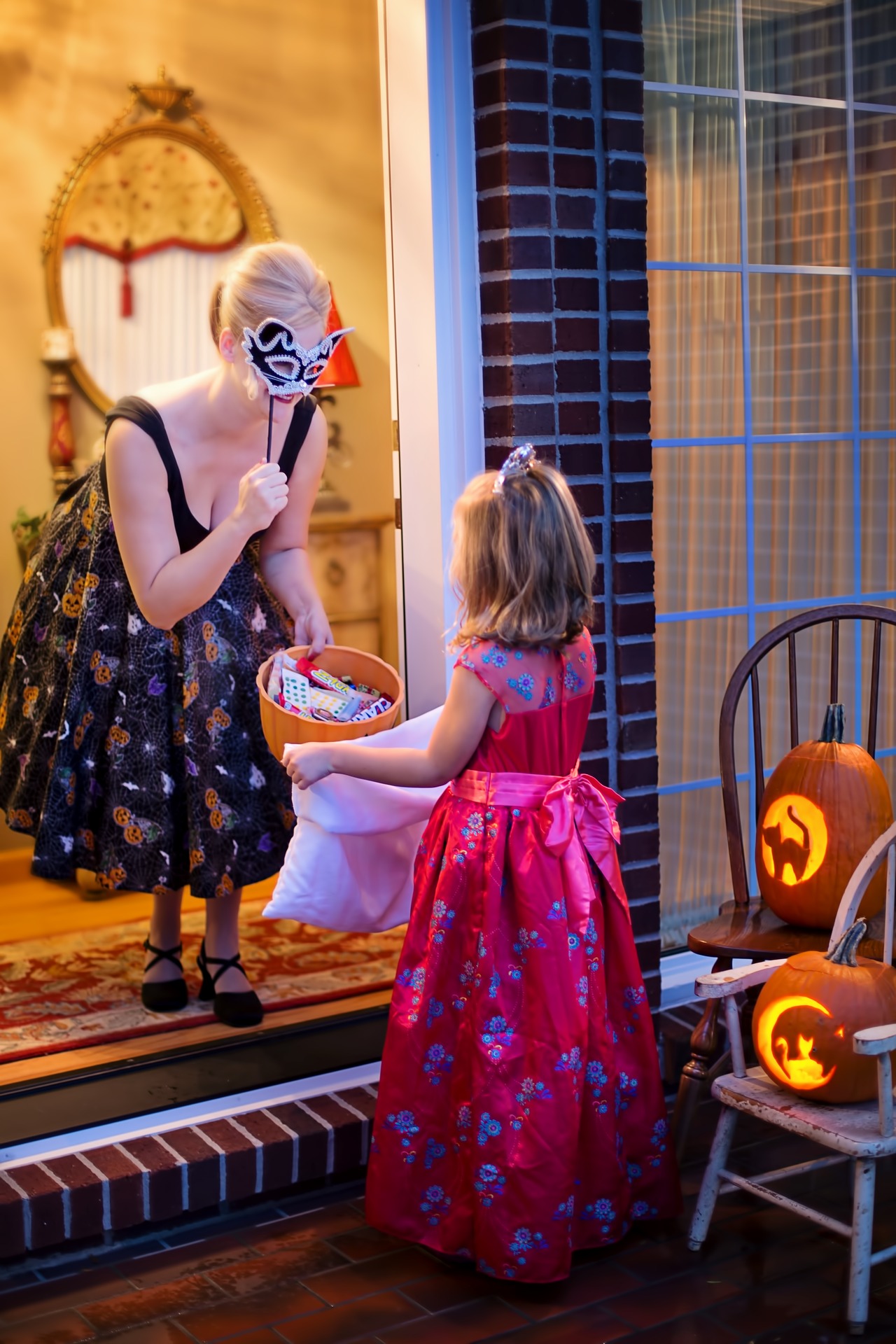
Marching Monsters: This song teaches phonemic awareness of initial sounds. It also practices locomotor and axiel movements of marching, skipping, waltzing and jumping. Use the colorful Google slides to teach the characters.
Pumpkin, Pumpkin: Autumn is a time for change, and this song surely demonstrates that! Change is a concept we teach in our young learner classrooms. Our pumpkins change size, growing from small to big. We change our body shape in this song. Pumpkins change into jack-o-lanterns. We change our faces. Our voices change from high, little voices to low, big voices.
I’m a Witch: It’s fun for young learners to use their imaginations to move like different Halloween characters. They can use different locomotor movements to move from one place to another and change the way they move (slowly/ quickly). Grab the free picture cards, too.
I’ve gathered a bunch of Halloween ideas on Pinterest, too.
Here’s my YouTube channel with some videos of my students. These songs are from my album Kathy Kampa’s Special Days and Holidays. You can grab my music on Spotify and Apple Music!

I love celebrating Halloween with my students! Throughout the entire month of October, we sing songs and use our imaginations. As a teacher of young learners, I find that songs with strong rhythm and repetition stick in students’ brains. Fun songs become well-loved. I hope that you’ll find my music a great tool for building students’ skills in language and the arts.
If you’re looking for a song about another lesson or topic, send your idea to me at magictimekids@gmail.com.
What will you teach through songs and poems about Valentine’s Day?
Letters and Shapes: I love creating letter shapes and heart shapes. Students can use their fingers, arms, whole body, or even make a shape with a friend.
For my Japanese students, the sound /v/ can be challenging. This is a perfect way to practice it.
Movement: Students can do movements in place as well as from one place to another. As young learners grow, we can help them to learn these movement skills, like marching, tiptoeing, galloping, jumping, skipping, etc.
Working with a partner: Valentine poems and songs often invite children to face a partner and hold hands. They can talk about how they want to move together.
This poem prepares children to make a heart shape.
I put my hands together. (put the heels of your hands together)
This is how I start. (hold)
I curve my fingers just like this (curve your fingers to touch each other)
and now I have a heart. (this should make a heart shape)
Now, look through the heart to see each of the students in your class.
Say, “I see you in my heart!”
This little song is a favorite of my students and the teachers I work with. You might recognize the melody as “Cho Cho” or “Lightly Row.” It focuses on the sound /v/ for Valentine. When the children hear the word “valentine,” they make a heart shape with their fingers, arms, or whole body.
2. Be My Valentine words by Kathy Kampa
from Kathy Kampa’s Special Days and Holidays CD
I like you. You like me. Will you be my Valentine?
I like you. You like me. Be my Valentine.
[v] [v] Valentine!
[v] [v] Valentine!
I like you. You like me.
Be my Valentine.
Here’s a video link to give you some ideas of how to move to the song. Special thanks to my nieces Brooke and Shannon for helping out. They were quite little when we made this video. Enjoy!
This next Valentine’s Day song is called “I’m Your Friend,” from my album Jump Jump Everyone. This song invites students to move in various ways, such as skipping, jumping, walking, and even skating! Developing gross motor skills is important for young learners.
Many songs for young learners use rhyming schemes to build language skills. You’ll hear mine, nine, and Valentine as rhyming words.
You can sing this with small or large classes. Here are the lyrics to the song.
3. I’m Your Friend words and music by Kathy Kampa
From Jump Jump Everyone CD
Chorus:
I’m your friend. You are mine.
Will you be my Valentine?
I’m your friend. You are mine.
Will you be my Valentine?
Let’s walk.
4-5-6, 7-8-9, Will you be my Valentine?
*repeat with skip, jump, slide, skate, dance
With a small group, it’s easy to have all of the students join hands in a circle.
.Here’s a video clip of one of my Magic Time classes in Tokyo singing “I’m Your Friend.”
Try these variations!
-Dance with a partner. Face a partner for the chorus. On the verses, hold hands and dance together around the circle.
-Stop and clap during the counting section: 4-5-6 clap to one side; 7-8-9 clap to the other side
-Make small heart shapes with hands and big heart shapes with arms.
Need an art activity?
I love to add art activities to my Valentine’s Day lessons. Here are some fun ideas I’ve collected on Pinterest.
Here is an activity from Denmark. You can weave these hearts with paper, too.
To find the songs in this post, check out my CDs Kathy Kampa’s Special Days and Holidays and Jump Jump Everyone.
on iTunes.
You can also find my music at https://www.etjbookservice.com/product-category/songs-chants-3/kathy-kampas-cds-4/
Kathy Kampa is a teacher, author, and teacher-trainer who specializes in working with young learners. As a former PYP (Primary Years Program) teacher in Tokyo, Japan, she uses a globally-minded and inquiry-based approach to teaching through which students develop 21st-century skills. She also supports the development of English language skills by creating songs, chants, and TPR/movement activities targeted to young learners’ needs.
Kathy and her husband Charles Vilina are also co-authors of Magic Time, Everybody Up, the ELTon award-winning course Oxford Discover, and Beehive, all published by Oxford University Press.
Autumn is one of my favorite times of the year. Here in Minnesota, we can see red maple leaves, yellow aspen, and brown oaks. When we lived in Tokyo, we witnessed such beautiful autumn leaves. Here’s a photo I took in Japan as the leaves started to change colors. People celebrate the season outside by enjoying picnics, taking hikes, and taking lots of pictures!

My Kindergarten students and my English students delighted in gathering the fallen leaves. Every morning they brought a collection of leaves to school. They enjoyed watching different kinds of leaves falling to the ground. We sang many songs about autumn leaves, but this one is my favorite. I especially love the incredible instrumentation that Andre DiMuzio created to accompany this.
Here are the free Google slides to accompany this song.
It’s fun to teach this song with a xylophone or glockenspiel. You can play it by starting at the shortest bar (C) (do’), and going step by step to the longest bar. If you turn the instrument on its side with the shortest bar on top, it’s easy to see and hear the melody descending.
Falling Leaves Adapted by Kathy Kampa
Down, down, down, down, the leaves are falling to the ground.
do ti la sol fa mi re do‘
Whoosh!
Red, yellow, orange, and brown, the leaves are falling to the ground.
do ti la sol fa mi re do
Whoosh!
My students will sing this song over and over again. On the recording, the last time just slows down to signal the end of the song.
When I arranged this song, the children first sang the words to build their understanding of autumn. I also created a section where children can create their own movements. It’s important to give children opportunities to express themselves freely. They can spin fast or slow. They can pretend to blow in the wind.
Children love dancing with lightweight scarves. The color doesn’t seem to matter. They just love the way the scarves float so lightly. As students sing, they float their scarves back and forth (crossing their midline) moving their bodies lower and lower, just like the music. When they sing “Whoosh!” they scoop up the scarves.
After this part of the song, we toss the scarves. My students laugh when the scarf lands on their arm, their head, their shoulder . . . . You can model this action with your students. I usually do this twice. Look! The scarf is on my head! Look the scarf is on my elbow! Then encourage students to spin around, a great vestibular movement! This feels so smooth with the scarves.
Here’s a video of my young learners in Tokyo.
I use small, lightweight hemmed scarves like these. Search for “hemmed scarves” or “juggling scarves.” Check the reviews. I like mine! Young children can practice naming the color, too.
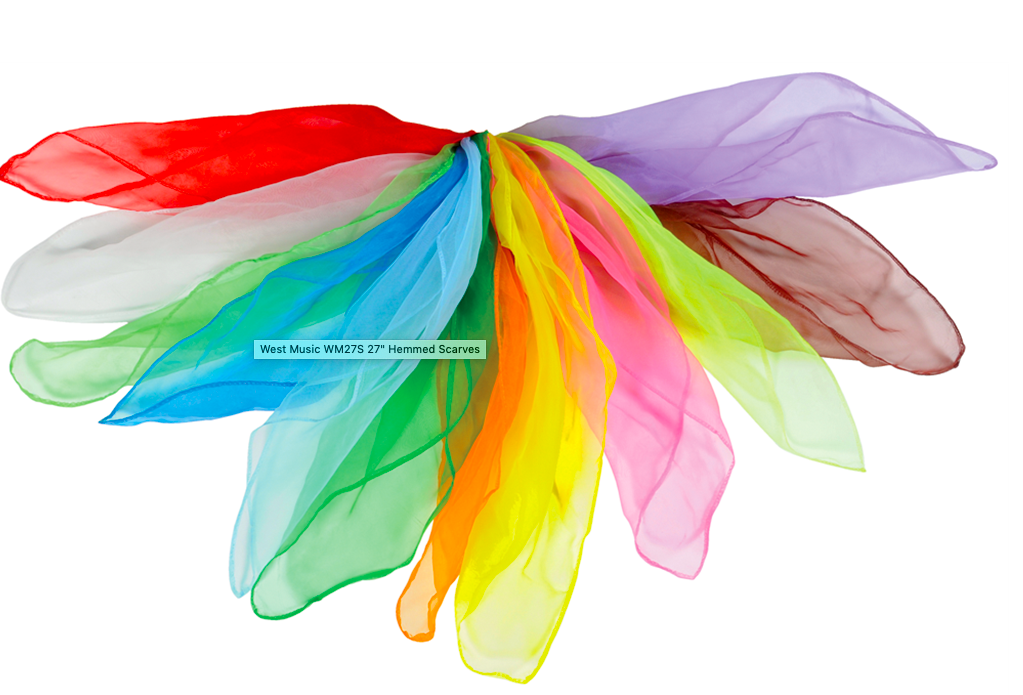
Check out my Pinterest board for more autumn activities. This song is available on my album “Jump Jump Everyone.” For more kid-tested music and movement activities, check out my music on iTunes.

Kathy Kampa is a teacher, author, and teacher-trainer who specializes in working with young learners. She taught at Seisen International School in Tokyo, Japan in the PYP (Primary Years Program) and continues to teach young learners in Minnesota. Kathy uses a globally-minded and inquiry-based approach to teaching through which students develop 21st-century skills. She also supports the development of English language skills by creating songs, chants, and TPR/movement activities targeted to young learners’ needs.
Kathy and her husband Charles Vilina are also co-authors of Magic Time, Everybody Up, Oxford Discover, Beehive and Buzz, all published by Oxford University Press.
#AUTUMN #FALLINGLEAVES #KIDSMUSIC #AUTUMNDAYS #AUTUMNCOLORS #NURSERYRHYMES #ENGLISHSONGS #KINDERGARTEN
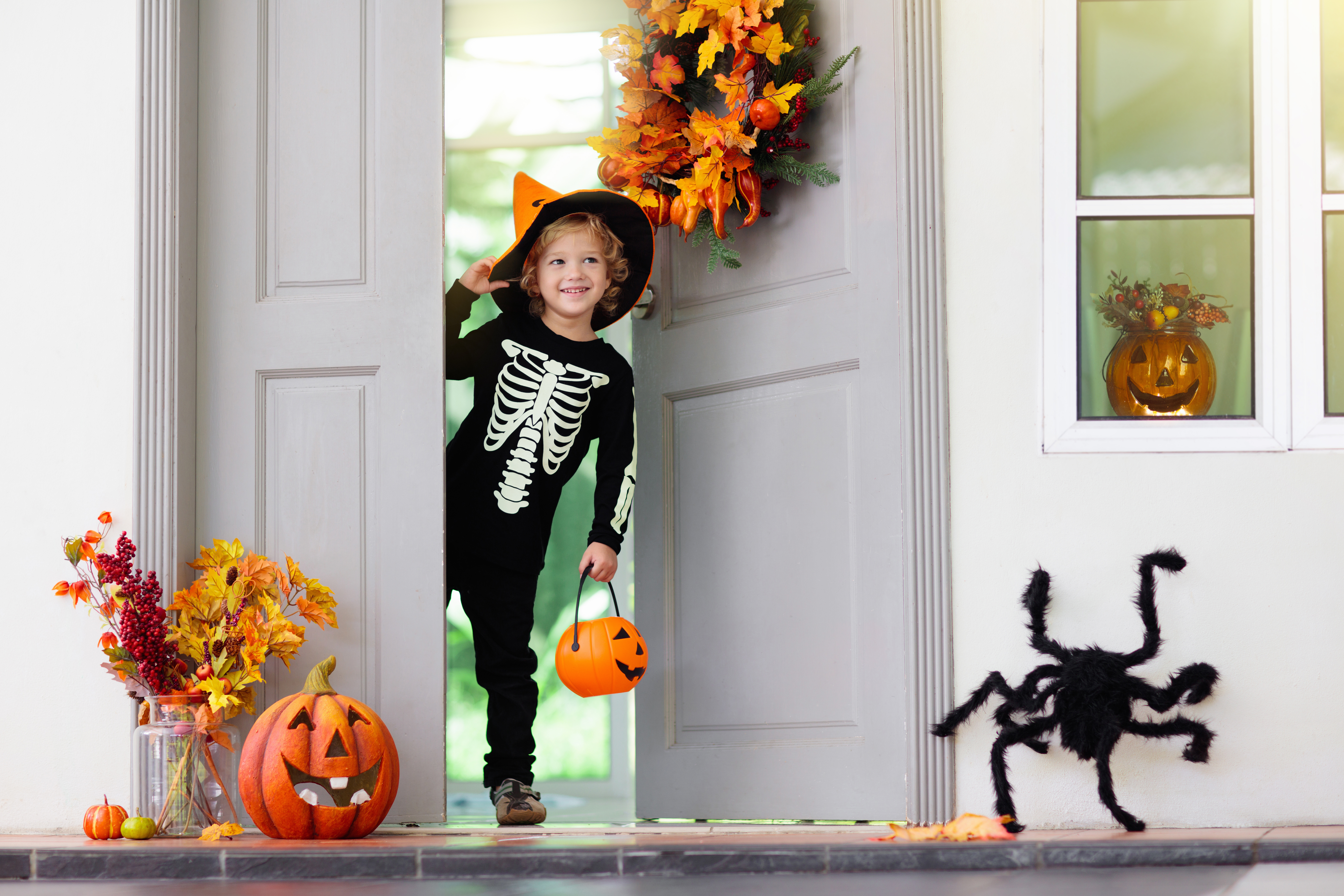
Halloween is right around the corner! Children love dressing up in costumes, trick-or-treating, and participating in all the wonderful Halloween activities teachers prepare in the classroom.
Halloween is filled with magical changes. Children put on costumes, and “change into” a princess, Spiderman, a witch, a ghost, or a character from their favorite Disney movie. We see the magical change of pumpkins into jack-o-lanterns.
The concept of change is one of the “big ideas” we teach young learners. Babies grow and change. Bean seeds planted in the soil in little paper cups grow into bean plants. Caterpillars turn into beautiful butterflies. Small pumpkins grow into big pumpkins and pumpkins turn into jack-o-lanterns!
Halloween is also a perfect time to teach new English words and the concept of change.
The song “Pumpkin, Pumpkin” is a fun Halloween song to do! The children experience change:
-from a pumpkin to a jack-o-lantern
-from small to big
-from a quiet voice to a loud voice
-from tiny, high voice to big, low voice
-from sitting to standing
To begin, make two paper pumpkins — a small one and a large one. Each of the pumpkins should have two sides — one plain side, and one side with a face (jack-o-lantern). This pattern by Shala on Pinterest is helpful. Show the students the plain side of the “small” pumpkin and say “pumpkin.” Then turn it around and say “jack-o-lantern.” Once students know these two words, put them into this simple chant:
Jack-o-Lantern Chant by Kathleen Kampa
Pumpkin, pumpkin, (turn picture around) jack-o-lantern
Pumpkin, pumpkin, (turn picture around) jack-o-lantern
Pumpkin, pumpkin, (turn picture around) jack-o-lantern
Happy Halloween!
Now you’re ready to expand upon the language and sing the song “Pumpkin, Pumpkin.”
Use this slide show to teach the song. The lyrics and ideas for movements are below:
Pumpkin, Pumpkin
(words adapted by Kathleen Kampa, music: traditional)
(Sit with students in a circle. Sing quietly.)
Pumpkin, pumpkin small and fat,
(With fingers, make the shape of a small pumpkin.)
Turn into a jack-o-lantern,
(Roll hands. Spread fingers out wide.)
Just like that!
(Tap two fingers on the palm of your hand as you say each word.)
(Sing the verse again!)
Spoken: Grow and grow and grow and grow
and grow and grow and grow and GROW!
(Slowly stand up while making a big pumpkin shape. Get louder!)
(Sing loudly.)
Pumpkin, pumpkin big and fat,
(While standing, make the shape of a big pumpkin with your whole body.)
Turn into a jack-o-lantern,
(Turn around. Jump into a big shape.)
JUST LIKE THAT!
(Clap and stamp on each word.)
(Sing the verse again!
Here’s a video of my Japanese students singing this song.
Thanks to my dear friend Setsuko Toyama for creating this pdf of the song lyrics.
“Pumpkin, Pumpkin” is one of many holiday songs featured on Kathy Kampa’s Special Days and Holidays CD available on iTunes and Apple Music. Here’s the link on Spotify. Four more Halloween songs are featured, so check out recent the blog posts.
Kathy Kampa’s Special Days and Holidays

I have numerous activities saved on my Halloween Pinterest board.
Thanks to my dear friend Setsuko Toyama for creating this pdf of the song lyrics.
Let me know how your children enjoy “Pumpkin, Pumpkin.” Happy Teaching!
Kathy
Kathy Kampa is a passionate educator of young learners. She seeks to nurture children’s imaginations and spark creativity through fun and engaging activities. Kathy believes that music and movement should be a part of every young child’s learning.
Kathy is the co-author of Magic Time, Everybody Up, Oxford Discover (ELTon winner), and Beehive (published by Oxford University Press). She has been teaching young learners in Tokyo, Japan for over 30 years. Kathy has composed educational music for Tokyo Shoseki and recorded songs for Learning World. She is active as a teacher trainer, inspiring teachers around the world. Kathy and her husband have currently returned to her home state of Minnesota in the US.
If you’re interested in more of Kathy’s work, check out her YouTube channel at Kathy Kampa and subscribe to this blog at magictimekids.com. Her second album, Jump Jump Everyone, is available on iTunes and Apple Music.
Just in case you didn’t find enough goodies here, check out this video of Kathy teaching her Japanese students the song “Pumpkin, Pumpkin” without the recording. Enjoy!
Are you ready for Halloween? Add “Marching Monsters” to your Halloween activities It builds phonemic awareness and is super fun to do!
I’m gifting you with these Google slides. You can print them or just share on your device. You can easily sync your music to these slides.
Marching Monsters Halloween Slide Show: Kathy Kampa’s Special Days and Holidays
There are four Halloween characters in this song–monsters, skeletons, witches, and jack-o-lanterns. Have fun pretending to be the four characters. Practice the four verbs– march, skip, sway side-to-side in a waltz, and jump! Now put them together.
“How can we march like monsters? (Who doesn’t love marching like monsters???!)
How can we skip like skeletons?
How do you waltz? How can we waltz like witches? (sway side to side)
How can we jump like jack-o-lanterns?”
Practice “Turn around and stop!”
Note: Moving and stopping is an essential movement skill for very young learners.
For very little ones, skipping is a new skill. Try walking with a little hop. Or galloping.
Here are the lyrics. You can also find them in the slide show above.
Marching Monsters
Words and music by Kathleen Kampa
1. Marching monsters! Happy Halloween! Boo!
Marching monsters! Happy Halloween! Boo!
Marching monsters, Turn around and stop! (hold)
Marching monsters Happy Halloween! Boo!
2. Skipping skeletons! Happy Halloween! Boo! . . .
3. Waltzing witches! Happy Halloween! Boo! . . . .
4. Jumping jack-o-lanterns! Happy Halloween! Boo! . . . .
Just watch the video and have fun!
Did you notice that you can build phonemic awareness with this song too? The word pairs begin with the same initial sound. You can separate the verbs and nouns. Students match.
Marching Monsters worksheet and flashcards
For a bigger challenge, write the letters m, sk, w, j, and h on the board. What pair of words begins with these letters in the song?
m-> marching monsters
sk-> skipping skeletons
w-> waltzing witches
j-> jumping jack-o-lanterns
h-> Happy Halloween!

Want to add a cute monster craft? http://acupcakefortheteacher.blogspot.jp/2012/07/my-frankenstein-craftivity.html
Monsters by Gunder on Flickr Attribution CC 2.0 license
http://bit.ly/Gundermonstersdrawing
We hope that your students enjoy singing and dancing throughout the month of October. The music for this song and other Halloween favorites (Pumpkin, Pumpkin, Skeleton Dance, Marching Monsters, I’m A Witch) are available on Kathy Kampa’s Special Days and Holidays.
You can search for my music on iTunes. or Apple Music.
If you like this, my second album has more happy songs for children that have grown in my young learner classroom. Dance like falling leaves, bloom like a spring flower, move through the butterfly life cycle . . . . you’ll find LOTS of fun and magic in this album, too.
Happy teaching!
Kathy Kampa
Kathy Kampa is a passionate educator of young learners. She seeks to nurture children’s imaginations and spark creativity through fun and engaging activities. Kathy believes that movement should be a part of every young child’s learning.
Kathy is the co-author of Magic Time, Everybody Up, Oxford Discover, and Beehive (all by Oxford University Press). She has composed music for Tokyo Shoseki’s English language courses.
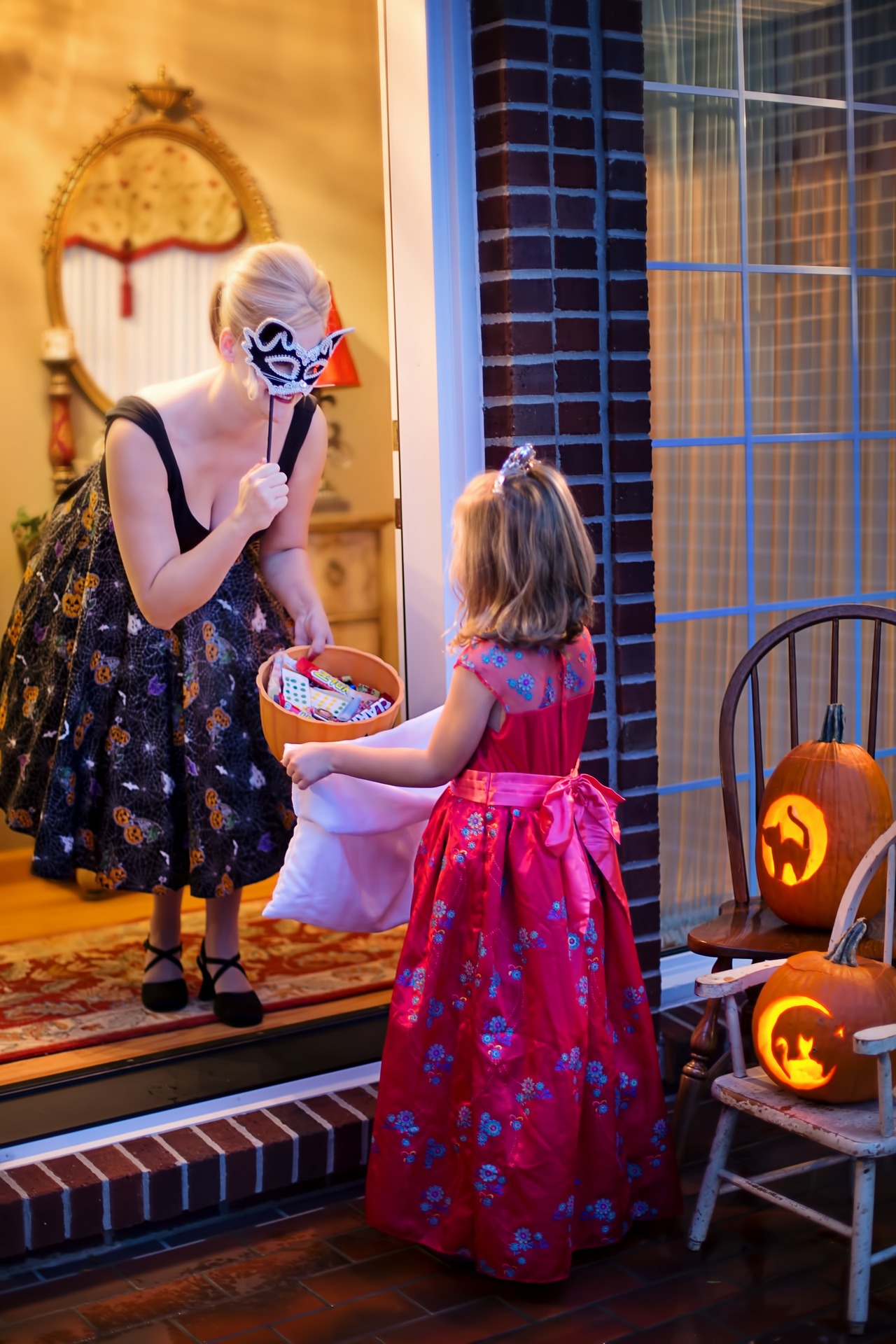
Image by Jill Wellington from Pixabay
Are your students getting ready for Halloween? Mine are! This song was inspired by the book “Where’s the Halloween Treat?” by Harriet Ziefert and Richard Brown (Putnam Juvenile). As you read the book to students, you can see children dressed in different costumes going trick-or-treating. I also love the lift-the-flap book “Boo Who?” by Joan Holy (Scholastic). Both books are great for teaching students about Halloween.
In this song, we chose these Halloween characters: a ghost, a witch, a monster, a skeleton, and a black cat. You can use these Trick or Treat picture cards. I like to make two copies of the pictures, one for students to see up close and one to find around the classroom.
1) Have students sit in front of you. If you have one of the Halloween books, enjoy reading it with your students. Ask students, What do you see? They may be able to name some of the Halloween vocabulary words.
2) Now use the Trick or Treat picture cards.
Point to one word, such as ghost. Ask students, What do you see? Encourage them to say, I see a ghost.
Continue with the other Halloween vocabulary in the same way.
3) Now teach the phrase Trick or Treat. You might explain the tradition of children going from house to house and getting treats from neighbors. Show the children your treat bag, plastic pumpkin, or the Trick or Treat picture above. When children ring the doorbell or knock on the door, they always say, Trick or Treat! We do this because It’s Halloween!
4) I like to teach students the melody of the song while I change the picture cards as I sing it.
Kathy Kampa’s Special Days and Holidays. (click on the title, then on Track #8)
-Pat your legs on the chorus, Trick or treat . . . .
-When you hear It’s Halloween put your arms up like you’re saying Hooray!
-When you hear each of the characters (such as I see a ghost), point to each one. When you hear Oooooh, wave your arms in a spooky way.
Here are the lyrics:
Words and music by Kathleen Kampa and Charles Vilina
copyright © 2013 by Kathleen Kampa
Chorus:
Trick or treat! ch-ch-ch Trick or treat! ch-ch-ch
It’s Halloween! Say “Trick or treat!” ch-ch-ch
Trick or treat! ch-ch-ch Trick or treat! ch-ch-ch
It’s Halloween! Say “Trick or treat!” ch-ch-ch
Verse:
I see a ghost!
I see a ghost!
Ooooooooooooooh!
Sing again with Halloween characters: witch, monster, skeleton, black cat
5) Now your students are ready to stand up and move to the song!
Here’s a video I created for my students. With COVID restrictions, I took the video while I was the only person in the room, so I couldn’t move around a circle. I’m holding up the picture cards, but in my classroom, they’re posted around the room.
Make a circle. Practice a movement standing in one spot for each Halloween character.
Here are some suggestions; however, using your own imagination is even better! Your students will certainly have some interesting ideas!
For the ghost, you might move your arms like you’re floating.
For the witch, you might pretend to make some witch’s brew or cast a spell.
For the monster, you might make scary arms and stomp in place.
For the skeleton, you can move your elbows up and down.
For the black cat, you can creep in place.
On the chorus, Trick or Treat . . . march around the circle.
On It’s Halloween, put your arms up in the air as you continue marching.
For each of the verses (such as I see a ghost), stop in one place and pretend to be that character or point to the pictures.
On Oooh, do spooky arm movements.
Then begin marching again around the circle.
6) In the next class, put the picture cards around the room. Add new characters to the song. Invite your students to draw their Halloween costumes and post the pictures around the classroom.
7) Finally, sing this song at your Halloween party. At our party, I lead the students around the room singing the chorus of “Trick or Treat.” We stop to ring the bell or knock at a pretend door. One by one, my students’ parents pretend to open the door. The students say, Trick or Treat!, Thank You! and Happy Halloween!
In addition to having fun, this song teaches young learners:
a. simple phrases, especially for EFL / EAL students –
It’s Halloween! Trick or Treat! I see a ____.
b. Halloween vocabulary words and sight words
c. movements, such as marching, that go from one place to another
d. ways to move and stop
e. how to express their own ideas for the vocabulary words and inspire their creativity
We hope that your students enjoy singing and dancing throughout the month of October. The music for this song and other Halloween favorites (Pumpkin, Pumpkin, Skeleton Dance, Marching Monsters, I’m A Witch) are available on Kathy Kampa’s Special Days and Holidays.
You can find it at iTunes, CD Baby for downloads, and ETJbookservice.
If you like this, my second album has more happy songs for children that have grown in my young learner classroom. Dance like falling leaves, bloom like a spring flower, move through the butterfly life cycle . . . . you’ll find LOTS of fun and magic in this album, too.
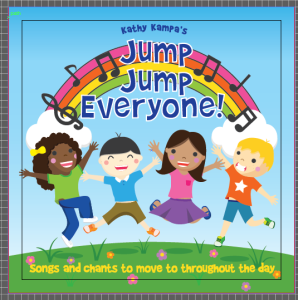
Happy teaching!
Kathy Kampa
Kathy Kampa is a passionate educator of young learners. She seeks to nurture children’s imaginations and spark creativity through fun and engaging activities. Kathy believes that movement should be a part of every young child’s learning.
Kathy is the co-author of Magic Time, Everybody Up, Oxford Discover, and Beehive (all by Oxford University Press). She has composed music for Tokyo Shoseki’s English language courses.
Young children LOVE to learn about farm animals. When our sons were little, their favorite children’s stories about farm animals included Oh Dear by Rod Campbell and The Very Busy Spider by Eric Carle. There are many traditional farm songs, too. I’d love to have you try out this one, The Cow Says ‘Moo’ from Jump Jump Everyone by Kathy Kampa (available from ETJbookservice, CD Baby, and iTunes).
Let’s get started. Show pictures of the various farm animals from a picture book or from these blog images. Children might suggest additional animals from the farm, too.

Name the animals. What does each animal say? Even animals make different sounds in English! You can make a game matching the animal picture with its sound or with its name.
Display the vocabulary words. Print the images in this blog and put them into clear file folders. I put magnets on the back of mine. I can use the files with different vocabulary. Hang the picture cards on the board in the order of the words.
Children can stand and sing the song. There are two parts to the song.
The first part is the animal name and sound. Do you see the pattern in the song?
The cow says “Moo”
The cow says “Moo”
“Moo! Moo! Moo! Moo!”
The cow says “Moo”
The second part includes TPR actions. Practice these with the children. Did you notice the rhyming words (floor/ more/ four)? That’s important for our students!
When the cow says “Moo” you’ve got to clap, clap, clap,
When the cow says “Moo” you’ve got to pat, pat, pat,
When the cow says “Moo” you’ve got to touch the floor,
Are you ready for more? Count 1-2-3-4!
Children listen for the next animal sound. In this song you’ll find a sheep (baa), horse (neigh), dog (woof), pig (oink), and rooster (cock-a-doodle doo). The verse with the rooster is slightly different.
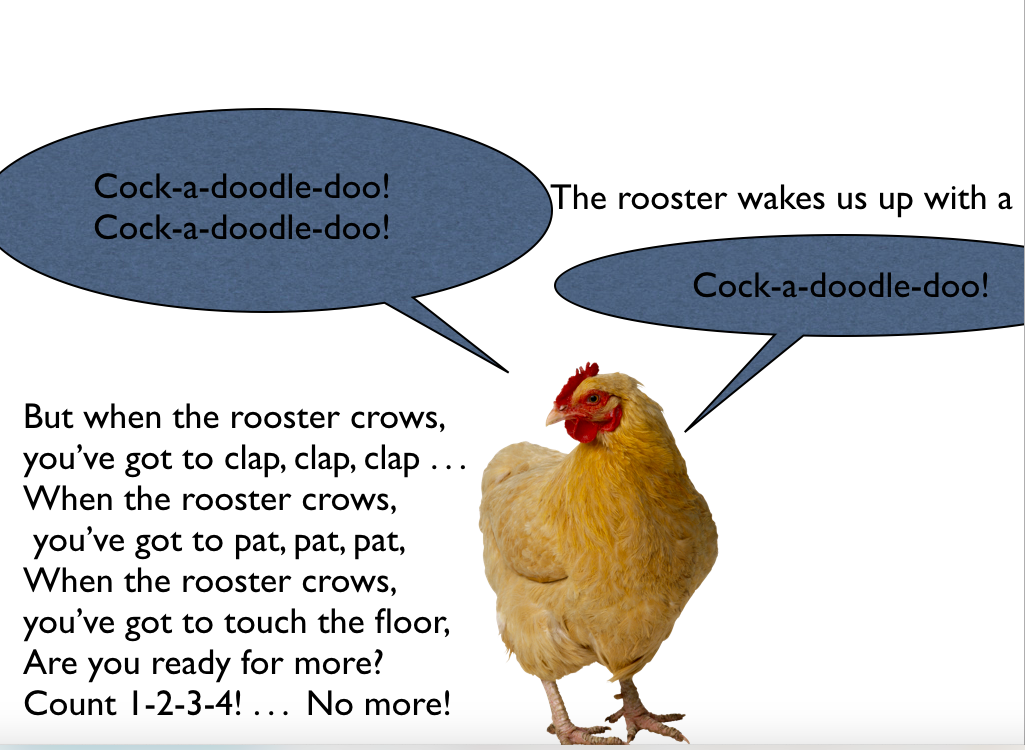
Once children know the song, you can add some props.
2. Use Beanie Babies, stuffed animals, or puppets. Children love to hold these.
Small groups: Give each child one animal card or puppet. Listen for the name of each animal. When each animal is called in the song, the child with that animal card/puppet goes to the middle of the circle. The other children can walk in a circle around the child.
You can see my English class here.
Large class: If your students use desks, you can have each row designated as one of the animals. The child at the front of the row can hold the card. When each animal is called in the song, the children in that group can move around their desks.
You can also make a card for each student. When each animal is called in the song, the children with that animal card move around their desks holding their card up.
The music for this song is available on the CD “Kathy Kampa’s Jump Jump Everyone!”
You can find it on iTunes, CD Baby Store, and ETJbookservice as well as streaming services, such as Spotify and Apple Music.
Have a wonderful time singing and moving with your students!
You can find Kathy on the farm in the summertime. There are no animals here, but lots of fresh veggies are growing.
Kathy Kampa is a passionate educator of young learners. She seeks to nurture children’s imaginations and spark creativity through fun and engaging activities. Kathy believes that music and movement should be a part of every young child’s learning.
Kathy is the co-author of Magic Time, Everybody Up, Oxford Discover (ELTon winner), and Beehive (published by Oxford University Press). She has been teaching young learners in Tokyo, Japan for over 30 years. Kathy is also active as a teacher trainer, inspiring teachers around the world. She has currently returned to her home state of Minnesota in the US.
If you’re interested in more of Kathy’s work, check out her YouTube channel at Kathy Kampa
If you teach young learners, you probably use chants and songs in your class. But how do you teach them to use them most effectively?
Each song we use has different challenges and is magical in its own unique way. Your challenge is to find that unique magic and share it with your students.

I’m sharing an example from my online Zoom class with English students in Japan to help you see what we did with songs. Today we’ll look at the first song in this video called She Has a Shirt, from Magic Time 2.
Let’s talk about the parts of the lesson that lead up to the first song in this video. Magic Time, Unit 6 lesson takes place in a jungle where everyone has packed their clothing for the trip. In a Magic Time lesson, students first learn the six new vocabulary words (shirt, skirt, cap, dress, jacket, sweater). I like to introduce this vocabulary by making it magical, such as using a suitcase to hide the clothing items or the picture cards. The students are surprised to see them. In the textbook, students search for the vocabulary items in the double-page spread and practice the words in a chant. In the final listening activity, I invite students to predict which number will be said. They say, “I think number one is ________,” and put their eraser on that picture in their book. Then they write the number. This continues until all six numbers have been called. This activity pushes output from an early stage. The kids love it! We play additional games, too.
In the next lesson, students add the grammar paradigm: She/ He has a _________. When I’m in a classroom with the students, I make a rebus sentence using the grammar paradigm and the picture cards.

Now that the students have practiced the vocabulary and grammar, they’re ready to sing the song. Make sure that you listen to the song before you teach it. The first time my students listen to the song, they’re looking at the images in their book. The second time we add movements. You can see the students pointing to their clothing, too. They really love the silly monkey part.
The children really loved this song. It helped them use the vocabulary naturally. What makes this work?
First of all, the language was gently scaffolded. Students had an achievable step. This is called the Zone of Proximal Development.
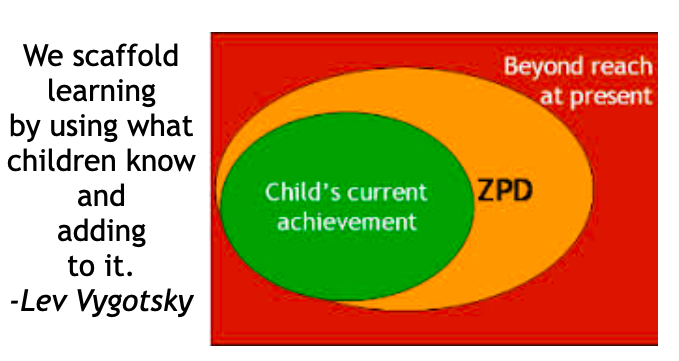

Next, the language was taught in a variety of ways. On the right, you can see the “Multiple Intelligences Pizza.” This theory was developed by Dr. Howard Gardner and adapted for the classroom by Dr. Thomas Armstrong. Some teachers have used this theory to look at students’ talents. I use it, however, for planning varied ways to teach my lesson. In our lesson, students looked at pictures (individually and in context), followed patterns, explored musical songs and chants, and moved their bodies. They learned alone and played games with their classmates. Learning like this provides repetition that is varied and engaging. When you use MI (Multiple Intelligences) strategies, you create variety in your lessons.
Remember: Repetition, Repetition, VARIATION.
Last of all, making learning a positive experience is a very important aspect of learning. To nurture students’ imaginations and fun, use hands-on materials, including picture cards, stuffed animals, puppets, instruments, beanbags, scarves, and found items.
Songs build fluency. Games build on the language taught in class. This dice game is so much fun and builds fluency along with reading skills. You can see the children rolling the dice, adding the sight words, then reading the sentence. This activity creates some funny sentences, such as “He has a dress.” (dice pattern in MT 2 Teachers’ book). Alternatively, you can use picture cards. Students turn over one of the character cards, choosing he or she. Then the student adds “has a,” followed by another vocabulary picture card (i.e. shirt).
Just a note that before students go home, I like to play the song again. Create the chance fo students to catch SSIYH, the “song stuck in your head” phenomenon. Good songs are easy for students to repeat. Repetition helps, too. Students will sing independently and happily.
Do you have a secret to teaching songs? Let us know at magictimekids@gmail.com. We’d love to hear from you!
Kathy loves to write music for children. If you’re looking for songs for little ones, check out these two CDs, available on iTunes.
Kathy Kampa is a passionate educator of young learners. She seeks to nurture children’s imaginations and spark creativity through fun and engaging activities. Kathy believes that music and movement should be a part of every young child’s learning.
Kathy and her husband Chuck are co-authors of Magic Time, Everybody Up, Oxford Discover, and Beehive (published by Oxford University Press). They have been teaching young learners in Tokyo, Japan for 30 years. Kathy and Chuck also active as teacher trainers, inspiring teachers around the world. They have currently returned to their home state of Minnesota in the US.
If you’re interested in more of Kathy’s work, check out her YouTube channel at Kathy Kampa. Kathy has collected numerous activities to link with her here on Pinterest.
-.
It has happened countless times in my teaching. A young student loses a tooth right in the middle of my lesson. I was most worried when one student bumped into another student during my class. The student was bleeding, so I ran to get her a towel. Then I saw her smile! She had been worried about her loose tooth, and it finally popped out. Whew! I wrote this song for her and for all of the kids who worry about losing a tooth.

Last week one of my students in my online English classes had a loose tooth, so we sang this song. Maybe one of your students does, too?
Here are the lyrics to my song Loose Tooth on Kathy Kampa’s Special Days and Holidays.
Loose Tooth by Kathy Kampa
I’ve got a loose tooth, Wiggle, wiggle.
I’ve got a loose tooth, Wiggle, wiggle.
I’ve got a loose tooth, Wiggle, wiggle.
A loose tooth in my mouth.
Wiggle front to back, Wiggle, wiggle,
Wiggle side to side, Wiggle, wiggle,
Wiggle up and down, Wiggle, wiggle,
Wiggle all around . . . (repeat from the start)
Final: I had a loose tooth . . .
Here’s our YouTube video from our Zoom lesson.
What can your students learn during this song?
*Directional movements (front/back, side/side, up/down, around)
*oo/ sound (loose/tooth)
*Simply, it can help children stop worrying about a loose tooth. It fills the air with happy, fun, and silly vibes.
How does your culture celebrate the loss of a tooth? If you want to learn more about traditions around the globe, check out this informative article. And if you want to read a picture book about this, check out this post by Show and Tell.
Here in the US, a child places the tooth under their pillow at night. During the night, the tooth fairy collects the tooth and leaves some money in its place. Here’s a simple idea from East Coast Mommy for a darling tooth bag. For more ideas, go to my Pinterest page.
The studio version of Loose Tooth can be found on iTunes on Kathy Kampa’s Special Days and Holidays, track #2. Click here to take you there!
Kathy Kampa is a passionate educator of young learners. She seeks to nurture children’s imaginations and spark creativity through fun and engaging activities. Kathy believes that music and movement should be a part of every young child’s learning.
Kathy is the co-author of Magic Time, Everybody Up, Oxford Discover, and Beehive (published by Oxford University Press). She has been teaching young learners in Tokyo, Japan for over 30 years. Kathy is also active as a teacher trainer, inspiring teachers around the world. She has currently returned to her home state of Minnesota in the US.
If you’re interested in more of Kathy’s work, check out her YouTube channel at Kathy Kampa.
For a special playlist of Kathy Kampa’s Special Days and Holidays, click here.
Happy singing, dancing, and wiggling!!

When I was living in Japan, springtime was filled with one beautiful flower after another. We could find flowering trees (especially plum and cherry blossoms), purple and blue hydrangeas, wisteria, tulips, rapeseed, azaleas, and lots of roses.
Now we’re living in Minnesota. It’s been too cold for anything to start blooming yet. Once it warms up, however, we can find gardens filled with colorful flowers–zinnias, daylilies, purple coneflowers, hollyhocks, daisies, bee balms, and more. This year we’re going to plant a pollinator garden to help the bee and butterfly population.
The kindergarten children at my former school learned about living things. They planted seeds and watched them grow. Look at a real plant with your students. Look at the stem, the leaves, the buds, and the flowers. Do all plants have the same types of leaves? Buds? Flowers? What do they look like? If you don’t have a real plant, you can often find a silk one at a bargain store. I like to show students a watering can, too. This graphic showing how to plant from a Garden of Goodies (Pinterest) may be helpful.
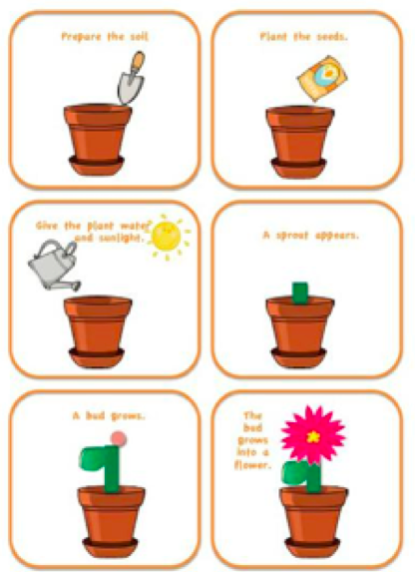
My students loved this poem called Here’s a Leaf! They would ask to do it over and over again. Yours will, too! You’ll see the magic when you try it. I use small, lightweight hemmed scarves like these. Search for “hemmed scarves” or “juggling scarves.” Check the reviews. I like mine! These scarves expand beautifully for this poem. Young children can practice naming the color, too.
In my video, we take you to Munsinger-Clemens Gardens, one of my favorite places in St. Cloud, Minnesota. Special thanks to my son, Christian Vilina for his awesome video work.
To begin, scrunch up the scarf in your hands, so that it can’t be seen. Here’s the video to show you how you might do it.
Here’s a Leaf (also known as The Flower Poem) adapted by Kathy Kampa
Available on iTunes (Jump Jump Everyone)
Children listen and answer.
Here’s a Leaf video
Do you have a scarf? (Yes!)
Let’s scrunch up our scarves. (tsch, tsch, tsch, tsch . . . . .)
(Scrunch up the scarf in your hands so that it’s not visible.)
Is your scarf very tiny? (Yes, it is!)
Are you ready? (I’m ready!)
Let’s pretend.
Let’s plant a seed in the dirt.
(Bend down and tap the ground, pretending to plant a seed in the dirt.)
Water it!
(Pretend to water the seeds by tipping your hands.)
Watch it grow and grow and grow.
(Stand up slowly.)
Now show me your thumbs. Here we go.
Here’s a leaf, and here’s a leaf.
(Pretend that your thumbs are leaves. Wiggle one thumb, then the other.)
Count them. 1-2.
(When you count 1-2, move your thumbs up and to the side.)
Here’s a bud.
(Open your hands slightly to reveal the scrunched-up scarf.)
Here’s a flower,
(Open your hands a little more.)
blooming just for you.
(Open your hands and let the scarf ‘bloom’ like a flower.)
Hooray!
(Toss the scarf into the air!)
Let’s grab our scarves and do it again!
For more kid-tested music and movement activities, check out my music on iTunes.
Kathy Kampa is a teacher, author, and teacher-trainer specializing in working with young learners. As a PYP (Primary Years Program) teacher, she uses a globally-minded and inquiry-based approach to teaching through which students develop 21st-century skills. She also supports the development of English language skills by creating songs, chants, and TPR/movement activities targeted to young learners’ needs.
Kathy and her husband Charles Vilina are also co-authors of Magic Time, Everybody Up, Oxford Discover (ELTon winner), Beehive/Buzz (2022), Blue Dot (2024), all published by Oxford University Press.
Thanks again to my son Christian Vilina for his vision in creating this video.
Images: “Easter Lily” by Recherché Furnishings is licensed under CC BY 2.0

February 22, 2022 is a historic day–it’s 2/22/22! AND it’s on a Tuesday, yes, that’s TWO’S-DAY.
I wrote a little song called “Two-Two-Two-Two-Two” to celebrate this auspicious day.
One of the wonderful outcomes of the pandemic was meeting amazing teachers online, like Aimee Curtis Pfitzer. Aimee is a passionate musician, songwriter, and teacher. She’s constantly creating. She has written numerous books with Beatin’ Path Publishing. Check her out at www singsmileplay.com. So I reached out to Aimee to collaborate with me on this little song. Here’s our Zoom photo!
In this blog post, you’ll find the song lyrics, the notation, accompaniment, and a video with movement suggestions. We hope that your Tuesday, February 22, 2022 will be amazing!
Here are the lyrics:
Two, Two, Two, Two, Two!
Here’s the musical score for the song with the words written out. Thanks to Aimee Curtis Pfitzner for creating this score.

Have fun by adding some movement! Hold up two fingers. Make the shape of the number 2! Add some 2 count patterns by clapping, patting, stamping, and snapping. Grab your “tutu” if you have one!
Here’s the “karaoke” accompaniment on Chrome music lab. It’s fun for your students to see how the melody is moving. We’ve made two versions, a slower tempo and a faster one. If you have Boomwackers, your students can play this.
Slow version: 80
https://musiclab.chromeexperiments.com/Song-Maker/song/5761674782441472
Fast version: 105
https://musiclab.chromeexperiments.com/Song-Maker/song/4818068420689920
Join the fun and have a very happy 22222!


It’s time to sing “Hello Spring” with your little ones.
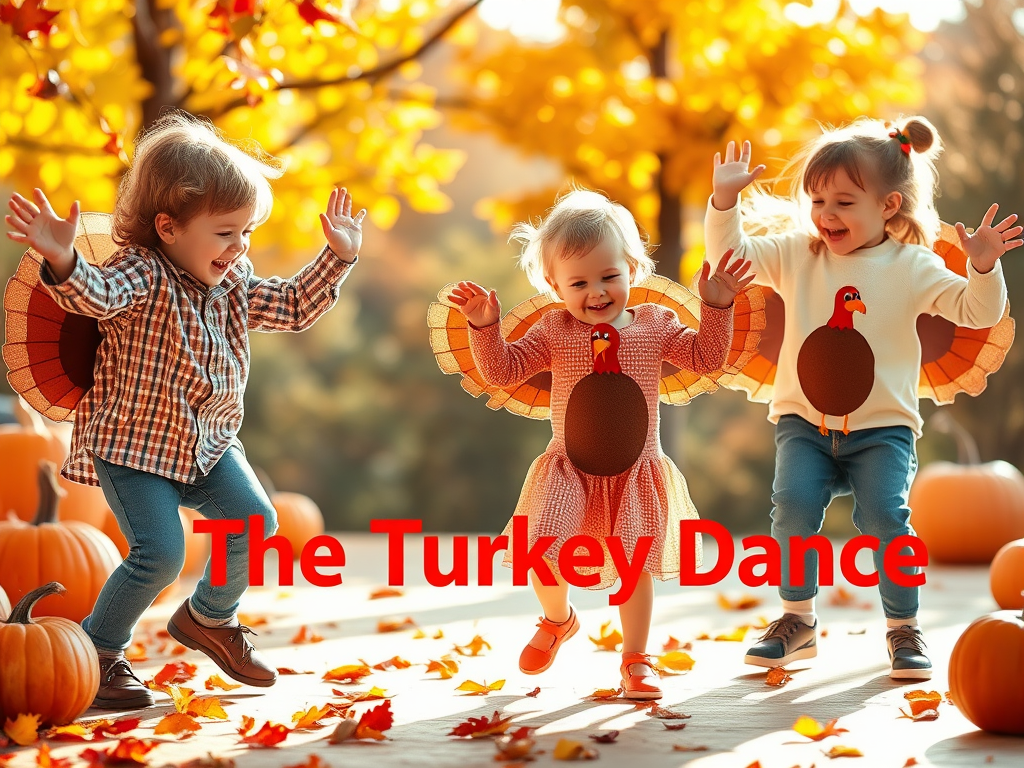
Get up and move with this lively Thanksgiving song by Kathy Kampa! This catchy tune is a fun movement activity for children. Invite them to use their imaginations as they pretend to be turkeys. Move different body parts with each repetition of the song.
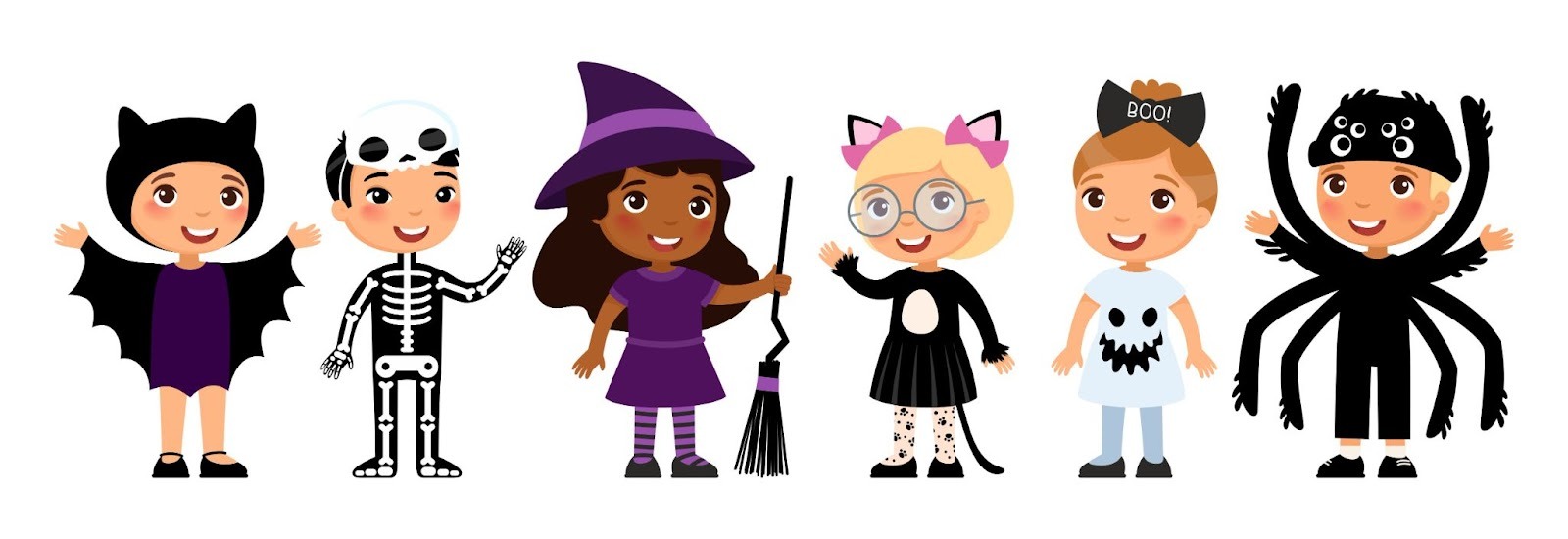
For our young learners, Halloween presents an opportunity to nurture their creativity through imaginative activities. Students can dress up as a character and move in more expressive ways. They can use their voice in different ways, too. Let’s explore moving like various Halloween characters.
First of all, I gather students in front of me to teach the vocabulary from this song. I sing the transitional song, “Come and Sit In Front of Me.” (by K. Kampa) The professional version of this transitional song is here for you.
Come and sit in front of me, in front of me, in front of me.
Come and sit in front of me, in front of me,
You can gather students in a circle, too.
Let’s make a circle, big and round (4X).
Show the Google Slides vocabulary images for the song “I’m A Witch.”
“What sounds do each of the characters make?”
Sing the lyrics below. Students can add hand or arm movements while sitting.
I’m A Witch
Words by Kathleen Kampa melody: Skip to my Lou
Spoken: Let’s be witches and fly on our broomsticks.
Hee! Hee! Hee! I’m a witch
Hee! Hee! Hee! I’m a witch!
Hee! Hee! Hee! I’m a witch!
Happy Halloween!
2. Spoken: Let’s be ghosts and float gently through the air.
Boo! Boo! I’m a ghost! (3X) Happy Halloween!
3. Spoken: Let’s be bats and fly through the night sky.
Eeek! Eeek! I’m a bat! (3X) Happy Halloween!
4. Spoken: Let’s be owls and turn our heads from side to side.
Whoo! Whooo! I’m an owl! (3X) Happy Halloween!
5. Spoken: Let’s be black cats. Put on your whiskers and sneak around.
Meow! Meow! I’m a black cat! (3X) Happy Halloween!
Let’s add some locomotor movements to this song. Stand up and make a slightly larger circle with your students. You can sing the transitional song, Let’s Make a Circle Big and Round, to make a circle.
Make this activity magical by waving your hand or a wand, and saying the words “Abracadabra! You’re a witch!” Ask, “How does a witch move?” Wait for ideas and try some. “Get on your broomsticks and fly around the circle.” Practice each movement, making sure that students are moving in the same direction around the circle. Say “Stop!” to end the movement. Since stopping is an important concept for young learners, acknowledge students who have stopped in interesting poses. Continue with the other characters, asking students how that character might move. While they are moving, describe what you see. “I see Kumi creeping and sneaking around like a cat. Her back is arched, or high in the air.” In this way, students learn more vocabulary and develop more interesting movements.
Now play the music! The spoken cues on the recording guide your students’ movements. My students love the special sound effects. Students start by posing like the characters, such as the witch, then move around in a circle. You can show the characters on the Google Slideshow.
Add your own ideas. What sound or sounds does this character make? Some characters don’t really make a sound, so you have to use your imagination.
When your students are ready, invite them to move throughout your classroom space rather than in a circle.
“I’m a Witch” is on Kathy Kampa’s Special Days and Holidays, available on Spotify or Apple Music.
Find more Halloween ideas on our Magic Time Kids blog and on my Pinterest page. If you’re interested in more of my work, check out my YouTube channel at Kathy Kampa.
My second album is filled with many happy songs that have grown in my young learner classroom. The songs encourage children to move. Many songs link to classroom content. Children can dance like falling leaves, bloom like a spring flower, move through the butterfly life cycle . . . . you’ll find LOTS of fun and magic in this album. This is available at iTunes, Apple Music and Spotify.
A little about me . . .
Kathy Kampa is a passionate educator of young learners. She seeks to nurture children’s imaginations and spark creativity through fun and engaging activities. Kathy believes that music and movement should be a part of every young child’s learning.
Kathy and her husband, Chuck Vilina, are co-authors of Magic Time, Everybody Up, Oxford Discover, Beehive, Buzz, World Class, and Blue Dot (all published by Oxford University Press). Their latest course Blue Dot encourages students to be changemakers and take action in the world.
Kathy has taught young learners in Tokyo, Japan for over 30 years. She’s also active as a teacher trainer, inspiring teachers around the world. She has currently returned to Minnesota where she continues to teach young learners, write educational materials, and compose songs for children.
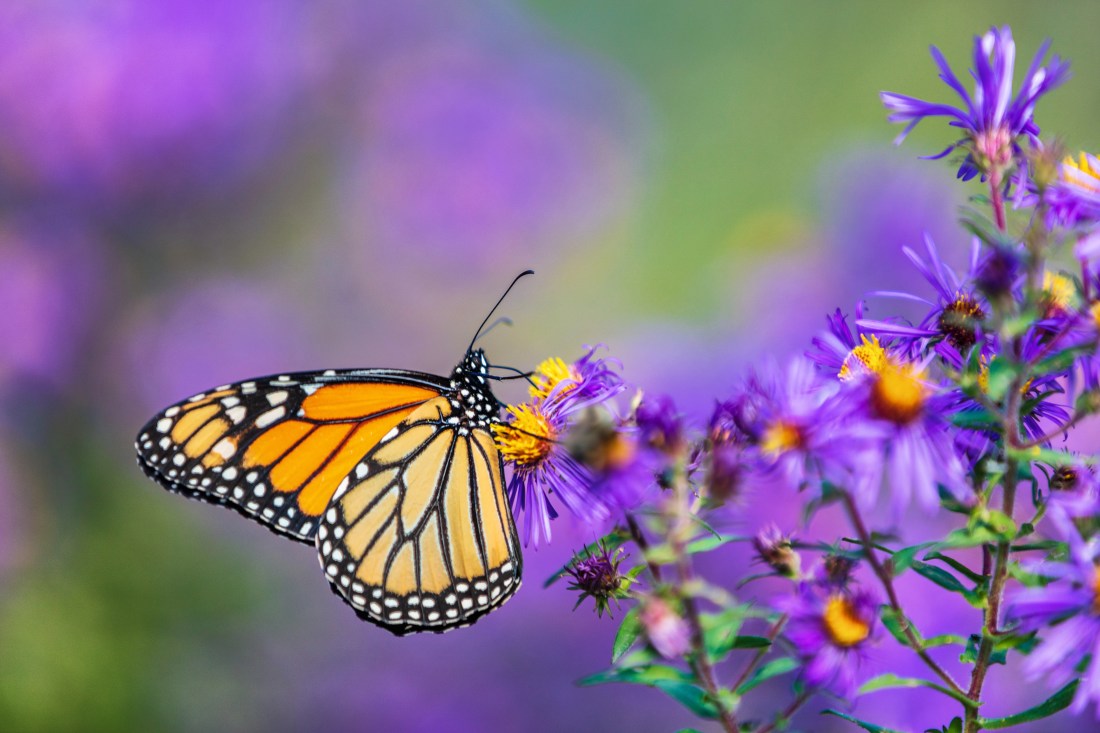
Here in Minnesota, we’ve caught a glimpse of butterflies flying in our pollinator garden. It’s wonderful to see them!
You can teach your students about the butterfly life cycle in a CLIL lesson, or Content and Language Integrated Learning. CLIL lessons link classroom content with vocabulary and grammar paradigms. We can bring the world of nature into our English lessons!

Using the theory of Multiple Intelligences, you can use many ways for your students to learn. Use words to describe the pictures or puppets. Use music and follow the pattern in the chant. Move your fingers or whole body. Invite students to work together and come up with their own ideas. Notice how each part of the life cycle changes.
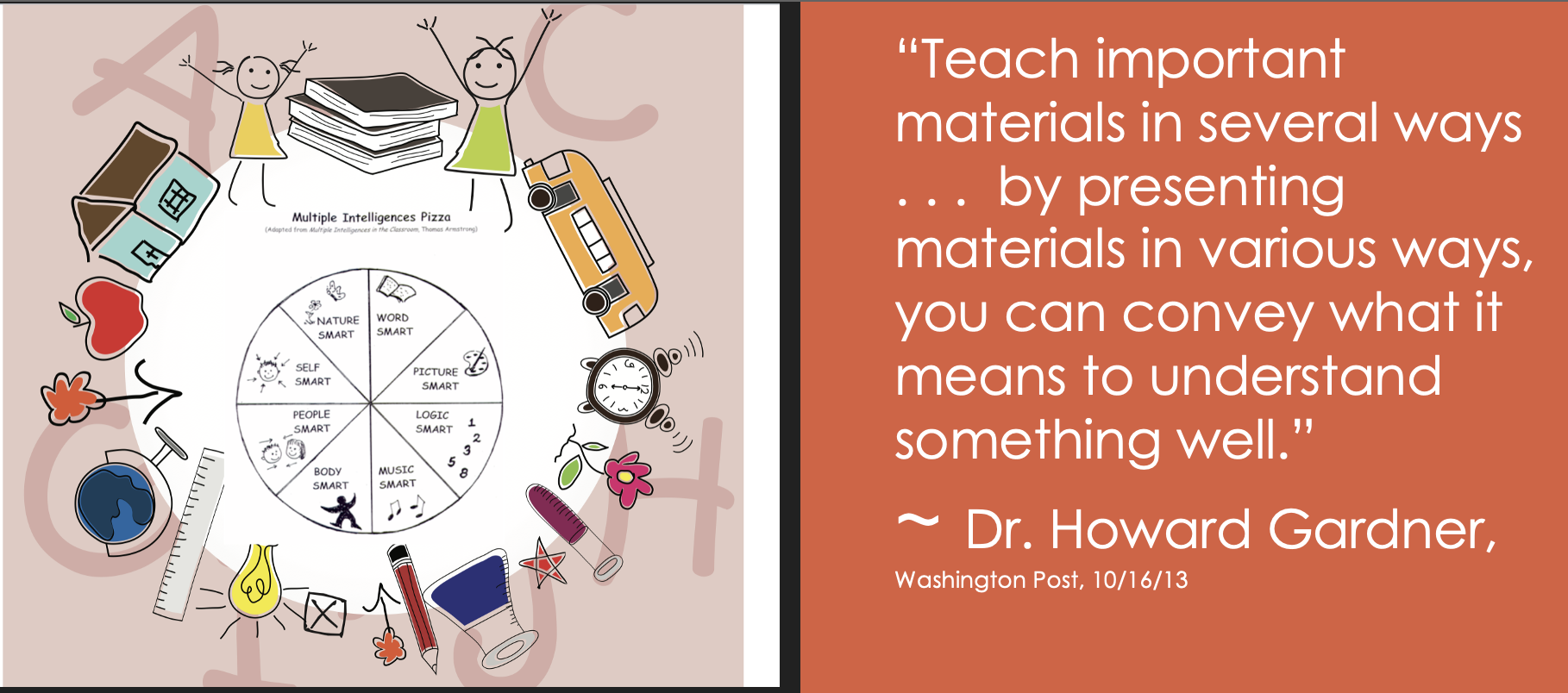
In addition, if you teach want to teach conceptually, consider the concept of “change.” What changed in each part of the life cycle? (size, the way it moves, the way it looks, etc.)
Through this activity, students will:
-know the names of the butterfly life cycle
–create movements for each part, with their fingers, with whole body
–perform a chant
–recognize a life cycle
Please refer to the illustration below as we go through the steps of the lesson.
1. First, present the new language:
egg caterpillar chrysalis butterfly
 You may introduce the language using the picture card illustrations (right), or use these Google slides to show students beautiful images of the vocabulary. It’s fun for students to find these life cycle images in the story of “The Very Hungry Caterpillar” by Eric Carle.
I often introduce the language with an egg shaker, a Folkmanis caterpillar puppet that changes into a butterfly, and a scarf (to be the chrysalis).
2. Create finger shapes for each word. The “fingerplay movements” below the illustrations will show you how, or use your imagination to create your own ideas.
3. Say the chant using the finger movements.
Tiny Egg Chant (Butterfly Life Cycle Chant)
by Kathleen Kampa © 2013
Tiny egg, tiny egg X X XX X (ch – ch- ch ch – ch)
Tiny egg, tiny egg X X XX X (ch – ch- ch ch – ch)
Tiny egg, tiny egg X X XX X (ch – ch- ch ch – ch)
1-2-3-4 LOOK!
Caterpillar, caterpillar X X XX X (ch – ch- ch ch – ch)
Caterpillar, caterpillar X X XX X (ch – ch- ch ch – ch)
Caterpillar, caterpillar X X XX X (ch – ch- ch ch – ch)
1-2-3-4 Look!
Chrysalis, chrysalis X X XX X (ch – ch- ch ch – ch) (Repeat 3 times)
1-2-3-4 Look!
Butterfly, butterfly X X XX X (ch – ch- ch ch – ch) (Repeat 3 times)
Wait . . . . Good-bye!
________________________ ____________________
Here is a simple recording of the chant that you can use:
The professional recording can be found on Jump Jump Everyone.
4. Finally, you can expand the activity by having students move to the chant using their whole body. Students can curl up to make tiny egg shapes, then wiggle about on their tummies as caterpillars. They can balance on one foot in a chrysalis shape. While students are balancing quietly, give each student one or two colorful scarves for butterfly wings. Your students might enjoy moving around the room like butterflies. I often play “Aviary” by Camille Saint-Saëns, or the Japanese song “Cho Cho.” I’ve also written a song called “Flitter Flutter Butterfly” that connects nicely with this.
Video: Here are my young learners in Tokyo doing this chant with me.
______________________________________________________________
Through the power of CLIL, students have now experienced the life cycle of a butterfly in a meaningful, memorable way. They have embodied the vocabulary and will happily repeat this activity in future lessons.
You can transfer the idea of the butterfly life cycle to other animal life cycles, such as the frog life cycle. How does the frog change? How is this similar to the butterfly life cycle?
Let us know how this activity works in your classroom, and if you discovered any new ways to teach it!
Here’s a beautiful visual of the gradual transformation. According to The Butterfly Lady, “When the Monarch caterpillar is ready to pupate it will spin a silk button, attach itself, and hang head-down in a “J” shape. The caterpillar will stay like this for around 24 hours. Shortly before the caterpillar is ready to shed their larval skin, it will straighten and the antennae will become ragged. The caterpillar wiggles to discard the skin and reveals the pupa (chrysalis).”

Happy Teaching!
Kathy
Are you streaming music? Go to Spotify or Apple Music to find my music. You’ll find “Tiny Egg” and “Flitter Flutter Butterfly” on “Jump Jump Everyone.”
Jump Jump Everyone, my second album, is filled with many happy songs that have grown in my young learner classroom. The songs encourage children to move. Many songs link to classroom content. Children can dance like falling leaves, bloom like a spring flower, move through the butterfly life cycle . . . . you’ll find LOTS of fun and magic in this album.
Kathy Kampa loves to bring joy to the world through her children’s music. She is passionate about making learning engaging for young learners. You’ll find more resources on Kathy’s YouTube page.

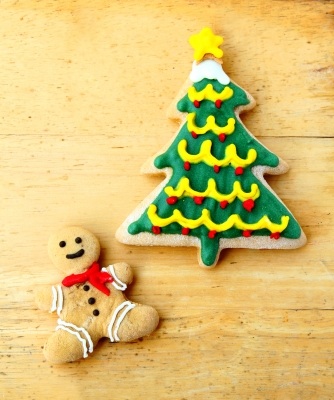
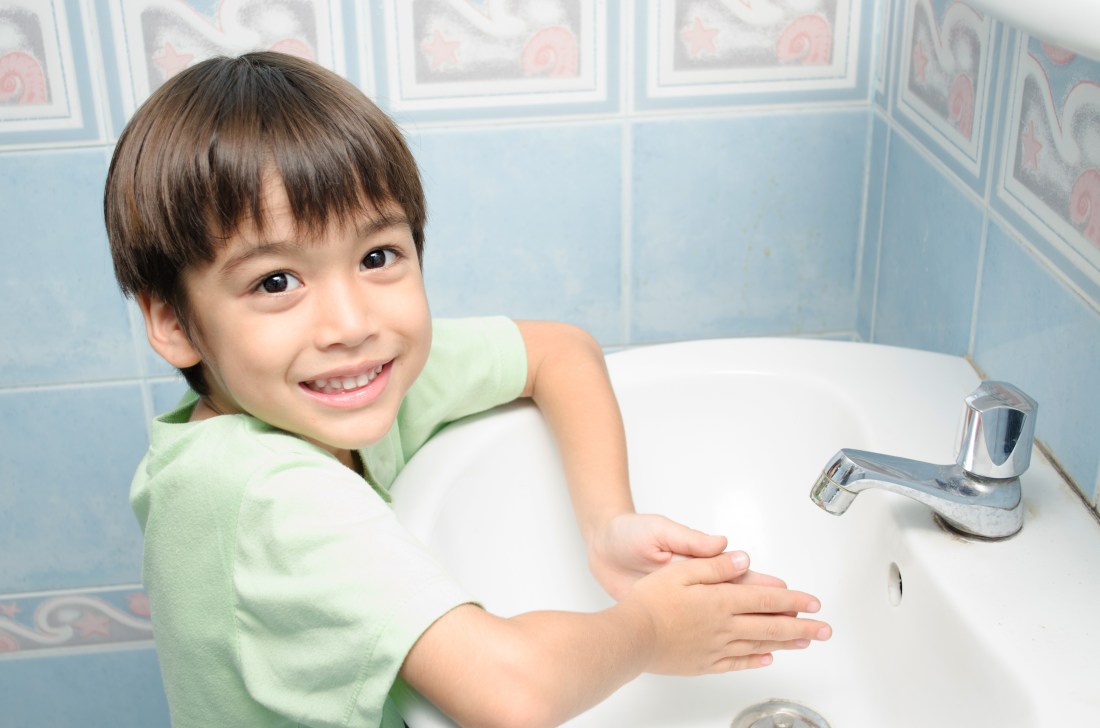
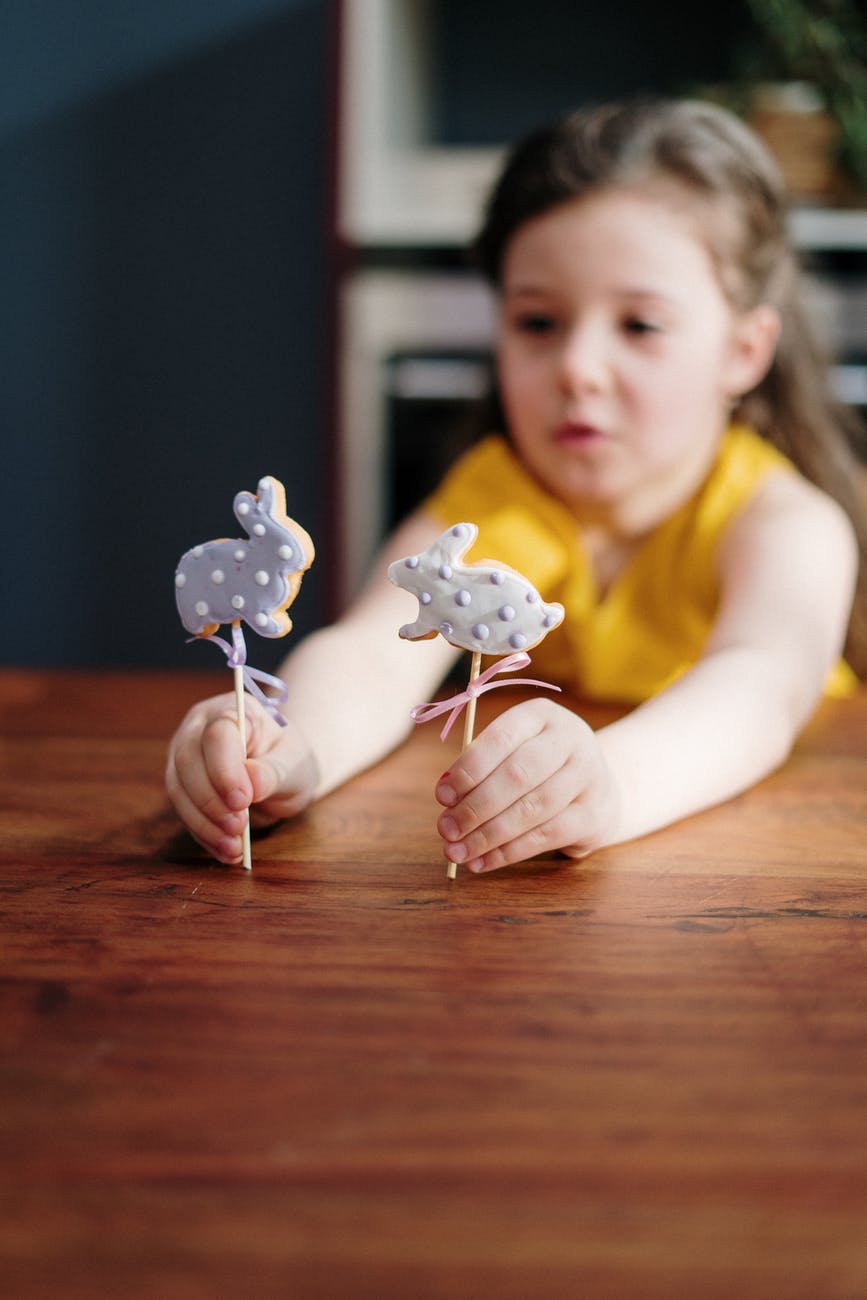










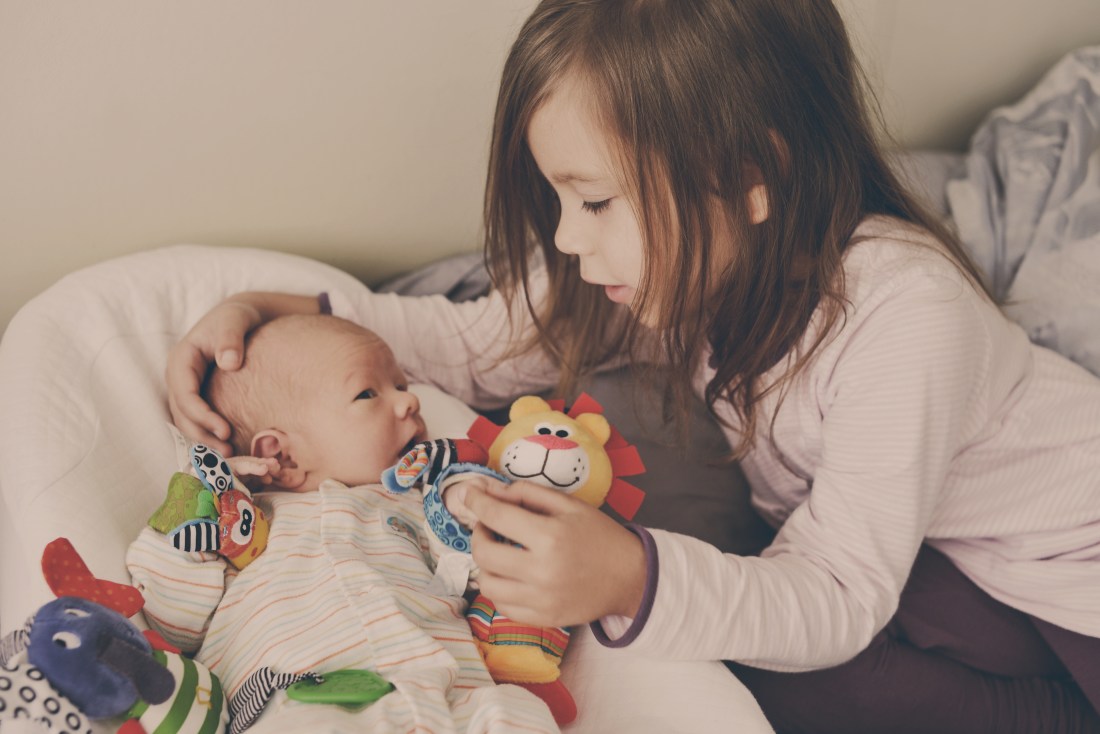


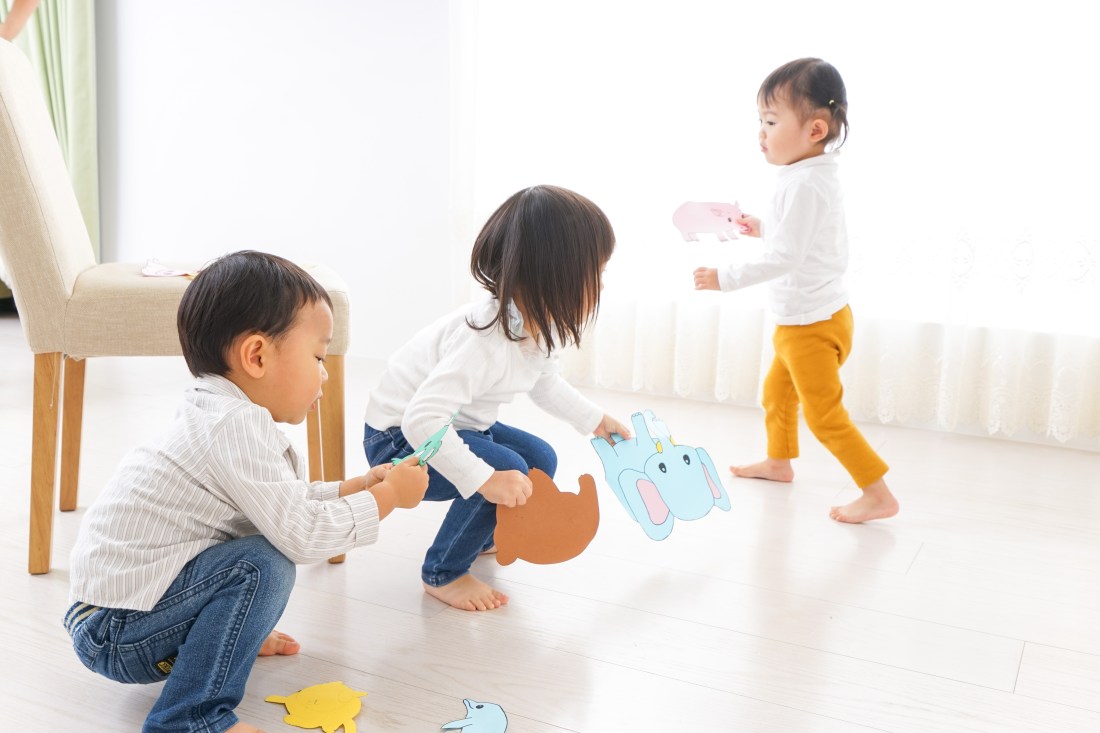



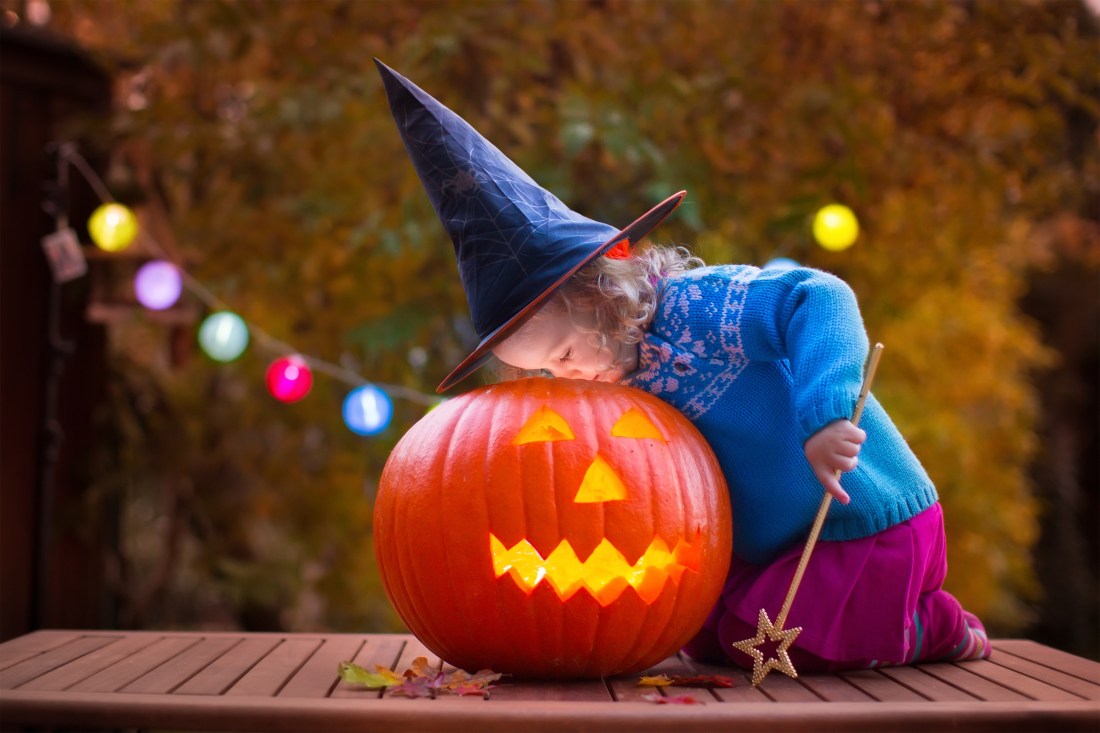

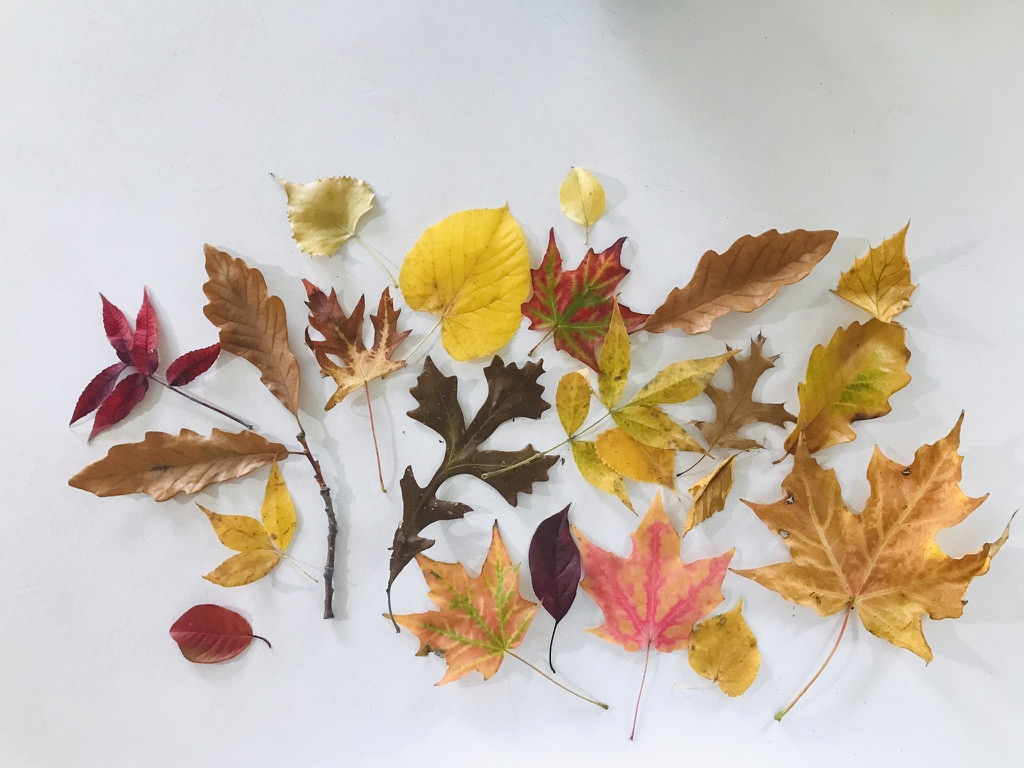
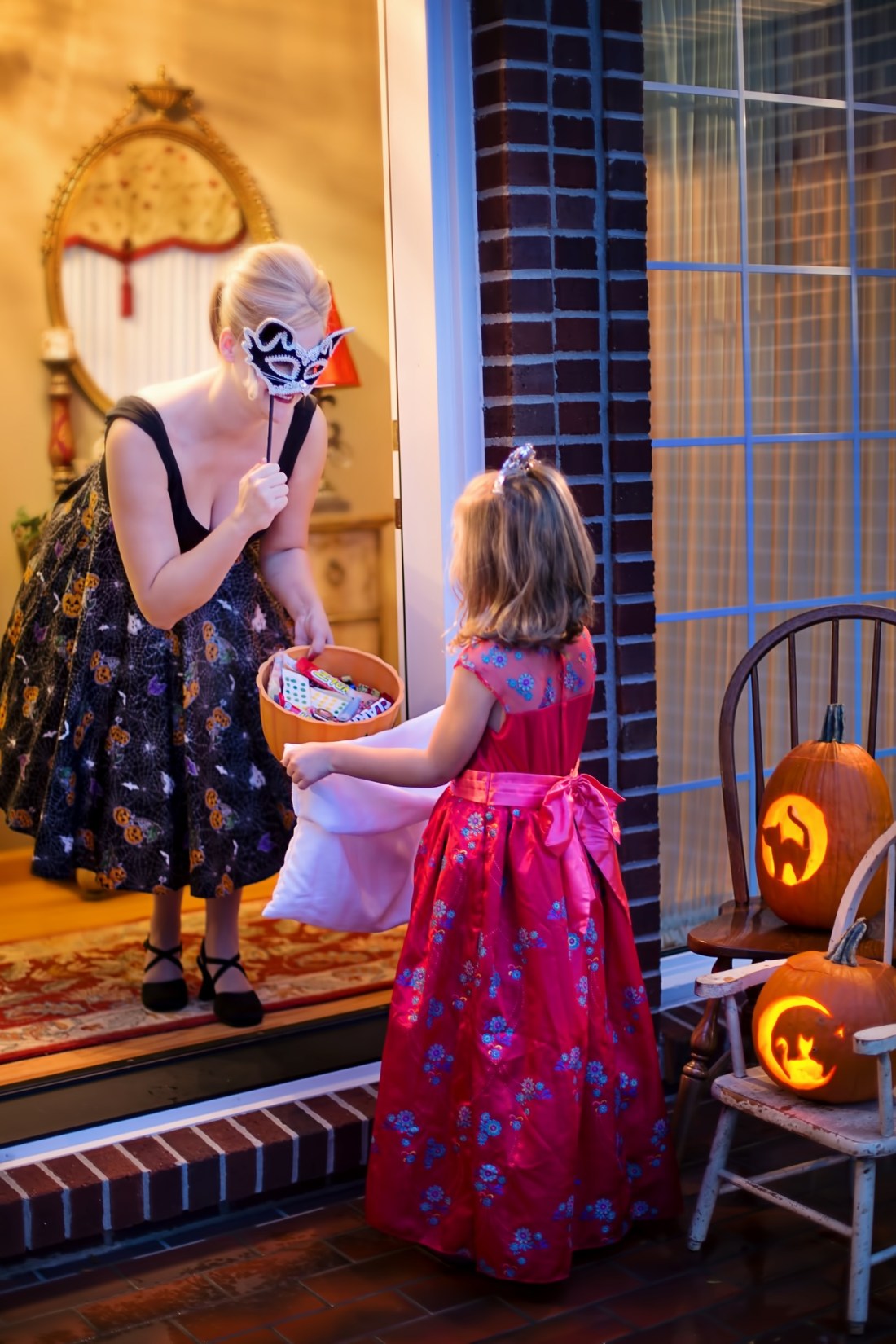



 MagicTimeKids